Constant Contact is a platform for small businesses getting started with email marketing. It’s easy to use, familiar, and well suited to sending newsletters or simple campaigns. But for many teams, there comes a point where “easy to use” starts to mean “hard to grow.”
As marketing strategies evolve, simplicity can quickly turn into a limitation. Teams often find themselves doing more manual work, struggling to build more advanced customer journeys, or hitting limits with segmentation, automation, and performance tracking.
There are plenty of Constant Contact alternatives that could be a better fit for your business. Realized it’s time to graduate from basic email campaigns? Or starting out and looking for a platform that can grow with you? This guide will help you choose the platform that fits not just where your marketing is today, but where it’s headed next.
What to look for in a Constant Contact alternative
As you evaluate the best Constant Contact alternative for your business, it’s important to look beyond surface-level features and focus on the limitations that typically drive teams to switch.
Constant Contact is widely appreciated for its simplicity and ease of use, especially among small businesses and beginners. But across review platforms like G2 and Capterra, a consistent theme emerges: as marketing becomes more sophisticated, users begin to feel constrained by limited automation, basic segmentation, and a lack of flexibility.
While Constant Contact offers a solid feature set, it can be a bit pricey compared to some competitors, especially as your contact list grows. The automation features are effective but somewhat limited when compared to more advanced platforms like ActiveCampaign or HubSpot.
Here are the key areas to evaluate when choosing an alternative that can support your next stage of growth:
- Automation that reduces manual work (not just basic autoresponders): Constant Contact supports simple automations, but lacks the flexibility for multi-step, behavior-driven journeys. Teams often switch when they need dynamic workflows that adapt across the full customer lifecycle—without repetitive setup.
- Segmentation and personalization that go beyond static lists: Constant Contact’s segmentation is largely list-based and campaign-level, which makes it difficult to build audiences from real-time behaviors like site activity, engagement patterns, or purchase intent. Look for platforms that support dynamic segments, event-based triggers, and reusable audience logic—so personalization updates automatically as customer behavior changes, rather than requiring constant manual rebuilds.
- Cross-channel orchestration, not just email campaigns: Constant Contact is primarily designed for one-channel execution, with limited ability to coordinate messaging across SMS, CRM actions, or on-site experiences. As strategies mature, teams often need a platform where the same automation logic can trigger and adapt campaigns across multiple channels—without managing separate tools or disconnected workflows.
- A clear path to CRM and revenue alignment: Constant Contact’s CRM functionality is minimal and not deeply integrated into campaign workflows, which makes it harder to track how marketing drives pipeline or revenue. A stronger alternative should allow marketing and sales to operate from shared data without requiring a separate system.
- Pricing that holds up as you grow: Look for a platform where the price reflects a real increase in value, not just a bigger contact database or more sends. Many users move on from Constant Contact because it can feel expensive for what it offers—especially once you factor in added costs for a comprehensive CRM or other systems needed to support more advanced marketing.
Constant Contact is a strong starting point, but it’s not always built for what comes next. As your marketing evolves, the right alternative should not only solve today’s limitations, but also give you a clear path to scale—without forcing you into more manual work or another platform switch down the line.
Your priorities will depend on how your business operates and where you’re headed next. For example:
- Growing SMBs or startups may prioritize stronger automation and better value as their contact list expands.
- B2B businesses may look for CRM functionality that connects marketing with sales activity.
- Ecommerce brands may want deeper automation for customer journeys like abandoned cart, post-purchase, and re-engagement campaigns.
- Lean teams or solo marketers may prioritize tools that reduce manual work and make it easier to scale without adding complexity.
The goal isn’t to replace Constant Contact with a like-for-like tool. It’s to choose a platform that matches the kind of marketing you want to run next—and gives you the flexibility to grow into it.
ActiveCampaign
ActiveCampaign is a strong Constant Contact alternative for businesses that want to move beyond basic email campaigns and build more sophisticated, results-driven marketing. It’s designed for teams that need deeper automation, better personalization, and a clearer path to revenue—without stitching together multiple tools.
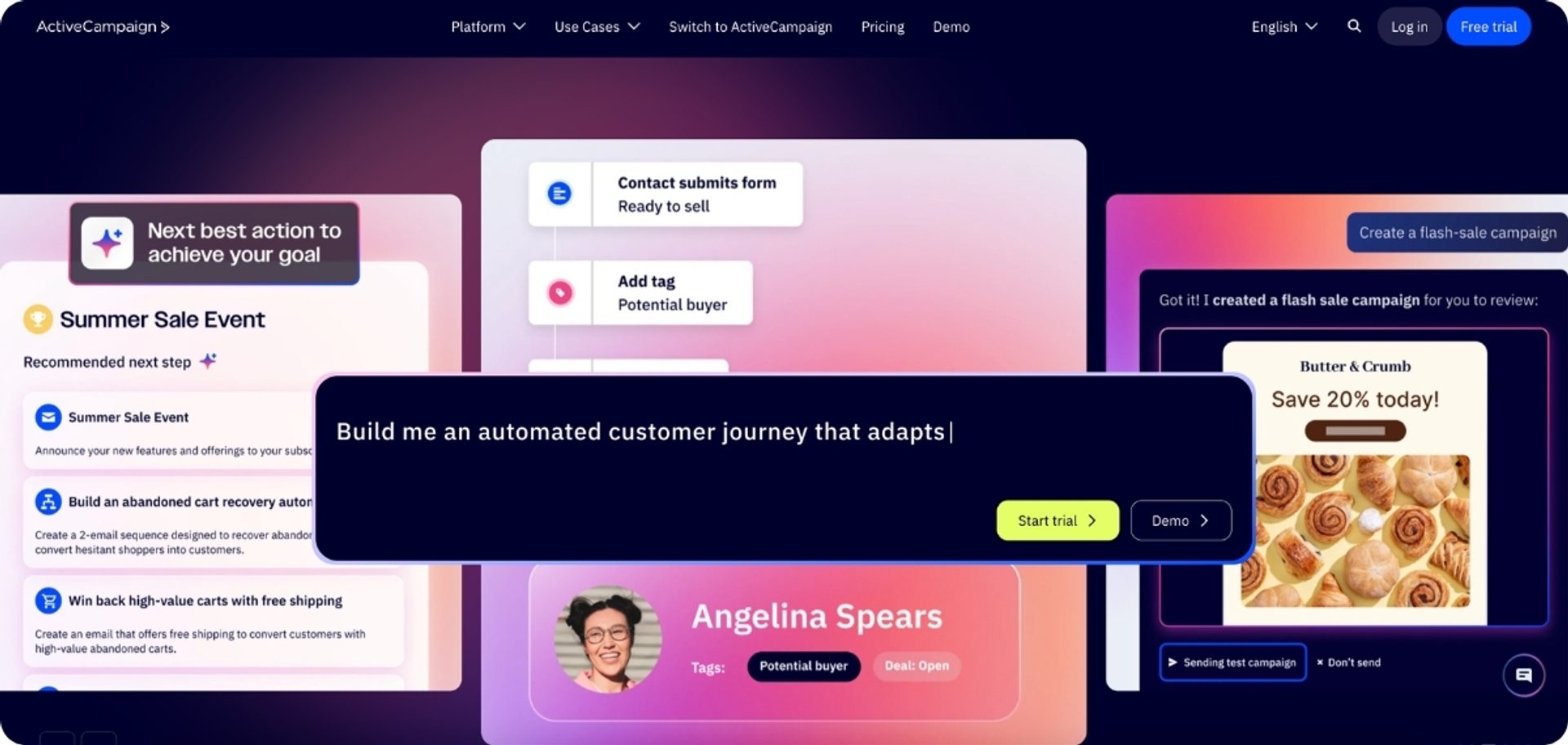
For businesses that have outgrown Constant Contact’s limitations, ActiveCampaign offers a more advanced and integrated system that scales with your strategy, not just your contact list.
- AI that executes, not just assists: ActiveCampaign is an AI-native platform. Active Intelligence is a smart automation engine designed to support the full marketing lifecycle. It builds multi-layered campaigns, finds the right audiences, improves timing, and surfaces insights and optimizations automatically. Compared to Constant Contact’s lighter AI assistance, it plays a much bigger role in helping marketers scale output with less manual work.
- Automation and segmentation built for real lifecycle marketing: ActiveCampaign is an autonomous marketing platform, prioritizing accessible, responsive, behavior-driven campaigns that adapt and personalize as customers move through the funnel. Reusable logic and dynamic segments replace the manual rebuilds and static list management that teams often outgrow in simpler platforms.
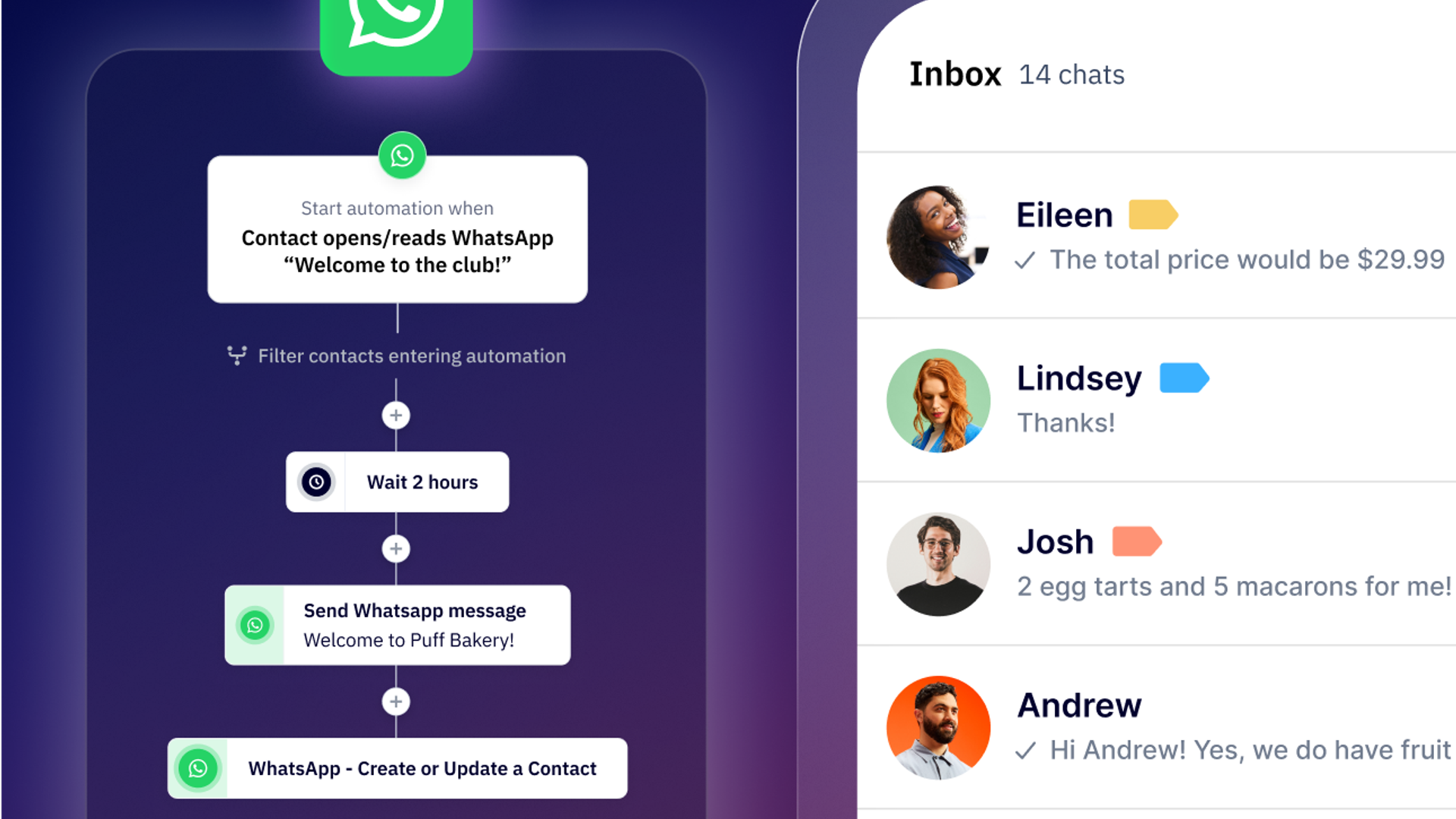
- A built-in CRM and cross-channel engine in one system: ActiveCampaign connects marketing directly to sales with a native CRM, pipeline automation, and lead scoring built into the same platform. It extends journeys and CRM actions across email (including transactional), SMS, WhatsApp, and extensive integrations, making it easier to move beyond email-only campaigns without stitching together separate tools.
- Deliverability and analytics that improve performance over time: ActiveCampaign is built to help campaigns land in the inbox and show what happens next. With domain verification tools, dedicated IPs, and automated list hygiene, it gives teams stronger control over performance and clearer visibility into what drives conversions and revenue.
Constant Contact rates pretty well for deliverability, with a 91.7% deliverability score from EmailToolTester’s latest data. It’s beaten only by ActiveCampaign, which holds a score of 94.2%.
- Pricing that scales with capability and long-term value: ActiveCampaign provides access to core features like automation, segmentation, CRM, and AI from early plans, so as your needs grow, you’re unlocking deeper functionality—not just paying for more contacts. This creates a clearer path to scaling without needing to layer in additional tools.
Explore ActiveCampaign’s capabilities further in the interactive product tours.
While ActiveCampaign offers significantly more depth than Constant Contact, it’s also designed to remain approachable. With a visual automation builder, AI-assisted workflows, and extensive pre-built templates and automation recipes, teams can launch sophisticated campaigns quickly without needing technical expertise.
Across review platforms, ActiveCampaign is consistently praised for its automation capabilities, flexibility, and ability to support more advanced marketing strategies. Many users highlight the shift from manual campaign execution to scalable, automated systems.
For many years, I used Constant Contact. It was a good platform, but as my business needs evolved, CC’s ability to provide more business intelligence did not keep up. I reviewed a wide range of services, and ActiveCampaign stood out for many reasons. A simple but powerful reason for my choice was that ActiveCampaign makes it easy to set up lead scoring. Also, the powerful lead management and filtering tools make it easy to work with your contacts in constructive ways.
| ActiveCampaign | Constant Contact | |
| Which businesses choose this platform? | More often chosen by growing businesses that need advanced automation, personalization, and a platform that can support full customer journeys. | More often chosen by small teams and beginners focused on newsletters and social media. |
| Pricing & value over time | Free trial available. Paid plans start at $15/month for 1,000 contacts. Core features like automation, segmentation, and AI available from early plans. Native CRM and cross-channel workflows built-in to the platform. | Free trial available. Paid plans start at $30/month for 1,000 contacts. Pricing increases mainly with contacts and sends, with limited gains in feature depth. Additional tools often required for advanced use cases. |
| AI tools | AI-native system that supports campaign creation, execution, optimization, and audience insights across workflows. | Basic AI assistance for content generation and campaign creation. |
| Templates | 250+ responsive, AI-powered email templates. 1,000+ automation recipes. | 200+ email templates. |
| Integrations | 1,000+ native integrations. | 300+ native integrations. |
To dive deeper into the differences between Constant Contact and ActiveCampaign, read our full ActiveCampaign vs Constant Contact comparison.
Moosend
Moosend was acquired by Constant Contact in 2025, but the platforms still operate separately and have significant differences. Moosend is a Constant Contact alternative for small businesses and lean marketing teams that want more flexibility and automation without adding too much complexity. It sits in the middle ground between basic newsletter tools and more advanced marketing platforms.
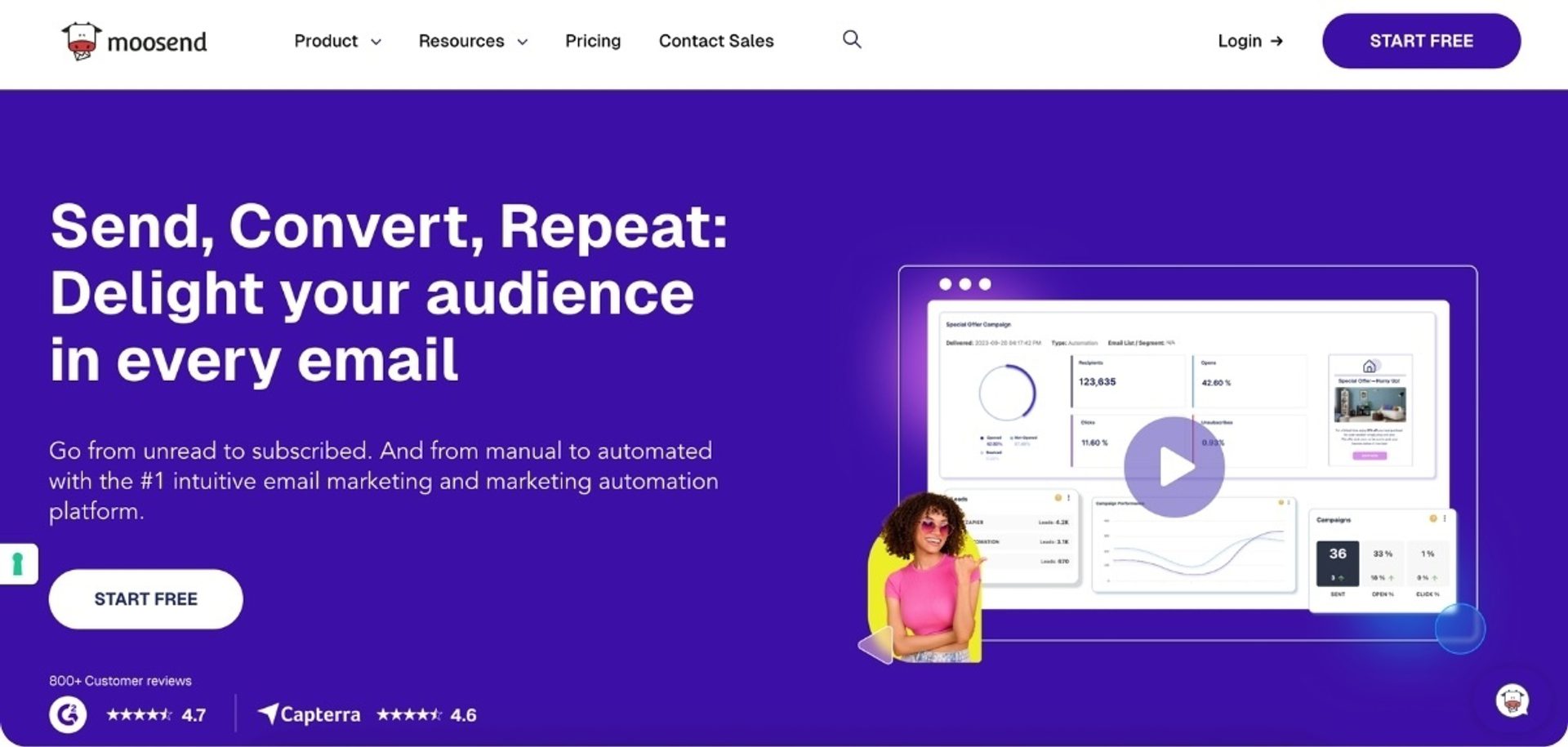
For businesses that have outgrown Constant Contact’s limitations but don’t need a fully integrated system, Moosend offers a more capable, cost-effective step forward.
- More flexible automation without added complexity: Moosend makes it easier to move beyond simple campaigns with a visual automation builder that supports triggers, conditions, and multi-step workflows. It gives teams more control than Constant Contact’s basic automation, while still being very approachable for beginners and non-technical users.
- Stronger segmentation and campaign optimization tools: Moosend supports more advanced audience targeting and reporting, including behavioral segmentation, A/B testing, and engagement tracking. This helps teams improve relevance and performance without relying on static lists or manual updates.
- Better value for growing contact lists: Moosend’s pricing is typically lower than Constant Contact’s, with plans starting at a lower entry point and billing based on active subscribers. For businesses scaling their audience, this can make it a more cost-efficient option over time.
Moosend keeps the experience focused on email marketing, making it easy to adopt and operate. However, it does not include a built-in CRM or deeper cross-channel capabilities, so teams with more complex lifecycle or sales alignment needs may eventually require a more advanced platform.
Across review platforms, Moosend is often praised for its ease of use, affordability, and balance of functionality for smaller teams. Users typically see it as a strong upgrade from simpler tools like Constant Contact, but not a full-scale system for more complex marketing operations.
I like Moosend’s great balance of ease of use, affordable pricing, and solid automation, which makes it ideal for small-to-medium B2B teams looking for powerful email marketing without the complexity or cost of enterprise tools.
| Moosend | Constant Contact | |
| Which businesses choose this platform? | More often chosen by growing small businesses that like the simplicity of Constant Contact but want more automation and targeting without a major jump in complexity. | More often chosen by very small teams that need a dependable newsletter tool and social media features, without advanced automation or segmentation. |
| Pricing & value over time | Free trial available. Paid plans start at $13/month for 1,000 contacts. Upper tiers add enterprise features and transactional email. | Free trial available. Paid plans start at $30/month. Pricing scales with contacts and sends, with limited gains in feature depth. |
| AI tools | Moosend AI offers a content writing tool, targeted product suggestions, and audience discovery support. | AI assistance is primarily focused on content generation and campaign creation. |
| Templates | 130+ email templates. | 200+ email templates. |
| Integrations | 80+ native integrations. | 300+ native integrations. |
Mailchimp
Mailchimp is a Constant Contact alternative for small businesses and teams that want a familiar, easy-to-use platform for email marketing with slightly more flexibility and modern tooling.
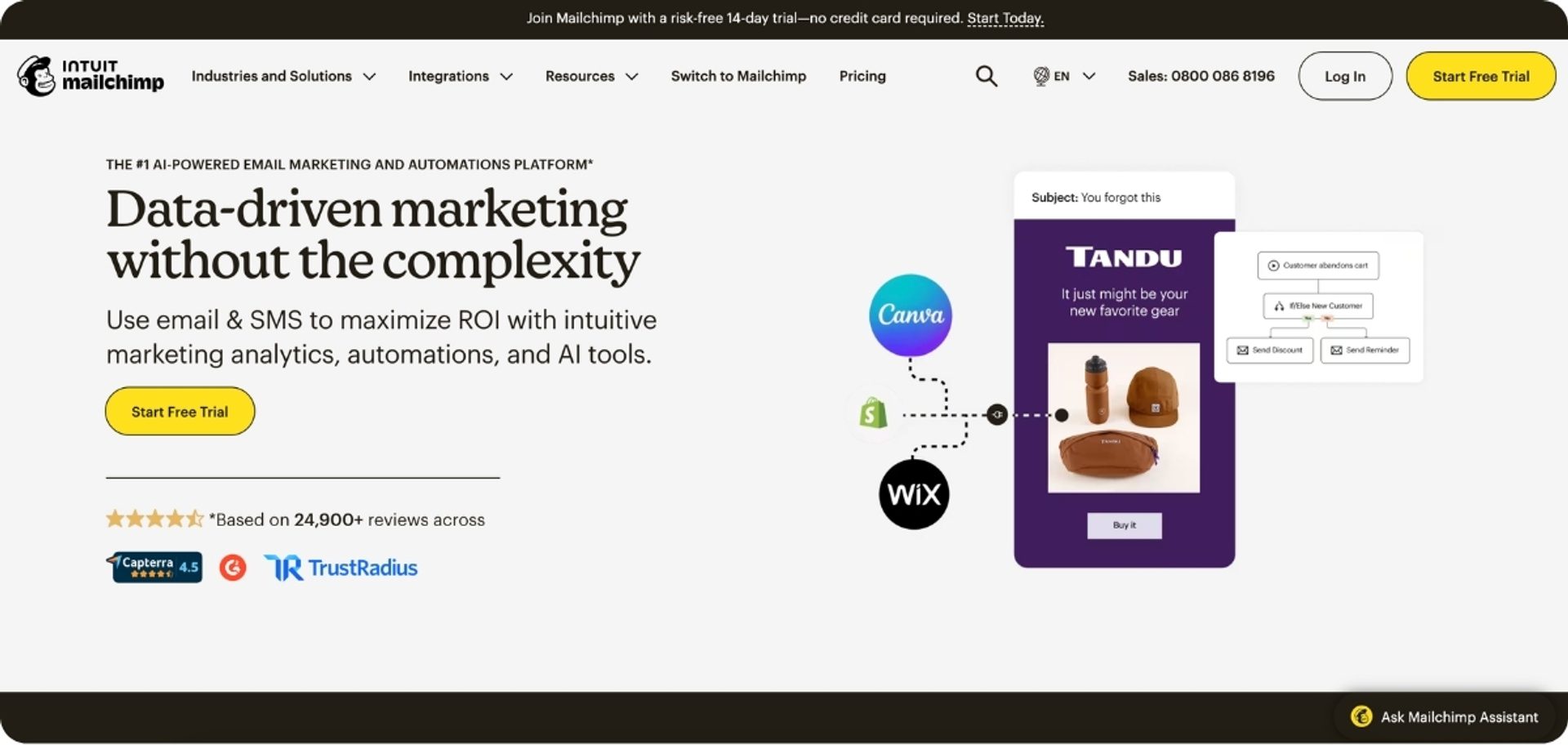
For businesses that need a tool with better pricing and integrations, but still want a simple, email-first platform, Mailchimp offers an accessible solution.
- More intuitive campaign building and design flexibility: Mailchimp is widely known for its polished interface, drag-and-drop editor, and large template library. It makes it easy to create professional campaigns quickly, with more customization and design control than Constant Contact’s more rigid template system.
- Automation that goes beyond basic email sends: Mailchimp introduces some trigger-based automations that allow for more dynamic campaigns than Constant Contact. It gives teams a clearer path toward lifecycle marketing without needing to rebuild campaigns manually.
- Improved segmentation and audience targeting: Mailchimp offers more flexible segmentation than Constant Contact, allowing users to group audiences based on engagement and behavior. This makes it easier to move beyond static lists and send more relevant campaigns.
- Broader ecosystem and integrations: Mailchimp connects with a wide range of ecommerce platforms, CMS tools, and third-party apps. This makes it easier to extend functionality compared to Constant Contact, which is more limited in how it fits into a broader marketing stack.
Mailchimp still shares some of the limitations that cause teams to move on from Constant Contact over time—particularly around automation depth, segmentation flexibility, and scaling costs—but it offers a more modern and capable starting point.
Across review platforms, Mailchimp is consistently praised for its ease of use and strong design experience. At the same time, users often note limitations as their marketing becomes more advanced, particularly around automation depth and pricing as contact lists grow.
Mailchimp is a solid email marketing tool with an intuitive interface and a wide range of templates that make it easy to get started quickly. The segmentation and automation features cover the basics well. For teams that have outgrown simple newsletters and need advanced segmentation, behavioral triggers, or tight CRM connectivity, Mailchimp can quickly feel like a limitation rather than an enabler.
| Mailchimp | Constant Contact | |
| Which businesses choose this platform? | More often chosen by small businesses that want a more modern, flexible email platform than Constant Contact, with better automation and design tools. | More often chosen by beginners and smaller teams focused on simple newsletters and straightforward email campaigns. |
| Pricing & value over time | Limited free tier available. Paid plans from $26.50/month for 1,000 contacts. Restricted access to automations on lower-tier subscriptions. Costs increase as lists grow, with more advanced features gated to higher tiers. | Free trial available. Paid plans start at $30/month for 1,000 contacts. Pricing scales mainly with contacts, with limited increases in feature depth. |
| AI tools | AI-powered content generation for emails, subject lines, and campaign suggestions.Assistive rather than execution-focused. | Basic AI assistance for email creation and campaign setup, with limited scope beyond content. |
| Templates | 250+ email templates. | 200+ email templates. |
| Integrations | 300+ native integrations. | 300+ native integrations. |
Want to see how Mailchimp compares to ActiveCampaign? Read our deep dive comparison of ActiveCampaign vs. Mailchimp.
Brevo
Brevo is a Constant Contact alternative for businesses that want to expand beyond email into cross-channel functionality, without moving to a more complex or expensive platform.
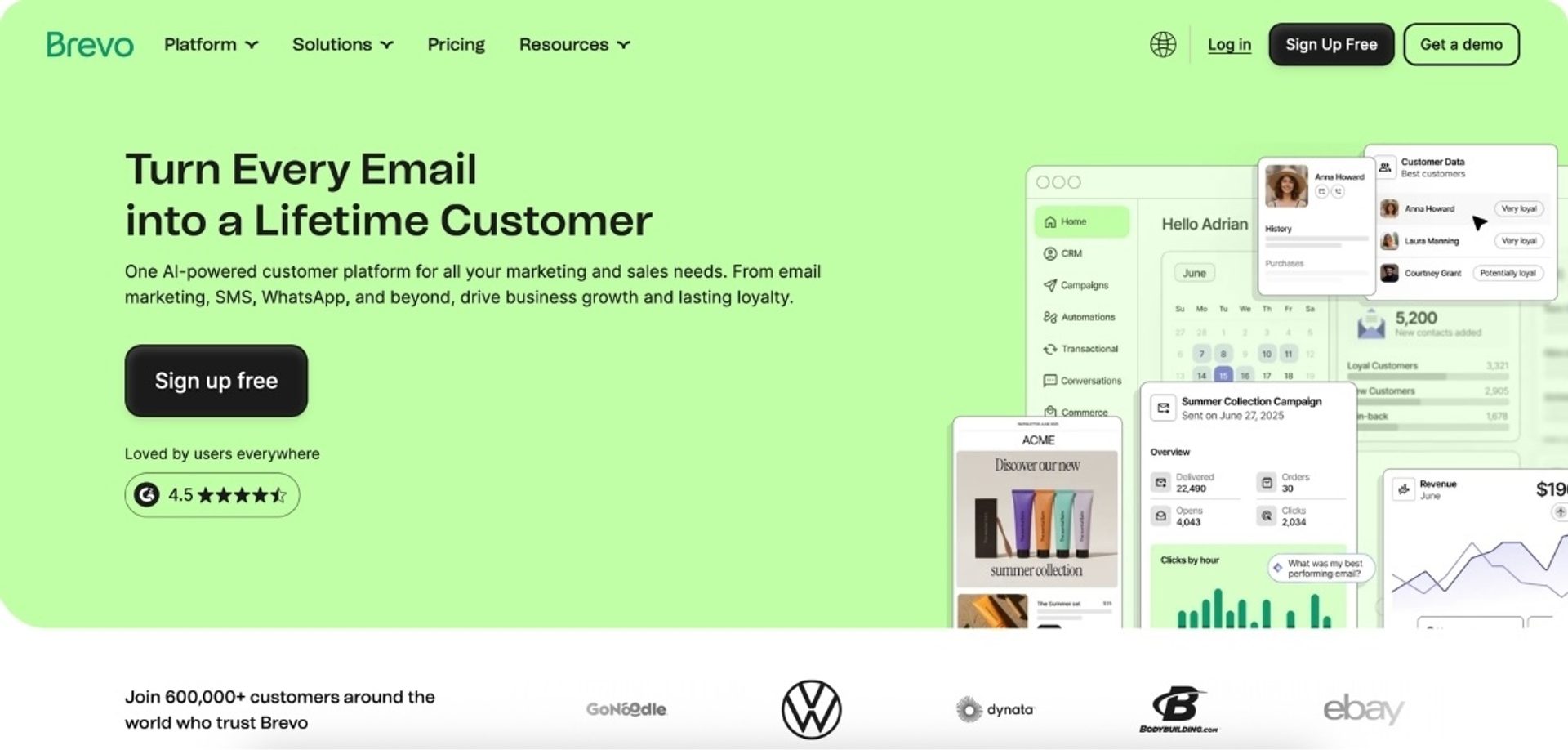
Brevo is designed for SMBs that need a broader communication toolkit while keeping things relatively simple.
- Multichannel marketing built into the core platform: Brevo combines email, SMS, WhatsApp, live chat, and transactional messaging in one system. This makes it easier to move beyond email campaigns and start building more connected customer experiences—something Constant Contact does not natively support.
- Automation that extends across channels: Brevo allows users to create workflows triggered by customer actions, similar to Constant Contact—but with the added ability to coordinate messaging across multiple channels. This gives teams more flexibility as their marketing expands, even if the automation logic itself is still relatively simple.
- Send-based pricing that can benefit larger lists: Brevo’s pricing is primarily based on email sends rather than contact count. For businesses with large but less frequently contacted databases, this can be more cost-efficient than Constant Contact’s contact-based pricing model.
- Built-in CRM and communication tools: Brevo includes a lightweight CRM, along with tools like live chat and transactional email. This gives teams a more complete system for managing customer communication without needing separate tools, whereas Constant Contact typically requires additional solutions for CRM or sales workflows.
Brevo offers more breadth than Constant Contact, but not necessarily more depth. While it expands into multiple channels, it is generally less advanced in areas like automation logic, segmentation, and reporting compared to more specialized platforms.
Across review platforms, Brevo is often praised for its affordability and multichannel capabilities. However, users frequently note that automation and reporting can feel limited as their needs become more sophisticated.
The platform makes it easy to create email campaigns and basic automations without a steep learning curve, which is great for small teams and growing businesses. Some advanced automation and segmentation features feel limited compared to more robust platforms.
| Brevo | Constant Contact | |
| Which businesses choose this platform? | More often chosen by SMBs that want a broader communication toolkit, including WhatsApp, SMS, and live chat. | More often chosen by small teams focused primarily on email. |
| Pricing & value over time | Free tier available. Paid plans start at $9/month for 5,000 emails. Pricing is based on sends rather than stored contacts. Can be more cost-efficient for large lists with lower send frequency. | Free trial available. Paid plans start at $30/month for 1,000 contacts. Pricing scales mainly with contacts, with limited increase in capability. |
| AI tools | AI agents that can generate campaigns and execute on segmentation, sales support, and more. More advanced capabilities are restricted to higher subscription tiers. | Basic AI assistance focused on email creation, with minimal impact on broader workflows. |
| Templates | 40+ email templates. | 200+ email templates. |
| Integrations | 150+ native integrations. | 300+ native integrations. |
Want to see how Brevo compares to ActiveCampaign? Read our deep dive comparison of ActiveCampaign vs. Brevo.
HubSpot
HubSpot is a Constant Contact alternative for businesses that want to move beyond basic email marketing into a full, all-in-one platform that combines marketing, sales, CRM, and customer service.
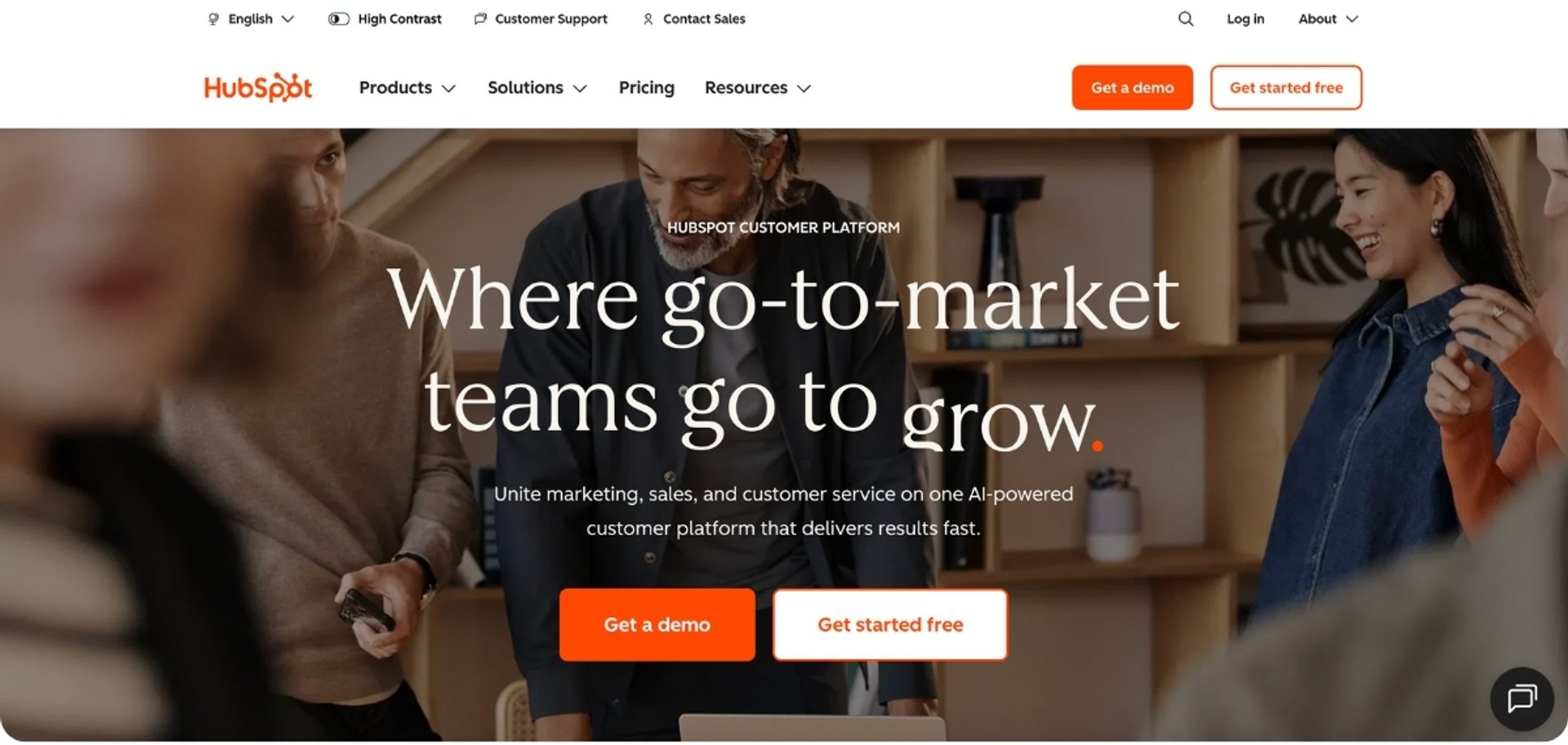
HubSpot is designed to give teams a centralized system for managing the entire customer lifecycle.
- All-in-one platform for marketing, sales, and CRM: HubSpot brings together email marketing, automation, landing pages, forms, CRM, and customer service tools into a single ecosystem. This makes it easier to manage customer data and coordinate activity across teams—something that requires multiple tools with Constant Contact.
- Stronger automation and inbound marketing capabilities: HubSpot enables multi-step workflows, lead nurturing, and campaign tracking across channels. Compared to Constant Contact’s basic automation, it provides a more structured approach to inbound marketing, with tools for content, lead capture, and lifecycle management.
- Advanced analytics and customer visibility: HubSpot offers detailed reporting across campaigns, pipelines, and customer interactions. This gives teams a clearer view of performance and ROI, whereas Constant Contact’s reporting is more campaign-level and limited in scope.
- AI embedded within the CRM ecosystem (Breeze): HubSpot’s AI layer is designed to support productivity across marketing and sales workflows, helping with content creation, data enrichment, and insights. Its value increases as you adopt more of HubSpot’s ecosystem, though advanced functionality may require higher-tier plans and additional usage-based costs.
HubSpot solves many of the limitations that push teams away from Constant Contact—but introduces a different tradeoff. Its modular “hub” structure, onboarding requirements, and pricing tiers can make it much more complex and expensive to scale, especially for teams that don’t need every part of the platform.
Across review platforms, HubSpot is widely praised for its powerful features and polished user experience. At the same time, users frequently highlight rising costs and complexity or data delays as their usage expands.
HubSpot Marketing Hub is extremely powerful as a central GTM operations layer. As someone running growth systems and AI-driven outbound programs, what stands out is how flexible the platform is for orchestrating workflows, signals, and integrations. The workflow engine, while powerful, can become difficult to manage at scale. When you have many automation flows running across different teams, debugging and maintaining them can get complex.
| HubSpot | Constant Contact | |
| Which businesses choose this platform? | More often chosen by growing, sales-first teams that want a full CRM-driven platform across marketing, sales, and service. | More often chosen by small teams focused on simple email campaigns without broader system needs. |
| Pricing & value over time | Limited free plan available. Paid plans start at $9/seat/month to access basic email marketing features for 1,000 contacts. Core marketing features like automation and advanced reporting are only available for Professional users at a steep jump to $800/month. This plan also requires a $3,000 one-time onboarding fee. | Free trial available. Paid plans start at $30/month for 1,000 contacts. Pricing scales more consistently with contact list growth. |
| AI tools | Breeze AI tools cover CRM, content and service workflows. These are aimed at making teams faster and smarter inside the HubSpot system of record. Advanced AI features that interact with data are tied to higher tiers and also require the purchase of usage-based credits, making access and costs less predictable. | Basic AI assistance focused on content and email campaign creation. Available to users on all plans. |
| Templates | Text-only email templates available, mostly with a sales and follow-up focus. | 200+ email templates. |
| Integrations | 2,000+ native integrations. | 300+ native integrations. |
Want to see how HubSpot compares to ActiveCampaign? Read our deep dive comparison of ActiveCampaign vs. HubSpot.
GetResponse
GetResponse is a Constant Contact alternative for businesses that want to move beyond basic email campaigns and build more complete lead generation funnels within a single platform.
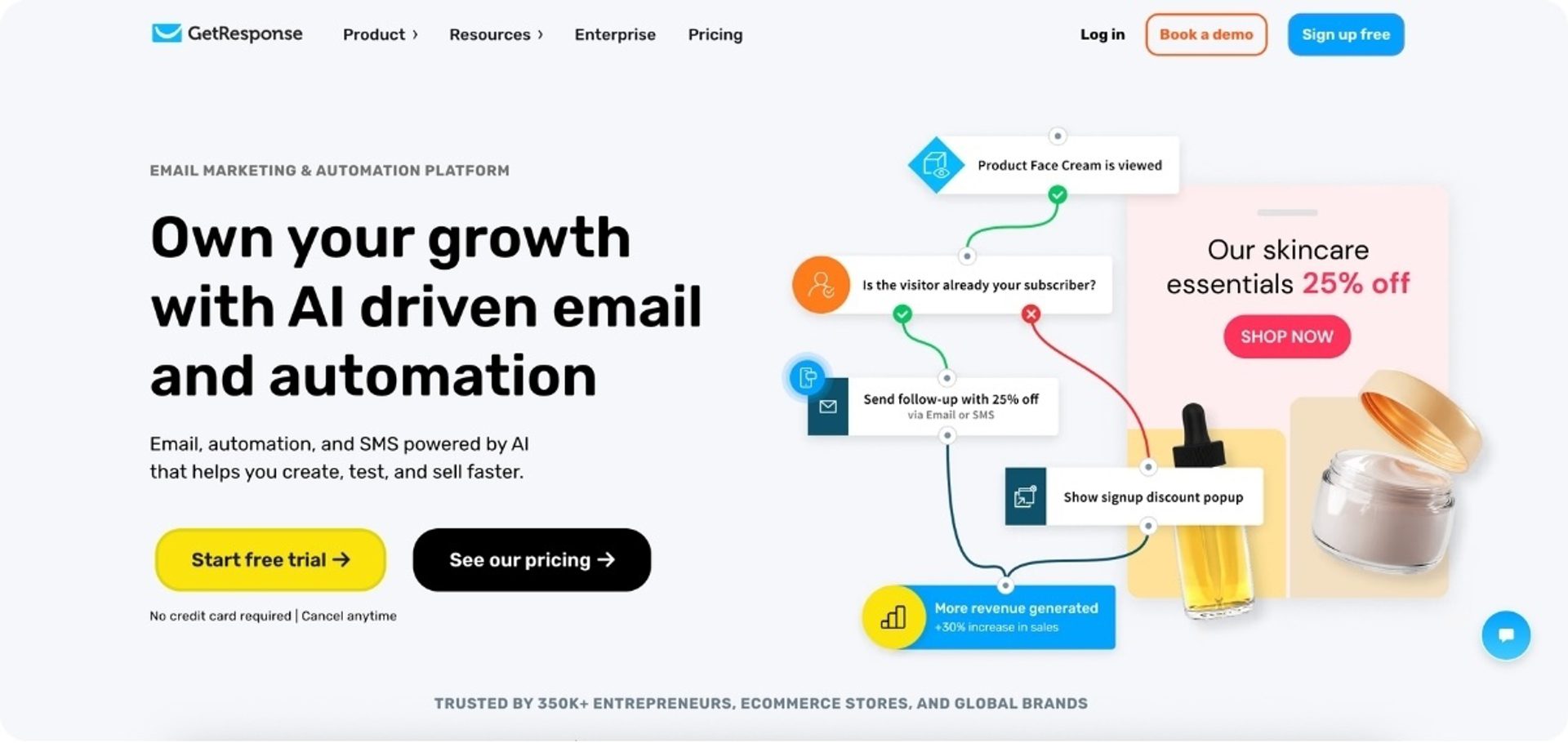
For businesses that want resources to drive conversions, GetResponse offers a more complete campaign-building toolkit.
- Stronger automation and funnel-building capabilities: GetResponse enables multi-step workflows, lead nurturing, and conversion-focused funnels that go beyond simple email sequences. Compared to Constant Contact’s more linear automation, it gives teams a clearer path to building end-to-end customer journeys.
- Built-in webinars and lead generation tools: One of GetResponse’s biggest differentiators is its native webinar functionality. Businesses can manage registration, reminders, follow-up, and nurturing in one place—something that would require multiple tools alongside Constant Contact.
- All-in-one toolkit for campaign execution: GetResponse combines email marketing, landing pages, forms, automation, and basic CRM features in one platform. This allows teams to manage more of the customer journey without needing to stitch together separate systems, which is often necessary with Constant Contact.
- AI tools for faster campaign and asset creation: GetResponse includes AI features that can generate emails, landing pages, and even full websites. These tools help smaller teams launch campaigns faster, though they are more focused on creation than ongoing optimization.
GetResponse expands significantly on Constant Contact’s capabilities, but that added breadth can introduce more setup and a steeper learning curve. If your main priority is simply sending email campaigns from an accessible UI, it may not be the right choice.
Across review platforms, GetResponse is often praised for combining multiple tools into one platform, particularly for lead generation and webinars. At the same time, users note that managing more advanced automations can take time to learn.
GR helps manage email marketing and lead generation in one place. Instead of using many different tools, everything such as emails, landing pages, and contact lists can be handled in one dashboard. Some advanced automation features may take time to learn for beginners.
| GetResponse | Constant Contact | |
| Which businesses choose this platform? | More often chosen by businesses that want built-in webinars, funnels, and stronger lead generation workflows. | More often chosen by small teams that need a user-friendly tool for email-first campaigns. |
| Pricing & value over time | Free trial available. Paid plans start at $19/month for 1,000 contacts. Higher tier plans unlock stronger features. | Free trial available. Paid plans start at $30/month for 1,000 contacts. Pricing scales based on contact list growth. |
| AI tools | AI tools focus on generating emails, landing pages, and websites quickly. | Basic AI assistance focused on content and email creation. |
Want to see how GetResponse compares to ActiveCampaign? Read our deep dive comparison of ActiveCampaign vs. GetResponse.
How to pick the best Constant Contact alternative for your team
Most teams don’t leave Constant Contact because it’s broken. They leave because it stops being enough. Choosing a Constant Contact alternative is about deciding how you want your marketing to evolve.
Don’t just look for a slightly better newsletter tool. Choose a platform that supports how your marketing will work a year from now—especially as you move toward more automation, personalization, and measurable revenue impact.
When comparing platforms, focus on how each one solves the specific limitations you’ve likely already run into:
- Automation depth: Constant Contact is built for simple sends and linear automations, which makes it difficult to run true lifecycle marketing. Look for platforms that support multi-step, behavior-driven journeys that adapt automatically as customers engage.
ActiveCampaign is built for businesses that have outgrown broadcast email. Its automation engine uses branching logic, reusable segments, and cross-channel triggers to create always-on campaigns that scale without manual rebuilds.
- Segmentation and personalization that actually scale: Static lists and basic filters make it hard to deliver relevant messaging as your audience grows. The right platform should let you segment dynamically based on behavior, engagement, and lifecycle stage.
ActiveCampaign uses real-time, behavior-based segmentation that updates automatically—so personalization becomes part of your system, not something you rebuild for every campaign.
- Pricing and long-term value: Constant Contact has a surprisingly high entry cost compared to other simple email tools. Many teams also end up paying for additional tools to fill gaps in automation or CRM. Look for a tool that pays back from day one.
ActiveCampaign delivers value earlier, with accessible pricing that is sustainable as you grow. Core features like automation, segmentation, CRM, and AI are available from early plans, so you can think big right at the start of your strategy.
- Integrated sales and marketing: Constant Contact lacks a meaningful path to CRM and revenue tracking, which makes it harder to connect campaigns to outcomes. As teams grow, this often leads to adding and managing separate systems.
ActiveCampaign balances a native CRM with flexible marketing automation in one platform. Marketing and sales share the same data, workflows, and triggers—so you can manage the full customer lifecycle without switching systems later.
- AI that actually reduces manual work: Many basic platforms offer AI for content generation, but that doesn’t solve the underlying issue of manual campaign setup and optimization. Look for AI that helps execute and improve campaigns—not just write them.
ActiveCampaign’s AI-native approach helps plan, build, and optimize campaigns end-to-end, reducing the manual effort that teams often experience as they outgrow simpler tools.
Migration is another factor that’s easy to underestimate. If you’re switching platforms, you won’t just be moving contact lists. Keep in mind how you’ll preserve your campaigns, automations, and structure so your team can keep operating without disruption.
Here’s how each of the platforms in this list approach seamless migration:
- ActiveCampaign: Offers free agentic migration, including data migration on qualifying plans for contacts, lists, automations, and templates. Additional support includes:
- Agentic onboarding
- AI chatbot
- Email support
- Self-serve resources including a Help Center and Community
- Certified consultants for strategy support
- Educational resources like webinars, courses and in-person training events
- Moosend: Supports simple imports and onboarding with a self-serve approach, making it easy to get started but less hands-on for complex migrations.
- Mailchimp: Offers straightforward import tools and integrations, but more advanced automation and structure typically need to be rebuilt manually.
- Brevo: Provides import tools and integrations to help move contacts and campaigns, though migration is more self-serve and may require rebuilding workflows.
- HubSpot: Migration can be more complex due to its multi-hub structure, often requiring additional setup to fully operationalize the platform. Onboarding also comes at a cost for their functional marketing plans: $3,000 for smaller businesses, while larger enterprises may pay $7,000+.
GetResponse: Provides migration guides and onboarding support, with more structured assistance available on higher-tier plans.
The best Constant Contact alternative is the one that aligns with how your business expects to grow—not just the one that looks better on a feature checklist.
If you want a simple upgrade with slightly more flexibility, tools like Mailchimp or Moosend may be enough.
If you want to expand into multichannel communication, Brevo offers a broader but still accessible platform.
If you’re building full-funnel campaigns with webinars and lead generation, GetResponse may be a strong fit.
But if your goal is to move beyond manual campaigns and build scalable, automated marketing that connects directly to revenue, ActiveCampaign stands out:
- Best for advanced marketing automation without complexity: Built for teams ready to move beyond newsletters into full lifecycle marketing.
- Best for value as your strategy grows: Delivers deeper capability at every stage, without forcing you to stack additional tools.
- Best for long-term scalability: Combines automation, CRM, and AI in one system, so you won’t need to switch platforms again as your needs evolve.
Based on a survey of over 450 customers:
- 88% said ActiveCampaign delivers value faster than competitors.
- 77% report better lead generation and conversion.
- 67% saw ROI within 6 months.
- 68% said it helped reduce the cost to acquire, convert, and support customers.
If you’ve outgrown basic email tools, it’s time to switch to a platform that actually scales with you. Start your free ActiveCampaign trial today.
Related alternatives lists:
FAQs
How does ActiveCampaign compare to Constant Contact in terms of ease of use for beginners and new users?
Constant Contact is an easy-to-use tool for absolute beginners focused on simple newsletters. However, ActiveCampaign is designed to stay easy as your marketing becomes more complex. Its focused, intuitive interface, AI-powered, visual automation builder, agentic workflows, and prebuilt templates/recipes reduce setup time so you can launch your first campaigns in minutes.
How does ActiveCampaign’s pricing compare to Constant Contact?
ActiveCampaign offers transparent, scalable pricing that includes automation, segmentation, CRM, and AI in earlier plans, so you can make use of powerful features from day one. It’s also more modular at the high end, so businesses can start with core marketing automation and add capabilities like sales engagement or transactional email later—only when there’s a clear use case and the ROI justifies it. You get more value for your investment through time savings, increased revenue, and the ability to scale your marketing without hidden fees or forced upgrades.
Are there resources or onboarding services to help me get started quickly with ActiveCampaign?
ActiveCampaign plans include free agentic onboarding and migration that help you set up quickly and confidently. All customers also have access to an extensive library of educational materials, video guides, and a supportive customer community. This ensures you can hit the ground running, whether you’re starting fresh or transitioning from another platform.