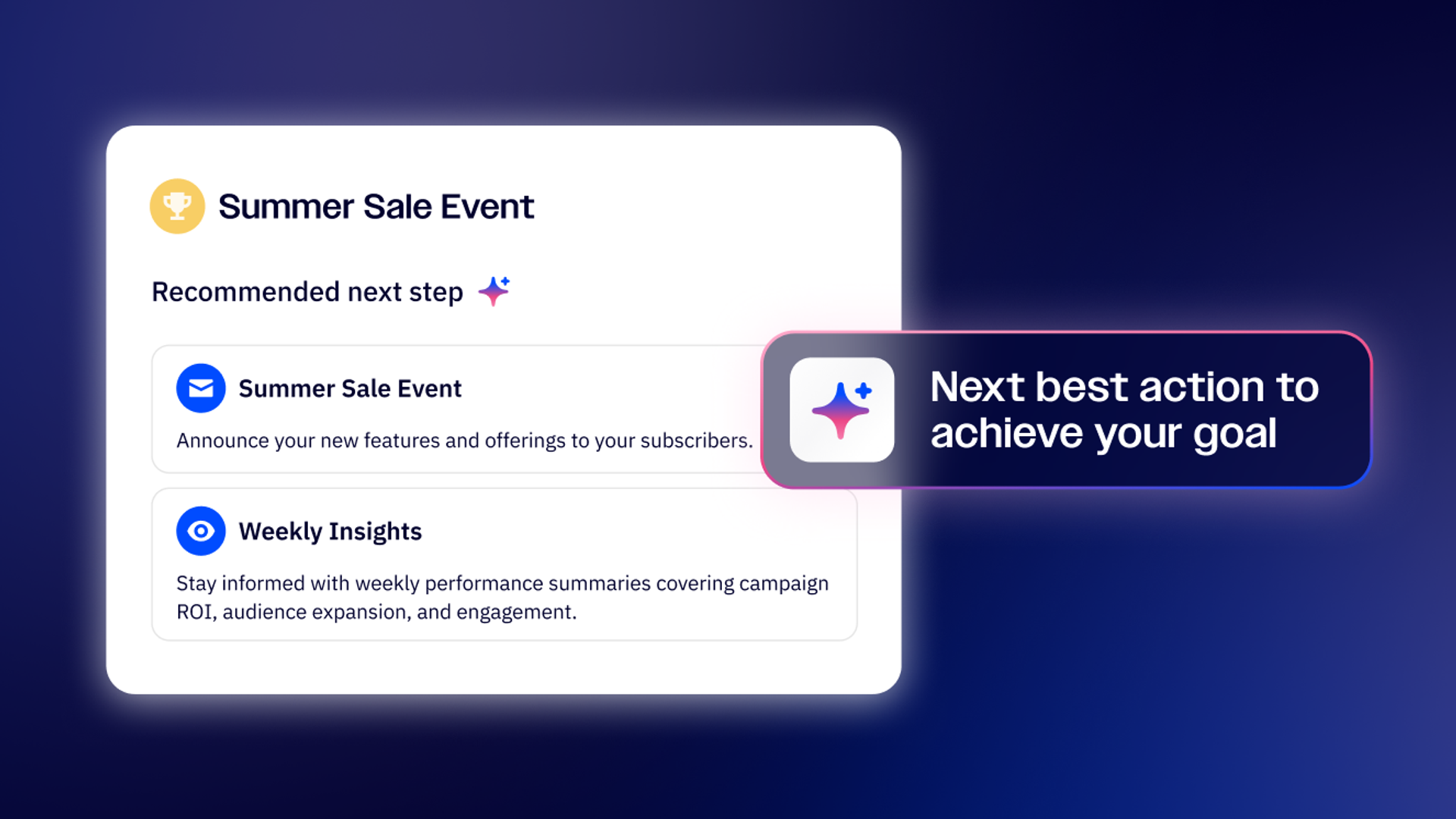
In the push to become more data-driven, marketers find themselves inundated with more data than ever before. We’ve built sophisticated dashboards and tracking systems, implemented analytics platforms across every touchpoint, and generated reports like it was our job. But in spite of all this information, a fundamental question still haunts most teams: What actually drove that conversion?
Modern marketing analytics has given marketers more data than ever but less clarity about what’s working. As a result, marketers often find themselves performing what amounts to data theater—creating impressive displays of statistics and metrics that fail to answer the most pressing business questions.
Where traditional analytics fall short
The analytics landscape of today creates a “black box” problem for marketers. Teams invest significant resources into campaigns only to struggle to draw the line from their efforts to business revenue. To support a product launch, you might host a webinar series, build an email campaign, and engage prospects across your social channels. But when you successfully close a deal several months later, how do you know which activity influenced that customer’s decision?
The disconnect between top-of-funnel activities and bottom-of-funnel results can hurt confidence in marketing decisions, making it even more challenging to optimize effectively. That problem compounds when you realize most marketing technology is fragmented, with campaigns living in one place, automations in another, and forms scattered across multiple landing pages.
This means teams find themselves spending more time preparing reports instead of acting on those insights. By the time they’ve assembled data from siloed sources, the moment for adjustments has usually passed. Marketing becomes reactive instead of proactive, putting teams at a significant disadvantage.
Moving toward goal-oriented intelligence
The most successful marketing organizations are making a fundamental shift, transforming how teams organize their work, measure progress, and align their goals with business outcomes.
With an intelligent business operating system like ActiveCampaign’s Business Goals, marketing activities are organized around business goals instead of asset types. This provides real-time visibility into the progress you’re making toward those goals and offers specific recommendations when performance isn’t on track.
Instead of managing campaigns and automations as separate initiatives, tools like Business Goals lets you group all those activities under the same business objective. Similarly, goal-oriented intelligence enables you to track campaign performance in real-time so you can make adjustments on the fly. For example, if you’re trying to grow your subscriber base to a certain number by the end of the month, Business Goals can help you monitor your progress and provide suggestions to help you reach your goals.
This turns your marketing efforts from a series of launches followed by a post-mortem into a dynamic practice of continuous improvement.
Transforming your marketing outcomes with Business Goals
Imagine you’re gearing up for a new product launch. Your marketing activities likely consist of things like an announcement campaign, a multi-step nurture automation, multiple landing pages with demo or trial forms, and a webinar series. With traditional marketing platforms, those activities are all tracked individually. With Business Goals, you can see how all of those initiatives are contributing to your overall target.
Business Goals isn’t just about multi-touch attribution modeling. At its core, it’s about organizing your marketing around what matters to your organization and understanding in real-time if you’re going to achieve it. With Business Goals, marketers benefit from:
- Faster, more informed decision making: Make strategic adjustments in days, not weeks, and with confidence knowing you can see the clear connection between actions and business outcomes.
- Reduced time and manual work: Eliminate hours spent on manual report creation and analysis thanks to AI that turns complex data into actionable insights.
- Improved goal achievement: Hit your targets more consistently with AI recommendations that inform your next move and keep your goals on track with real-time performance monitoring.
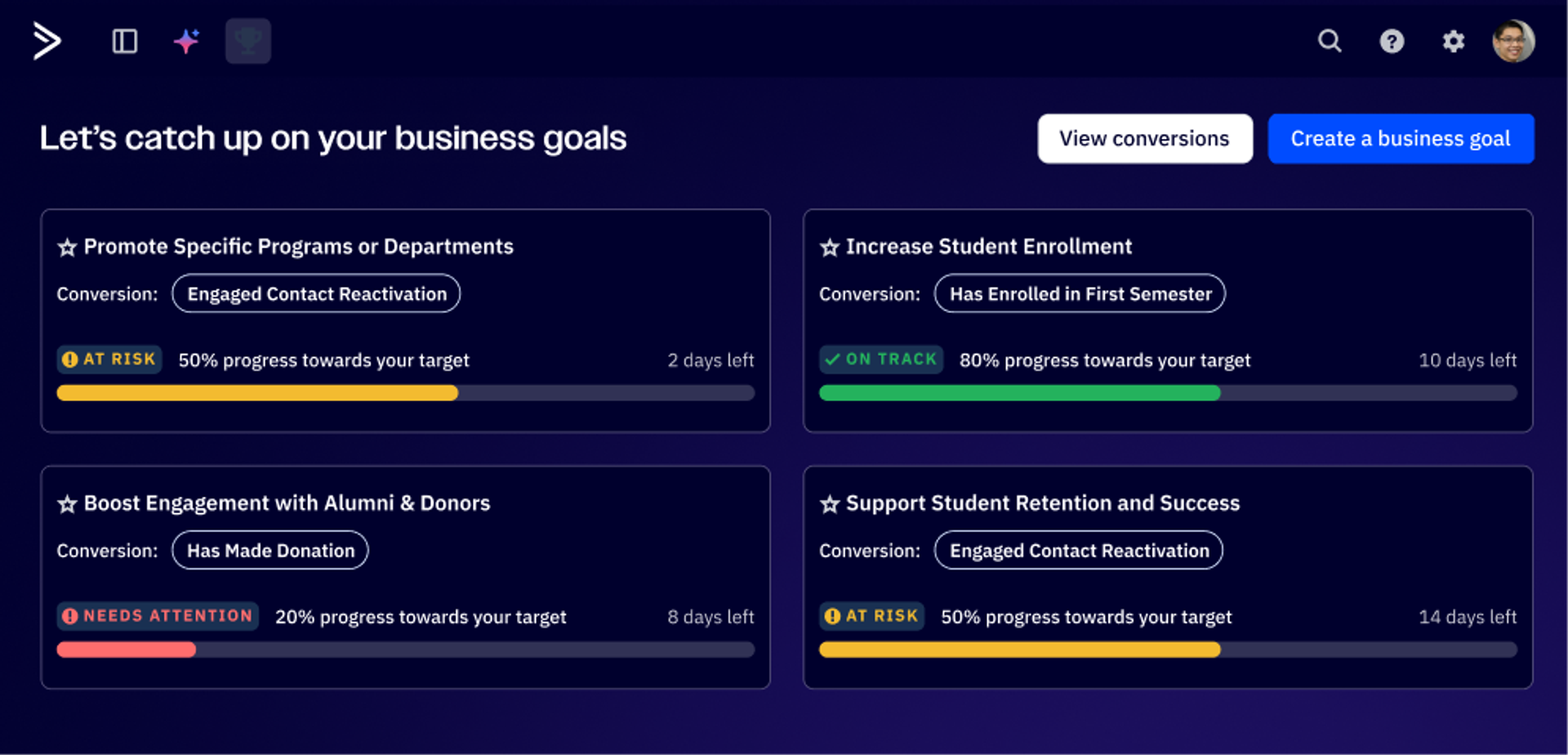
ActiveCampaign’s Business Goals dashboard tracks progress on four key institutional objectives with real-time status indicators and deadline countdowns.
This transformation can be seen in how teams operate day-to-day. Instead of launching campaigns and hoping they’ll drive bottomline results, marketers gain immediate visibility into whether or not their grouped activities are on pace to hit their targets.
Marketers can create Business Goals and apply this goals-driven approach to a variety of scenarios, including:
- Online education: If your goal is to increase student acquisition for an online course, group enrollment-related activities like course preview automations, registration forms, and reminder broadcasts under one unified enrollment goal.
- Consultancies and agencies: Build a lead generation goal where you can organize activities like thought leadership campaigns, request automations, contact forms, and follow-up sequences to measure the number of qualified leads they provide.
Moving toward a new era of business intelligence
The shift from activity-based reporting to goal-oriented intelligence is more than an incremental improvement. It represents a fundamental shift in how marketers operate, transforming marketing from a reactive function into a proactive practice.
That means teams can recognize when a business goal is trending below target and adjust the different levers contributing to that goal before the campaign ends. Marketers can also identify and replicate patterns that are working, add additional supporting activities, and refine messages instead of conducting post-mortems on missed targets.
More importantly, tools like Business Goals help democratize strategic visibility across the entire organization. Historically, marketers were tasked with compiling data from multiple sources and distributing their team’s updates via monthly or even quarterly reports. With Business Goals, anyone can access real-time dashboards and see how the marketing team is progressing toward their targets.
The benefits of increased visibility extends beyond a single campaign. Organizing marketing around business outcomes means marketers can justify their activities, drawing a clear line between marketing and revenue results. And with AI-powered recommendations, marketers can further translate their performance data into concrete actions, helping teams improve their activities without requiring advanced analytical capabilities.
The end of data theater
Complex dashboards may look impressive but mean little if they don’t answer whether or not you’re achieving your goals. Marketers are swapping out static reports for actionable guidance, real-time visibility, and insights that help them understand collective progress toward what matters most.
The question is no longer if you have enough data or launched enough campaigns. It’s whether or not your marketing is organized around the outcomes that drive revenue and if you have the intelligence to achieve them. By grouping marketing activities under one unified goal, marketing becomes what it always should have been: a strategic and creative driver of measurable business growth.