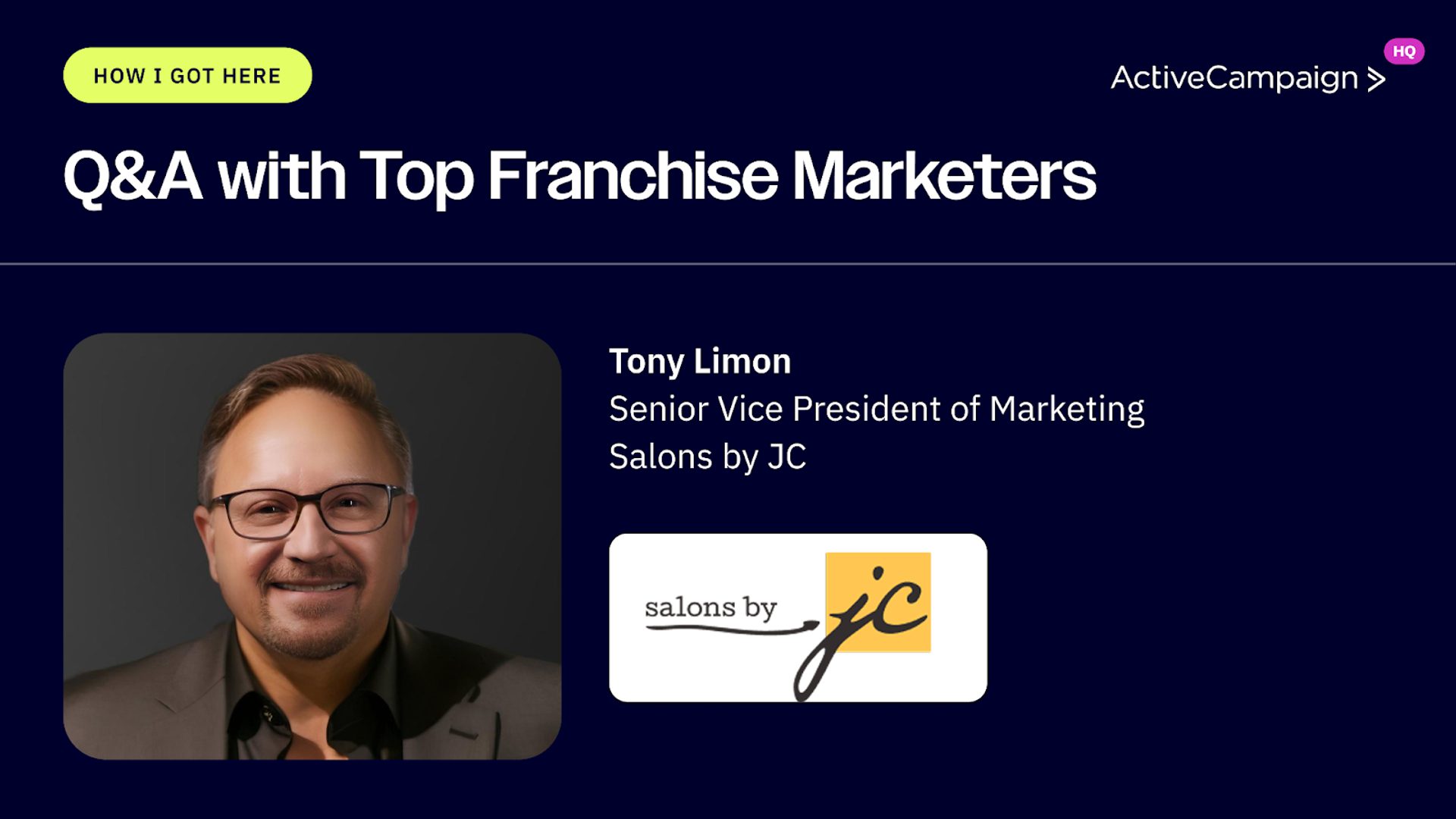
Tony Limon has spent most of his decades-long career working in traditional marketing roles at Fortune 500 companies, including Pepsi Co., 3M, and AMD. Equipped with an MBA in marketing, he’s experienced in a range of industries, from technology to financial services, but it wasn’t until he became a partner at a digital agency that Tony was first introduced to the world of franchise marketing. It was in this client-facing role that he learned how franchise relationships work from both an operational and marketing perspective.
Fast forward to 2021, Tony’s career presented him with an opportunity to move back to his hometown of San Antonio, Texas, to join salon suite franchise company Salons by JC as the Senior Vice President of Marketing. Tony oversees the marketing and digital operations for 160 locations across 26 states and in Canada.
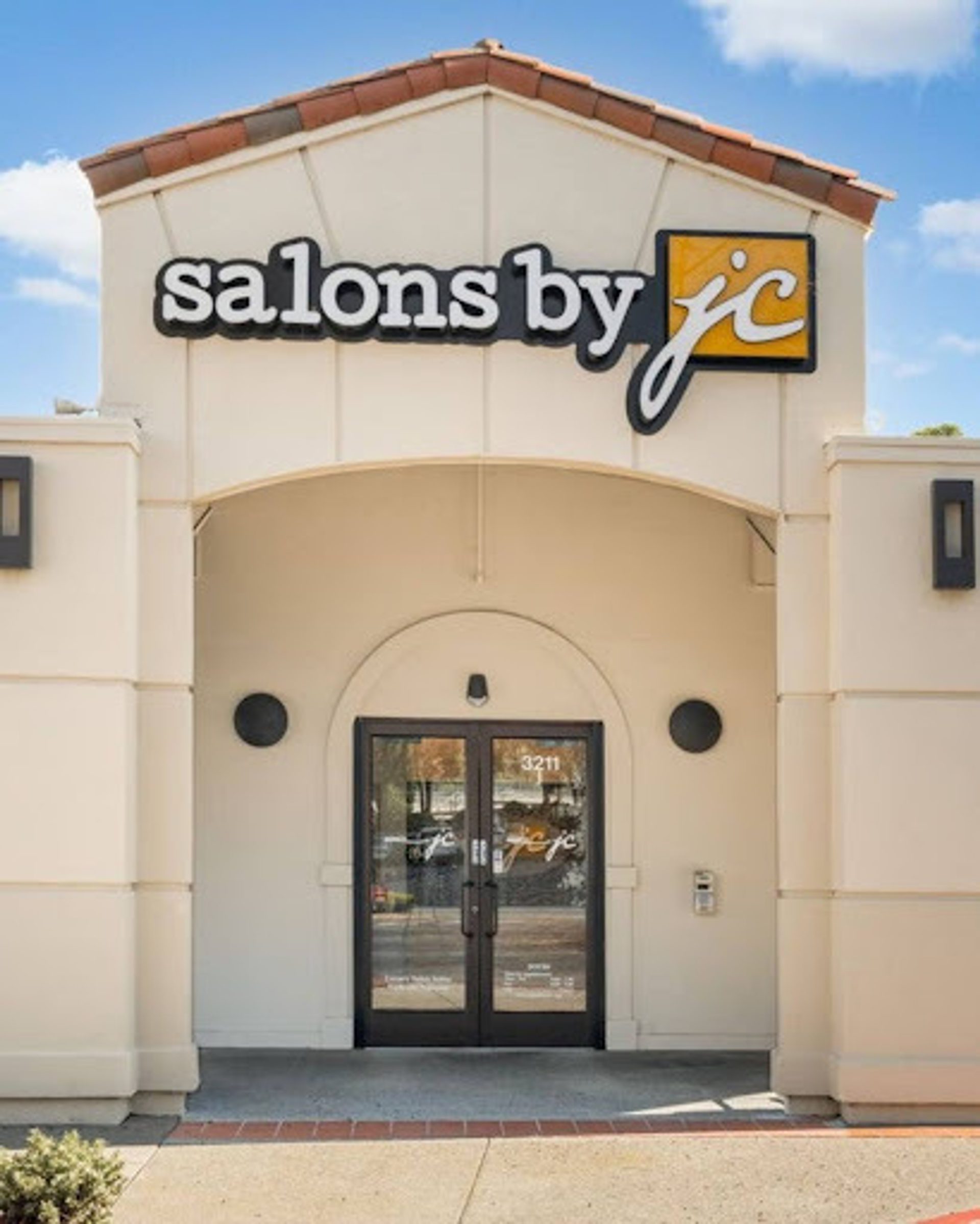
Image shows a typical JC Salons storefront (source)
A salon suite is a private, individual salon room that solo beauty professionals can rent and run their businesses from. The suites are located within a larger complex that houses anywhere from 40-75 suites in one building. Think of it as a “WeWork for beauty professionals,” suggests Tony.
Salons by JC gives franchisees an opportunity to own a salon building and earn multi-unit rental income from salon tenants. This model puts Salons by JC in a unique position to market to both franchise owners and beauty industry entrepreneurs who want to start an independent business.
In this conversation, Tony shares the importance of cultivating collaborative relationships with franchisees, how the company used digital insights to realign their brand, and the exclusive role the company developed to create a high-touch customer experience.
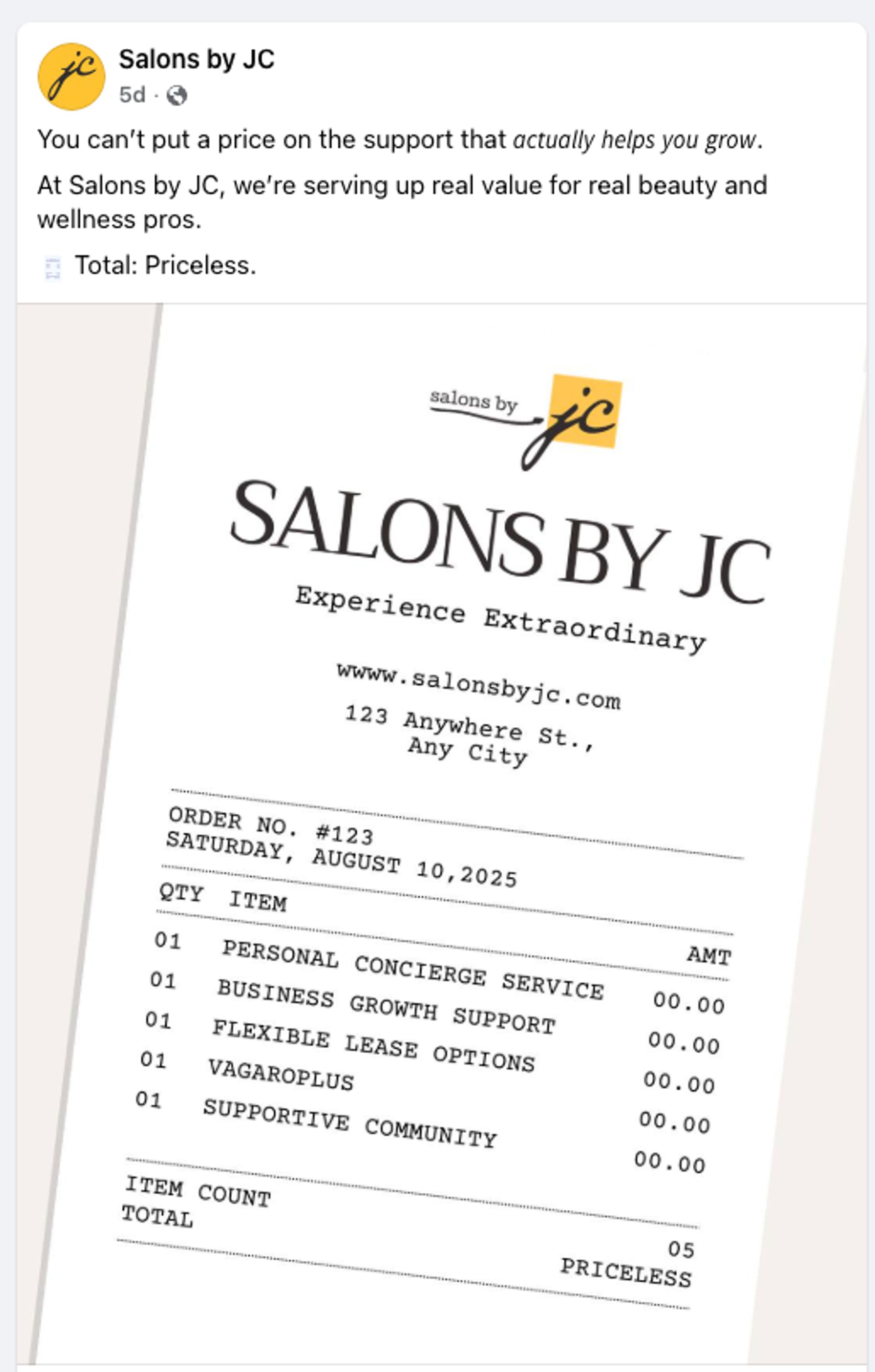
A Meta ad communicating the value to salon tenets
Coming from a more traditional marketing background, what have been your biggest learnings about franchise marketing since joining Salons by JC?
In traditional companies where I came from, everyone’s unified, whether you have total buy-in or not. With franchisees, it’s more collaborative. They have to be a part of the process, and they have to be considered in everything you do.
I’ll give you an example. When I first started here, we were trying to launch a CRM. A CRM is a central piece of a good marketing foundation because it houses your leads and allows you to interact with them. Had I been in a traditional company, rolling out a big initiative like a new CRM would have had a much faster adoption among employees.
With a franchisee group, it took us about a year and a half before we had any type of significant adoption. Because it’s not just about the rollout, but also getting people to use it, and training them to use it right.
My biggest takeaway from that rollout was the importance of tiered execution. When you are thinking about an initiative, you have to think about it differently. Do I beta test it in our corporate locations first? Or do I go to my biggest franchisees and then phase it out to everyone else? You've got to think through all of these dynamics and layers, because you've got a very fragmented system with people of different backgrounds and different levels of understanding.
To give you some context, a third of our franchisees come from the corporate world, and this is their semi-retirement plan. About a third of them were franchisees for other businesses, and they want to diversify their portfolio. And then another third are entrepreneurs who are trying to build businesses. The way each one of them thinks about how they're going to take what we offer them and implement it in their own location is going to be different, and you’ve got to speak to them and lay things out in the manner that makes sense to them.
"My biggest takeaway from that rollout was the importance of tiered execution... you've got a very fragmented system with people of different backgrounds and different levels of understanding."
When you launch new initiatives or campaigns, how do you communicate and collaborate with franchisees? Are they required to implement new systems you introduce?
In our franchise agreement, franchisees are required to offer anything we put out in terms of products. But before rolling out anything new, we usually beta test everything with our corporate-owned locations.
We have 16 company-owned salons, and the beauty of that is we always test new things there first. Once we’ve built a case, then we go to our early adopters. These are usually people who own multiple locations, who are actively involved in the corporate business, and are on one of our councils, like our marketing council. By working with them next, we have a business case, not just from us, but from them – and they're naturally influencers to the other franchisees.
So then the last phase of the rollout becomes easier because franchisees talk to Joe Smith who's knocking it out of the park at his location, and it's not just corporate telling them what to do. Our phased rollouts have been successful. For example, we saw a 15% increase in lead conversion in the quarter following our CRM implementation, which we attribute to better lead nurturing capabilities.
The franchise councils sound like an interesting concept. What role do they play in the company? How do franchisees get involved?
We have a marketing council, a branding council, and a couple others, and the councils help franchisees have a voice and give them an opportunity to shape the company.
We choose who we want to join the councils. The way we usually choose is we look at franchisees who are excited about being part of the brand. We also look for people who are successful, and success means building occupancy. If somebody is at a minimum of 90% occupancy in most locations year after year, they're doing something right. It’s a symbiotic relationship – we’re learning from them as much as they’re learning from us.
And of course, we do special things for them, too. For example, we have conferences everybody has to attend, and we'll usually pay for the council members to fly out and for their room as a thank you for what they're doing. We also have a Franchisee of the Year award that’s based on occupancy rate.
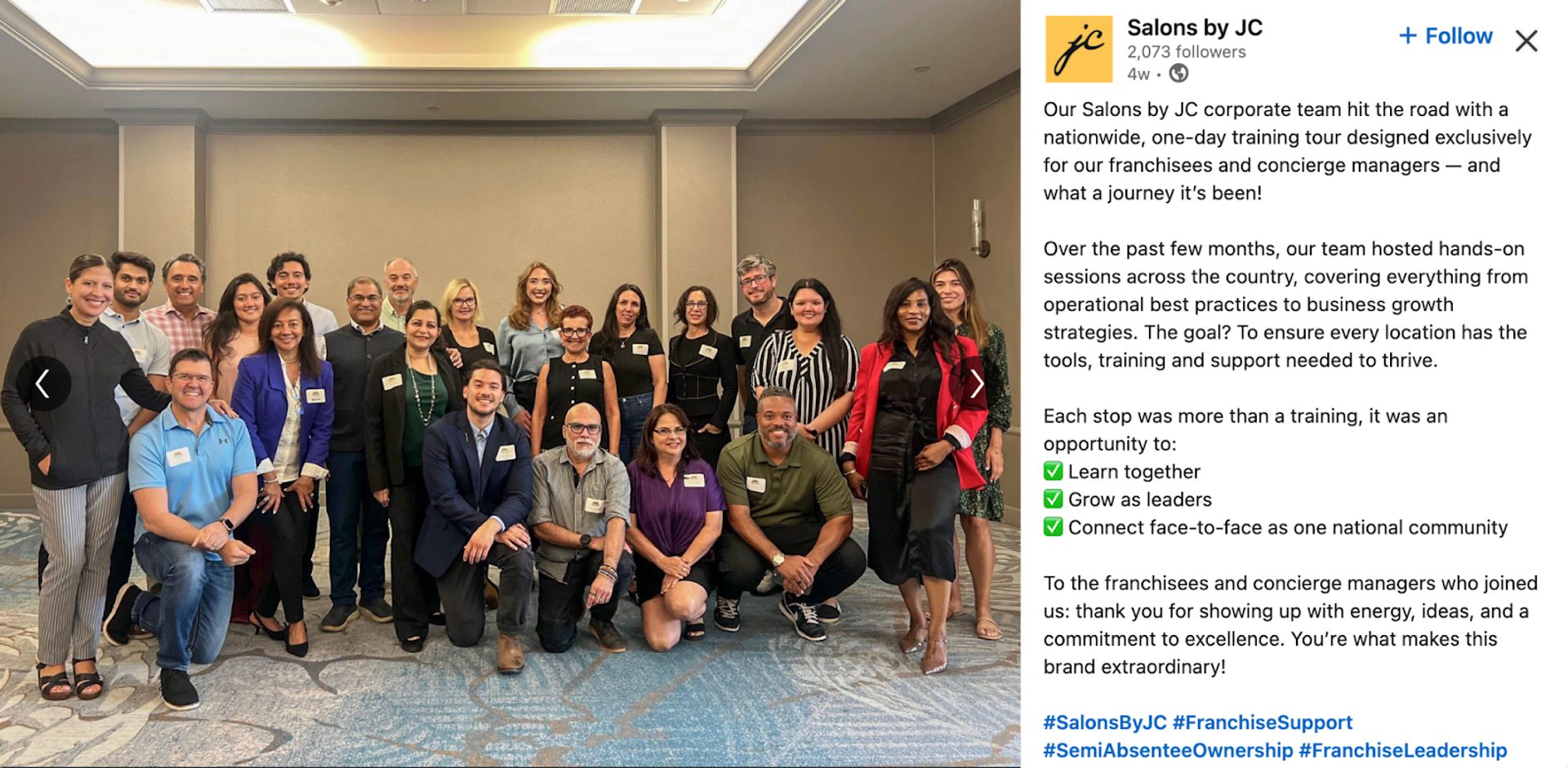
A franchise council gathering (source)
Essentially, the council members are bought into the brand because we listen to them and they're actually helping us drive the vision of the company. So it's no wonder then that when we ask them to communicate things to other franchisees, they're more than willing to do it because they understand the value proposition, and they can communicate it very authentically and in a way that we probably couldn't.
On a similar note, how do you maintain consistency around branding and messaging among your franchisees?
Branding is critical, and it's much more delicate in the franchisee world because you’re trying to manage all of these different backgrounds and people who also have their own ideas and who may need to adapt to their own marketplace.
For us, we make sure that we’re always selling the brand, giving clear guidelines, providing vision, and making sure that they're on board with that. We give franchisees some flexibility to be entrepreneurial, but with guardrails. And most of the guardrails are from a branding standpoint.
When a franchisee is getting onboarded, we take them through what we call Salon Fundamentals, which is a training course that includes marketing training. In the marketing training, the very first module is branding. We try to emphasize the significance of brand consistency.
It's much more delicate in the franchisee world because you’re trying to manage all of these different backgrounds and people who also have their own ideas.
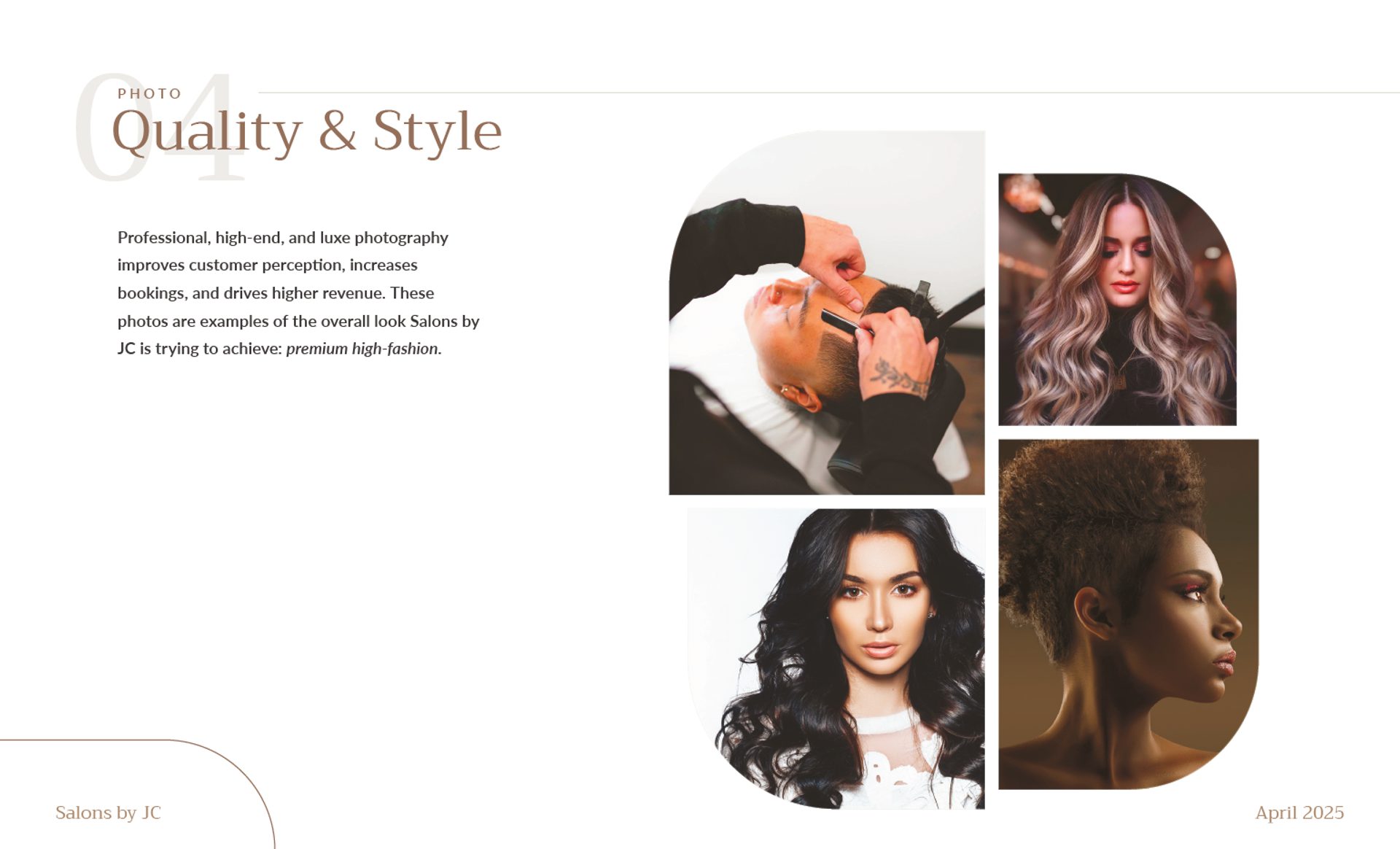
An example of Salons by JC’s brand guidelines
We give them examples, like, “Here's what it should look like when you run an ad.” We also let them know that we periodically check their social media pages and conduct monthly audits to make sure the content aligns with our branding. Once a year, we also host a branding webinar to refresh their knowledge and keep things up to date.
How do you help new franchise locations get up and running from a marketing standpoint?
Every location has one employee called a “concierge” who is essentially the salon manager. They're the ones who give tours and greet clients, but they’re also the ones who are updating the CRM and posting on Instagram.
During a location’s first year – we call this the “Momentum Phase” – we do things to support franchisees, like advertising about six months before the site is going to be up and running. We also have the “Growth Phase,” which typically spans years two and three, focusing on scaling operations, and the “Maturity Phase” from year four onwards, emphasizing long-term brand loyalty and market penetration.
During the Momentum Phase, however, the location may not have a concierge yet. So, in order for them to have some sort of social presence, we will post for them. It’s usually the same content we post on the corporate pages. The idea is that at the end of the year, we completely stop broadcasting posts on their page, and it’s up to them to post content going forward.
As a salon franchise, I imagine your target customers are both franchisees and salon suite renters. How do you differentiate your marketing strategy for those different segments?
You're absolutely right. We have simultaneous targets. One target that's distinct and separate is investors who want to be franchisees. We have a separate website for franchising, which you can access either directly or through our main site.
Our other target customer is people who want to be suite renters. We primarily run ads on Meta, and these ads are all targeted to people in the beauty industry who are looking for independence and want to lease a suite of their own.
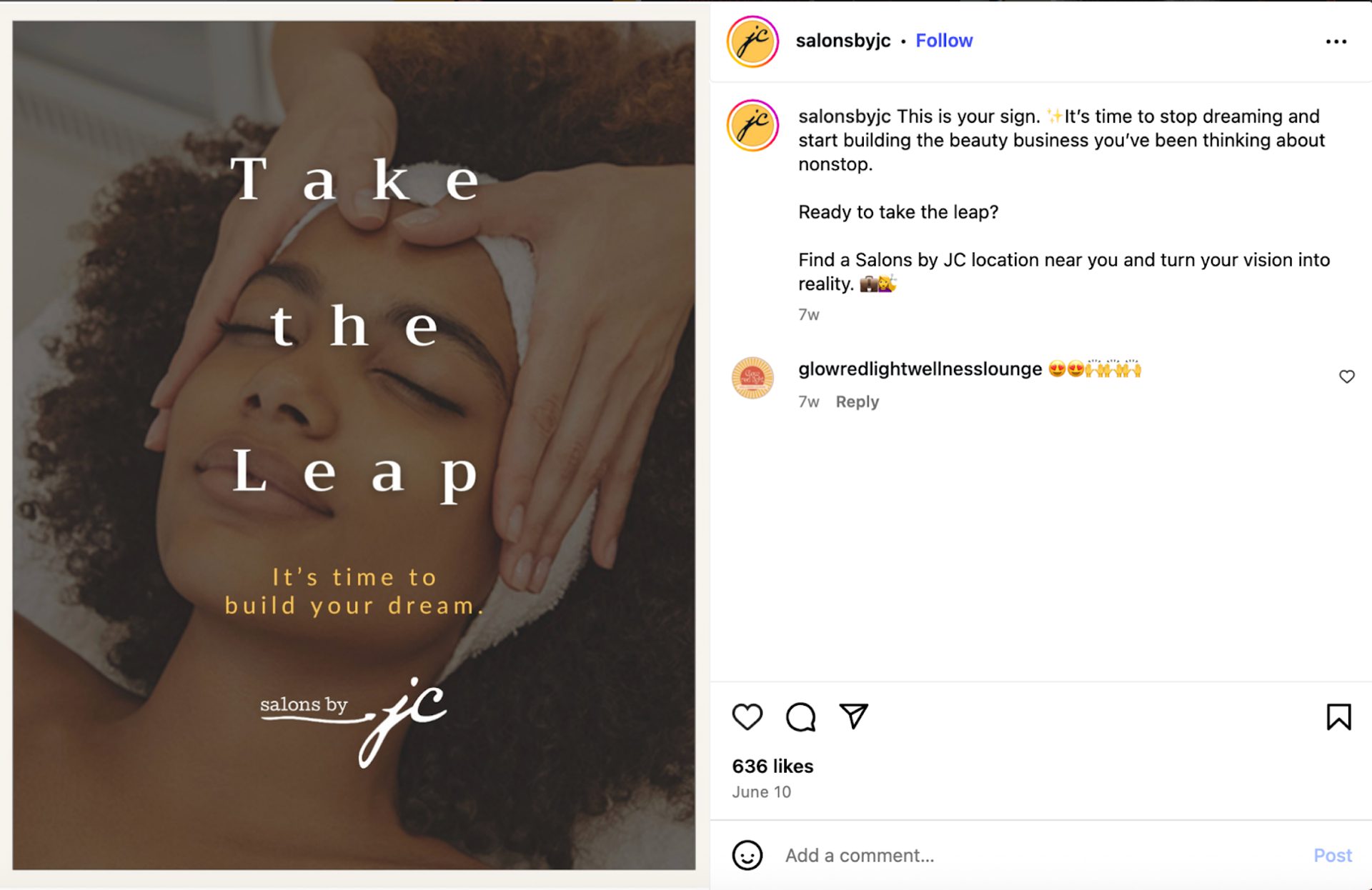
The salon tenants are our focus. We don’t advertise to their customers. (source)
The salon tenants are our focus. We don't advertise to their customers. For instance, somebody who might use a beauty service is never going to see an ad from us like, ‘hey, come get a haircut,’ because that's up to the tenant to market their own business.
However, we had a revelation a couple of years ago when we realized that over 60% of our website traffic came from people looking to book appointments or book services. We had to wise up to the fact that most people don’t know what a salon suite is. When they drive by a Salons by JC location, it just looks like a salon. They feel like they can pick up the phone and book an appointment.
We used that information to inform our branding direction, and what we’re trying to do now is blur the line between a luxury salon and salon suites. The way we're doing that is by connecting everyone in one salon with a centralized booking system, so if somebody wants to book an appointment, or call, or learn more, they can do that in one place.
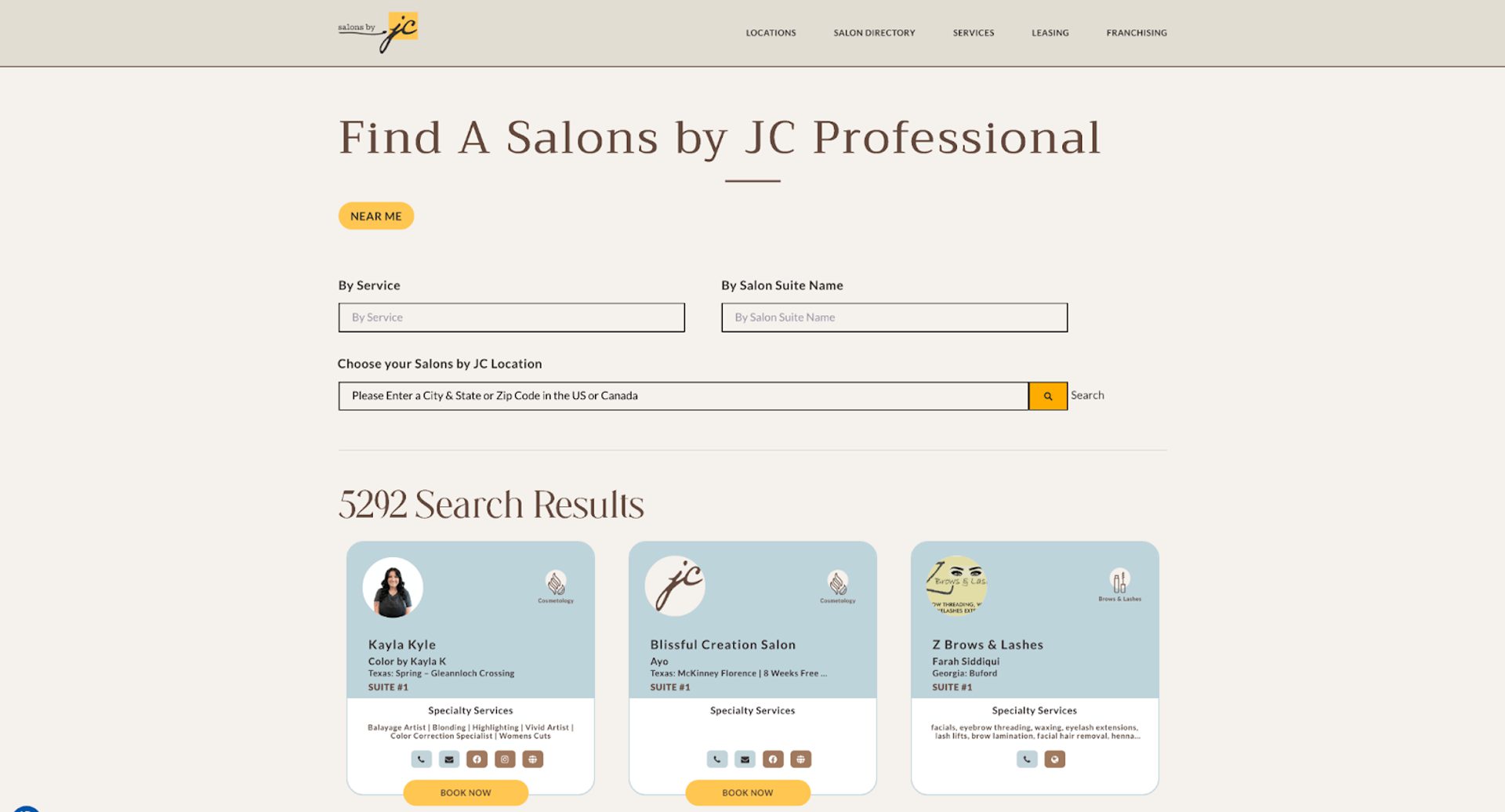
Salons by JC’s online directory of salon professionals
About a year ago, we also began a strategic partnership with Vagaro, a top booking software platform. We encourage salon tenants to use the booking system, and we’ve made it easier to adopt by offering them a program where they don’t have to pay for the software. Instead, all they have to do is add a 99-cent convenience fee to their client’s bill. After they complete 30 transactions, it pays for the software. Everything else after that is additional income directly to them.
By building this centralized system, it’s going to allow us to create a more connected feeling for people who walk by or call a salon.
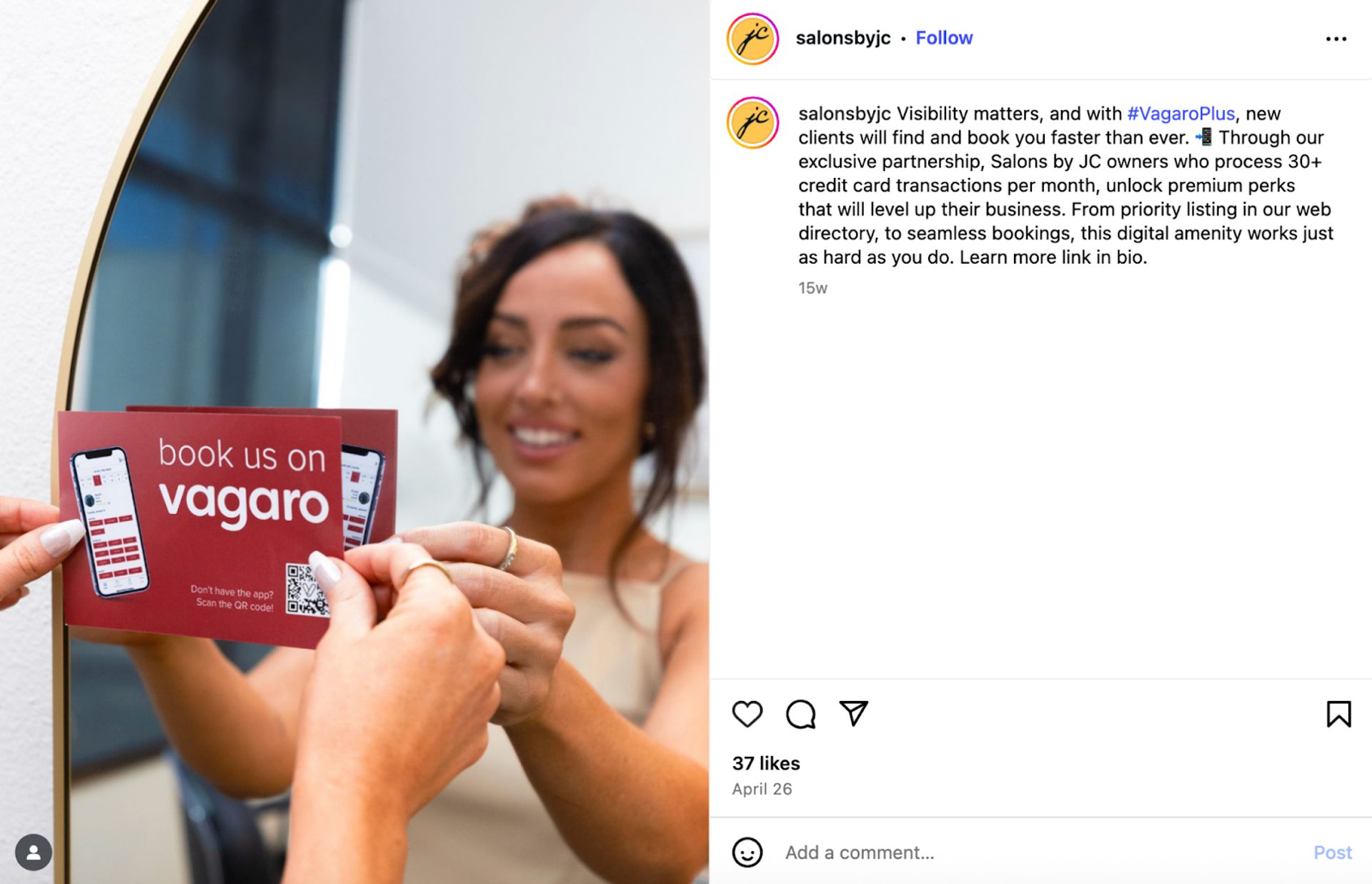
Highlighting a powerful integration offered by JC Salons (source)
Being in the self-care business, how do you ensure a high-touch customer experience?
The number one way is through our concierges. It’s a scary thing to go out on your own, so when salon suite owners have someone they can go to day after day, it’s a comforting feeling.
The concierges end up becoming like a best friend to everyone in the space. They also do a great job at creating community. They host mixers and events that encourage cross-collaboration, so when a client comes in to get their hair done and asks their stylist if there’s someone they know who can do nails, tenants can say, “let me introduce you to my friend over here.” It just becomes this web, and it starts with the concierge building that.
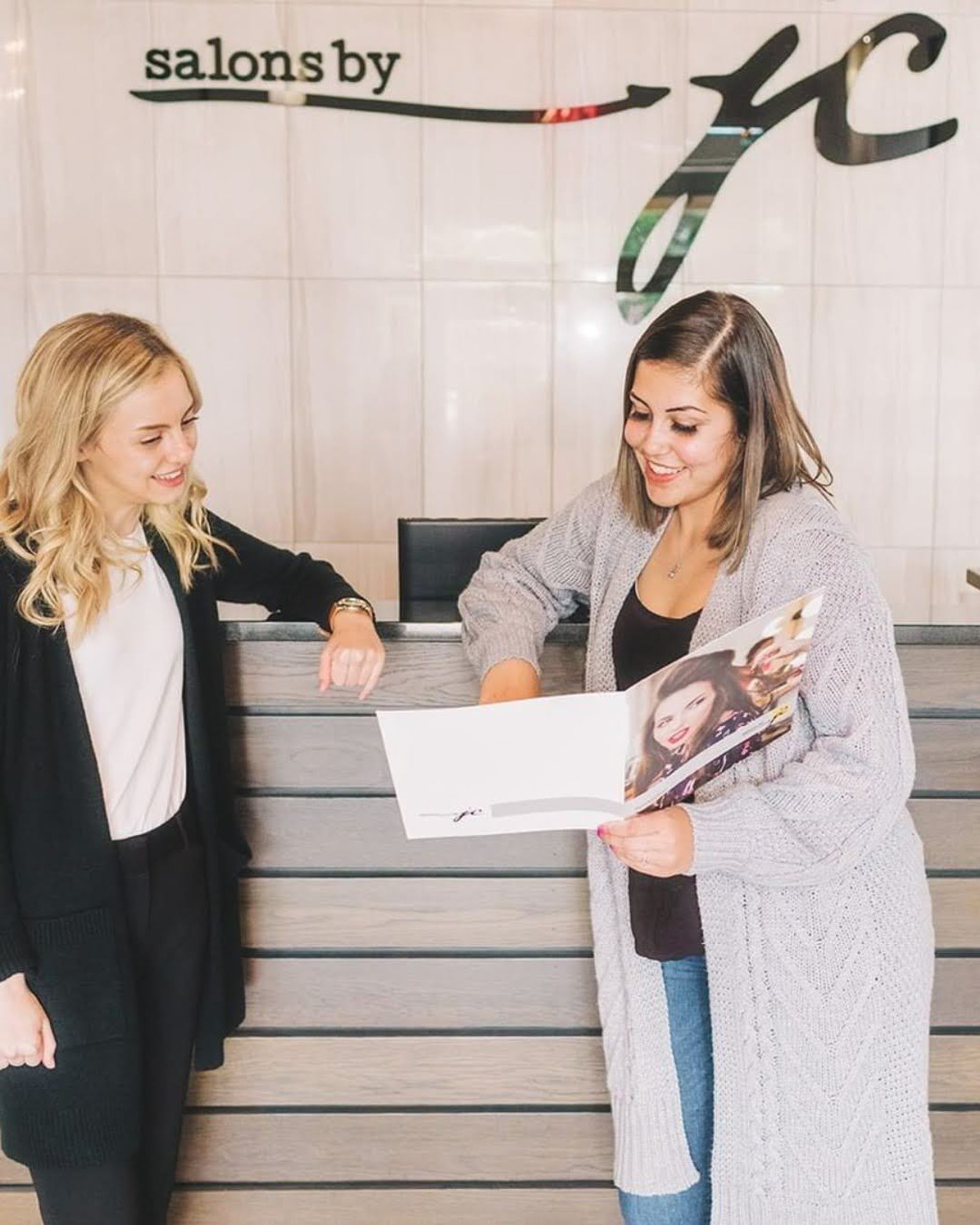
A concierge is a key part of their offering and brand (source)
And for the client experience, not only do concierges greet them and host them in a luxury waiting room, but on the way out, we ask them how their service was and what they liked about the location to help generate reviews.
What’s your number one tip for other franchise marketers?
Hearing and understanding the voice of your franchisee is so critical. I'm sure we all come from backgrounds that are very extensive, but some of the best ideas come from the field.
For instance, before I have to make a presentation for an initiative, I know there's at least one or two people that I can share it with who will give me honest feedback. And 100% of the time, they’ll say, “Hey, but did you think about this?” Part of this is because they're out in the field and working directly with people. They're not in the bubble that I'm in, so they can think a little bit wider.
If you cultivate those franchisee relationships and are open to collaborative work, it’ll pay off in dividends.
"They're not in the bubble that I'm in, so they can think a little bit wider."