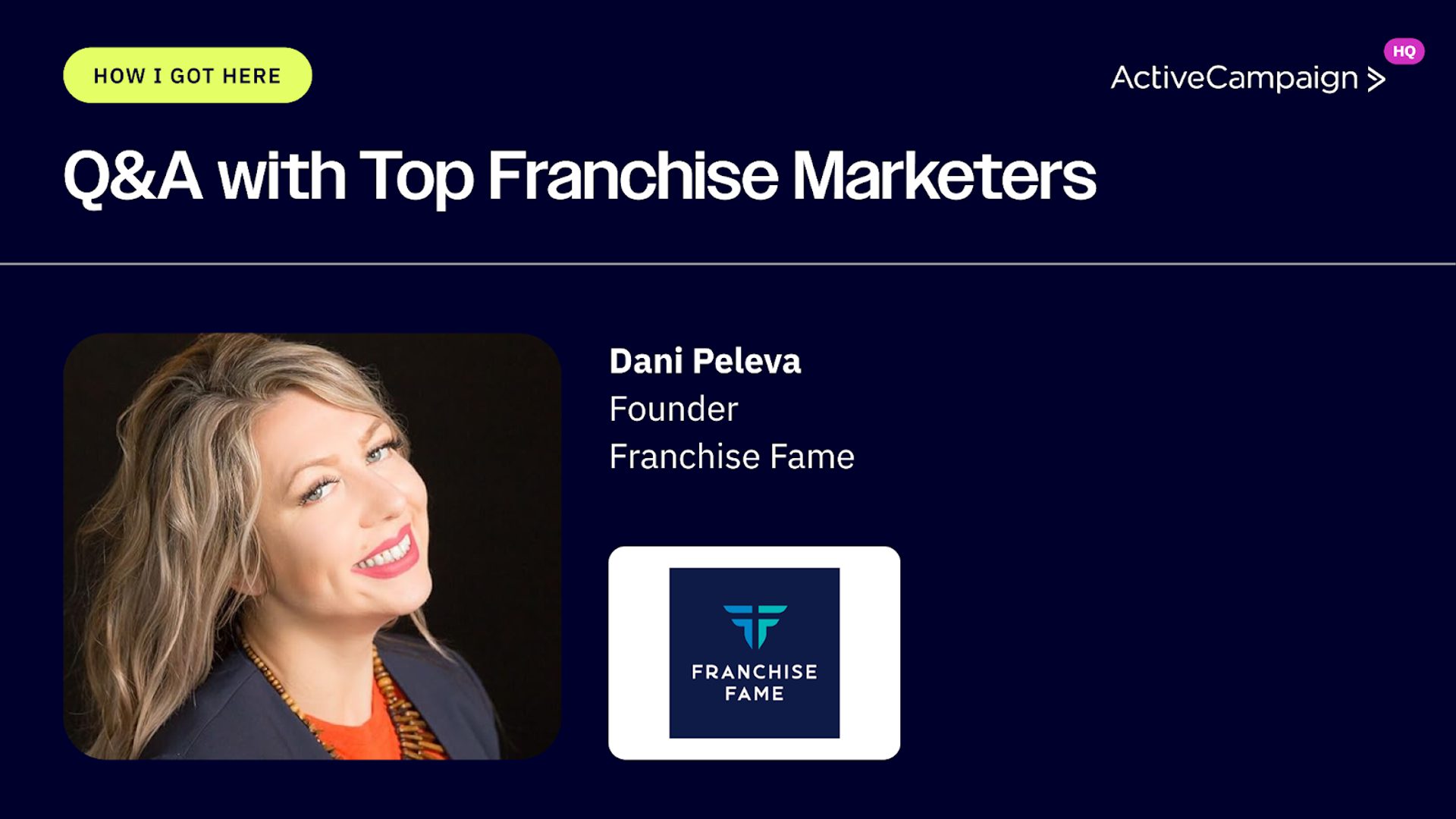
Dani Peleva's parents were forced to shutter their Bulgarian furniture business when she was a child, and that loss had an indelible effect on her. Today, as Founder and CEO of her own award-winning agency, Franchise Fame, she's helping franchise brands build marketing strategies to gain traction in their markets—help she wishes she could’ve given her parents all those years ago.
Peleva brings a rare dual perspective to franchise marketing: she's worked both as a franchisee and now as a franchise marketing consultant. Her agency has served clients in over 50 countries over the last 11 years, and was named the Best Franchise Marketing Specialists in the UK for 2025. She's developed the "Five F's of Franchise Marketing" framework, detailed in her book Franchise Fame: An Insider's Marketing Guide to Incremental Growth and Soaring Success.
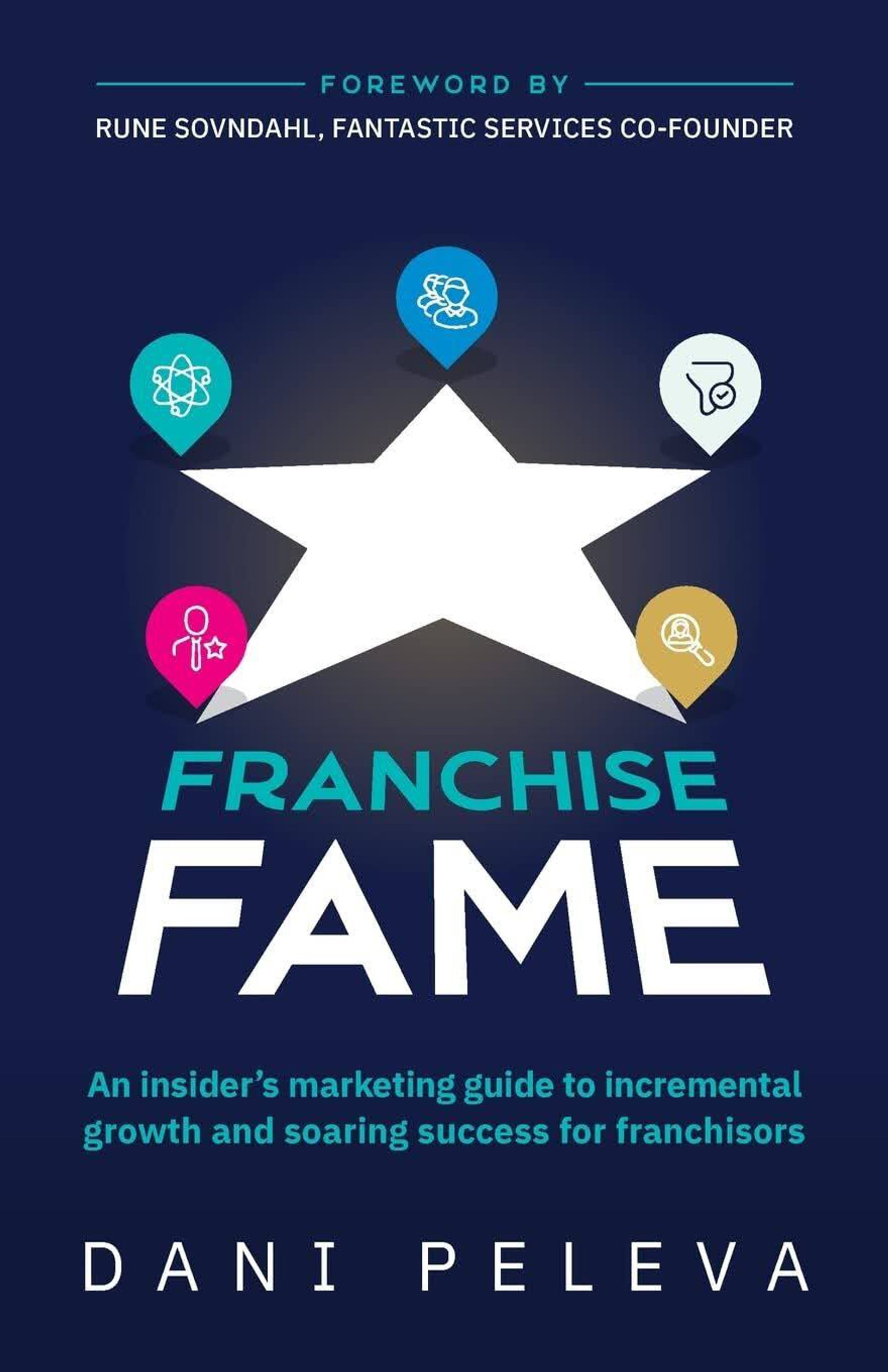
Peleva’s book, which outlines tips for franchise marketers, including the “Five F’s of Franchise Marketing” framework.
In this conversation, Peleva shares how she balances corporate and local marketing needs, reveals why AI optimization is crucial for franchise development, and explains the biggest mistake she sees franchisors making with their marketing investments.
What made you decide to start Franchise Fame? And how did your childhood in Bulgaria influence your approach today?
The true reason for starting the agency goes back to my childhood in Bulgaria, when I was just six years old. My parents, both teachers, started a luxury furniture manufacturing company because they struggled to make ends meet.

Dani Pelevea (second from left) and her family during her family’s early entrepreneurial days.
It was incredibly labor-intensive work, and they often came home exhausted at 10 p.m. after working a second job. At age six, I had to take on responsibilities like looking after my two-year-old sister, cooking, and cleaning to support their venture.
They had a brilliant product, but without a go-to-market strategy, they sadly had to shut the company down a few years later. Today, as an adult, I'm driven to help franchisees and franchisors fulfill the entrepreneurial dream my parents couldn't. In a way, the little girl from my past is now helping hundreds of people succeed in becoming their own bosses—something I couldn't do for my parents. I have no doubt they would have succeeded if they had had the support and framework of a franchise.
"In a way, the little girl from my past is now helping hundreds of people succeed in becoming their own bosses—something I couldn't do for my parents."
Walk me through your “Five F’s of Franchise Marketing” model. How do you use this when assessing a new franchise brand?
I developed the "Five F's of Franchise Marketing" model over the years, and it's built around the key stakeholders in any franchise business: clients, existing franchisees, your team, and prospective franchisees.
- Fantastic reputation. A franchisor’s reputation is one of the cornerstones of its success, and this reputation is a part of the overall brand.
- Focused team. Franchises require effective teamwork. However, when it comes to marketing and overall operations, franchisees often try to do everything on their own, which leads to stress and burnout.
- Franchise network. Investing and nurturing relationships with your franchisees is crucial for a franchise’s success. With strong relationships, all parties benefit, and the business thrives.
- Full funnel. Next is effective lead generation. For example, we helped MBE Central America, more specifically Panama and Costa Rica, launch lead generation campaigns that were incredibly successful. We recorded a whopping 964% increase in the number of conversions.
- Finding the fit. Not every person is the ideal franchisee candidate, so you need to find that perfect fit that aligns with your organization.
When a new franchise brand comes to us, we use this model to figure out what they need help with. Most of the time, it's either local marketing initiatives to support their franchisee network or franchise development to help the brand scale into new markets.
This framework helps us maintain a high-level view of the entire program instead of getting lost in individual mini-projects. It keeps us focused on the bigger picture while also ensuring we're effectively serving all the different stakeholders.
You work with franchises on both sides of the Atlantic. What differences do you see in how U.K. versus North American franchises approach marketing?
Our American counterparts are a lot more open to innovation and trying out new tactics and strategies that will make them stand out from the competition. I suppose, in a crowded marketplace, you need to become more creative. British brands are slightly more conservative when it comes to trying out new things.
Working across the pond helps us build strong case studies with American brands and bring them across to the U.K., explaining what the trends will look like in 6-12 months in Europe. This is another superpower we have: we can sniff out innovation and market trends that are always rolled out first in the U.S. by market leaders. In this way, we’re prepared well ahead of time.
Based on your recent experiences, what marketing channels are working best for franchise brands right now?
We are seeing great results with Generative Engine Optimization (GEO) in combination with SEO, which means optimizing for searches in both Google and AI assistants. Local search marketing with Google My Business profiles, along with PR and link-building campaigns, are also highly effective. And, of course, lead generation campaigns for franchise development remain a core part of our strategy.
If you think you’re “too late” to embrace AI, think again. See our report 13 Hours Back for the current state of AI adoption. Spoiler: there’s still time to be an earlier adopter.
Can you share a specific example of a successful campaign and the measurable results you achieved?
One of our most successful recent campaigns was with The Travel Franchise, a British franchisor. We launched a 12-month SEO and Generative Engine Optimization (GEO) campaign for them and achieved incredible results: an 80% increase in organic visitors to their site compared to the previous year, a 50% increase in franchise applications, and they now rank on the first page of Google for all relevant key searches.
We used E-E-A-T principles when creating the SEO content (Experience, Expertise, Authoritativeness, and Trustworthiness), a framework Google uses to evaluate content quality. Creating this type of content using the clients' experience and expertise, telling stories, and answering frequently asked questions made the content explode in Google and LLMs.
Additionally, all major AI models are recommending The Travel Franchise as the best investment in the travel industry.
What’s the biggest mistake you see franchisors making when it comes to marketing?
One of the biggest mistakes I see franchisors making is trying to do it all themselves, including running their franchise marketing campaigns. This not only slows them down, but it also burns them out.
Hiring a team of A-players for the head office or working with a professional agency works out to be a lot more cost-effective in the long run. But when franchisors are starting out, they try to save every penny and try to juggle too many balls until one drops.
Investing in a great team, freelancers, or an agency that knows what they’re doing will pay off.
"When franchisors are starting out, they try to save every penny and try to juggle too many balls until one drops."
When you’re hiring marketing talent for franchise clients, what skills do you prioritize?
I mainly look for soft skills like empathy, a collaborative mindset, a desire to be of service, teamwork, and patience. While we do look for specialists in core marketing channels, these soft skills matter the most to me personally, because other marketing-specific skills can be taught.
All of our top managers have previous experience working for a franchise brand. When we hire other employees, we make sure to provide contextual training and onboarding, not only on our agency's processes but also on the world of franchising. Every new employee also receives a copy of my book and is encouraged to read it to gain insight into our model.
"All of our top managers have previous experience working for a franchise brand."
What’s something about franchise marketing that people outside the industry just don’t understand?
The dynamics and relationships within the franchising ecosystem. The ecosystem has various stakeholders with different needs and priorities. The real challenge is staying true to brand guidelines while serving the needs of these different stakeholders, and that's what we at Franchise Fame do best.