We’re living in the golden age of marketing data. We’ve got dashboards for days, more analytics platforms than we can count, and access to an unprecedented wealth of customer information. Marketers no longer have to guesstimate how a campaign contributes to their bottom line or what consumers want in a new product or service.
Yet despite having more data than ever before, marketers continue to find themselves paralyzed by the very data that was supposed to empower them. Which brings us to a sobering reality:
Marketers have more data at their disposal, but are still starved for actionable insights.
That’s not just a gut feeling either—marketing teams are using 230% more data compared to 2020, but more than half (56%) don’t have time to analyze their data properly. This combination of too much data and insufficient resources to extract key insights isn’t just costing us time and money. It’s also creating a competitive disadvantage. For marketers to stay one step ahead, they’ll need to enlist the help of AI tools and embed an AI-first mentality to their data analytics approach.
From spreadsheets to data lakes
Just a couple of decades ago, marketing was largely intuitive and based on feelings. We made decisions based on past experience, our understanding of the marketplace, and hypotheses based on what felt “right”. Fast forward to today, we can now track everything we do, and data-driven marketing has quickly replaced emotional decision-making.
Nowadays, we live in a time of information overload, with roughly 402.74 million terabytes of data created each day. In 2025, it’s estimated we’ll see 181 zettabytes of data created, or an increase of 23.13% compared to 2024. To combat this influx of data points, we’ve seen hundreds of new data analytics and business intelligence solutions enter the market, positioned as tools designed to make our lives easier.
Each new tool, however, brings with it a learning curve and even more data streams generated. Research shows 29% of marketers have too many tools in their martech stack. And 62% of organizations aren’t confident in their customer insights data. Coupled with the fact that 57% of marketers feel overwhelmed with how many martech platforms are available, it’s little wonder that we’re struggling to make heads or tails of the data in front of us.
The insights gap: Understanding what we have vs. what we need
Before diving into how AI enables marketers to extract the insights they need from their data sources, we need to distinguish what data, insights, and information really mean.
- Data: Raw, unorganized observations or facts. This collection of data points lacks context on its own and can include things like single data points from a survey, analytics metrics, quotes, or even user behaviors.
- Information: Processed, organized data with context. Information describes what happened and offers glimpses into patterns or trends, but doesn’t give us the why. For example, you might aggregate survey responses to get a total number, but we don’t know if that sum is “good” or “bad”.
- Insights: Actionable conclusions derived from information. Insights explain what opportunities are in front of you and are the knowledge that guides decision-making within your organization. It answers the questions about what happened, why it happened, and what to do next.
Going from raw data to actionable insights to implementing those recommendations can be a lengthy process that requires buy-in from your stakeholders. The more you can minimize the time and effort required to turn data into insights, the more you’ll be able to focus on execution.
That’s where AI can lend a helping hand.
AI: The great synthesizer for marketing leaders
AI is more than another tool to add to your martech stack—it’s the missing piece that bridges the gap between raw figures and usable recommendations. As more companies introduce AI into their workstreams, marketers are starting to take note of AI beyond its role as a time saver.
ActiveCampaign’s latest research reveals more than half (53%) of marketers use AI to measure performance and analyze business impacts and 77% say using AI increases their confidence in the quality of their work.
Instead of manually analyzing large data sets, marketers can rely on AI marketing analytics to tackle three distinct activities:
- Pattern recognition—Use AI to quickly identify and outline patterns and trends in large datasets that would otherwise take days to analyze.
- Predictive analysis—Develop future outcomes and behaviors, such as sales forecasting, based on historical patterns and current indicators.
- Proactive recommendations—Suggest specific actions based on data-driven insights, such as anticipating a customer’s needs or adjusting campaign strategies.
Another benefit to using AI is that it helps marketers move away from descriptive analytics to predictive and proactive insights. Rather than summarize what happened in a previous campaign, AI can offer tangible next steps to drive proactive decision-making for a future campaign.
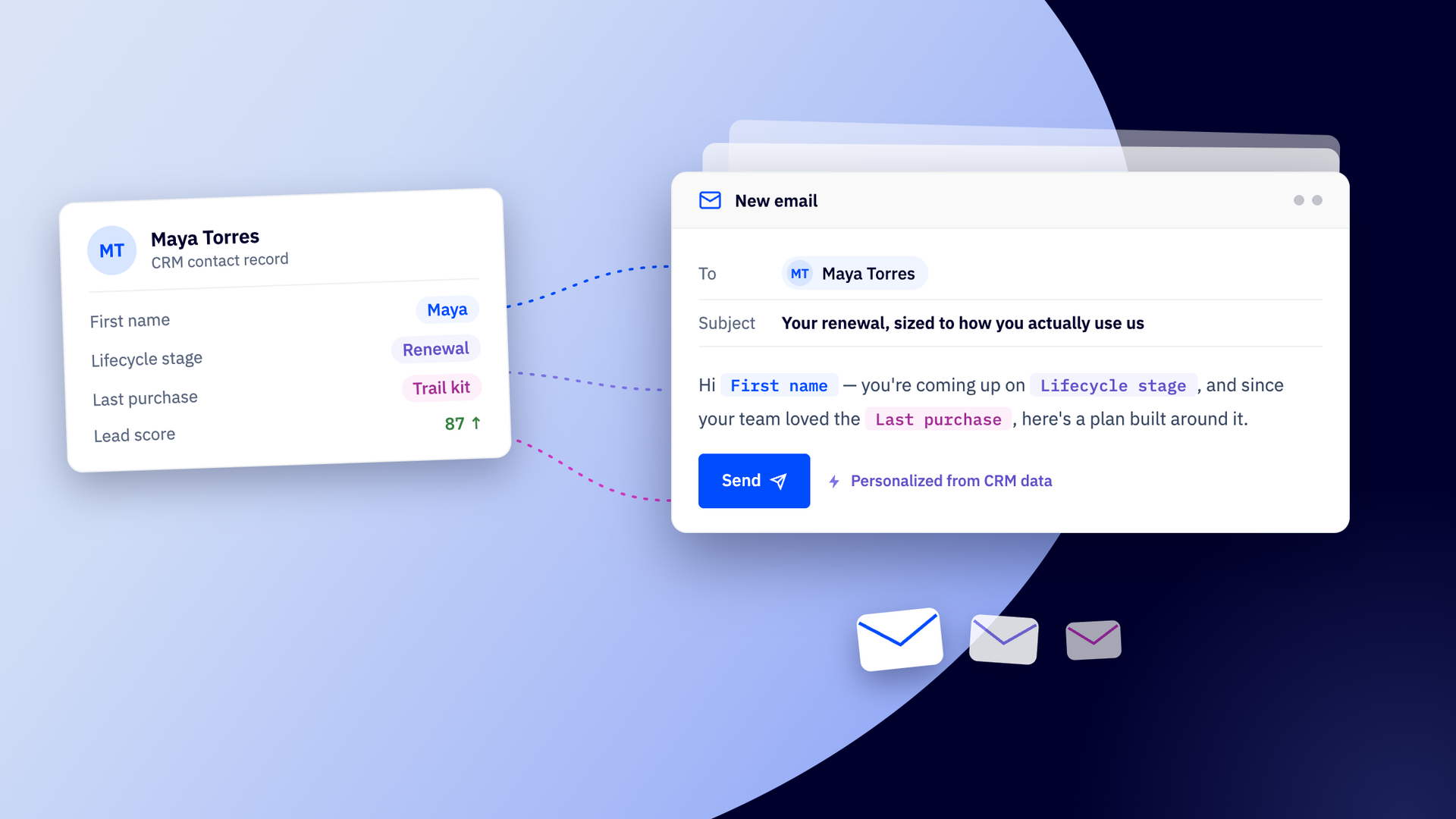
When it comes to improving lead scoring accuracy, for example, AI can analyze audience engagement, demographics, and behaviors to help marketers identify who to prioritize.
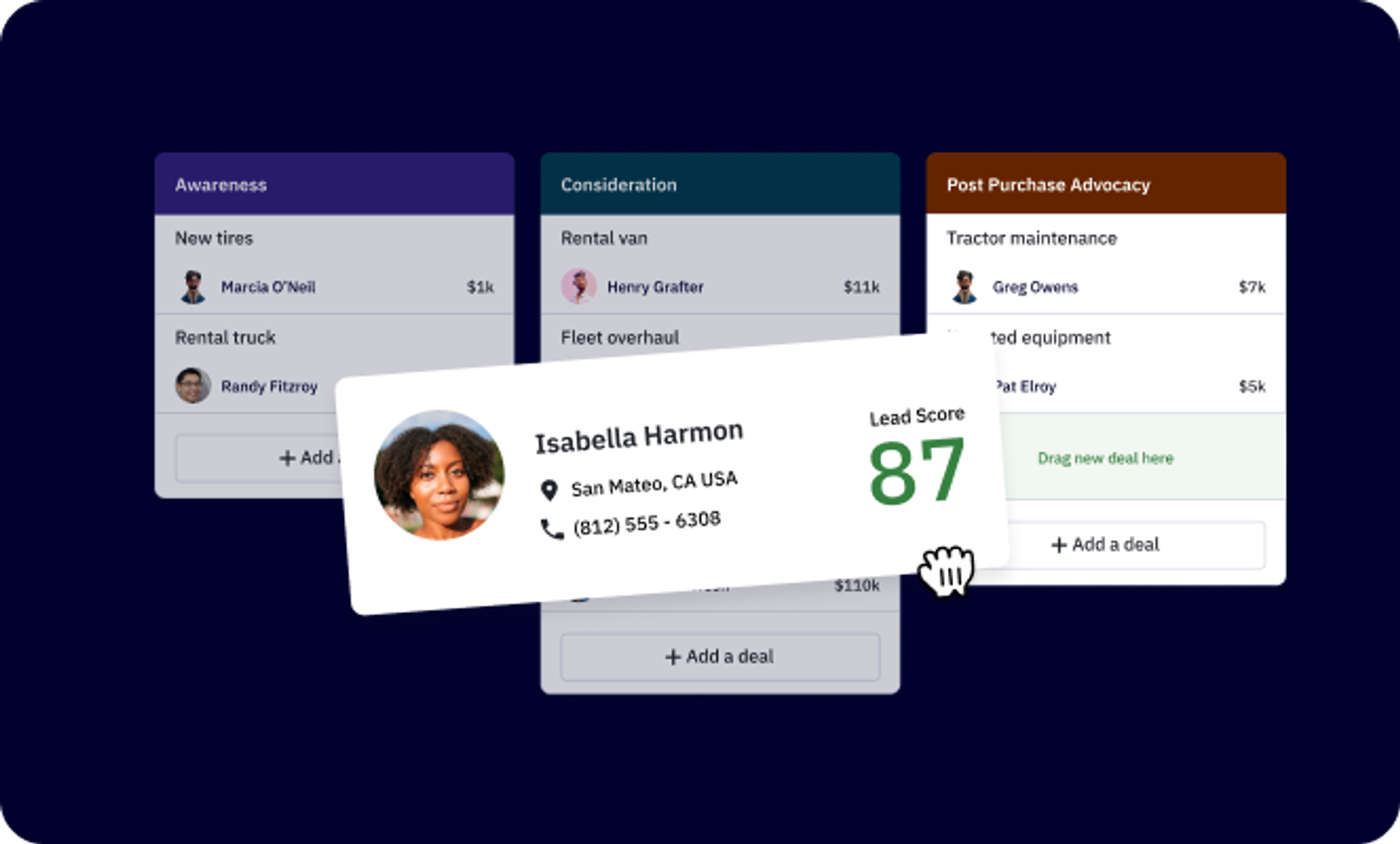
ActiveCampaign’s CRM tool helps you organize and keep track of every opportunity. Our lead scoring feature helps you identify the most promising leads based on a contact’s prior actions and behaviors.
From reactive reporting to proactive strategizing
AI won’t create another dashboard for you; instead, it’ll make your current dashboards work smarter. With AI, marketing leaders can better contextualize their data within their business objectives rather than just reporting on vanity metrics like traffic, social media followers, or total downloads.
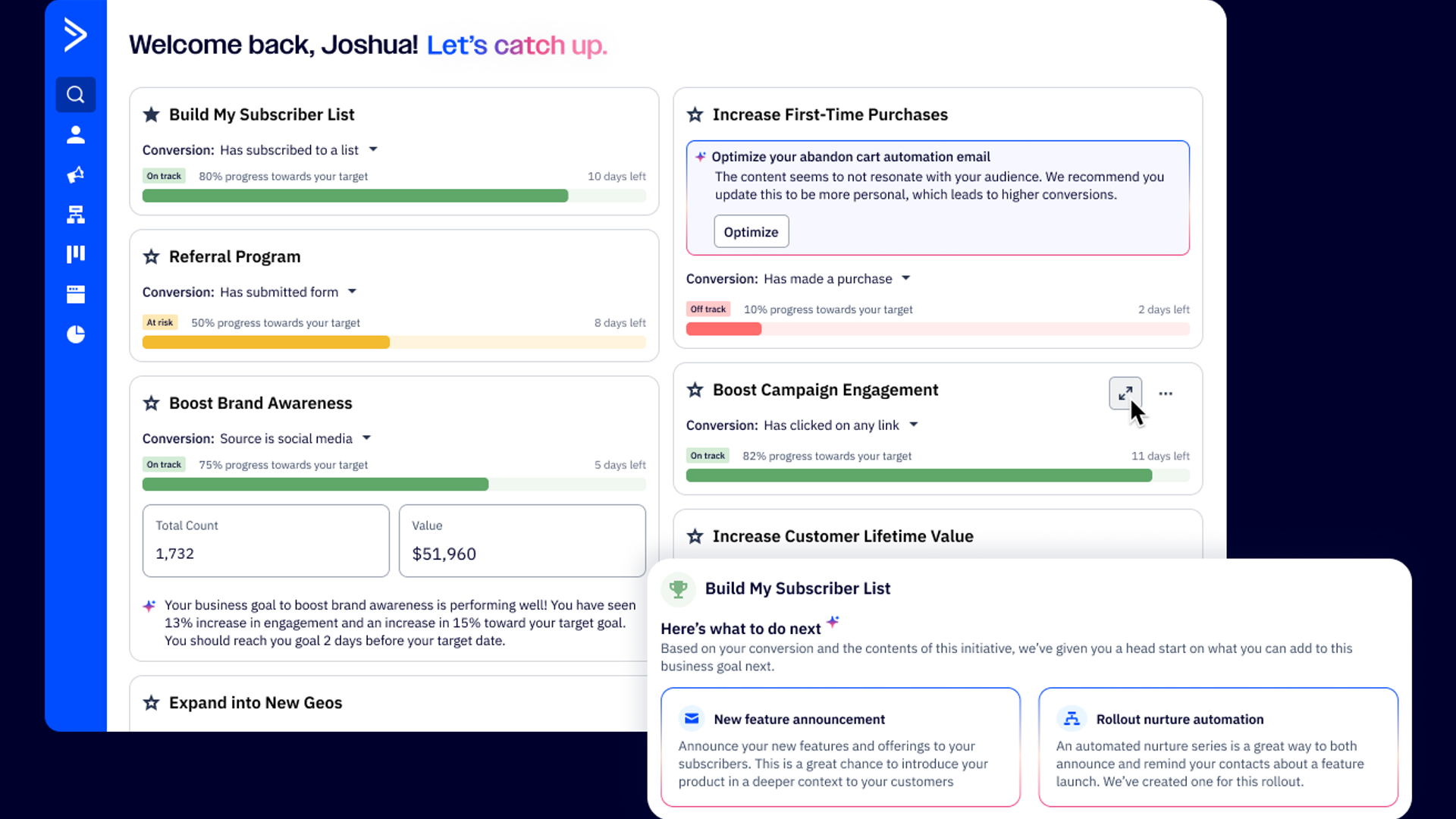
Tools like ActiveCampaign’s Business Goals help bridge the gap between data collection and strategic action. Instead of overwhelming marketers with another dashboard, Business Goals synthesizes insights from various campaigns to provide clear, actionable recommendations. In other words, you’ll be able to understand how an email campaign connects to your lead generation goals and what steps you’d need to take to improve metrics like conversions.
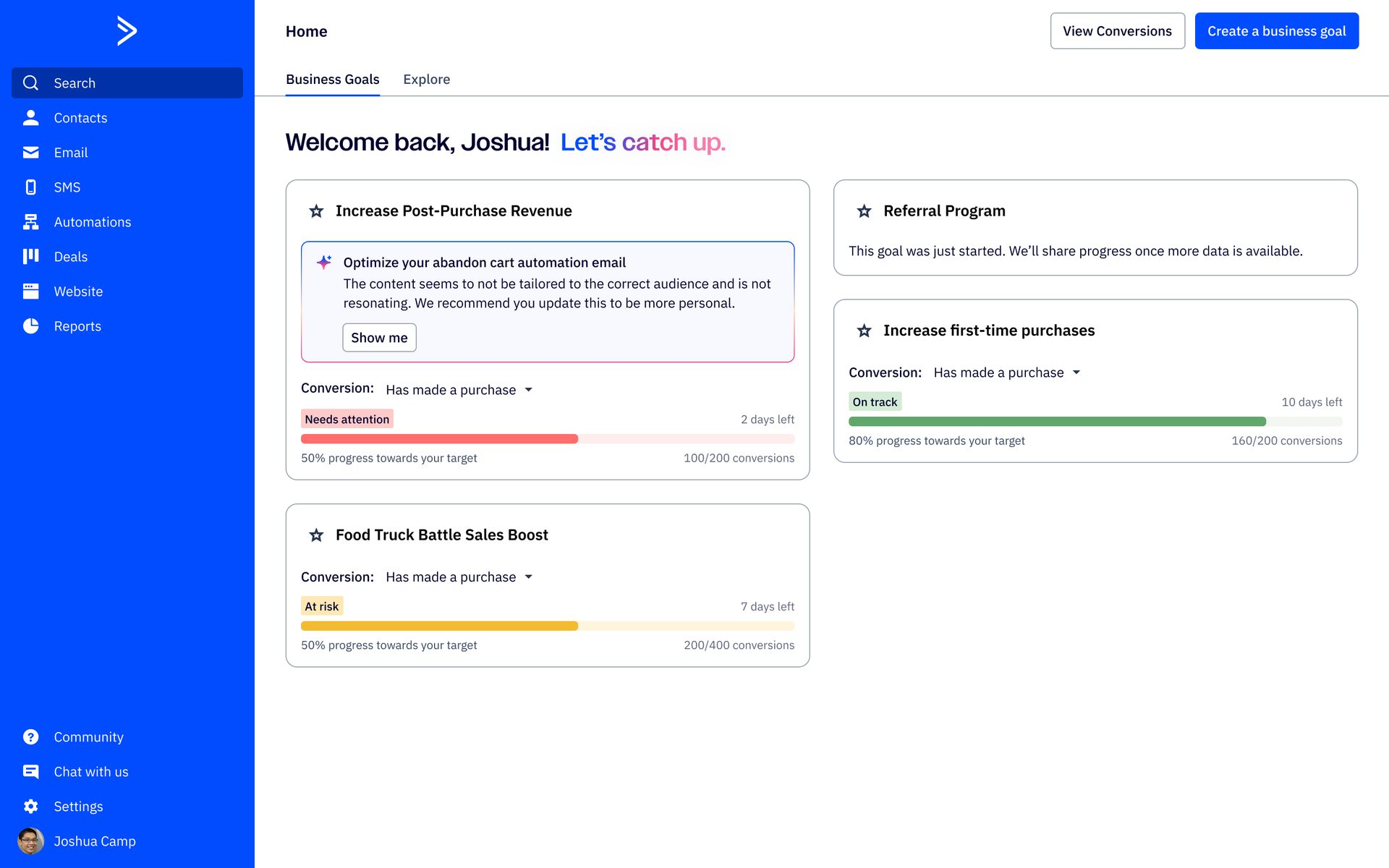
In the Business Goals dashboard, you’re able to see insights from all of your campaigns from a bird’s-eye view. This allows you to make more informed decisions on how to tweak and improve metrics in the future.
Moving from a data-rich to an insights-rich organization calls for more than introducing new tools. You also need to consider the organizational shift and any change management that needs to occur to accommodate an AI-first approach to data analysis.
As a marketing leader, consider the following steps to prepare your organization for a successful transition:
Establish data and intelligence governance. In addition to data governance, having intelligence governance ensures everyone is on the same page when it comes to defining key metrics and insights. If you’re working with 13 different definitions of a qualified lead, for example, you’re not going to have clarity on what insights matter.
To establish governance, consider creating a “North Star” framework with 3-5 metrics that correlate directly with a business outcome. These could include anything from traffic and engagement metrics to conversion and churn rates, trial signups and more. Define who makes decisions based on the insights generated by your AI tools and ensure cross-functional alignment so everyone shares the same definitions.
Build around insights, not reporting. If you feel like you’re spending too much time on summarizing what happened versus what to do next, you’re not alone. As marketers increasingly embrace AI for analytics, organizations must also shift how they come to decisions. Instead of reactive reporting, try shifting to real-time alerts and creating a 24-48 action protocol to respond to dynamic insights generated from AI.
Encourage collaboration, not replacement. A big roadblock to AI adoption revolves around fears it will replace humans at work, when in actuality, AI can serve to complement the work teams do. In addition to training your team on new tools, it’s critical to teach them about their role in the decision-making process and what else they could be prioritizing during the time AI frees up for them.
Companies that master this transition from data-rich to insights-rich know how to set clear objectives, establish success metrics, and scale the tools that work. When everyone has access to the same data, AI is what will empower leaders with the insight-to-action speed they need to stay one step ahead of the competition.
The analyst that never clocks out
The irony of modern marketing is that the data problem isn’t scarcity, it’s translation. Most teams have enough data. What they’re missing is someone to tell them what it means and what to do about it, without requiring hours of report-pulling to get there.
That’s the gap Autonomous Insights was built to close.
Instead of expecting you to know what questions to ask, Autonomous Insights runs continuously in the background. It analyzes your marketing performance, benchmarking your results against industry standards and your own historical trends, to surface specific recommendations directly in your ActiveCampaign dashboard. Every week, without you needing to prompt it.
If I wanted these insights, in the past I would have to delegate to another human to crunch the numbers. But now Active Intelligence is doing it for me.
That’s not an unusual situation. In fact, it’s the default for most marketing teams, and it’s exactly the ceiling that autonomous marketing is designed to break through.
When an insight surfaces on your homepage, it’s not a generic tip. It’s benchmarked to your account data, flagged because it’s relevant right now, and clickable into a full Active Intelligence conversation where you can go deeper and ask follow-up questions. The analysis still happens. You just don’t have to do it.
And on top of that, when applicable, Autonomous Insights goes beyond recommendations to deliver ready-to-use marketing assets. When Active Intelligence identifies an improvement opportunity, it can generate complete campaign drafts tailored to your brand style and performance data, with recommendations already built in. You get campaigns ready to review and send, not just advice on what to create.
→ Watch Autonomous Insights work: See the demo
AI is making marketing leaders insights rich
Insight velocity, not data collection, is the new competitive battleground. By shifting their approach to AI-powered intelligence, marketing leaders can achieve the promise of data-driven marketing without drowning in information overload.
AI helps you take the guesswork out of your next campaign and scale your decision-making while giving you back time in your day to tackle more strategic work. With ActiveCampaign’s Business Goals, marketing leaders can get the insights and actionable recommendations they need to thrive.