Everyone's AI now. But an "AI-powered" marketing platform can mean anything from a subject line suggestion to a fully autonomous marketing agent, and the gap between those two things is enormous.
Both ActiveCampaign and Mailchimp now have AI tools positioned as a core feature offering in their platforms, yet under the hood, the depth of that intelligence varies dramatically.
We’ve conducted a hands-on product evaluation to examine how each AI marketing platform actually handles your day-to-day work. Below, you’ll find a feature-by-feature breakdown that explains how AI is embedded into each platform. We’ll cover campaign creation, automation, segmentation, reporting, pricing, and what AI really costs you at scale.
ActiveCampaign Active Intelligence | Mailchimp Intuit Assist | |
| Send-time optimization | ✅ Per-contact predictive send time based on individual engagement history; available on all paid plans. | ✅ Send-time optimization available, but Mailchimp uses broader audience-level data rather than per-contact prediction. |
| AI content generation | ✅ AI-assisted email copy, subject lines, and CTAs with brand voice controls. Draws on comprehensive campaign history for context. | ✅ Intuit Assist generates email drafts, subject lines, and campaign copy. |
| AI automation building | ✅ Natural language automation builder: describe a workflow, and AI generates the sequence. Deep conditional logic supported. | ❌ AI-assisted automation not available. Users can only fill pre-built templates with AI content. |
| AI agents | ✅ Autonomous AI agents that can execute multi-step tasks, respond to contacts, and trigger actions without human oversight. | ❌ No autonomous agent capability. AI assistance is generative, not agentic. |
| Predictive lead scoring | ✅ ML-driven lead scoring that updates dynamically based on engagement signals and CRM data. Available on Plus plan and up. Win Probability provides real-time scores that indicate how likely any deal is to be won. | ❌ Contact scoring exists but is rule-based, not predictive. No machine learning applied to scoring. |
| AI segmentation | ✅ Suggested Segments surface high-intent contacts automatically. AI recommends segment logic based on your goal. | ℹ️ Predictive demographics and purchase likelihood available. Standard segmentation is rule-based, not AI-powered. |
| Multi-channel AI | ✅ AI spans email, SMS, site messaging, and CRM for unified intelligence across channels in a single automation. | ℹ️ AI features primarily scoped to email, with some availability in SMS. WhatsApp has no AI integration. |
| MCP integration | ✅ Model Context Protocol support enables AI tools and agents to connect directly to ActiveCampaign data and actions. | ❌ No MCP integration. Third-party AI tools cannot natively connect to Mailchimp via the protocol. |
| Pricing | Core AI features included across paid plans. Advanced AI (e.g. Predictive Sending) on Pro from $79/mo. | Intuit Assist included in Beta on Standard ($20/mo+) and above. Predictive features locked to Premium. AI gating increases cost at scale. * Intuit Assist is available only in beta and geo-restricted to US, UK, Canada, and Australia. |
Assistant vs. autonomous engine: Two different approaches to AI
Before comparing features line by line, there's a fundamental distinction worth understanding. That is the role AI is actually playing in your marketing operation. There's a measurable difference between AI that writes faster and AI that runs your marketing operation.
ActiveCampaign's Active Intelligence is an AI engine that’s embedded into the core of the platform. Rather than simply augmenting a workflow you've designed, it operates as an end-to-end autonomous marketer. Describe a goal in plain language, and Active Intelligence builds the complete workflow, freeing up the time you used to spend filling in templates or assembling blocks. The system generates the campaign architecture and populates it, then continues optimizing execution after launch based on real behavioral signals. All orchestrated by you.

That generative capability sits on top of a deeper AI engine. Active Intelligence aggregates behavioral data across billions of interactions (opens, clicks, purchases, site visits, CRM signals) and operationalizes that data at the individual contact level. AI agents execute across channels without waiting to be told what to do next. The result is a cross-channel system capable of genuinely 1:1 personalization.
Mailchimp’s AI capabilities are powered by Intuit Assist. Originally built as a financial assistant that operates across Intuit’s platforms, it’s best understood as an AI toolkit bolted onto an established platform. It connects to your Mailchimp account and does genuinely useful things: drafting email copy, suggesting subject lines, recommending send times, and surfacing content optimization tips before you hit send.

Intuit Assist operates within predefined workflows, meaning the AI responds to what you've already built. It doesn't build the machine, but helps you run it.
With an AI content assistant like Mailchimp Intuit Assist, the marketer remains the architect. You still conceive the campaign, design the customer journey, define the segments, and decide when and how to reach each contact. The AI accelerates execution, but the cognitive and strategic load of building the system sits entirely with your team.
For a small list or a simple email program, that's a reasonable trade-off. At scale, or in complex multi-step journeys, it becomes a bottleneck.
With an autonomous AI engine like ActiveCampaign’s Active Intelligence, execution decisions can live in the platform. The system determines when each contact is most likely to engage, which segment they belong in, and what the next logical touchpoint should be based on behavioral evidence, not a marketer's best guess.
Your team's attention moves upstream, toward strategy, creative direction, and the goals you're optimizing for, rather than the mechanics of who gets what message and when. The AI architects the best path forward; you give it the green light.
ActiveCampaign AI vs. Mailchimp AI across core marketing workflows
Feature lists can be deceiving. Two platforms might both claim "AI-powered automation" or "smart segmentation," but those labels are vague. We’ve unpacked what each platform's AI capabilities look like across common workflows.
AI campaign creation and content generation
Content generation has become table stakes for AI in marketing platforms. But what comes after the copy is written?
ActiveCampaign's AI Campaign Builder produces complete campaigns from a single prompt: email structure, subject lines, layouts, and CTAs assembled together and ready to deploy across email, SMS, and WhatsApp. Specialized AI Agents extend outputs, handling execution, monitoring performance, and optimizing results against your defined Business Goals; all without requiring a separate brief for each task.
Try out the AI Campaign Builder in an interactive product tour:

Keeping AI-generated campaigns on brand is handled by the AI Brand Kit, which imports your company's colors, fonts, logos, and imagery directly into the generation layer. Every campaign that comes out reflects your visual identity without requiring a manual design review pass, compressing the cycle between brief and send.
Mailchimp's Intuit Assist is a capable drafting partner. Feed it a prompt, and it generates email copy, subject line options, and tone and length adjustments informed by your campaign context. For teams that spend significant time on content production, acceleration is noticeable. The scope is narrower than a full campaign generator: Intuit Assist works on content within workflows you've already built, rather than generating the workflow itself.
Automation and workflow intelligence
True AI marketing automation removes the manual decisions that slow execution down:
- Who gets which message?
- When?
- Through which channel?
- Based on what behavior?
The more of those decisions an AI engine can make accurately and at scale, the more your team's time concentrates on strategy rather than operations.
ActiveCampaign was rebuilt from the ground up as an autonomous marketing platform. It offers deep branching logic, conditional workflows, lifecycle orchestration, and AI-driven decisioning that adapts each contact's journey in real time based on behavioral signals. The system actually makes execution decisions based on what each individual contact is doing, rather than just applying rules you wrote manually.
The conversational workspace built into Active Intelligence lets teams describe an automation goal in plain language, like "onboard a free trial user who hasn't activated after three days," and generates the full workflow: triggers, branches, messages, and timing appear without you manually mapping a single step.
Mailchimp offers some pre-built automation journeys—welcome sequences, abandoned cart flows, re-engagement campaigns—through a visual builder that covers the most common use cases. Intuit Assist then contributes more generic list-level send-time suggestions and content recommendations within those flows.
For teams managing multi-step customer journeys, lifecycle marketing, or cross-channel sequences, ActiveCampaign's automation engine provides a level of AI-driven execution that Mailchimp's current framework doesn't match.
AI segmentation and personalization
Reaching the right contact with the right message at the right moment is the premise every marketing platform sells. What separates platforms in practice is whether AI is helping you approximate that outcome at the audience level or achieve it at the individual level. That difference shows up directly in engagement rates, conversion rates, and revenue per contact.
ActiveCampaign's AI-Suggested Segments analyze customer behavior, purchase history, and engagement patterns to surface high-value audiences automatically. Marketers don’t need to define the targeting hypothesis first. Instead, the segments surface themselves. You'll see groups like repeat buyers who've gone quiet, at-risk contacts approaching churn, high-intent prospects buried in an untagged list: all ready to engage with personalized messaging and content.
Natural language input is also supported, so if you do know what you’re looking for, a query like "create a segment for high-intent contacts who haven't bought in 60 days" produces a ready-to-use segment instantly.

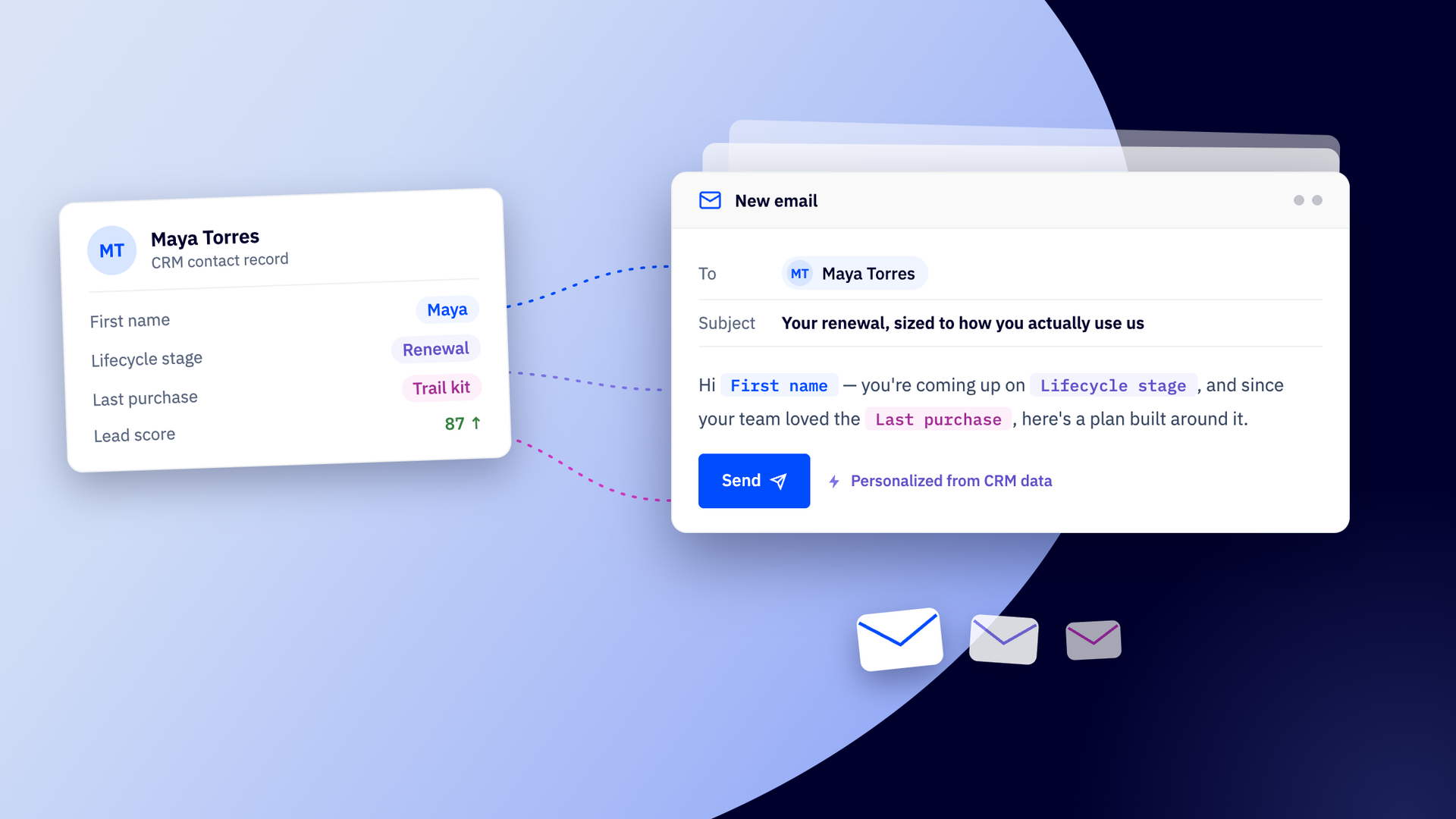
Predictive Content extends personalization intelligence into the message itself. Rather than sending the same email body to every contact in a segment, ActiveCampaign automatically selects the content block most likely to resonate with each individual based on their behavioral history.
Predictive Sending calculates each contact's habitual open times individually and staggers delivery accordingly: a contact who opens at 7am gets a 7am send, while a contact who engages at 9pm gets one at 9pm. This runs inside automated sequences, not just broadcast campaigns.
Personalization extends to language through ActiveCampaign's AI Translations capability, which detects each contact's preferred language and translates subject lines, body copy, and CTAs across 75+ languages. Because the system adapts at the contact level, global execution doesn't require duplicating workflows per market.
Mailchimp provides tag-based segmentation, audience-level insights, and predictive analytics that cover future flags like purchase likelihood, lifetime value, and churn risk. These are useful capabilities for e-commerce-focused teams with a connected store, since LTV and demographic predictions require one.

Its personalization operates primarily through manual rules and list-level recommendations rather than individual behavioral prediction, which works well for straightforward programs but has a lower ceiling as journey complexity increases.
As segmentation needs deepen and audience sizes grow, the difference between optimizing for a list average and optimizing for each contact individually compounds.
Reporting, insights, and AI-driven optimization
Reporting only drives growth if it changes what a team does next, and that requires insight to arrive quickly enough to act on, in a form that points toward a decision rather than just describing what happened.
ActiveCampaign's campaign reporting co-pilot works differently from a standard analytics layer. Autonomous Insights surface recommendations proactively in the dashboard, flagging underperformance, identifying trends, and suggesting automation adjustments without waiting to be asked. When a marketer has a specific question, they can ask it in plain language on the dashboard and receive instant summaries, visualizations, and tailored recommendations in seconds. Reporting becomes a live input into decisions in motion, not a post-mortem task.
Get hands-on with Autonomous Insights with a tour below:

For teams with a sales motion, Predictive Lead Scoring and Win Probability add a predictive layer directly into the internal CRM. Each deal is assigned a continuously updated likelihood of closing based on behavioral signals and engagement history. This gives sales and marketing a shared, data-driven view of pipeline health rather than one based on gut feel or manual stage updates. Mailchimp has no CRM equivalent.
Mailchimp provides standard campaign performance dashboards, audience growth tracking, and benchmark comparisons. They’re a solid foundation for looking at what happened after a send, but not currently powered by AI.
Its AI contribution in this area comes primarily through the Content Optimizer, which analyzes email design and copy against industry best practices before you send: readability, CTAs, imagery, grammar. It's a pre-send quality check rather than a proactive performance engine; reactive by design, and most useful earlier in the campaign process than after.
Integrations and AI ecosystem depth
An AI engine is only as smart as the data it can see. A system that reads email engagement in isolation makes different (and less accurate) decisions than one that also has visibility into purchase history, CRM stage, support interactions, and ad behavior. The breadth of a platform's integration layer impacts how intelligent AI workflows can become.
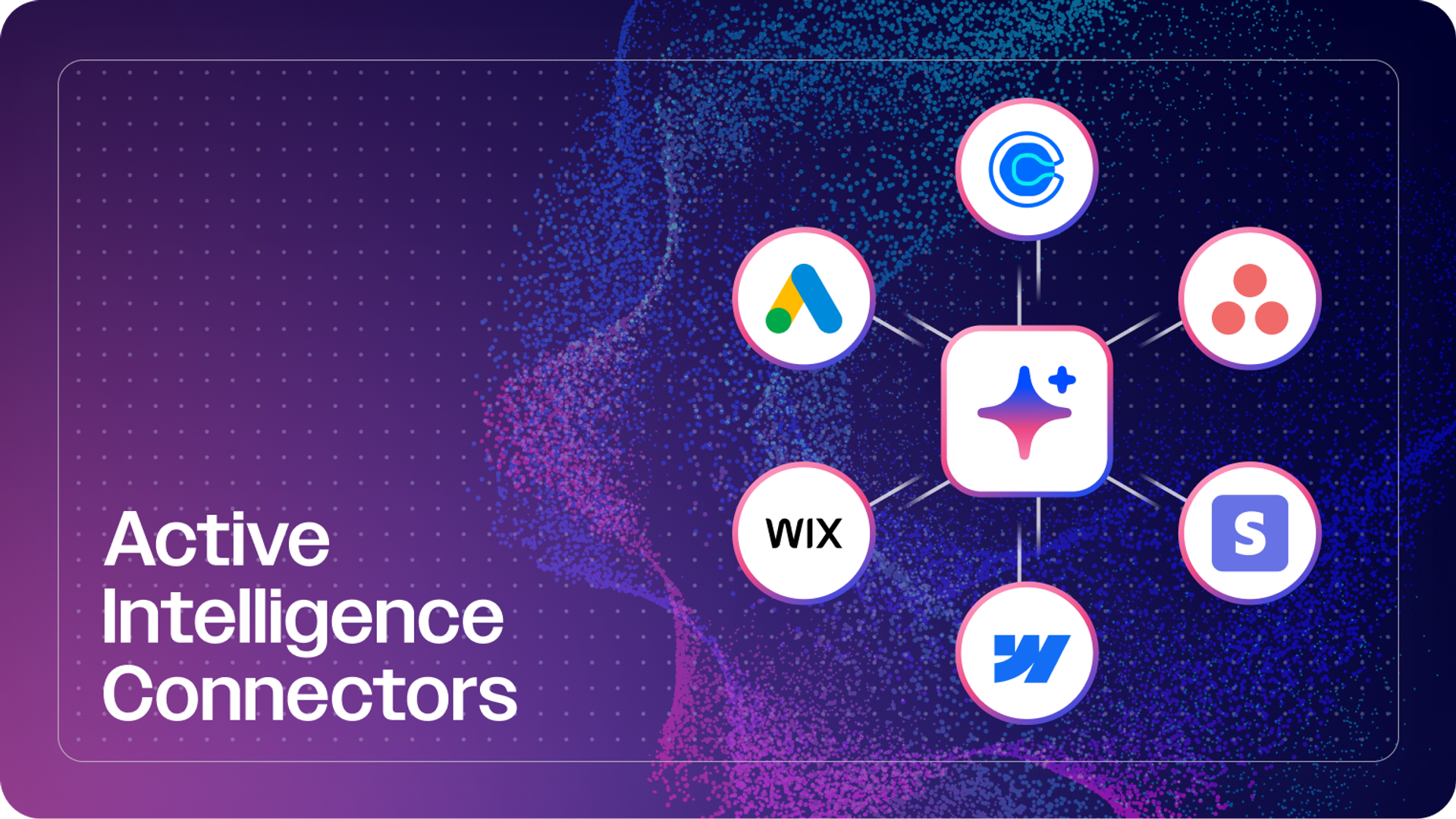
ActiveCampaign's 1,000+ integrations connect CRM, ecommerce, advertising, support tools, and more into a unified data layer that AI agents draw from across the full customer lifecycle. Every additional integration enriches the contact-level intelligence powering automation, segmentation, and personalization. The system gets meaningfully smarter as more context flows in.
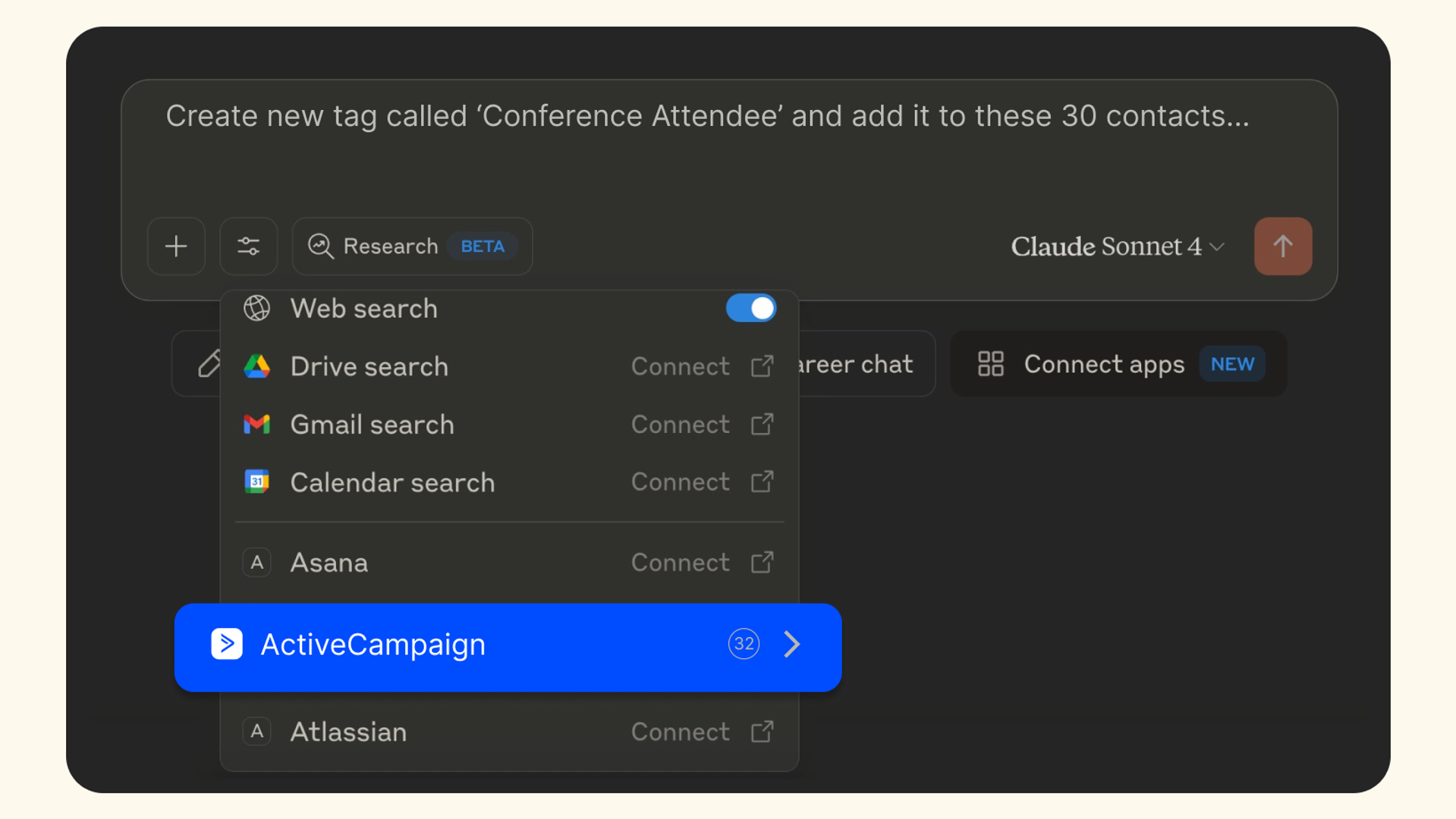
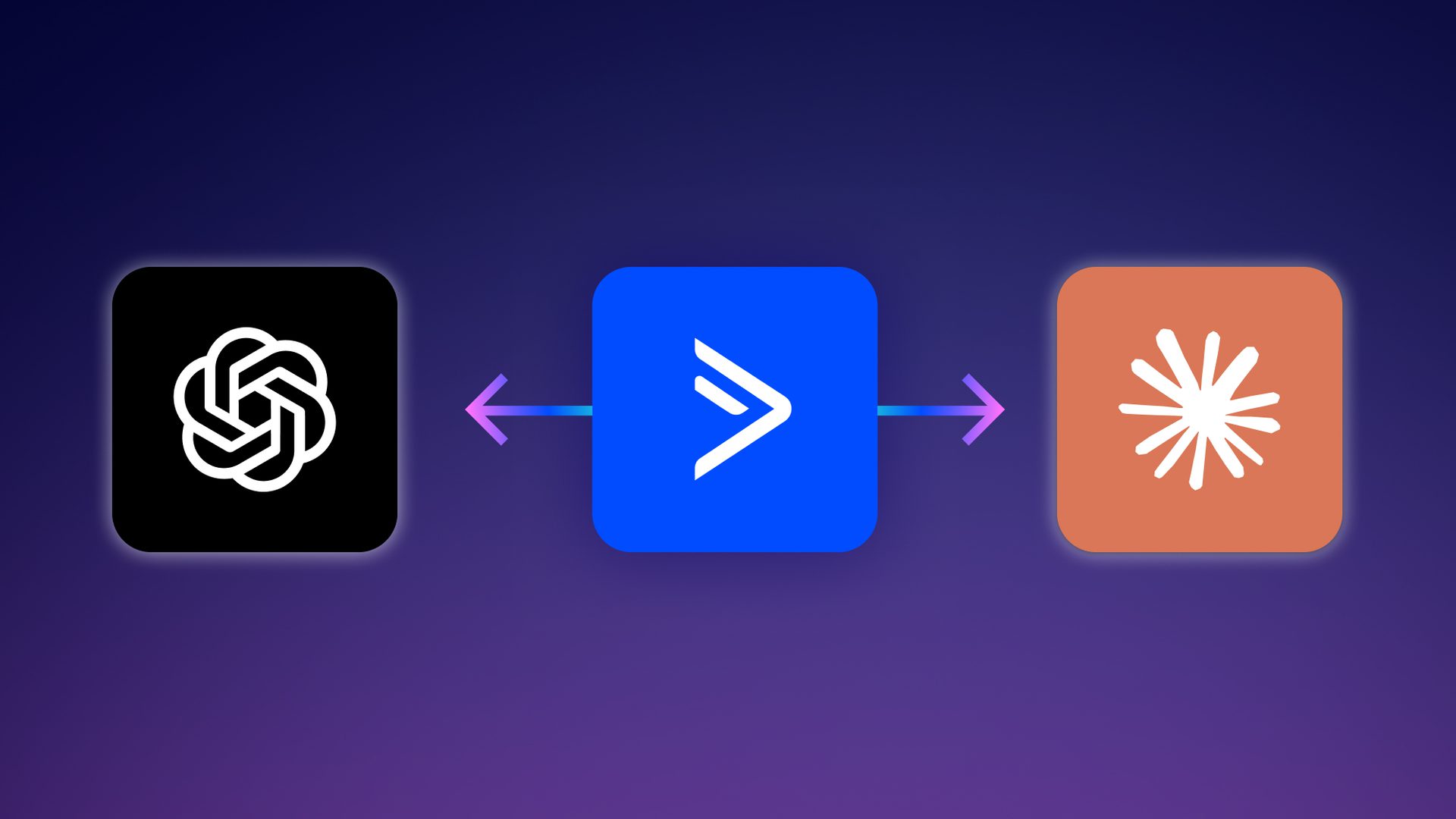
That ecosystem also extends outward via ActiveCampaign's MCP Connectors, which allow your favorite external AI tools like Claude and ChatGPT to query, interpret, and act on live CRM and behavioral data directly. An external AI can surface a recommendation, and ActiveCampaign can act on it without a manual handoff.
Mailchimp offers a solid library of 300+ integrations covering common marketing tools and ecommerce platforms, supporting its core email marketing functionality well. The constraint is at the AI layer. Intuit Assist is primarily focused on content generation and list-level optimization within predefined workflows, integrations don't extend the AI's decision-making surface the way they do in a contact-level, agentic system.
What AI actually costs: Pricing, packaging, and scalability
A tool’s starting price is the least useful number in a platform comparison. Instead, let’s look at which AI features are included at which tier, how much it costs to scale as your list grows, and at what point the pricing model might start working against you.
ActiveCampaign's core AI capabilities—the Campaign Builder, AI-Suggested Segments, Conversational Workspace, AI Agents, and more—are available for all users, including the Starter plan, without separate AI add-on fees. The pricing is higher at the entry point, but these AI features are generally included, even at the lowest-level plan. The only feature that requires unlocking is contact-level Predictive Sending, which is available to Pro users and above.
For more specialized tools like Lead Scoring, Win Probability, and Translations, add-ons are available, so you won’t pay for tools that aren’t relevant. Bandwidth improves gradually alongside plans, so the structure is the same as scaling your list size.
Mailchimp's entry-level plans are affordable. For teams with modest lists and straightforward email needs, the price-to-capability ratio is reasonable. However, moving from basic automation to more sophisticated AI-assisted workflows typically requires stepping up to higher tiers.
Intuit Assist, Mailchimp's AI layer, is currently in beta, available only to select users on Standard and Premium plans, in English only, and only in the US, UK, Canada, and Australia. Because the rollout is still in progress, it's difficult to state which AI capabilities will eventually be accessible at any given plan level and at what cost.
| Mailchimp Standard (select users only) | ActiveCampaign Pro | |
| AI features included | Intuit Assist (beta, geo-restricted) | Full Active Intelligence suite |
| 1k contacts | $45/month | $79/month |
| 5k contacts | $100/month | $205/month |
| 50k contacts | $450/month | $969/month |
| Monthly email sends | 12x contact limit | 15x contact limit |
| Automations | Up to 200 flows | Unlimited |
| Geographic restriction | US, UK, Canada, Australia | None |
These figures are drawn from available platform data and are correct as of April 2026.
For budget-conscious teams, the gap between ~$100/mo and ~$205/mo at 5k contacts isn’t small. Mailchimp's lower starting price may be a legitimate advantage for small teams.
But as requirements grow, teams may well find themselves either constrained by what Intuit Assist can do or paying to upgrade toward capabilities that are still catching up to what's promised.
When evaluating, ask what the platform costs—in subscription fees and in team time—when the list is three times larger, the automation is three times more complex, and the AI is doing work the team currently does manually? A platform with a lower entry price but higher manual overhead, feature gaps at scale, or uncertain AI availability can easily cost more in practice than one that packages deeper intelligence into a single, predictable tier.
Which AI marketing platform is right for your team?
The platform that's right for your team depends on where you are today, where you're going, and what you need AI to actually do in the context of your specific marketing operation.
Mailchimp might be the right choice for…
Teams running straightforward email programs with simple trigger-based automations. If your marketing is primarily broadcast-oriented and list-level optimization is sufficient, AI will accelerate content production.
ActiveCampaign is a better choice for…
Teams that need their platform to handle more of the execution work and AI that actively reduces daily decision-making overhead. It's particularly well suited to B2B, SaaS, and services businesses with longer, more complex customer journeys. The combination of Active Intelligence, Predictive Sending, AI Agents, and MCP connectivity delivers enterprise-grade intelligence without the enterprise-grade implementation burden.
The best way to evaluate whether AI-driven marketing automation is worth the investment is with your own data, running in the platform, against your own goals.
- Start a free trial and watch Active Intelligence find behavioral patterns your current platform isn't acting on.
- Book a demo with your own data. Work through your actual use case with an ActiveCampaign specialist, using your list, your workflows, and your goals.
- Switching from Mailchimp? ActiveCampaign offers a guided, in-app Migration Agent for eligible customers switching from Mailchimp. Powered by Active Intelligence and our preferred partner Quazzlient, this experience connects to your Mailchimp account via an API key, scans for available assets, and lets you review what you want to bring over to ActiveCampaign before starting the migration.
FAQs
FAQs
What should you look for in an AI marketing platform?
The most important factors to look for in an AI marketing platform are how deeply AI is embedded into the workflows you use most and whether the AI actively executes decisions or simply assists with content. Look for platforms like ActiveCampaign, where AI reduces your team’s daily workload rather than adding new complexity to manage, and where the features you need are included in the plan you can realistically afford.
Is Mailchimp’s AI sufficient for small businesses just getting started?
For small businesses with straightforward email marketing needs, Mailchimp’s AI features can offer a useful starting point, particularly for content generation and basic send-time recommendations. As marketing programs grow more complex, the limitations of list-level AI optimization and basic content assistance will become more apparent, so it is worth investigating more sophisticated, reasonably priced platforms like ActiveCampaign in order to avoid a later switch.
What is the difference between ActiveCampaign Active Intelligence and Mailchimp Intuit Assist?
Intuit Assist is a content-focused AI layer that helps draft emails, suggest subject lines, and recommend campaign improvements within Mailchimp workflows that are manually built. ActiveCampaign’s Active Intelligence is an AI-native engine that generates complete campaigns and automation workflows from a prompt, personalizes execution per individual contact, and deploys autonomous AI Agents that execute marketing tasks without manual intervention.
Which AI marketing platform is more affordable: ActiveCampaign or Mailchimp?
Mailchimp’s entry-level plans are generally less expensive at equivalent contact volumes, making it the more accessible option for teams with basic needs and limited budgets. However, the AI capabilities are currently in Beta, and may soon require moving to higher tiers. Total cost of ownership depends heavily on which features your team actually needs and how quickly your list and automation complexity grow.
Can I migrate from Mailchimp to ActiveCampaign without losing my data or automations?
Yes, ActiveCampaign offers free agentic migration and onboarding that covers contacts, campaigns, and automations, making the switch from Mailchimp more straightforward than starting from scratch. ActiveCampaign even backs the transition with a results-in-30-days-or-money-back guarantee.
What can I migrate from Mailchimp to ActiveCampaign?
Eligible Mailchimp switchers can use ActiveCampaign’s guided, in-app Migration Agent. Connect Mailchimp with an API key, review the assets the solution finds, select what to import, and verify the results after the background migration completes. Depending on account and asset availability, supported assets may include contacts, audiences or lists, tags, custom fields, forms, email campaigns, templates, and Classic Automations. Limits vary, and a standard CSV-based migration path remains available if the Migration Agent card does not appear.