Brevo and HubSpot represent two drastically different approaches to marketing. Brevo promises simplicity and affordability, while HubSpot focuses on depth and system integration. They have different price points, different target customers, and different assumptions about what a marketing team looks like, so it’s difficult to evaluate them on the same terms.
But there is a common measure: what you can actually get done.
AI has changed how marketing platforms compete. Intelligent marketing tools are making the gap between simplicity and power less of an either/or. Teams are looking less at who has the longest feature list, and more at who lets you execute more intelligently and with less friction. Increasingly, they expect a single platform to deliver both power and accessibility, not force a trade-off between the two.
This comparison will help you understand how the two platforms perform in modern workflows, and whether there’s a better way to access powerful marketing automation.
Brevo vs. HubSpot: Similar category, very different platforms
Brevo and HubSpot sit in the same broad category, but they have fundamentally different structures.
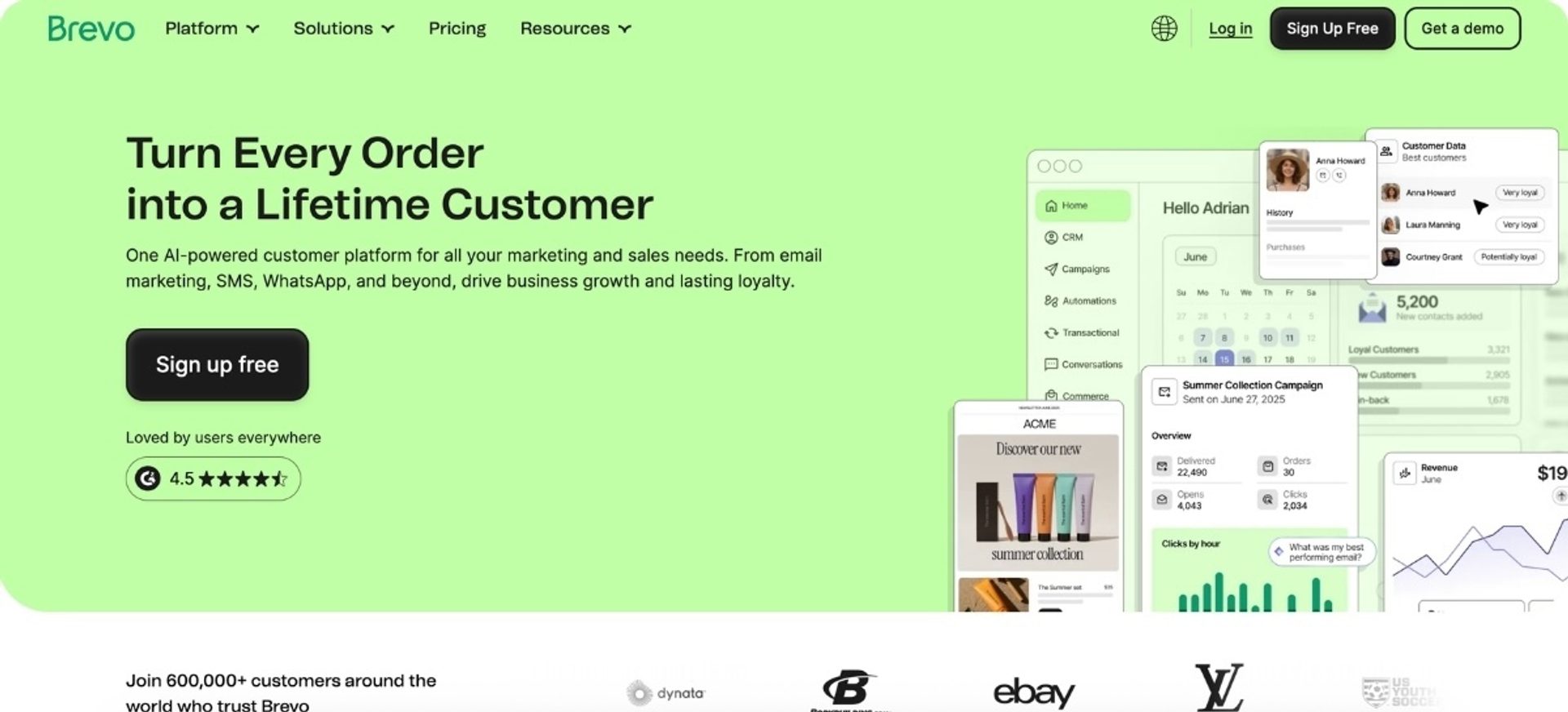
Brevo is a simplicity-first platform. It’s designed to make email, messaging, and basic automation accessible and cost-effective for growing teams. It’s easy to set up, easy to use, and easy to justify on a tight budget. The assumption baked into its architecture is that speed and affordability matter more than depth.
HubSpot takes the opposite approach. Its philosophy is system-led: the platform is built around deeply integrated data, automation, and cross-functional workflows that unify marketing, sales, and customer management under one roof. The assumption here is that long-term growth requires everything connected, and that teams should be willing to invest in the technical setup required for that infrastructure.

Ironically, AI is eroding the core advantage of each platform at the same time. As intelligent workflows handle more of the complexity in the background, simplicity becomes less of a selling point and more of a sign of limited capability. At the same time, the case for investing in a heavy, system-led platform weakens when AI can handle the connective tissue that once required deep infrastructure to maintain.
Strip away the positioning, and a practical question becomes increasingly important: how does each platform perform when it counts?
Brevo vs. HubSpot: Core feature comparison
With a budget-friendly entry point on one side and an enterprise-grade platform on the other, a feature-level comparison feels almost arbitrary. Below we’ve broken down how Brevo and HubSpot perform across the categories that matter most to growth-focused marketing teams — not by what each platform offers on paper, but by what it actually enables in practice.
Here’s a quick overview:
| Category | Brevo | HubSpot |
| AI Capabilities | Campaign-level assistance for content and timing. Doesn’t extend into workflow logic or journey decisions. | Full-funnel AI across content, scoring, and reporting. Most meaningful features are locked behind higher tiers. |
| Marketing Automation | Accessible from lower tiers. Handles simple sequences well, but complex conditional logic and cross-channel journeys hit a ceiling quickly. | Deep branching logic and CRM-connected triggers. Built for complex journeys, but advanced features carry a steep tier premium. |
| Segmentation | List-based and easy to manage. Sufficient for standard use cases, but behavior-layered audience building quickly exceeds its limits. | Real-time, behavioral, and lifecycle-based filters with high precision. Powerful, but requires clean data and sustained configuration effort. |
| CRM | Lightweight deal and contact management included from the free plan. Functional, but not built for complex processes or custom data relationships. | Deep, object-based CRM that underpins the whole platform. Powerful, but requires significant setup and ongoing maintenance. |
| Reporting | Covers campaign essentials clearly. Limited visibility into pipeline impact or revenue outcomes. | Advanced attribution and revenue reporting. Full capability requires Professional tier and above. |
| Integrations | 300+ integrations. Covers most growing team needs, but can become a constraint as stacks grow. | 2,000+ integrations built for complex environments. Depth is a genuine advantage, but adds management overhead. |
| Pricing | Limited free tier available. Pricing based on send volume rather than contacts stored. Plans start at $9/month for 5,000 emails. Sharp increase to $449+/month to access advanced features. | Free version available. Marketing Hub plans start at $20/month for 1,000 contacts. Modular pricing across hubs like CRM, Marketing, Data, Commerce. |
AI capabilities
Brevo and HubSpot both offer AI tools, but for most teams, the practical impact is fairly narrow.
Brevo’s AI centers on campaign-level assistance, with content generation, send-time optimization, and basic predictive tools. These features speed up individual tasks, but they are dictated by marketers and don’t extend into the workflows themselves. The AI helps you build a pre-defined list and write a campaign for them; it doesn’t generate ideas or execute autonomously.
HubSpot’s AI is broader in ambition. Agents span multiple hubs for content assistance, predictive lead scoring, and AI-powered reporting. But breadth and accessibility aren’t the same thing. The most impactful features sit behind Professional and Enterprise tiers, meaning the version of HubSpot AI most teams actually have access to is more limited than the one being advertised.
Both platforms add AI as a layer on top of existing workflows. The marketer still does much of the connective work between what the AI produces and the automations it drives. For teams that expect AI to sharpen targeting, adapt journeys in real time, and improve execution speed without manual intervention, both platforms fall short.
Brevo’s AI is too shallow, and HubSpot’s is too fragmented to add up to something meaningfully greater than the sum of its parts.
Marketing automation
Automation is the single biggest differentiator between these two platforms — and the primary reason teams start reconsidering their current tool as their marketing strategy matures.
Brevo offers a visual automation builder with basic triggers, conditions, and time-based sequences suited to email and SMS. Brevo provides full marketing automation tools free for up to 300 contacts, while unlimited marketing automation starts at $55/month. It works well for straightforward email sequences and simple behavior-triggered messages. But it becomes constraining when teams need multi-step, conditional lifecycle journeys that adapt based on real-time behavior.
Channels like email, SMS, and WhatsApp are covered, but they operate in parallel rather than as part of a unified journey, which limits how sophisticated cross-channel orchestration can actually get.
HubSpot’s automation engine goes significantly further: branching logic, goal-based workflows, cross-object automation, and enrollment triggers tied directly to CRM data. In theory, this enables the kind of lifecycle orchestration that Brevo can’t support. In practice, the most powerful features (custom behavioral triggers, A/B testing within workflows, calculated properties) are gated behind HubSpot’s Professional tier at $800/month. The price jumps are hard to absorb for teams that aren’t already operating at scale.
Segmentation
How well a platform segments audiences determines how relevant everything downstream actually is. Strong personalization is increasingly the difference between marketing that drives pipeline and marketing that generates noise.
Brevo’s segmentation model revolves around list-based filtering, contact attribute conditions, and basic behavioral segments. The biggest strength is its low cost, but this comes with functionality gaps; for example, Brevo cannot create social media content, build websites or blogs, or track marketing activities across different channels together. As customer data complexity increases, Brevo struggles with dynamic, behavior-layered audience building.
HubSpot’s segmentation works across all business functions, not just email marketing. This granular level of control means you can slice data in ways that Brevo can’t match. Active lists, custom properties, lifecycle-stage-based segments, and computed contact scoring create a more powerful engine. But it requires significant setup effort, consistent data hygiene, and cross-hub alignment to deliver on its full potential.
CRM depth and usability
Brevo’s CRM is light by design. The free plan is limited to 50 open deals and 1 pipeline, and the overall system is functional for teams that need basic contact tracking alongside marketing tools. It covers the essentials without adding overhead, but it isn’t built for complex sales processes, detailed lifecycle stage management, or custom data relationships.
HubSpot’s CRM is one of its strongest competitive assets. The Sales Hub is known as the default CRM software for large sales teams, though it presents a steep learning curve for small businesses. HubSpot grows with you: what starts as a marketing tool can expand into a full enterprise CRM with custom objects, hierarchical team permissions, and advanced attribution reporting, without ever migrating data. The deeply structured, object-based architecture serves as the foundation for the entire ecosystem.
The trade-off is that HubSpot requires more investment in onboarding. Heavy configuration and ongoing maintenance can stretch lean teams thin, turning a competitive strength into an operational burden if the resources to manage it aren’t there. Plus, additional budget is required to unlock the Sales Hub and best CRM tools alongside Marketing Hub.
Reporting, attribution, and revenue visibility
The reporting gap between Brevo and HubSpot is one of the widest in this comparison, and one of the most consequential as marketing teams face pressure to connect their activity to business outcomes.
Brevo provides solid reporting for campaign execution based on open rates, click rates, and conversion tracking, but there is little customization. It offers limited visibility into how marketing activity connects to pipeline movement or revenue, which makes it difficult to make a meaningful case for budget or headcount based on the data it surfaces.
HubSpot’s reporting is significantly more advanced. Custom report builders, multi-touch attribution models, revenue attribution, and cross-hub analytics dashboards give marketing teams the numbers they need to justify budget and headcount. Users often report that HubSpot excels in user experience, with many praising its intuitive drag-and-drop builder for dashboards and reports without complex configurations.
The caveat, again, is access. Full multi-touch attribution and custom reporting require Marketing Hub Professional or Enterprise tiers, adding once again to a cost base that scales steeply as teams grow.
Brevo vs. HubSpot pricing: what you really pay as you grow
Brevo prices on email send volume rather than contact count, with unlimited contacts across all plans. Entry-level plans start at $9/month, making it one of the most accessible options for startups and lean teams. Costs scale predictably as sending volume grows, but teams that outgrow the core feature set face a sharp jump to unlock advanced functionality that can arrive sooner than expected.
HubSpot’s model is tiered. Each hub (Marketing, Sales, Service, etc.) has separate pricing, and costs scale across contact limits, seats, and feature access. The Marketing Hub Starter plan begins at $20/month for 1,000 contacts, so it’s within reach for budget-conscious teams. But the automation, reporting, and AI capabilities that make HubSpot worth choosing sit almost entirely behind Professional, which starts at $800/month for 2,000 contacts. Teams frequently discover mid-cycle that features they assumed were included require an upgrade. Professional and Enterprise customers also face compulsory onboarding fees (starting at $3,000) on top of subscription costs.
At entry level, Brevo is the clear winner on cost. As teams scale, HubSpot’s curve steepens sharply while Brevo’s stays flat — but Brevo’s capability curve flattens with it. Teams usually have to compensate through workarounds, additional tools, or an unplanned migration.
The cost of workarounds, the overhead of managing tool fragmentation, and the time spent operating infrastructure that wasn’t built for how your team actually works all have a ripple effect on total cost of ownership. It’s worth asking how much of your team’s capacity will go toward forcing a platform to fit your strategy, before committing to it.
Does Brevo or HubSpot fit your business needs best?
Brevo and HubSpot each serve a specific kind of buyer well.
Brevo is the stronger fit for solo marketers and small teams with straightforward email and SMS needs, where simplicity and low entry cost matter more than automation depth. If budget is the primary constraint and campaigns don’t yet require complex journey logic, it covers the essentials without unnecessary overhead.
HubSpot suits organizations where CRM infrastructure is the strategic priority and marketing sits within a broader revenue operations function. It rewards teams that have the budget, technical resource, and operational capacity to build and maintain a connected ecosystem.
The profiles above represent the ends of the spectrum. What they don’t account for is the space in between — and that’s where a significant and growing number of marketing teams find themselves.
Many teams are preparing for more advanced email sequences but aren’t in a position to commit to the cost and complexity of a full HubSpot ecosystem. Brevo’s automation and orchestration capabilities feel too constrained for where their strategy is heading, but HubSpot’s infrastructure introduces more financial and operational overhead than the team can realistically absorb. They need depth without the complexity tax, and power without the price cliff.
ActiveCampaign: A platform with the power of HubSpot and the accessibility of Brevo
The smartest move isn’t to pick a cheap platform you’ll outgrow or one you’ll take time to grow into. ActiveCampaign is built to deliver from day one and scale as far as you need to go. There’s no need to choose between depth and usability. Instead, you get sophisticated, integrated, autonomous marketing at a price that’s easy to commit to from day one.

Complex campaign orchestration, made simple with AI
Sophisticated lifecycle marketing has traditionally meant sophisticated systems. Teams either accept simpler tools with lower ceilings, or invest in powerful platforms that demand significant setup, training, and ongoing maintenance before they return value. ActiveCampaign is built on a different premise.
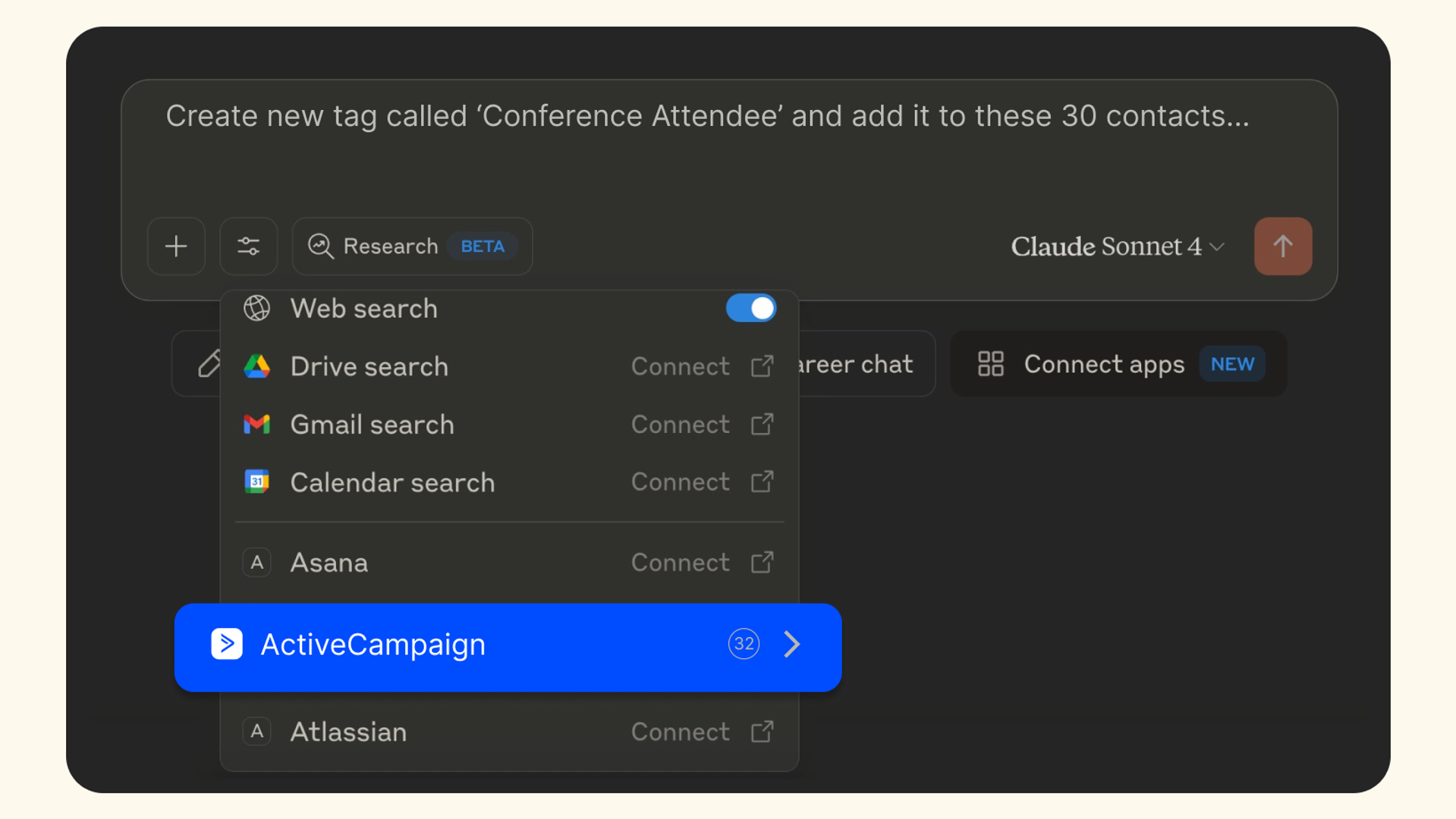
Active Intelligence is a unified AI layer built directly into the automation engine, not bolted on as a separate module or distributed across hubs. Simply describe your goals, and AI acts directly inside workflows rather than producing outputs the marketer then has to apply manually. Complex orchestration doesn’t require a steep learning curve to access.
AI-Suggested Segments proactively identify high-value audiences that manual analysis alone might miss. The AI Campaign Builder generates complete, goal-aware campaigns from a single prompt, and the automation engine builds multi-step workflows based on goals, rather than requiring teams to configure them from scratch. The intelligence is embedded in the execution, not layered on top of it.
Go hands-on and try the AI Campaign Builder yourself to see how easy it is.
Teams no longer need to draw their own conclusions from campaign data. Active Intelligence surfaces Autonomous Insights and offers actionable recommendations. It flags what’s underperforming, what to adjust, and where the next opportunity is, before you even think to look.
The promise of AI in marketing platforms has always been that it would make sophisticated execution more accessible. ActiveCampaign makes that a practical reality, with AI embedded in the execution layer rather than added on top of it.
Read more about how Active Intelligence compares to Brevo and HubSpot’s AI offerings:
- AI Marketing Comparison: ActiveCampaign Active Intelligence vs. Brevo Aura
- AI Marketing Comparison: ActiveCampaign Active Intelligence vs. HubSpot Breeze
Advanced automation, synced across every channel
ActiveCampaign automations cover 45+ trigger types, 50+ responsive actions, multi-step branching, automation goals, and A/B/C/D/E split testing, all available from day one, without tier gating. Teams aren’t working toward the version of the platform that justifies the investment; they have access to the full automation engine from the outset.
Getting started quickly doesn’t mean building from scratch, either. With 1,000+ pre-built automation recipes and a conversational AI workspace, teams can launch sophisticated workflows in hours, adapting proven templates to their own strategy rather than configuring complex logic from zero.
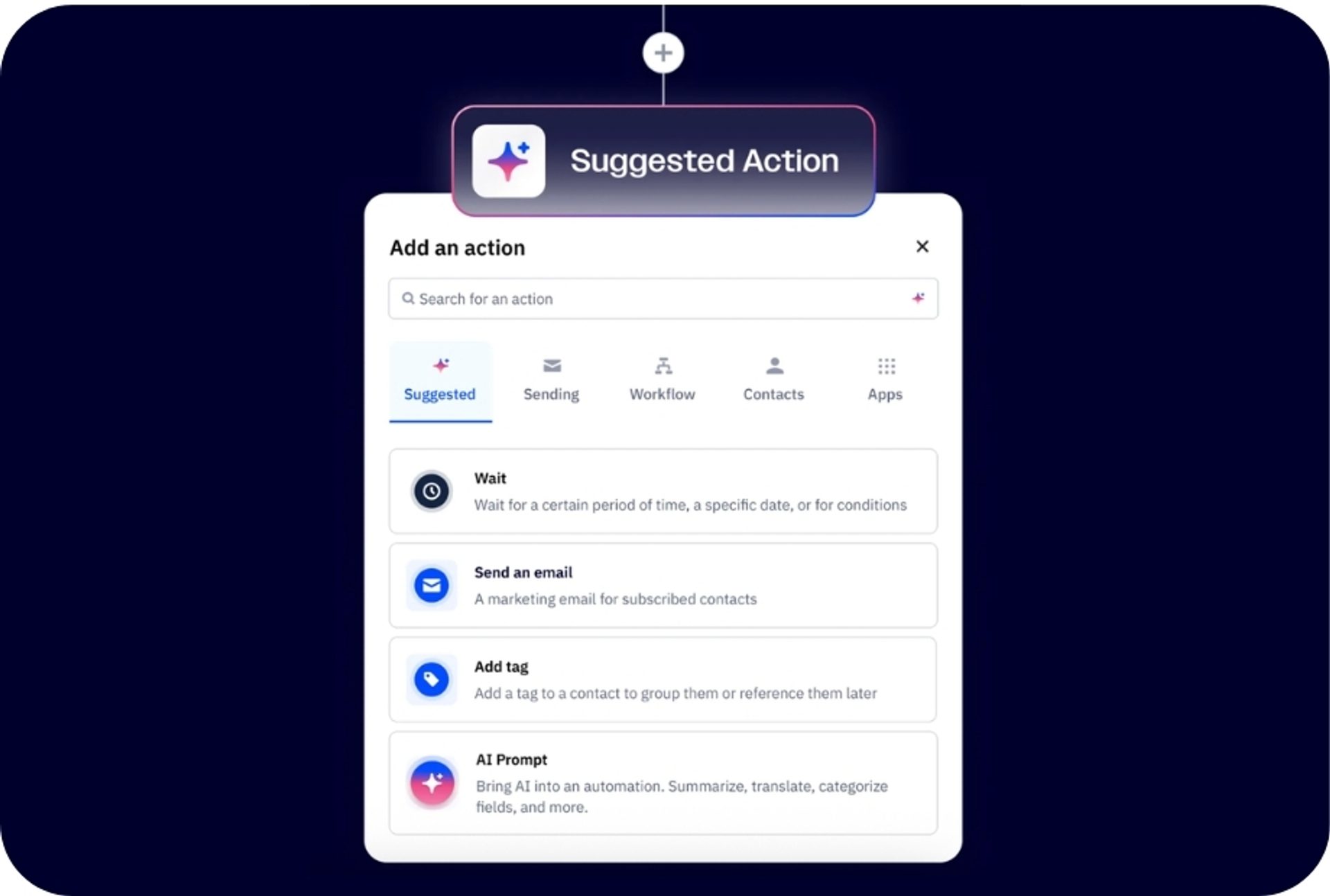
ActiveCampaign orchestrates multi-channel campaigns across email, WhatsApp, SMS, CRM, and on-site messaging within a single automation engine, driving end-to-end customer journeys from acquisition through retention and expansion. 1,000+ integrations extend the data layer and optimization recommendations are built into the feedback loop, so teams can act on performance data without switching context or tools.
Powerful marketing at a predictable price
ActiveCampaign is designed to avoid the cost escalation that catches teams off guard. There are no mandatory onboarding fees, no credit-based AI consumption charges, and no tier jumping required to access the features that make the platform worth using. The price you commit to reflects the platform you actually get.
Switching is made easier with free agentic 1:1 migration, reducing the friction that keeps teams locked into platforms they’ve outgrown. And for teams that want to evaluate before fully committing, a 30-day money-back guarantee means there’s no risk.
Startup Valencia doubled their click-through rate, increased prospects 5x, and achieved an 83% email open rate after switching from HubSpot.
UBITS saw a 30% increase in student enrollment and a 50% increase in productivity after switching from Brevo to ActiveCampaign.
Power and accessibility don’t have to be a trade-off when ActiveCampaign doesn’t make you choose between the two.
Find out more about:
If you’re ready to start with the right choice from day one, start your free trial now.
FAQs
Which platform has the best AI features for email marketing: Brevo or HubSpot?
Both Brevo and HubSpot offer AI features for email marketing, but the depth and accessibility differ significantly. Brevo’s AI is useful for campaign-level tasks like generating copy and optimizing send times. HubSpot’s AI is broader in scope, covering content, lead scoring, and reporting, but the most impactful capabilities are locked behind Professional and Enterprise tiers that most teams can’t justify for AI alone.
For teams that need AI embedded directly in the automation engine, ActiveCampaign’s Active Intelligence covers email marketing workflows end-to-end, proactively identifying segments, generating on-brand campaigns and automation flows, and optimizing them in response to real customer behavior.
How can I switch from HubSpot or Brevo to ActiveCampaign?
The core steps in switching from HubSpot or Brevo to ActiveCampaign are exporting your contact data, migrating automations, and reconnecting integrations. The process is more straightforward than most teams expect, particularly if your data is clean and your workflows are well-documented. ActiveCampaign offers free agentic migration and onboarding to manage the transition, AI tools that help teams get up to speed and kick off campaigns from day one, and a 30-day money-back guarantee if the platform doesn’t turn out to be the right fit.
Why does HubSpot get more expensive as you scale?
HubSpot’s pricing scales across three variables at once: contact volume, user seats, and feature tier. The features marketing teams typically prioritize, like advanced automation, AI tools, and revenue reporting, sit behind the Professional tier at $800+/month, plus mandatory onboarding fees. As lists and teams grow, costs increase across all three dimensions simultaneously, which makes the total spend harder to predict than the entry-level pricing suggests.
Many teams eventually consider an alternative that combines a powerful system with a more accessible price point. ActiveCampaign includes full feature access from entry-level plans, with no mandatory onboarding fees and no credit-based AI consumption, making total cost of ownership significantly more predictable as teams grow.