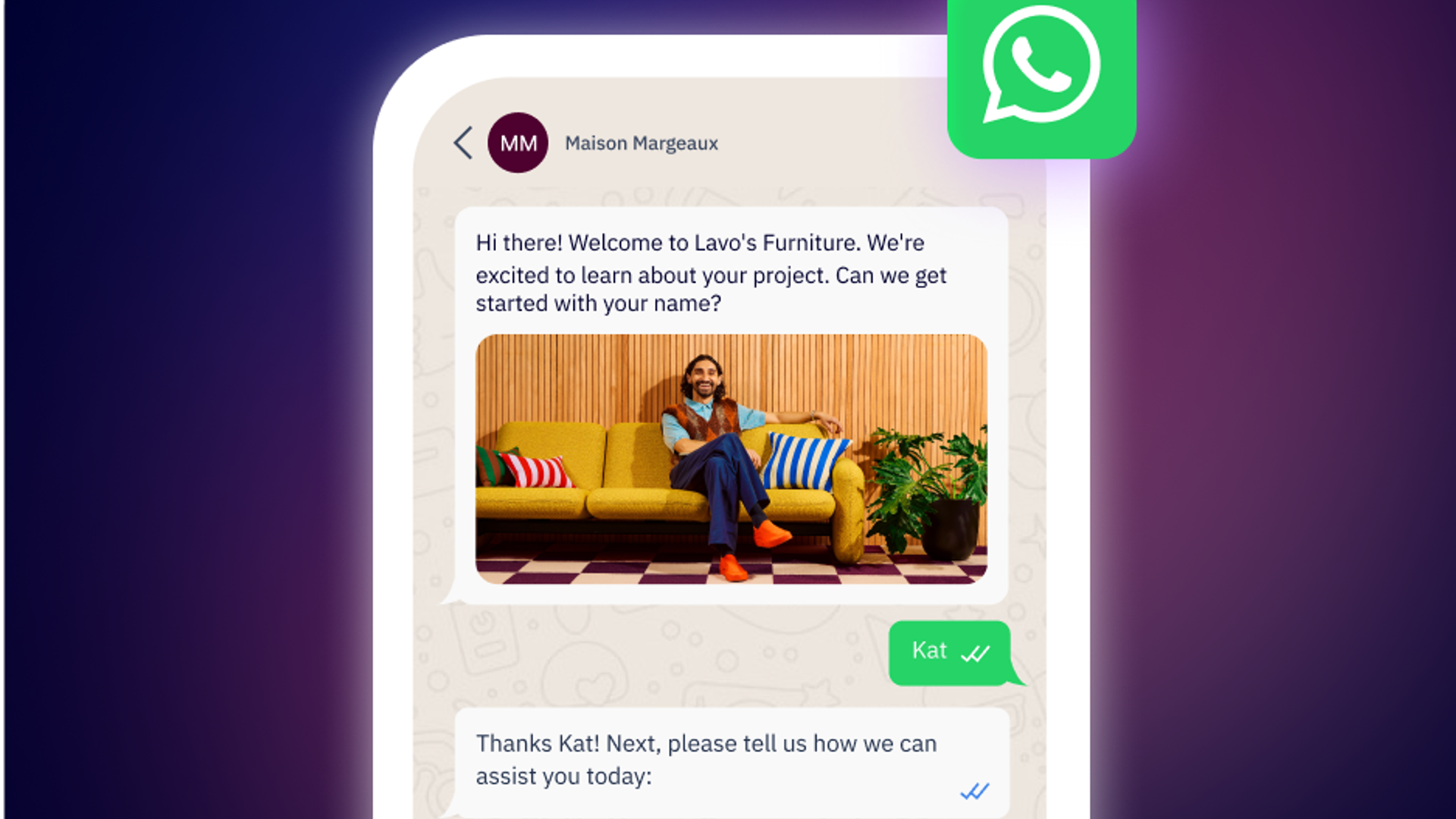
There's a very good chance your customers are already on WhatsApp. More than 3 billion people use the platform monthly, and over 175 million messages a business every day. It's a powerhouse of a channel that deserves to be treated like one.
WhatsApp is, however, more delicate than channels like email. Meta reviews every template before it goes out, monitors delivery quality in real-time, and can pause or permanently restrict accounts that trigger too many blocks or spam reports. Opt-outs are final, and there's no re-engagement campaign for a contact who's blocked you. That makes the volume-first approach that might work elsewhere an active liability here.
The businesses getting results here have figured out that WhatsApp rewards systems rather than volume. Conversations that trigger based on real behavior, route to the right person, and connect back to the CRM. WhatsApp automation is how you build those systems—and this guide shows you where to start.
What is WhatsApp automation?
WhatsApp automation involves using WhatsApp marketing software to send, manage, and respond to conversations at scale rather than handling each message manually. It replaces the tap-by-tap workflow of the free Business App with programmable processes that send the right message at the right moment based on what a customer does.
There are different ways that you can access WhatsApp messaging as a business. The WhatsApp Business App is free and easy to set up, ideal for small businesses managing up to 20 daily messages. But it's limited to one device and only offers basic automations, like quick replies and welcome messages. You can't create conditional flows, connect to databases, or execute actions on external systems.
The WhatsApp Business API, on the other hand, is purpose-built for medium to large businesses handling 50+ daily messages. It supports team collaboration, advanced automation, and CRM integration. The API unlocks WhatsApp marketing automation, broadcast sends, third-party integrations, and multi-user access.
Here's how the two options compare side by side:
| Feature | Business App | Business API |
| Price | Free | Per-conversation pricing |
| Devices | 1–5 linked devices | Unlimited agents |
| Automation | Quick replies, away messages | Full workflow automation, chatbots |
| Broadcasts | Up to 256 contacts (must save your number) | Unlimited opted-in contacts via approved templates |
| CRM integration | None | Full integration |
| Team collaboration | Limited | Shared inbox, routing, assignment |
You have three options to access the API:
- Build and maintain a direct integration (requires ongoing developer resources).
- Use a third-party connector (faster but still requires configuration).
- Work through an official WhatsApp Business Solution Provider (BSP) that handles API access, verification, and compliance as part of the platform.
Your choice here impacts how fast you can get up and running and what you're able to build once you're all set up.
The core capabilities that make WhatsApp automation work
WhatsApp automation isn't a single feature. The capabilities below are what separate a team that's managing WhatsApp from one that's using it to grow.
Automated conversation flows handle qualification and routing without agents
A conversation flow elevates WhatsApp from a 1:1 messaging app into a scalable channel. Instead of a single manual reply or a large-scale blast, a flow runs a full conversation automatically, branching based on what the contact says or does.
Flows come in two directions:
- Inbound flows trigger when a contact messages you first, which is useful for responding to inquiries instantly, at any hour, without anyone on the other end.
- Outbound flows are ones you initiate, like a campaign, a reminder, or a follow-up after a deal stage changes.
Suppose a new lead fills out a form on your website. That triggers an outbound flow where they get a WhatsApp message asking two questions: what's their budget, and when are they looking to start. Their answers define what happens next. Enough budget? High-intent, and the conversation routes to a sales rep. Not ready yet? They go into a nurture sequence.
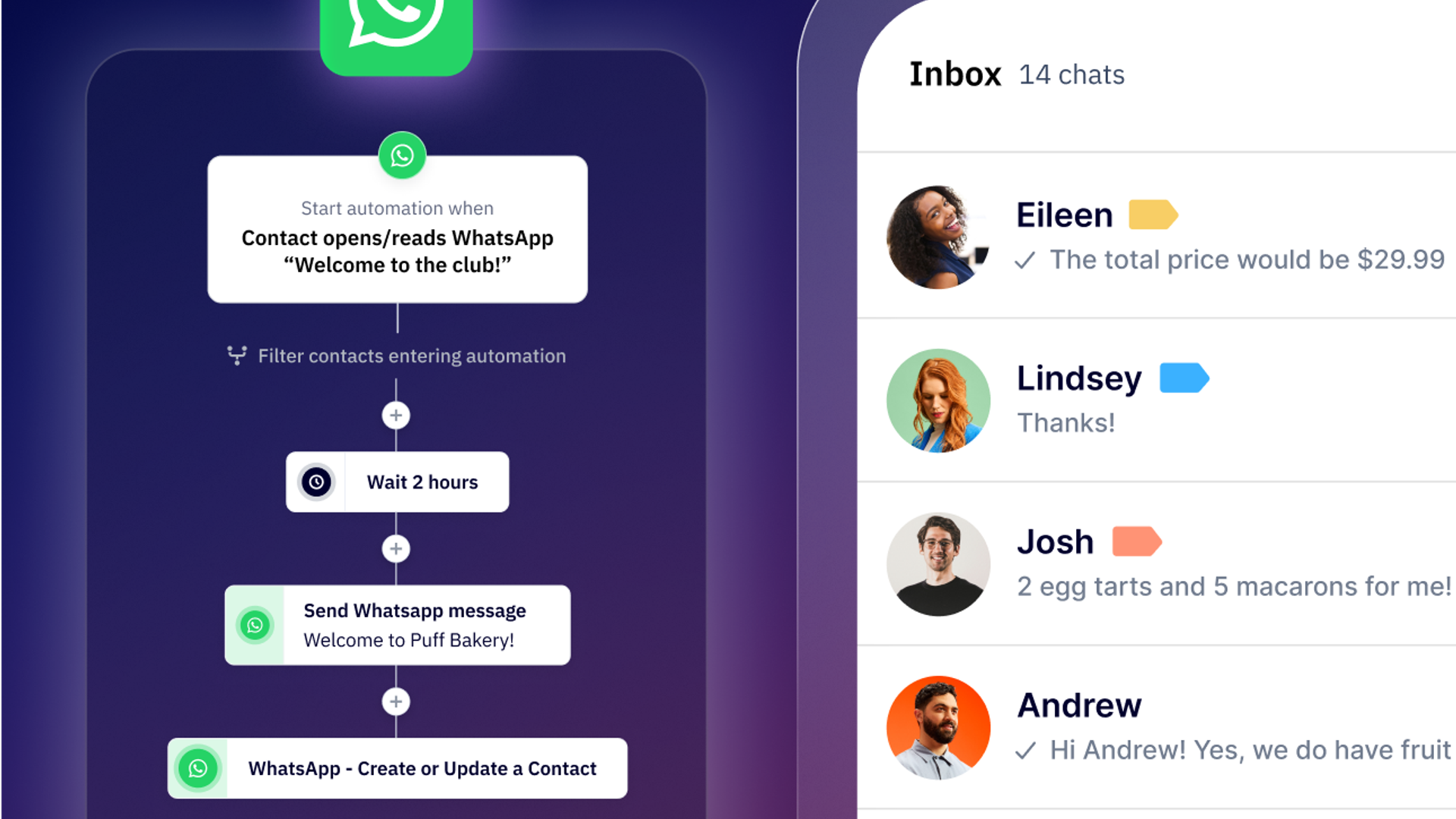
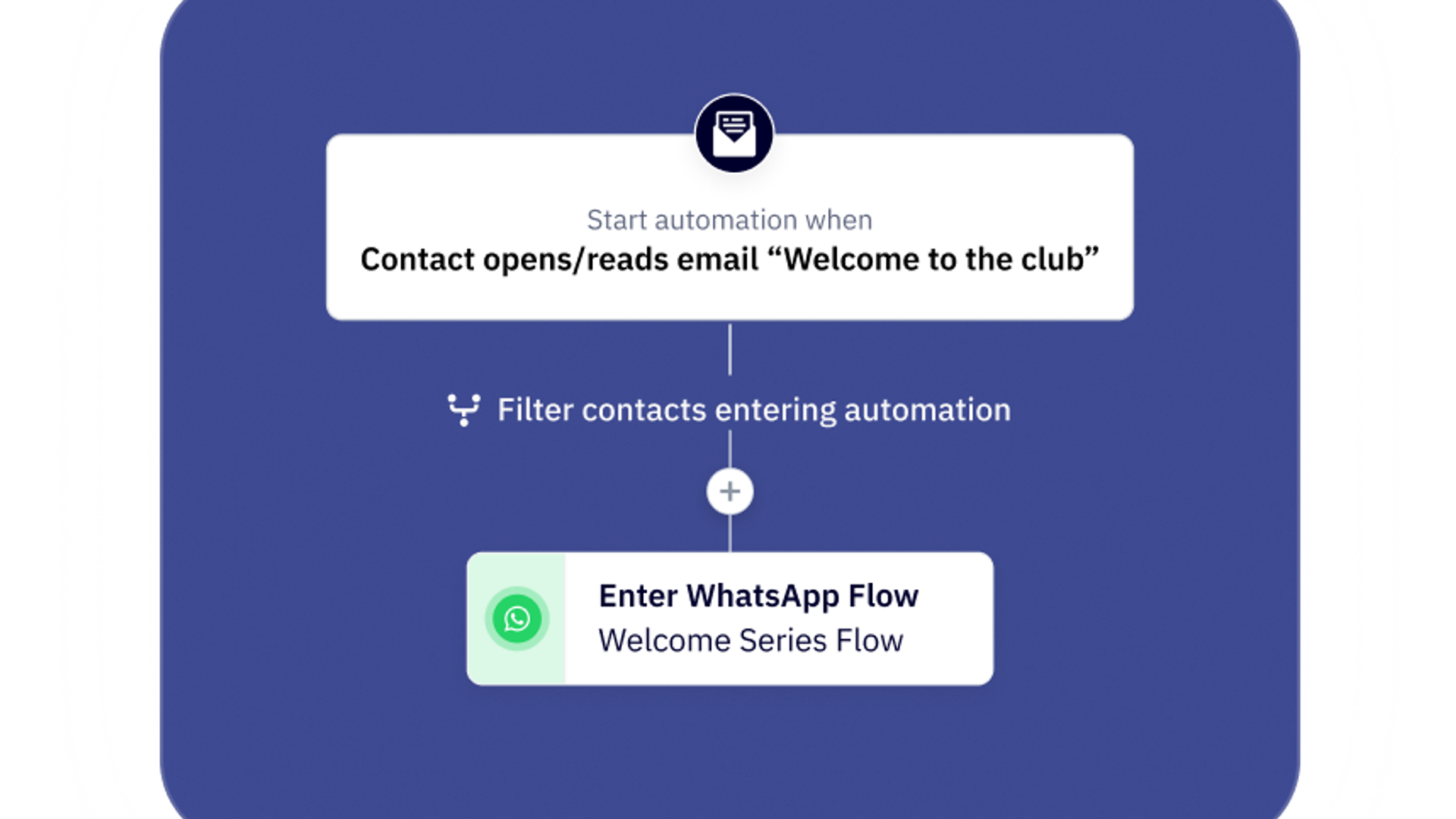
ActiveCampaign's WhatsApp Flows give you a no-code visual builder to configure both. You can set up inbound paths that respond to specific keywords or conditions, and outbound paths that fire from contact list uploads, API triggers, or directly from an automation.
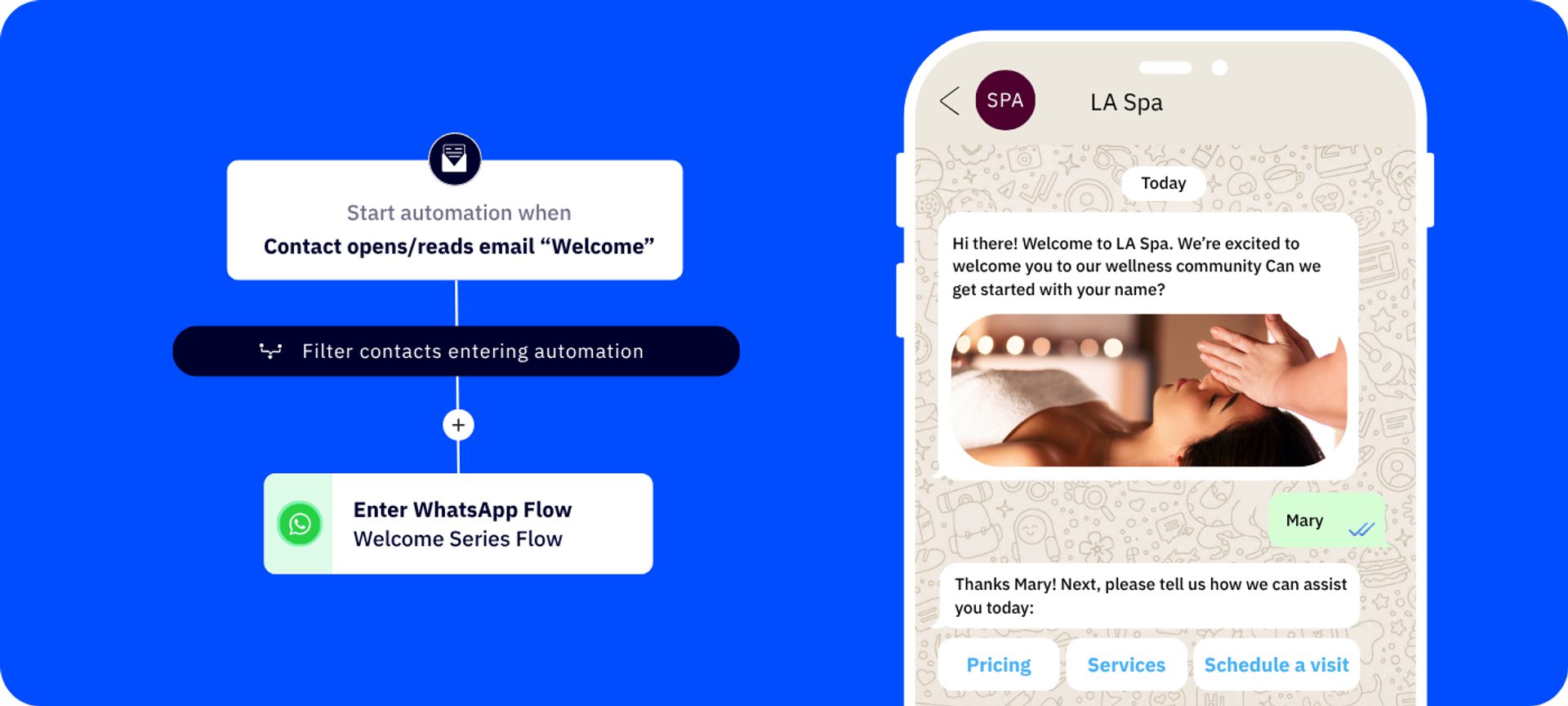
From there, branching logic handles the qualification, so agents only step in when the conversation needs a human in the loop. AI-Suggested Automations can also recommend flow logic based on a contact's behavior and journey stage, so you're not building from scratch every time.
Behavioral triggers send messages when customers act, not when you schedule
Schedule-based messaging treats all contacts the same regardless of what they've done. A Tuesday 10am blast doesn't care that one contact just abandoned a cart and another hasn't visited your site in three weeks. So as far as engagement strategies go, it won't yield very promising results.
In contrast, behavioral triggers ensure your messages fire at the exact moment a contact's action signals intent or risk. For example:
- A cart abandonment trigger that fires when a shopper adds items but doesn't check out. Thirty minutes later, a WhatsApp message arrives with the specific products they left behind and a one-tap link to complete the purchase.
- A deal stage change that goes off when a sales rep moves a deal to "Proposal Sent" in the CRM. An automated WhatsApp message follows up with the prospect to confirm receipt and ask if they have questions.
- A 14-day inactivity trigger that sets off when a contact who was previously active goes quiet for two weeks. A re-engagement WhatsApp message triggers with a personalized offer or a simple check-in based on their last interaction.
ActiveCampaign builds this on top of your CRM data, so every trigger fires with full contact context—what they've bought, where they are in the funnel, how they've engaged across every channel. Whatever happens in the conversation feeds straight back into their record, keeping everyone working from the same picture.
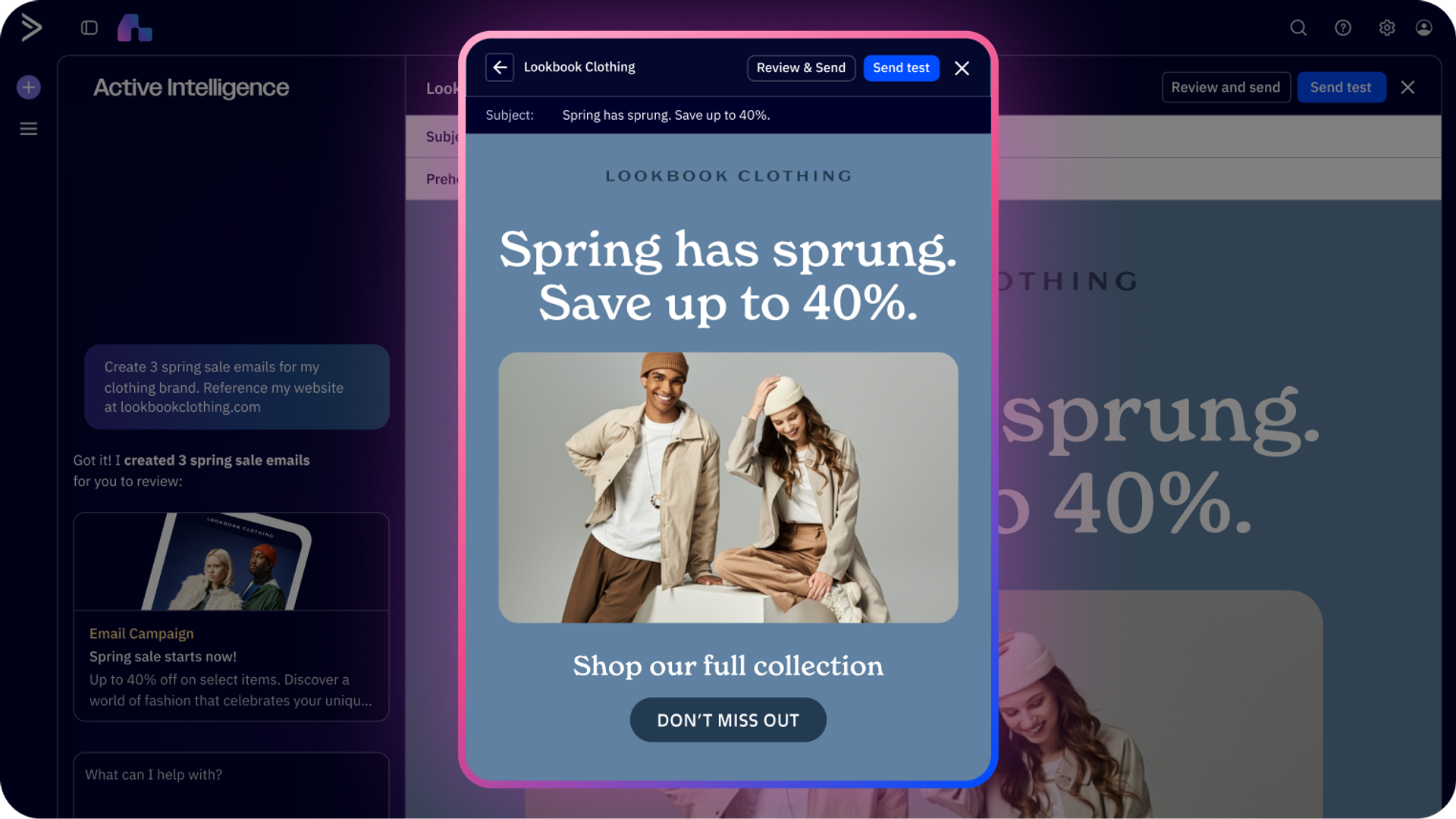
Active Intelligence, the AI engine powering ActiveCampaign's autonomous marketing platform, runs across that same data in real-time. It analyzes customer behavior and then recommends what to send next based on where a contact is in their journey.
Bulk messaging reaches targeted segments with personalized sends
Bulk WhatsApp messaging is the ability to send a broadcast WhatsApp message to a targeted group of contacts at once. It’s distinct from a blast broadcast, which doesn’t take per-contact targeting into account. Bulk messaging is a precision tool if you harness it well, but do it poorly, and it might end the channel for you.
Meta continuously monitors message template performance using metrics such as block rates, spam reports, and engagement levels. Based on these results, templates may be paced or paused to protect sender reputation and maintain high message quality. Send an irrelevant broadcast to the wrong segment, and you'll trigger opt-outs and Meta restrictions that can permanently damage your account.
ActiveCampaign handles this by building broadcasts on Meta-approved templates with dynamic fields that pull from CRM data: name, product interest, last purchase, and deal stage. With bulk messaging, you can send promotional WhatsApp messages to any segment of your contact list, with added personalization to improve engagement.
The relationship between broadcasts and Flows is complementary:
- Broadcasts handle the one-to-many outbound send for re-engagement campaigns, promotions, and announcements.
- Flows handle the automated conversation that follows when a contact replies, and can interact with other automation types like form submissions or email follow-ups.
The AI Campaign Builder generates WhatsApp message copy based on the audience segment and campaign goal. It drafts from the brief rather than from a blank page, which cuts creation time when you're running multiple campaigns simultaneously.
Shared inbox and assignment logic keep handoffs from dropping leads
Replies need to land somewhere a human can manage them. Without a shared team inbox, they'll pile up in individual accounts and agents will miss conversations. Customers who already went through a qualification flow have to start over when they finally reach a person.
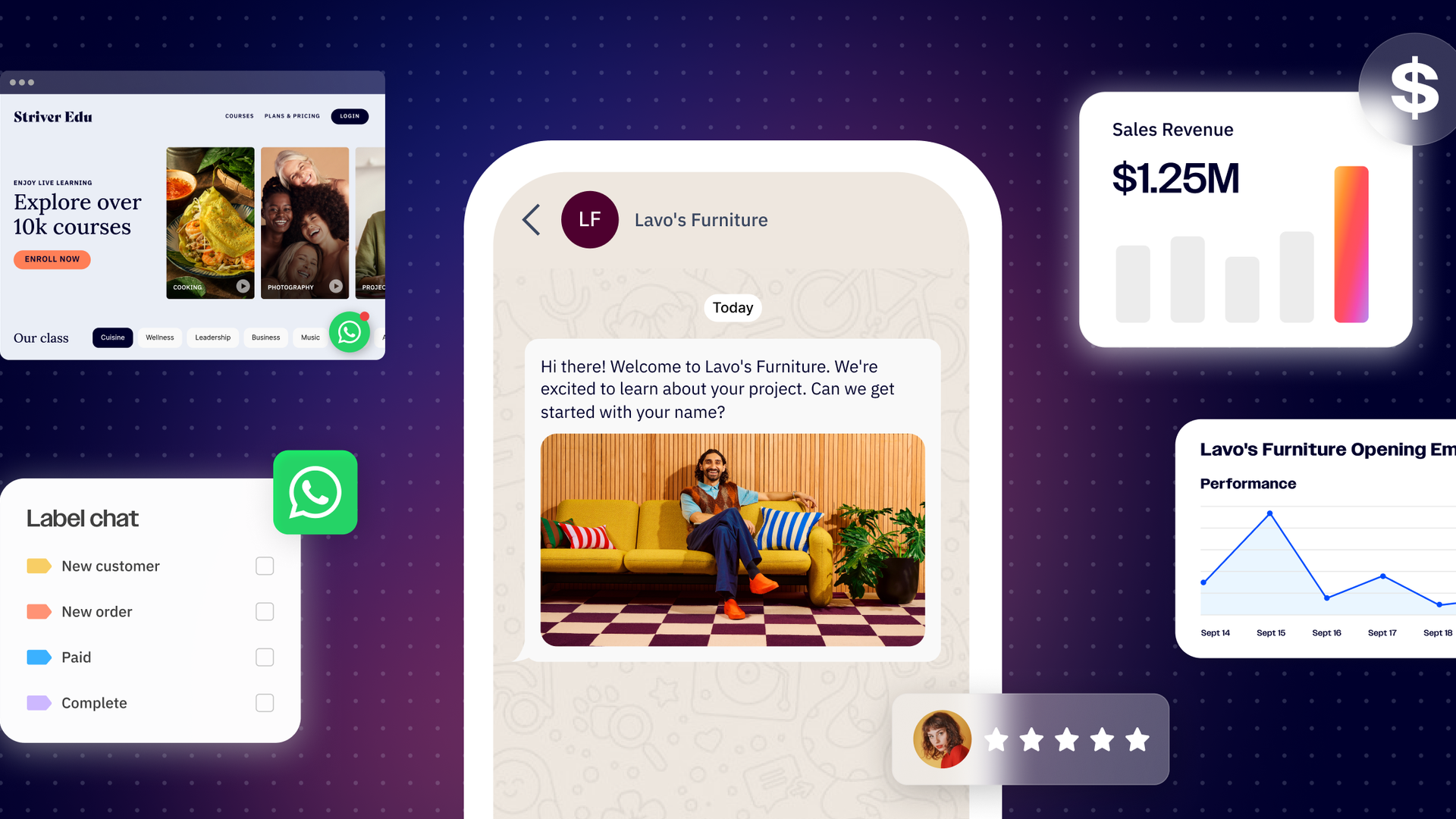
ActiveCampaign's shared WhatsApp inbox makes it easy to streamline customer communications. All conversations are centralized with labels, filters, and the full chat history visible to everyone on the team. Automatic assignment also routes conversations to specific agents based on lead qualification or tags.
The process works like this:
- A Flow handles the initial qualification, asks the right questions, and tags the contact with the relevant data.
- The assignment step routes that conversation to the right person based on those tags, territory rules, or round-robin distribution.
- The agent picks up mid-thread with full context and doesn't need to ask the customer to repeat anything.
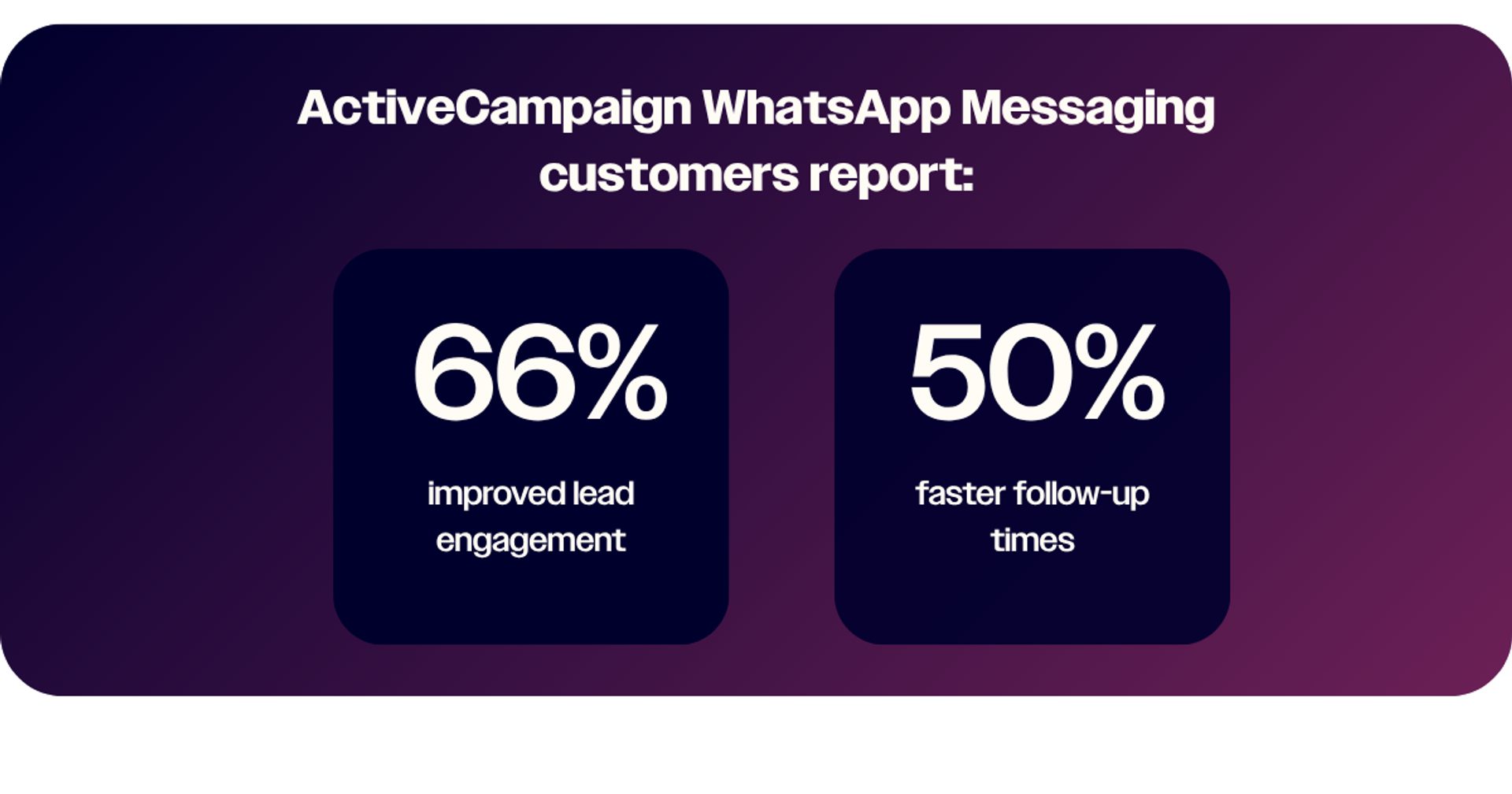
This is the bridge between automation and human conversation. ActiveCampaign's WhatsApp customers report cutting follow-up times by more than half after implementation, alongside a 66% improvement in lead engagement.
See the full report: The ROI of WhatsApp Messaging
Cross-channel automation runs WhatsApp alongside email, SMS, and CRM data
Siloed communication spells doom for any strategy that depends on knowing your customer. A contact can book a demo over WhatsApp and still get a cold outreach email an hour later, because nothing talked to anything else.
If WhatsApp, email, and SMS run inside the same automation, then a single workflow routes each contact to the right channel based on behavior or engagement history. For example, a customer buys a product and receives an email confirmation with their full order summary and invoice. When the order ships, an SMS goes out with the tracking link: short, urgent, designed to be read in two seconds while they're doing something else. Then, three days after delivery, a WhatsApp message sends a short how-to video showing how to get the most out of the product, with a prompt to reply if they have questions. All from one automation, all informed by the same contact record.
ActiveCampaign orchestrates full cross-channel campaigns from one platform. WhatsApp marketing can be automatically aligned with other channels using shared contact data and a unified automation engine. Tags applied during Flows, qualification data collected via WhatsApp, and engagement history all feed into the same built-in CRM that powers email and SMS decisions. Automations built by Active Intelligence are also optimized for engagement across channels, so the platform routes each contact based on where they engage.
Compliance and setup get easier when your platform is an official WhatsApp BSP
To run WhatsApp automation at scale, businesses need access to the WhatsApp Business API. That access doesn't come automatically, and the path you choose to get it—integration vs. third-party connector vs. BSP—matters more than you might realize.
As a BSP, ActiveCampaign can guide you through the entire process, from business verification to building an automated WhatsApp experience right away. You don't have to worry about building or maintaining an integration, and you don't have to wait for tech support to get to production.
ActiveCampaign also handles the compliance infrastructure that trips up teams trying to get started: business verification with Meta, template submission and approval, opt-in capture by message category, and the ongoing monitoring that keeps your account in good standing. None of it requires a developer or a separate compliance tool; it's part of the platform from day one.
Reporting connects WhatsApp conversations to pipeline and revenue
If you can’t tell the CFO what your WhatsApp investment is worth, the channel will always be treated as an experiment—and experiments are the first thing on the chopping board when budgets tighten.
A proper reporting framework connects conversations to outcomes by tracking:
- Open and reply rates
- Qualification-to-handoff ratios
- Time-to-first-response
- Meetings booked from Flows
- Cart recovery revenue
- Pipeline influence by channel
ActiveCampaign's reporting provides cross-channel insights that tie specific actions to specific people. You can see how an individual contact moved from clicking on an email to visiting a landing page, to making a purchase, and then entering a follow-up automation. It gives you a complete, person-centric view of your marketing performance across email, SMS, WhatsApp, and your website.
And because WhatsApp runs on the same platform as the CRM, every conversation ties back to the contact record. Reporting connects channel activity directly to pipeline and revenue.
ActiveCampaign’s WhatsApp Messaging ROI Report puts numbers on what this looks like: 94% of customers see ROI within 12 months. Teams using ActiveCampaign’s WhatsApp automation save 5 hours weekly and see slashed inquiry response times and improved lead engagement.
Want to model your own projected returns?
Get started with WhatsApp automation in ActiveCampaign
Every month you stay on the free WhatsApp Business App is a month of leads answered late, conversations lost to individual inboxes, and compliance risk accumulating.
ActiveCampaign helps you cover the distance between what WhatsApp can do and what you're currently getting from it. We have the infrastructure and the customer results to prove it's worth the move.
Book a demo to learn how you can unlock the full potential of WhatsApp automation.
WhatsApp automation FAQs
Which is the best WhatsApp automation tool?
The best WhatsApp automation tool depends on what you need WhatsApp to connect to. If you're looking for WhatsApp automation that runs alongside email, SMS, and a built-in CRM on the same platform, ActiveCampaign is purpose-built for that. It's an official Meta BSP, which means API access, compliance, and setup are handled without needing a developer or a separate integration tool.
Do I need a developer to set up WhatsApp automation?
You don't need a developer to set up WhatsApp automation if you work through a BSP like ActiveCampaign. Working with an official BSP gives you all the benefits of the API without the complexity. ActiveCampaign manages onboarding, compliance, integration, and billing, with a transparent pricing structure that charges only for the conversations you send. You'll have no-code access to advanced automation, templates, and reporting tools.
How do I measure the ROI of my WhatsApp automations?
You measure the ROI of your WhatsApp automations by tracking open rates, reply rates, qualification-to-handoff ratios, cart recovery revenue, and meetings booked from flows. Use built-in reporting and CRM integration to monitor opens, clicks, conversions, and ROI alongside other channels. ActiveCampaign's WhatsApp ROI Calculator can help you model projected returns based on your volume, team size, and use cases.