Maybe ActiveCampaign feels like more than you need right now. Maybe you're comparing several marketing automation platforms before you commit, or checking whether something out there fits you better. Whatever brought you here, you're likely looking for an answer to your question: which marketing platform is actually right for you?
Before we answer, let's address the elephant in the room. We're ActiveCampaign, writing about ActiveCampaign alternatives, so you'd be right to be a little bit skeptical about our recommendations. The truth is that nobody watches this category more closely than the platform competing in it, so we're pretty well informed on where each alternative actually stands right now.
We won't pretend that we're neutral: we think ActiveCampaign is the best fit for most growing teams. But each tool in this list of our competitors also does something genuinely well and, in some instances, may suit you better. There's no single best marketing platform; there's only the right fit for what you're trying to accomplish. The six tools below are aligned to different use cases, with an honest look at where they excel and where they might start holding your team back.
We'll take a quick look at what you'll get from each platform, as well as where you may start to see growing pains emerge. If you're ready to compare these tools head-to-head against ActiveCampaign, skip ahead to the situation that sounds most like yours.
| Platform | Where it shines | Where it falls short | Best fit |
| ActiveCampaign | Deep, branching automation, a native CRM, and Active Intelligence across email, SMS, and WhatsApp | No free plan and can be more powerful than the simplest setups need | Growing teams that want marketing to automate personalize, and adapt |
| HubSpot | Broad all-in-one suite with a strong CRM and inbound tools | Price increases into the enterprise tiers | Well-funded teams that want one big platform for everything |
| Mailchimp | Familiar, easy, and quick to get sending | Shallow automation and a thin CRM you outgrow | Simple newsletters and early-stage sends |
| Klaviyo | Ecommerce flows and revenue data, tuned for online stores | Storefront-only focus with little beyond it | Pure Shopify or DTC shops operating in the ecommerce space |
| GetResponse | Wide feature range, including email, funnels, and webinars | Broad, but masters few of those lanes | Teams that want lots of tools under one roof |
| Brevo | Low-cost, multichannel sending with SMS built in | Lighter automation and a thinner intelligence layer | Budget-conscious, early-stage senders |
| Constant Contact | Simple, dependable email that's easy to run | Basic automation and limited segmentation | Small businesses, nonprofits, and event senders |
1. HubSpot: Powerful, polished, and pricey
Often considered the all-in-one rival to ActiveCampaign, HubSpot offers a real CRM and marketing depth to match. The catch is what it cost marketers to get there in budget, complexity, and commitment.
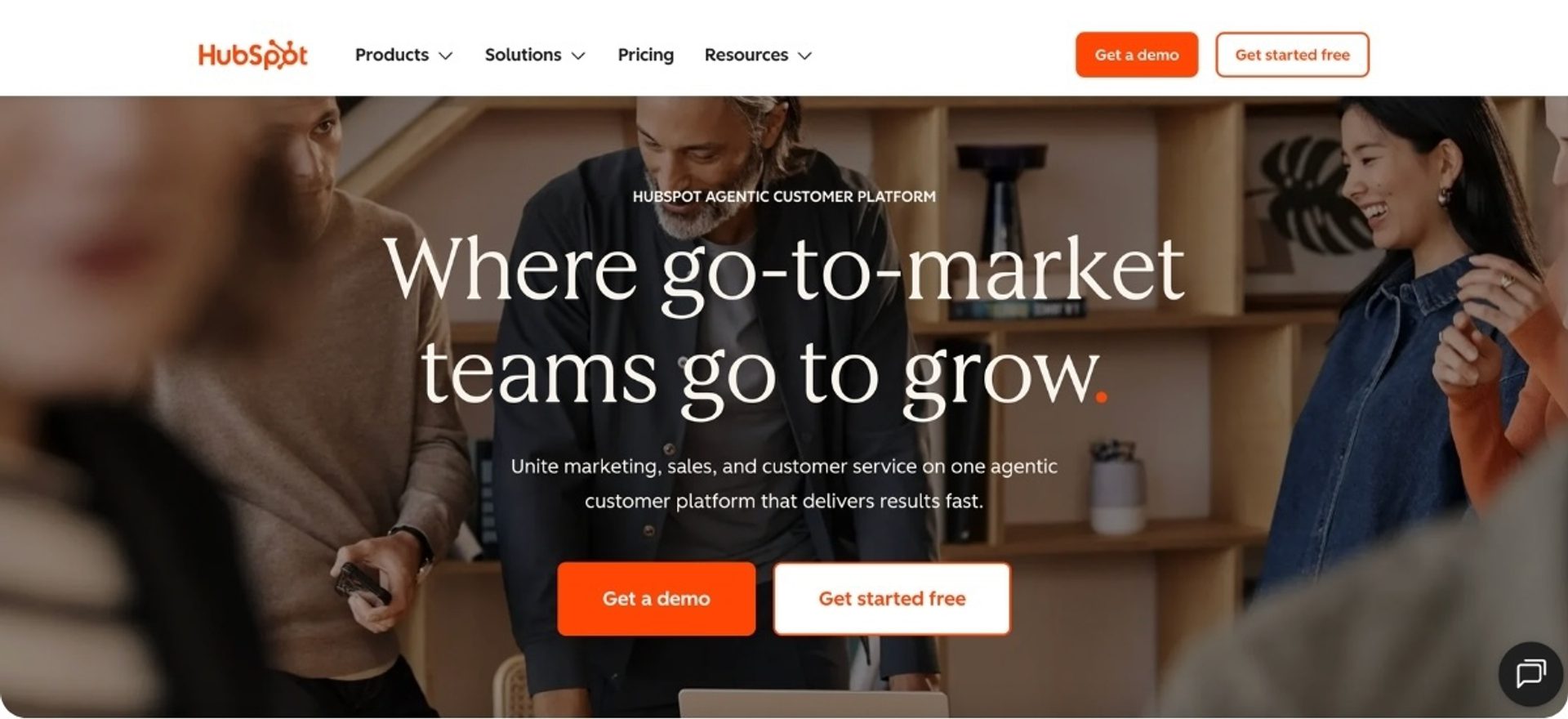
HubSpot organizes itself around CRM infrastructure while ActiveCampaign organizes itself around execution that runs your marketing day-to-day. Which platform is right for you ultimately comes down to what you’re optimizing for.
Standout features
HubSpot leads with breadth. It frames itself as a connected suite of "hubs" where every team works from one customer record. Key differentiators include:
- A mature CRM that keeps sales, marketing, and service aligned around the same contact
- Custom dashboards that give leadership a clear line of sight into pipeline and performance
- Enterprise-grade multi-touch attribution for teams that need to prove which touch drove revenue
- Lifecycle-stage workflows that move contacts through defined stages automatically
- Breeze AI for CRM-native tasks like enriching records and drafting from contact data
That breadth pays off when a whole organization wants to work from one customer record. One G2 reviewer notes that having sales, marketing, and service in one place removed the constant back-and-forth between disconnected tools.
I like that HubSpot Marketing Hub is one organized place where I can have everything in one central hub. It has everything I need, and all the data I require is in one place.
Where HubSpot wins
HubSpot is a strong tool when the entire go-to-market motion needs to live in one place. For a sales-led organization that wants CRM, sales, marketing, and service unified (and reporting that works as a shared measurement layer across every team) it's hard to beat.
HubSpot may be right for you if:
- You're an enterprise team with the budget to match the platform
- Your org is complex enough to need custom dashboards and attribution across hubs
- One company-wide system of record matters more than any single tool being the strongest at its job
If you're a sales-led enterprise that needs one system of record and can absorb the cost, HubSpot may well be the right pick.
Where ActiveCampaign wins
For most teams, HubSpot is a lot to pay for more complexity than they'll ever use.
The main downside is pricing. Costs scale quickly as your contact list grows and as you add hubs or move into higher tiers, and several features I’d consider essential sit behind the more expensive plans, so the jump between tiers can feel steep for a smaller team. There’s also a learning curve past the basics.
Let’s start with the price. On HubSpot's Starter plan, you can send branded email and capture leads, but you can't build sophisticated, responsive workflows. Behavior-triggered, branching follow-up doesn't arrive until the Marketing Hub Professional tier which starts at $890 a month. Professional plans also enforce a one-time onboarding fee at a minimum of $3,000 and annual billing.
Because HubSpot is sold as separate hubs, a full suite of marketing, sales, and service means paying for and stitching together each individual tool, with the bill increasing each time you add one. Year-one spend easily passes $13,000 before you've sent a single campaign.
ActiveCampaign takes the opposite approach: key workflows are on every paid plan, from day one. Starting with the entry tier, you can trigger a journey off a contact's behavior, branch the journey based on what they do next, and update their deal in the CRM automatically—no upgrade required. Comparable capability is available at a far lower cost with no onboarding fee, free migration services, and month-to-month billing if needed.
The same gap shows up in AI. ActiveCampaign's Active Intelligence is included in all plans and works inside your campaigns and automations. You can ask Active Intelligence to build a workflow and it'll respond to what a contact does as the journey runs. It offers similar granularity as HubSpot's Breeze AI, but without the need to build every piece by hand, upgrade to a higher tier plan, or purchase additional credits. With Active Intelligence, you get the the precision HubSpot's Breeze AI offers with far less of the manual setup.
Having transitioned from Hubspot, it was nice to have the functionality of ActiveCampaign at a fraction of the cost and we weren’t having to constantly manage our # of contacts to stay within pricing parameters. Our marketing consultant helped us get it set up and it was easy.
The takeaway
For most growing teams, ActiveCampaign delivers automation-led execution that keeps reducing manual work as you scale, without the enterprise bill or the enterprise setup. Unless you need the company-wide system of record that HubSpot offers, ActiveCampaign is the better default option.
2. Mailchimp: A great first tool, probably not your last
Mailchimp is one of the most recognizable names on the market. For many marketers, it's also the first email tool they ever touch and the one that helped them stand up their newsletter. As a starting point, Mailchimp is a genuinely solid platform.
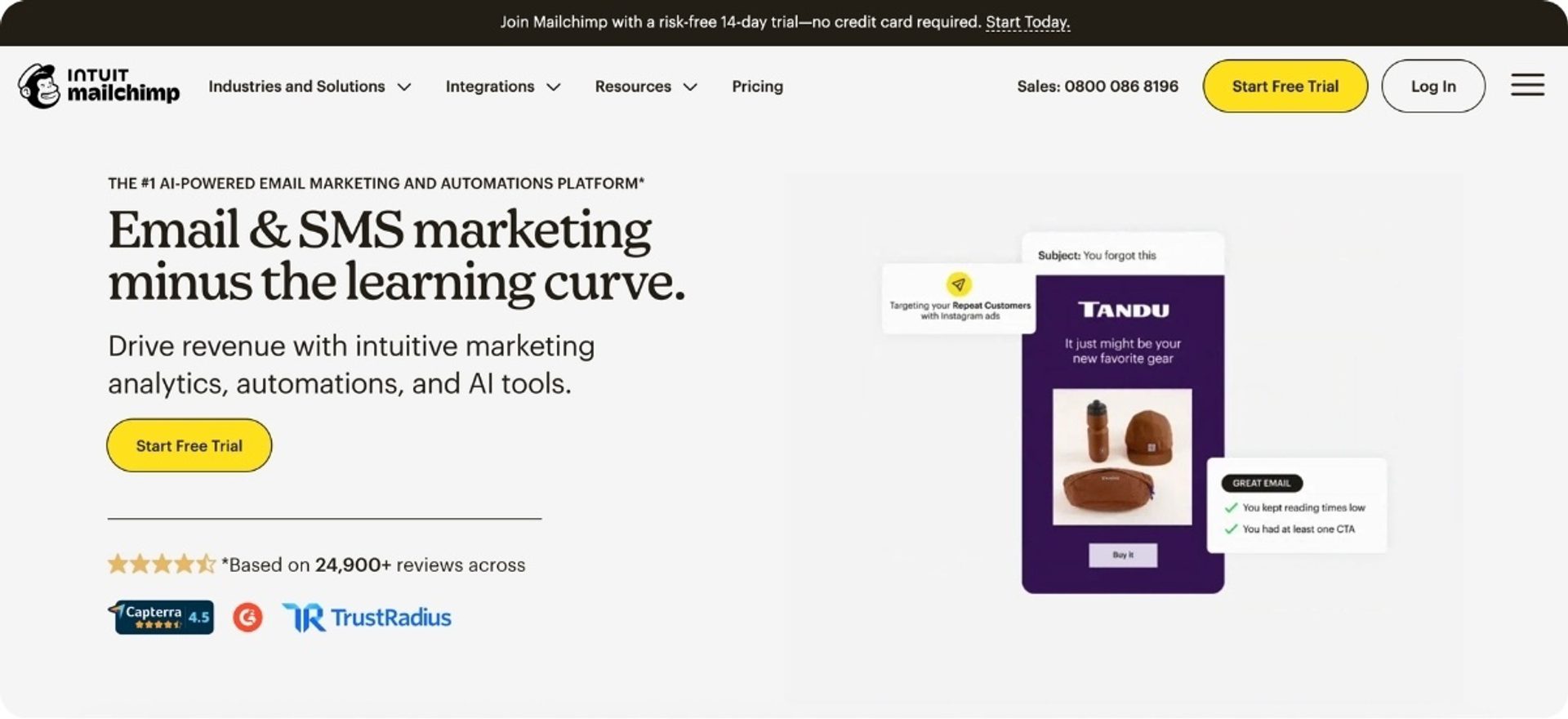
Where ActiveCampaign leans toward depth and automation, Mailchimp leans toward simplicity and quick sends, which makes each platform ideal for different kinds of marketers.
Standout features
Mailchimp frames itself around approachability and wants you sending your first campaign within the hour. Its differentiating features include:
- A friendly editor and a big template gallery so users can pick a drag-and-drop template and build a newsletter looks professional in minutes, no design skills needed
- Strong brand recognition with a familiar interface and a shallow learning curve
- A free plan to get started and send your first campaigns while your list is small
- Intuit Assist AI, which generates on-brand email content and subject lines from a prompt, handy for producing a campaign draft quickly
All together, that makes Mailchimp a strong candidate for small lists and early-stage senders who need to ship campaigns quickly.
The drag-and-drop editor is intuitive, so I can build attractive campaigns without any design or technical experience. It saves time while still producing professional-looking results.
Where Mailchimp wins
Mailchimp is a great choice if your plan is simple: newsletters, announcements, and one-to-many broadcasts you want live fast. For that, its speed and low friction are significant benefits.
It fits best when:
- You're a solo sender, creator, or hobby project emailing a modest list
- Your program is mostly scheduled newsletters and promotions
- Your automations will stay light, like a welcome flow, maybe a re-engagement nudge
If you send simple newsletters to a small list and won't need branching, behavior-based automation, Mailchimp is a fine home.
Where ActiveCampaign wins
For most businesses, though, "send a newsletter" doesn't stay the whole job for long and that’s where Mailchimp starts to show strain.
Mailchimp’s automation stays largely linear and the entry plan caps you at four automation steps, so anything past a basic welcome series hits a wall. Its CRM isn't really a CRM: you get contact organization and star-based engagement ratings, but no deal pipelines and no lead scoring, so anything sales-related means bolting on a separate tool. And its segmentation leans on static contact fields, with little of the behavior-based personalization that lets you message people by what they actually did.
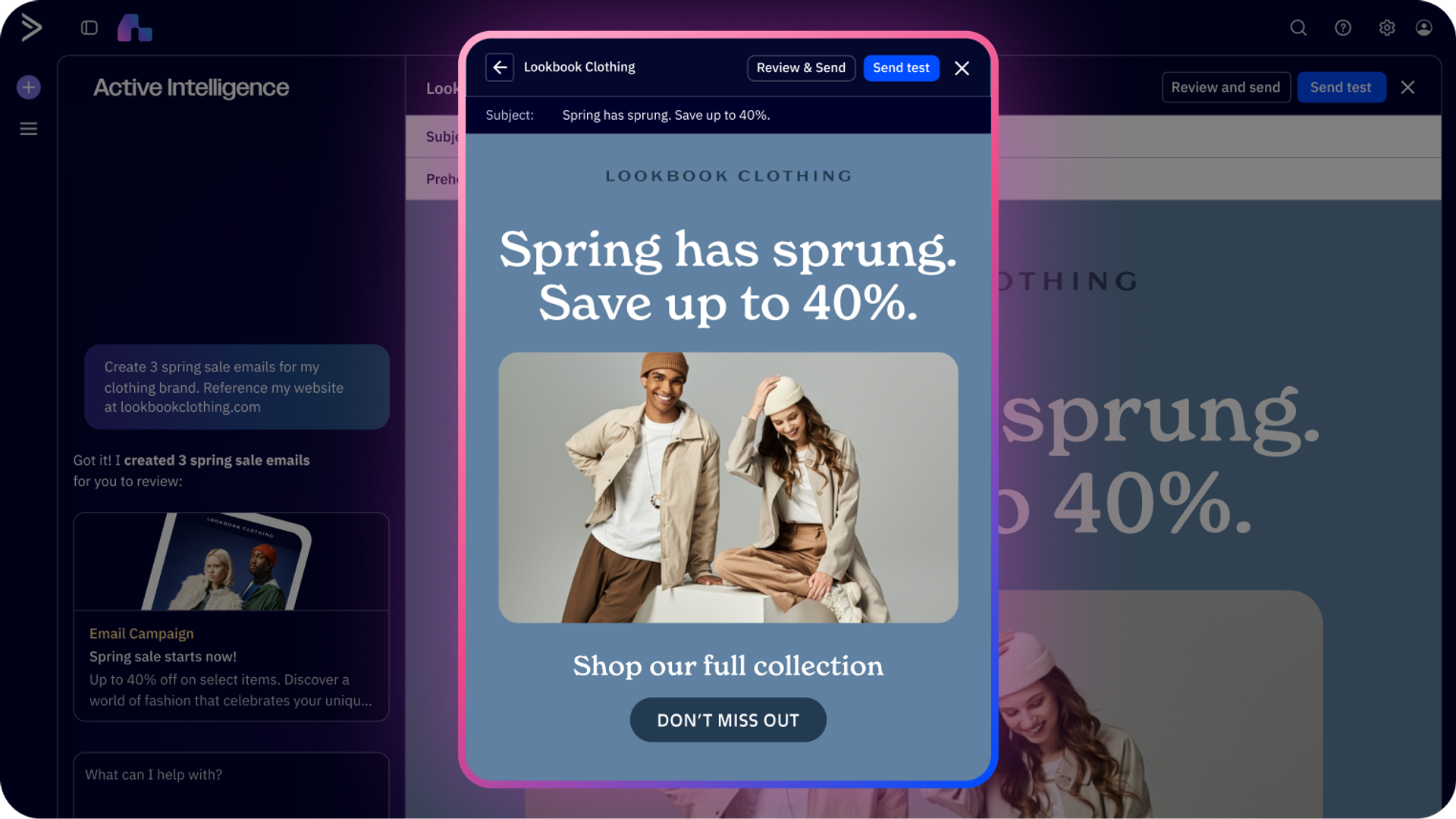
ActiveCampaign builds journeys Mailchimp can't. On one visual canvas, a single automation branches on a contact's behavior, their CRM deal stage, and external events at once, then updates the deal, scores the lead, and picks the next channel automatically across email, SMS, and WhatsApp. The Active Intelligence AI engine builds everything for you: describe a goal in plain language and it assembles the campaign, and surfaces high-value suggested segments you didn't even know to look for.
Before we started using ActiveCampaign, we were using MailChimp, and we felt really limited. There was no way to segment our lists effectively, and we couldn’t set up different automations for various segments, which was a big challenge. Once we switched to ActiveCampaign, the experience improved significantly.
Even send-timing goes deeper. Mailchimp optimizes to one best time for your whole list, while ActiveCampaign's Predictive Sending times each email to the individual contact, lifting CTR by an average of 17%.
Poor deliverability is the clincher for a lot of switchers: 95% of former Mailchimp users name it as their #1 reason for moving to ActiveCampaign.
The takeaway
Mailchimp is a great place to start, and a frustrating place to grow. For most businesses graduating beyond broadcasts, ActiveCampaign is the upgrade that scales with you — so you grow into it instead of switching off it.
3. Klaviyo: Built to prioritize storefronts
Klaviyo has a strong reputation in the ecommerce world, with its flows, personalization, and reporting all tuned around the storefront.
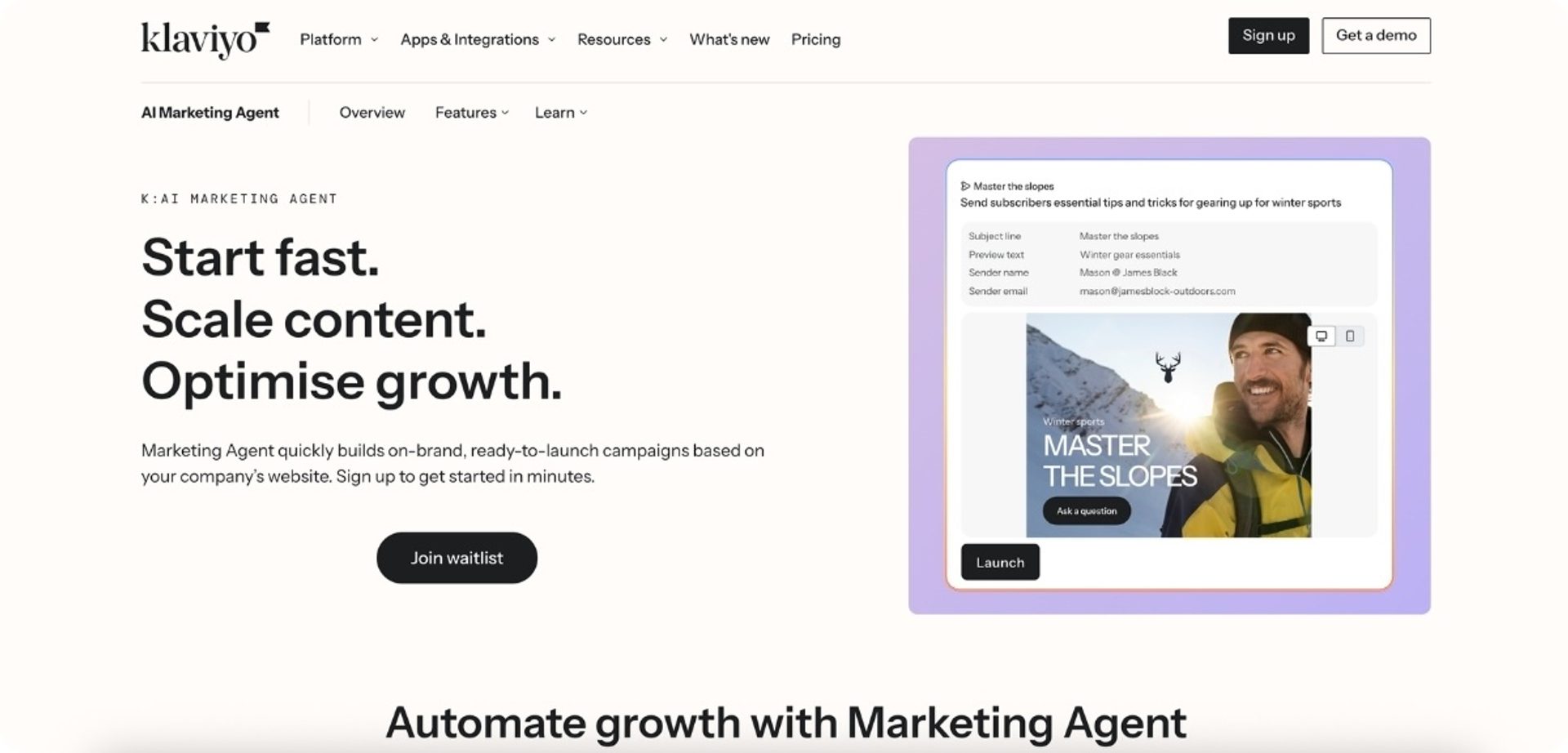
Klaviyo's sharp ecommerce focus is both its strength and its limitation. Where ActiveCampaign spans marketing and sales across any business model, Klaviyo hones in on just the online store.
Standout features
Klaviyo builds everything around the store. Its features assume you're selling products, and they're tuned to pull revenue from store data. Differentiators include:
- Deep Shopify and DTC flows like abandoned cart, browse abandonment, and post-purchase sequences that fire off real store events, ready to recover sales with little setup
- Product-level personalization that provides recommendations and content driven by what each shopper viewed and bought
- Strong revenue reporting for clear tracking of how much each campaign and flow earned, broken down by store
- Ecommerce-tuned AI that predicts what a shopper will buy and when from store data, and ties campaigns back to revenue
That ecommerce-native data model makes Klaviyo a strong pick for pure-play online retailers.
What I like most about Klaviyo is how well it connects with the rest of an e‑commerce stack, especially Shopify. The integration is seamless, and it pulls in customer behavior, purchase history, and engagement data automatically.
Where Klaviyo wins
Klaviyo is a solid choice if your business is the storefront and little else. For tightly tuned ecommerce flows on a store living entirely inside Shopify, it's hard to beat.
It fits best when:
- You're a DTC brand or high-volume online store focused on store-driven revenue
- Your marketing is mostly product-triggered — carts, browses, purchases
- You don't need much beyond email and SMS tied to the shop
If you run a purely transactional ecommerce shop and live entirely in Shopify, Klaviyo's flows are excellent, and it may well be the right pick.
Where ActiveCampaign wins
For most businesses, the store is only part of the picture.
Klaviyo has no real CRM, so the moment you need B2B journeys, deal pipelines, or a clean handoff to sales, you're bolting on a separate tool. It also lacks native landing pages, site messaging, and web personalization, which you'll need to fill with outside apps.
Even its AI reflects Klaviyo's ecommerce focus: it's built around purchase behavior, predicting what a shopper will buy and when, so its value scales with how much store data you feed it and thins out anywhere the journey isn't a transaction. ActiveCampaign's Active Intelligence works across the whole journey, building campaigns and surfacing segments whether the next step is a sale, a lead, or a follow-up.
Those gaps in Klaviyo's platform add up. Stitching in the missing pieces can run an extra $100–$400+ a month in third-party tools, and Klaviyo's own pricing climbs steeply as contacts and sends grow; the email plan alone starts at $30/month for 1,000 contacts and is capped at 10,000 sends.
In contrast, ActiveCampaign keeps everything in one place. Marketing and sales share one record, a native CRM where deals, pipelines, and marketing data live together. They’re paired with the same ecommerce power through 1000+ native integrations, including Shopify, WooCommerce, and Square. You get the store flows and everything around them, without assembling a stack.
[ActiveCampaign’s] detailed reporting and segmentation tools give me clear insights into what’s working and what needs adjustment. This means I can optimize campaigns faster, improve conversion rates, and ultimately generate more revenue for my ecommerce clients.
The takeaway
For the majority of businesses that are more than a single storefront, ActiveCampaign is the better choice. You’ll get ecommerce flows and a full CRM in one platform, instead of Klaviyo plus a handful of tools to cover what it can't.
4. GetResponse: More features than focus
GetResponse is a beginner-friendly, affordable all-in-one starter kit that's perfect for anyone that wants multiple marketing tools under one login without the big bill.
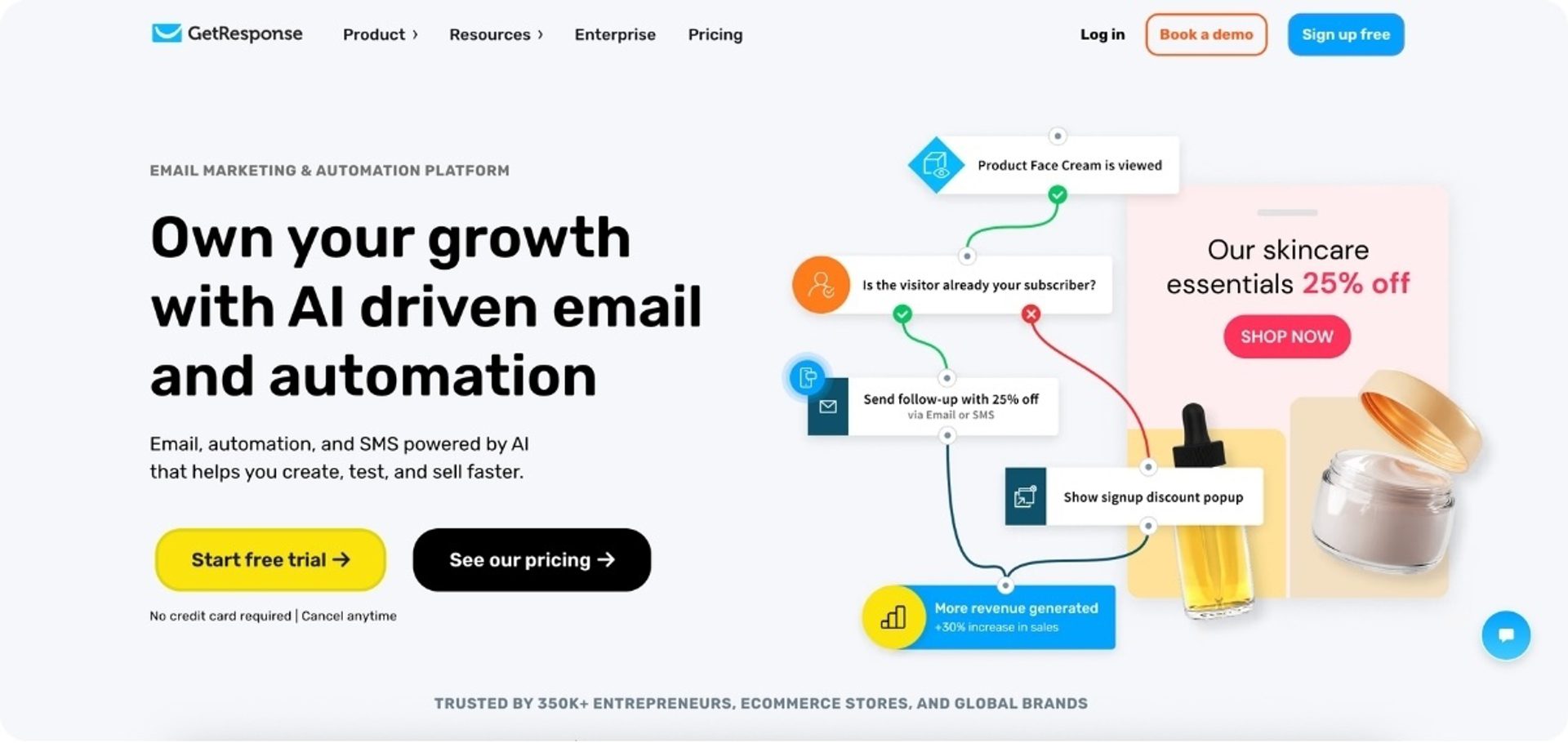
Because GetResponse is spread across a wide feature set, it doesn't go particularly deep on any one of them. On the other hand, ActiveCampaign concentrates on depth across automation, personalization, and offers a true CRM solution.
Standout features
GetResponse frames itself as the everything-in-one-place kit with lots of tools, one account, and a gentle learning curve. Here are some features that differentiate the platform:
- Email and landing pages together so you can build a campaign and the signup page it points to without reaching for a second tool
- Ready-made conversion funnels with prebuilt paths that string together a landing page, emails, and a checkout or signup into one guided launch flow, so you can stand up a whole campaign from a template
- A built-in webinar platform, which is genuinely rare among email tools, so you can host a webinar and follow up with attendees from the same account
- AI generation tools that produce starting email drafts from a few inputs
Breadth of tools, paired with an approachable interface, makes GetResponse a strong pick for solopreneurs and small teams running all of their marketing single-handed.
It’s very easy to use and has everything I need, from email marketing to webinars. GetResponse stands out for its intuitive interface and comprehensive feature set.
Where GetResponse wins
GetResponse is a great choice when you want low-cost email with webinars and lead-gen basics bundled in, and you don't want to manage a stack to get them. For a beginner, having all the tools you need in one cheap account is a real advantage.
GetReponse is ideal if:
- You're an early-stage business, creator, or coach running lean
- You specifically want webinars packaged with your email, not bolted on separately
- Your marketing is mostly campaigns, signups, and the occasional funnel
If you're just starting out and want webinars plus email in one affordable tool, GetResponse works, and it may be the right pick.
Where ActiveCampaign wins
For teams with real growth ahead of them, having every tool matters less than how far each one goes.
On the surface, GetResponse looks like similar features for less. Under it, the depth isn't the same. GetResponse's automation handles straightforward sequences well but lacks true multi-path logic, so complex, adapting journeys are harder to build. Its dynamic and conditional content stay comparatively basic.
The gap widens with AI. GetResponse's AI helps you draft a campaign or email before you send it. ActiveCampaign's Active Intelligence works inside the automations themselves, while they run — reading how each contact behaves and adapting the journey in the moment, not just producing a draft up front. You can build workflows, segment, and generate whole campaigns from a plain-language prompt, then let the automation respond on its own as people engage. That's the difference between AI that helps you make a campaign and AI that helps run it.
We’ve been with ActiveCampaign for about 2 years now and it’s been great. We love the features—it’s definitely more feature filled than GetResponse, our last provider.
The takeaway
For most teams with real growth intent, ActiveCampaign is the better choice, built to scale past a starter ceiling, not into it.
5. Brevo: No-frills essentials
Brevo's appeal comes in the form of its low-cost, multichannel messaging features housed in one place. The essentials are dependable, but lighter capabilities start to appear as your needs grow over time.
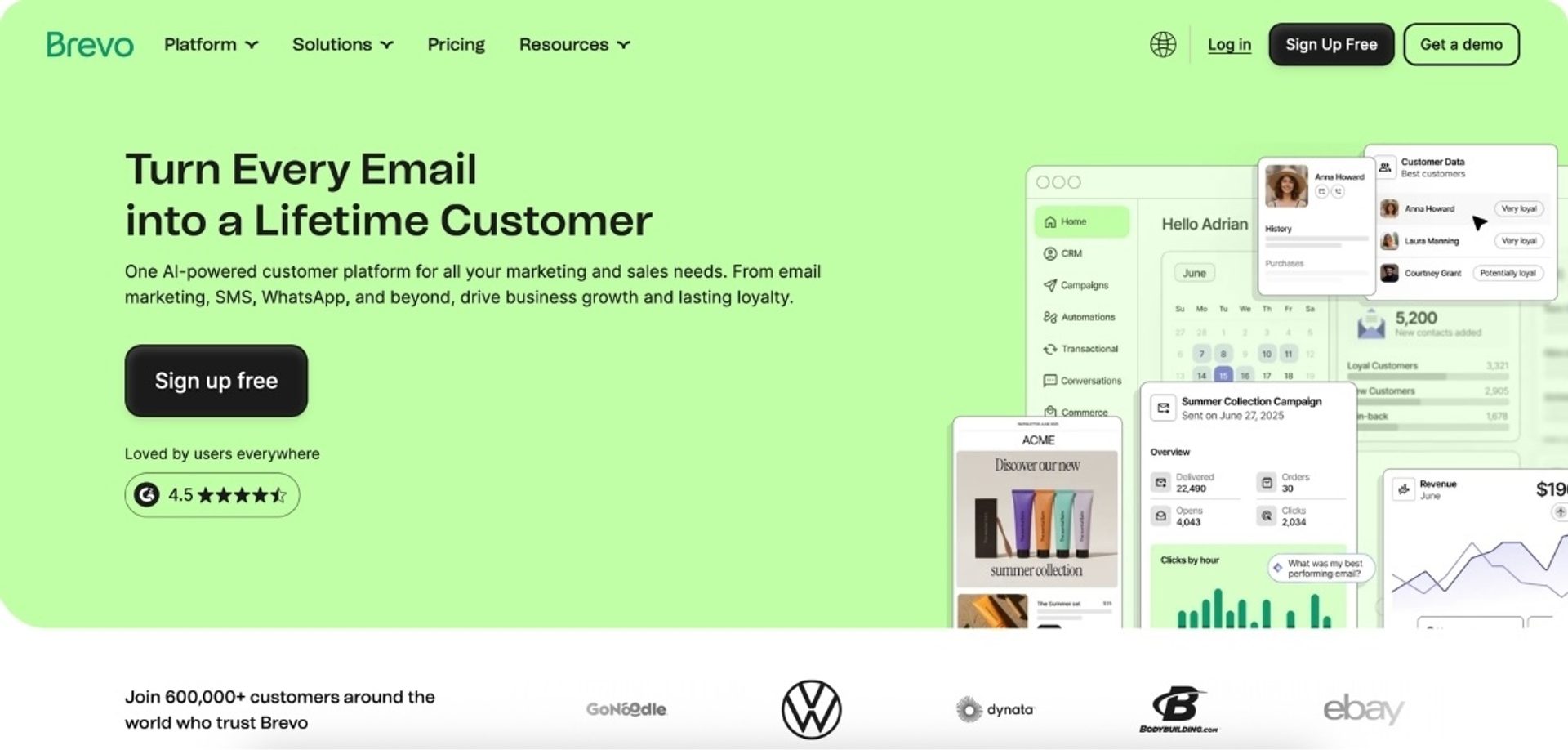
Brevo keeps things deliberately simple. Where ActiveCampaign goes deep on automation and personalization, Brevo stays light.
Standout features
Brevo prioritizes affordability and simplicity, offering the core tools at a low price. A few features that stand out include:
- Reliable email and SMS so you can reach people on two channels from one simple account, without stitching tools together
- A generous free tier and quick setup to start sending at no cost and get running fast, with a low learning curve
- Send-based pricing so you pay for the emails you send, not the contacts you store, which suits large lists that mail infrequently
- Brevo Aura AI, an intelligent assistant that takes on repetitive tasks and helps you work more efficiently
All together that makes Brevo a strong pick for teams starting out on a tight budget who need dependable messaging more than deep features.
I’ve been using Brevo for about two years, and, overall, it’s been a positive experience. The email editor is intuitive and easy to work with, making it straightforward to build and schedule campaigns without a steep learning curve.
Where Brevo wins
Brevo is a useful platform if your priority is cheap, dependable email and SMS with a low barrier to entry. For straightforward sending, it does the job without fuss or cost.
Brevo is ideal if:
- You're a cost-sensitive team sending straightforward campaigns
- You need reliable transactional and promotional messages more than complex journeys
- Your budget matters more than advanced automation
If you want affordable, dependable email and SMS to get going, Brevo is a strong start.
Where ActiveCampaign wins
For most teams, "keep it simple" turns into "I've hit a wall" faster than expected.
Brevo's automation stays light. There are no split-testing whole workflows, no goal-based paths that let a contact skip ahead when they convert. It has no predictive sending, so everyone gets messaged on the same schedule rather than at each person's best time. It lacks advanced conditional content, so you can't adapt sections of an email to individual behavior. Brevo's template library is also thin, sitting at around 40 options while ActiveCampaign offers 250+ templates.
Reporting is another step down. Brevo covers the essentials (like opens, clicks, conversions) but it's a rear-view mirror: it tells you how last week's send performed and stops there. ActiveCampaign's reporting works in real time and acts on it. It ties campaigns to revenue, tracks how whole automations are performing as contacts move through them. Active Intelligence surfaces what's changed mid-flight and can recommend or make the adjustment while the campaign is still running, so you're optimizing live instead of writing a post-mortem.
Better data means better results. Leading EdTech platform UBITS switched to ActiveCampaign after discovering Brevo couldn’t keep pace with their needs.
The data doesn’t lie. Open rates, deliverability rates, and activation rates all increased after we implemented ActiveCampaign.
While Brevo covers email and SMS, ActiveCampaign coordinates email, SMS, WhatsApp, and on-site messages inside a single automation, so one journey moves across channels and adapts to what each contact does. And its predictions act on their own: Predictive Sending times each email to when the individual contact is most likely to open, instead of blasting the whole list at once.
The takeaway
For the majority of teams that will eventually need behavior-triggered, multichannel workflows, ActiveCampaign is the better choice. Brevo's automation ceiling often ends up pushing users toward a more advanced choice, so why not set your foundation now?
6. Constant Contact: Simple to a fault
Constant Contact is one of the most approachable platforms around as it's quick to learn, quick to send, and offer friendly phone support on every plan.
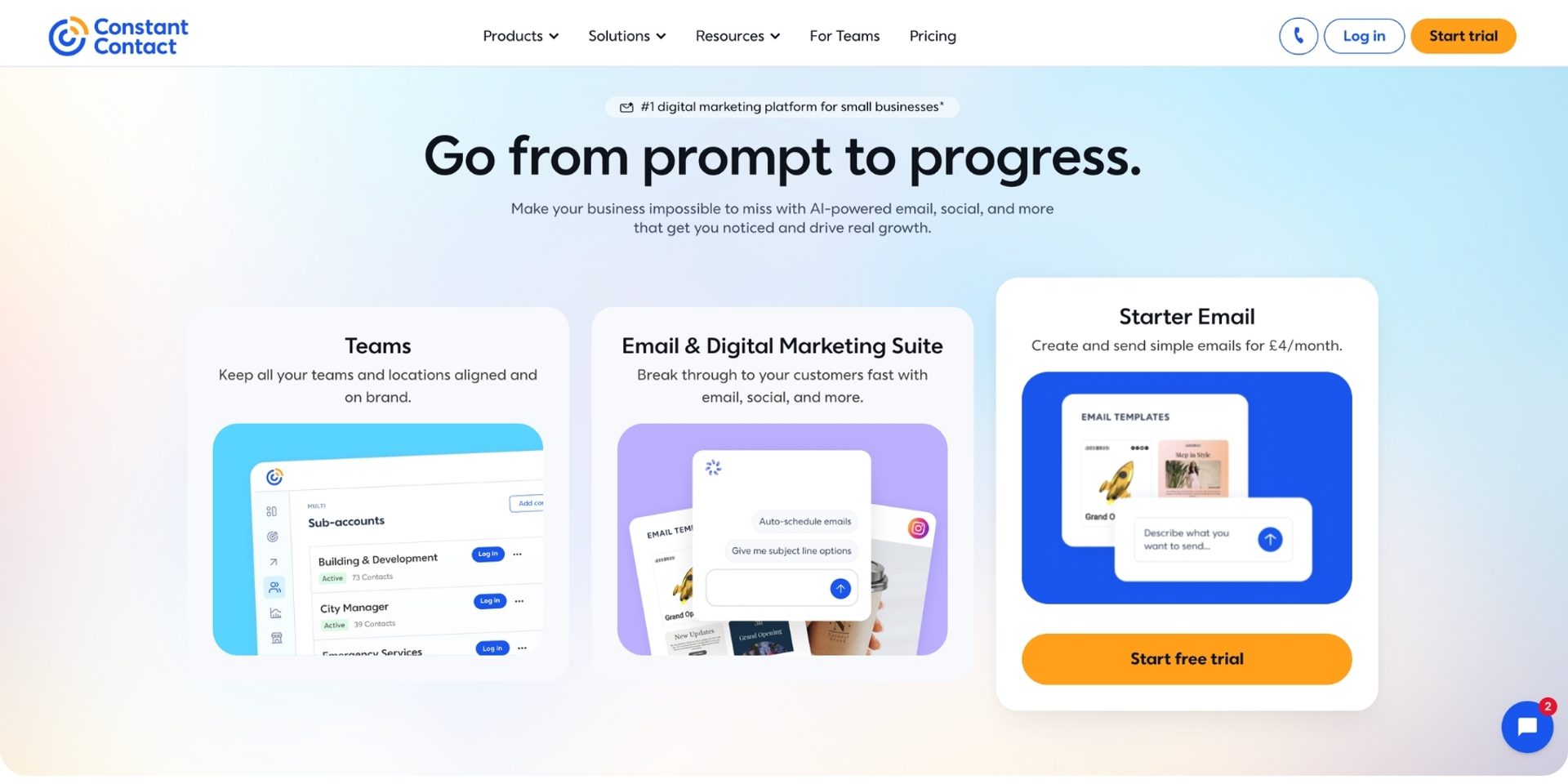
Where ActiveCampaign is built to automate and adapt as you grow, Constant Contact is built to keep things simple, making each platform suited to very different stages of business.
Standout features
Constant Contact frames everything around speed and simplicity: get set up and get sending with as little configuration as possible. Its differentiators include:
- Fast setup so you can go from sign-up to a scheduled send quickly, without wrestling with the tool
- An approachable editor with drag-and-drop templates that let you build a clean email in a few clicks, no design skills needed
- Built-in event management for invites and registrations, a genuine strength for organizations that run gatherings
- Reliable everyday sending for routine newsletters and announcements
- AI assistant that generates and repurposes email, social, and landing-page copy in your brand's tone
The minimal-configuration approach makes Constant Contact ideal for teams that value speed-to-send over depth.
What I like most about Constant Contact is how easy it is to create and send professional-looking email campaigns without a steep learning curve.
Where Constant Contact wins
Constant Contact is great if you want the simplest possible path from idea to inbox with almost no learning curve. Its ease is hard to match.
Constant Contact is ideal if:
- You're a nonprofit, community organization, or small business
- Your campaigns are straightforward and occasional — newsletters, announcements, event invites
- You'd rather pick up the phone for help than build a sophisticated system
Where ActiveCampaign wins
The challenge with simplicity is it can turn into a blocker down the road.
Constant Contact's automation is very basic: you can pick only one trigger per automation and flows are mostly linear and time-based rather than driven by what a contact does. Custom automations are also gated to the Premium tier that start at around $80 a month. Its segmentation filters on contact fields, with personalization limited to basic merge fields like first name. And you can't save and reuse content blocks, so you have to rebuild every campaign from scratch.
ActiveCampaign is built for the opposite. Active Intelligence keeps your segments current on its own, surfacing high-value audiences and updating targeting as behavior changes across engagement, site activity, and custom fields, so your lists stay live instead of going stale between campaigns. The same intelligence runs inside your automations, branching each contact down a different path based on what they actually do, and optimizing the journey after launch rather than sending everyone down one fixed line.
I switched from Constant Contact to ActiveCampaign because we needed reliable data. ActiveCampaign has enabled us to create an email strategy based on customer behavior to send targeted emails, versus everyone gets the same thing and hope they like it!
Constant Contact's AI is most useful at the writing stage. It drafts copy and subject lines to get a campaign out faster, but once you hit send, the segmenting, the branching, and the follow-up are back on you.
The takeaway
For most businesses that want campaigns to react to behavior rather than just go out on schedule, ActiveCampaign is the better choice. The platform keeps up as your strategy evolves, so you don't outgrow it and have to switch.
What could you lose by switching from ActiveCampaign?
Switching away from ActiveCampaign is a real trade-off. It means giving up specific capabilities buyers often overlook until they're gone. Here's what you'd feel the absence of most.
Start with automation depth. ActiveCampaign builds journeys on a single visual canvas, where one workflow branches on a contact's behavior, their CRM deal stage, and external events all at once, with conditional content adapting the message to each path. Most alternatives run a fixed line instead of a living tree, so the complex, adapting journeys you built quietly turn into "rebuild it by hand."
Then there's how your marketing reacts to real behavior. Automations fire from page views, conversions, and events in your scheduling, payment, signing, and ad-form tools. Leave, and marketing stops responding to what people actually do and goes back to running on a schedule.
You'd also lose a native CRM. In ActiveCampaign, sales and marketing share the same record, so a deal-stage change can trigger a campaign and an email open can update a lead score, with no sync lag in between. Rebuild that with two separate tools and you inherit the delay you never used to have.
And you'd give up predictions that act on their own. Predictive sending times each email to the individual contact, Win Probability flags the deals worth chasing, and Lead Scoring fires the next step the moment someone's ready. The send is scheduled, the deal prioritized, and the follow-up gone out, without you lifting a finger.
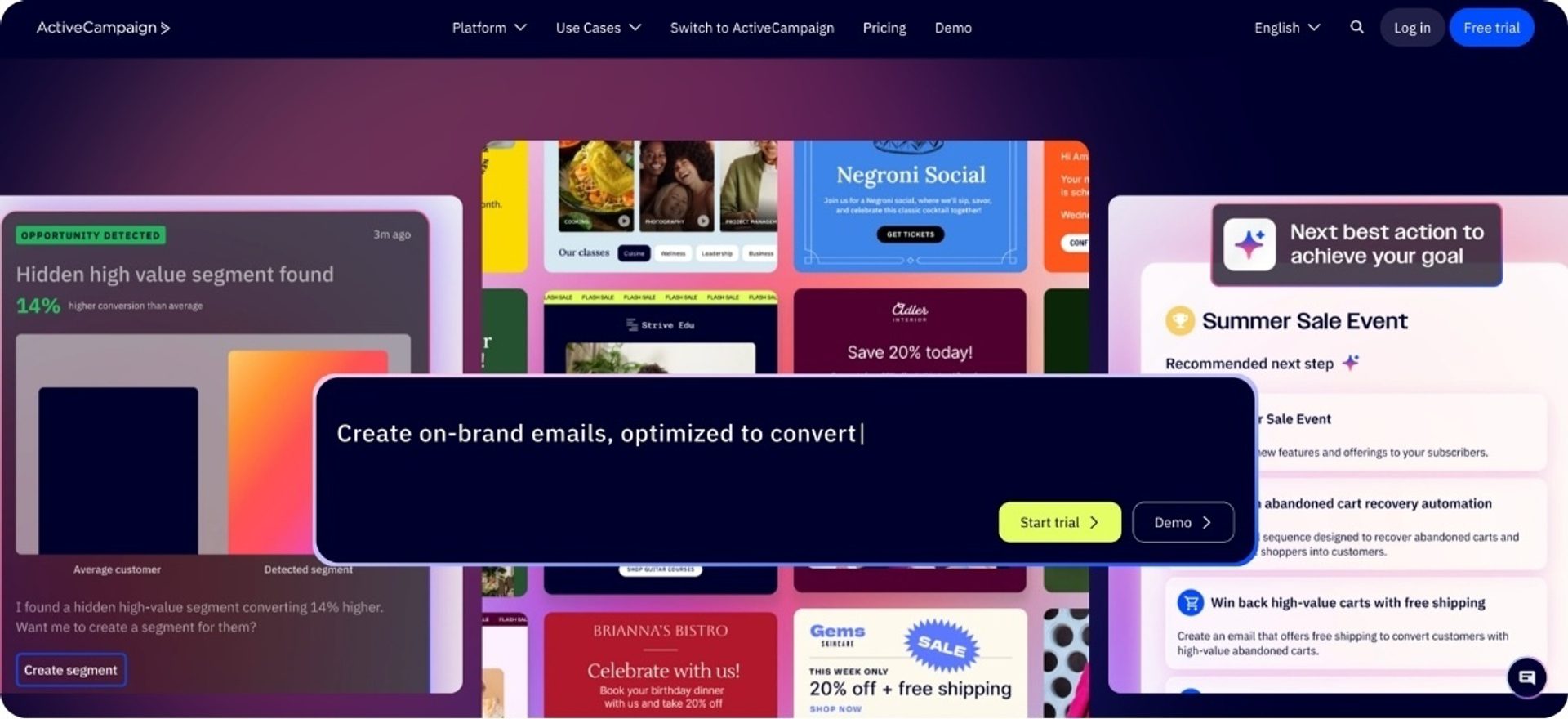
ActiveCampaign is also more than a feature list. It's a way of working. The platform is built for autonomous marketing, where Active Intelligence runs through the whole platform and does the building, reacting, and optimizing that you'd otherwise do by hand. Leaving ActiveCampaign means the manual work comes flooding back.
Explore more of what ActiveCampaign can do in our interactive product tours.
ActiveCampaign can’t be the best tool for every single use case — no platform is. For some genuine edge cases, the tools above might be the right call. But for teams with growth intent, we can promise that ActiveCampaign is a platform your ambitions won't outgrow.
We meant every nice thing we said about these ActiveCampaign alternatives. But we think you might just pick us anyway if you try ActiveCampaign free for 14 days.
FAQs
What are the most popular alternatives to ActiveCampaign?
The most popular alternatives to ActiveCampaign include HubSpot, Mailchimp, Klaviyo, GetResponse, Brevo, and Constant Contact. Each leads in one lane, such as enterprise CRM, ecommerce flows, or low-cost simple sends. However, most of them win only at the edges: the moment your marketing needs to automate, adapt, and scale across channels, ActiveCampaign often has the best return for growth-focused marketing programs.
What is the cheapest ActiveCampaign alternative?
Brevo tends to be the cheapest starting point, with a free tier for low-volume senders. Watch how pricing scales, as costs on most tools climb steeply as your list grows. But the real cost is measured in time, not just sticker price: lower-cost tools tend to leave more of the work manual, while ActiveCampaign’s AI-powered automation and built-in CRM do more for you from the entry plan. Cheaper upfront often costs more in hours down the line.
How hard is it to switch marketing automation platforms?
It’s easier to switch marketing automation platforms than most teams expect. ActiveCampaign includes free agentic migration and onboarding, which handles moving your data, templates, and campaigns. Most migrations finish within a few business days.