In healthcare, silence isn’t just a missed opportunity—it’s a risk. Patients forget appointments. Follow-ups slip through the cracks. Preventable conditions go unmanaged. These aren’t operational hiccups, but symptoms of healthcare systems struggling to scale meaningful communications.
In this post, we’ll explore how healthcare providers can use tactical, automated email strategies to proactively engage patients, streamline workflows, and stay compliant every step of the way.
Why email marketing is critical for healthcare providers
Patient communication extends far beyond the clinic walls, but healthcare teams are stretched thin as they juggle growing patient needs with leaner staffing and rising administrative demands.
Automated email marketing offers a scalable solution. It reduces the administrative burden on staff while maintaining consistent touchpoints that build trust.
A recent poll found that six in ten medical groups (63%) have seen their patient no-show rates stay the same (50%) or decrease (13%) in 2024, while no-show rates increased for 37% of responding groups.
Compared to traditional outreach like phone calls or mailed notices, email is faster and easier to personalize. Regular email communication has also been linked to higher patient satisfaction, especially when patients receive timely and relevant information related to their care. As telehealth becomes standard, email acts as the connective tissue in a digital care strategy, which depends on effective scheduling, documentation, and patient education.
Types and examples of effective healthcare emails
Different types of emails serve distinct purposes—from reducing no-shows to educating patients on wellness. Let’s break down some key healthcare email categories.
Appointment reminders
Missed appointments are more than scheduling headaches—they can disrupt care continuity and strain practice resources. Reminders reduce no-shows by giving patients timely nudges to confirm, reschedule, or cancel their visits.
An effective appointment reminder email should always include:
- Clear date and time details: Ensure the appointment information is front and center–ideally in the subject line or email preheader.
- Location and directions: Include the clinic address or a link to a map for convenience.
- Call to action: Provide simple options for confirming, rescheduling, or cancelling the appointment.
- Contact information: Offer a phone number or email for questions or changes.
- Personalized touches: Address patients by name and, when possible, mention the specific type of appointment.
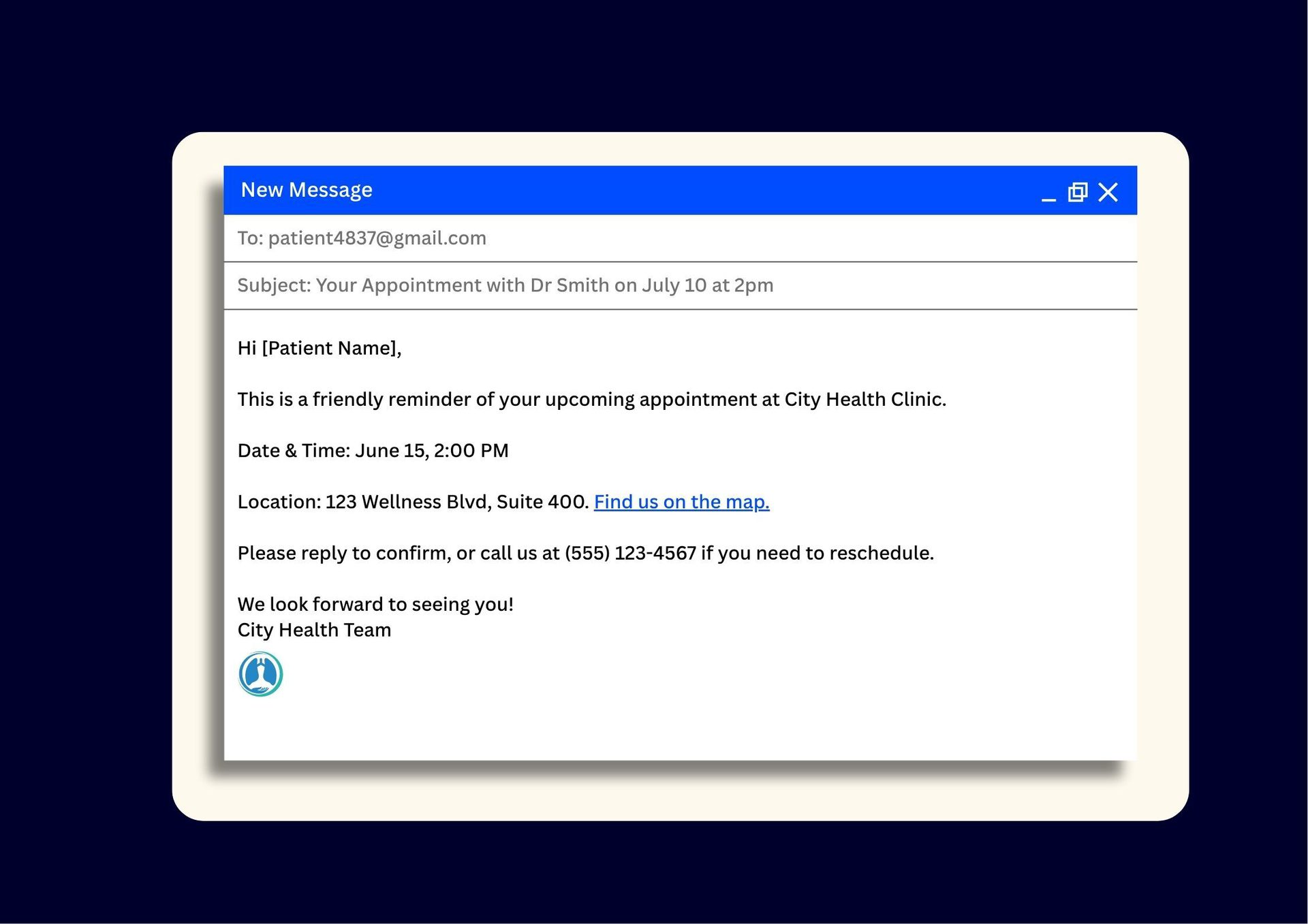
An example of what an appointment reminder email might look like, including key components.
Health education newsletters
A well-crafted health newsletter reinforces your role as a trusted guide in your patients’ wellness journeys. To build a consistent, useful, and relevant newsletter, make sure to:
- Choose focused, timely topics such as “Managing Allergies in Spring,” “Understanding Your Lab Results,” or “5 Tips for a Healthier Heart.”
- Use accessible language and avoid clinical jargon that might confuse or overwhelm patients.
- Incorporate visuals like infographics or photos to enhance readability and engagement.
- Link to additional resources on your blog, patient portal, or reputable health sites.
- Include a consistent section structure so patients know what to expect (e.g., Tip of the Month, Ask a Nurse, New Services, Upcoming Events).
Seasonal health alerts
Seasonal changes often bring shifts in health risks, from flu outbreaks in the fall to allergy spikes in the spring. Proactively reaching out to patients with relevant seasonal health alerts helps them take preventive action.
Best practices for seasonal health alert emails:
- Time your outreach strategically:
- Start 2–4 weeks ahead of known seasonal health trends (e.g., send flu reminders in early September before peak vaccination demand).
- Respond to real-time public health trends such as surges in respiratory illnesses or allergy index spikes with local email marketing.
- Be specific: Tailor content to geographic location, weather patterns, or known community health risks.
- Include a call to action: Invite patients to book vaccines, schedule checkups, or access relevant educational content.
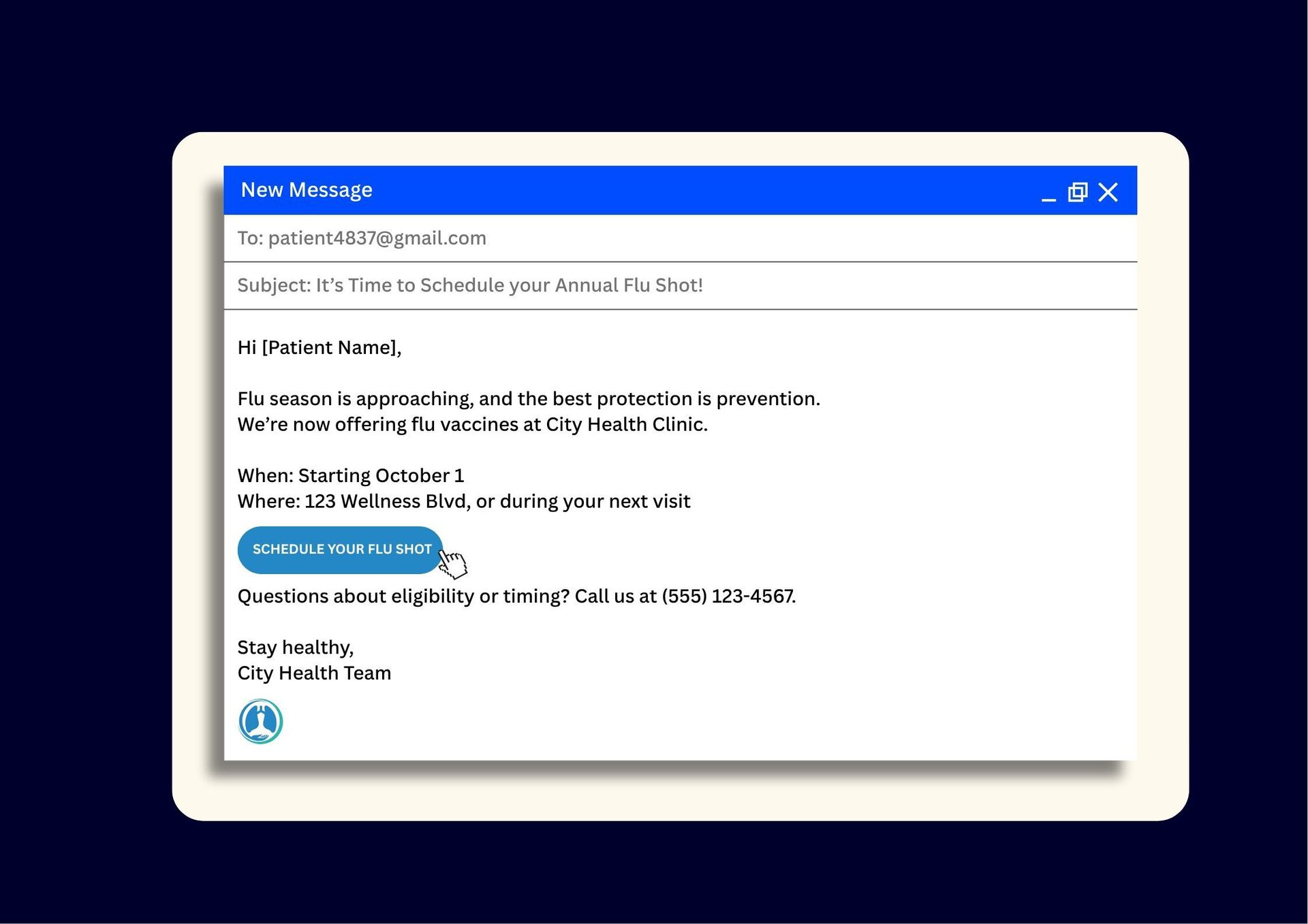
An example of what a health alert notification email might look like to remind patients to book a flu shot with a clear call to action.
Patient satisfaction surveys
Surveys act as a direct line to patients’ views on what’s working, what’s not, and how to build deeper trust with the people you serve. Here are some techniques for building surveys that get responses:
- Timing is everything: Send survey requests within 24–48 hours post-visit to capture fresh, relevant impressions.
- Keep it short and focused: Aim for 3–5 quick questions. Prioritize ease of completion.
- Make it mobile-friendly: The majority of patients will complete surveys on their phones.
- Explain the impact: Let patients know how their feedback will be used—and follow through by sharing improvements you’ve made.
- Automate the flow: Use a marketing platform that can automatically trigger survey emails after appointments, ensuring consistency and reducing manual follow-up.
Sending surveys shows you care beyond the exam room. It’s a simple gesture with a powerful message: Your experience matters.
Post-treatment follow-ups
Care doesn’t end when a patient walks out the door. Some of the most critical moments for engagement and recovery happen after the visit. Post-treatment follow-up emails should:
- Be sent within 24–48 hours of the appointment
- Recap the visit and reiterate key instructions
- Include any relevant links to additional resources, such as guides, exercise routines, or contact info
- Offer a clear way to reach out with questions or schedule additional care
- Maintain a tone of reassurance
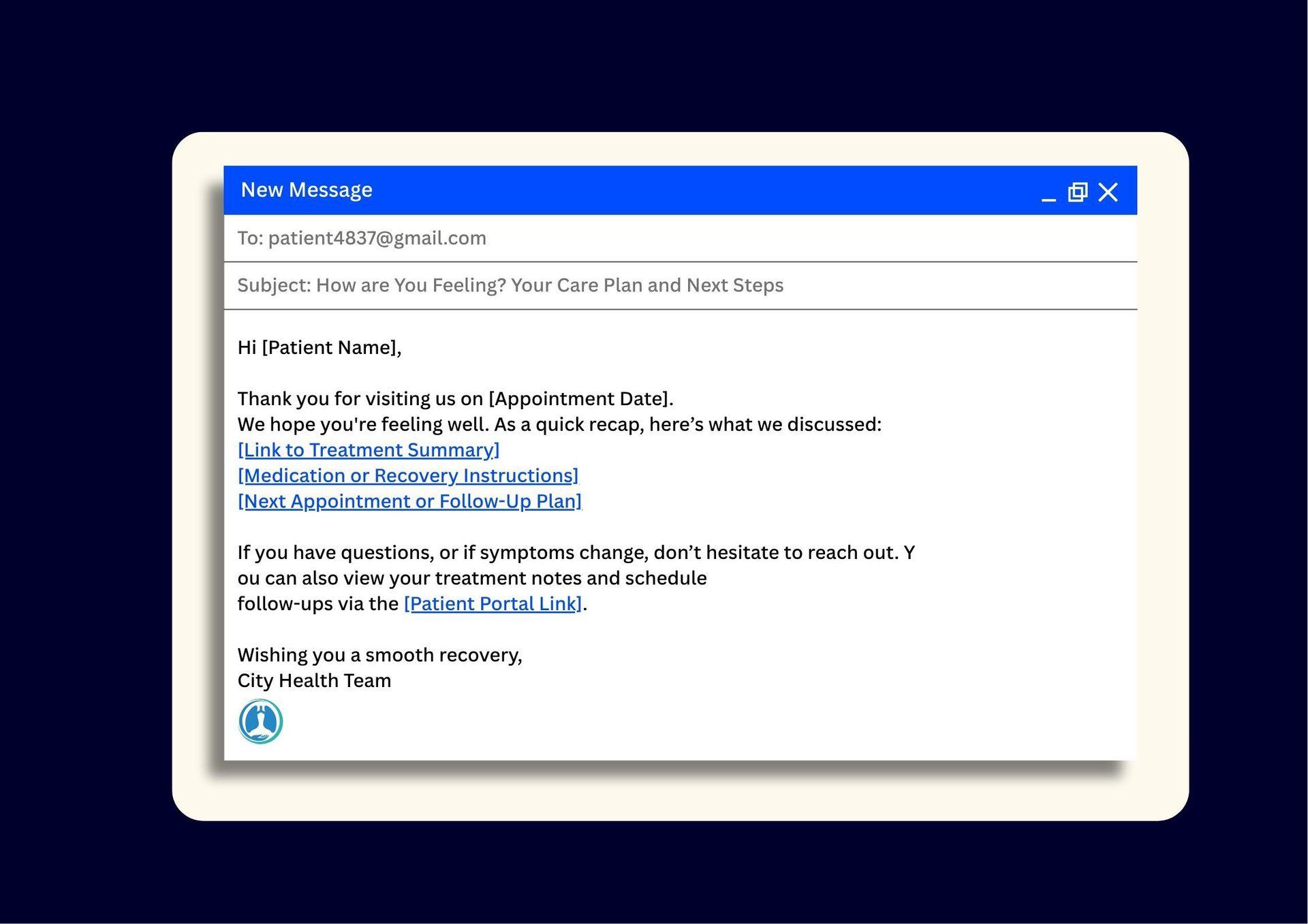
An example of what a post-treatment follow-up email might look like, with clear instructions on potentially continuing care.
How to leverage email marketing for your medical practice
Smart HIPAA compliant marketing automation software delivers the right message at the right moment in a care journey. With the best tools in place, even a small practice can create personalized, timely experiences that feel like one-on-one care.
Here are some actions your practice can start putting in place today.
1. Reduce appointment no-shows with automated reminders and follow-ups
Missed appointments can be costly—clinically and financially.
The American Medical Association estimates that no‑shows cost the U.S. healthcare system over $150 billion annually.
Automating appointment confirmations and reminders ensures patients receive notifications that prompt them to confirm or reschedule as necessary.
ActiveCampaign has over 950 automation recipes that simplify the email automation process based on your requirements. The Appointment Reminder and Post-Appointment Feedback recipe runs a series of touchpoints to remind patients of their upcoming appointments, and follows up with a satisfaction survey to check how their visit went and get timely feedback.
2. Encourage patient portal adoption
Patient portals are essential resources giving patients access to their medical records, test results, and online scheduling. Yet, adoption remains a common hurdle.
The Invitation to Patient Portal automation recipe sends personalized email invites that encourage sign-ups and guide patients through the onboarding process. The automation can trigger based on new patient intake, a completed appointment, or a lack of portal activity.
3. Share relevant health content to build patient trust and engagement
Providing useful, consistent health content helps establish your practice as a trusted resource—not just a place to go when something’s wrong. Patients are more likely to stay engaged when they receive updates, wellness tips, and condition-specific guidance tailored to their needs.
Whether you’re sharing seasonal health advice, new service offerings, or updates from your care team, the Send Latest Health Blogs automation recipe automatically delivers curated or newly published blog content directly to patients’ inboxes.
4. Improve prescription adherence with automated fulfillment reminders
Medication non-adherence is a silent threat to patients, leading to complications and avoidable hospital visits. For many practices, the main issue isn’t patient resistance but forgetfulness.
Instead of relying on manual follow-ups or leaving patients to remember on their own, use a Prescription Fulfillment Reminder automation to ensure proactive nudges go out when refills or pickups are due.
5. Personalize patient experiences with interest-based email segmentation
Not all patients are the same, and their inboxes shouldn’t be either.
Segmenting patients based on specific interests, conditions, or care journeys allows you to send content that actually matters to them. Use the Interest-Based Marketing Segmentation recipe, to automatically tag and sort patients by their expressed preferences or behaviors (like clicks, survey responses, or intake form selections).
When your emails reflect who your patients are and what they care about, they’re far more likely to engage.
6. Streamline patient intake by automating pre-appointment forms
Long waiting room delays and incomplete paperwork frustrate both staff and patients. Manual intake processes often lead to inefficiencies that impact appointment flow and patient satisfaction.
Automating pre-appointment form distribution ensures patients receive the necessary paperwork promptly and can complete it securely at their convenience, reducing last-minute administrative bottlenecks. The Pre-appointment Intake Form Flow recipe sends digital intake forms to patients as soon as their appointment is scheduled, allowing them to complete paperwork securely before arriving. Submitted responses automatically update patient records, ensuring the care team has the information they need in advance.
7. Ensure timely patient follow-ups by automating post-appointment tasks
Patients often leave appointments and hospital visits overwhelmed with information—sometimes under stress, sometimes distracted by pain or anxiety. It’s no surprise that follow-up instructions can be forgotten or misunderstood, leading to missed care steps or complications.
Healthcare teams must make sure that these vital details reach patients clearly and promptly. The Create Task To Send Post-Appointment Information recipe generates reminders and assigns follow-up actions to staff immediately after a patient’s visit. This ensures that patients receive the guidance they need when they’re most receptive, outside the distractions and pressure of the appointment.
8. Boost patient retention with yearly check-up reminders
Annual wellness visits are a cornerstone of preventive healthcare, helping to detect issues early and maintain long-term patient health. Yet, many patients delay or forget to schedule these important appointments, risking avoidable complications.
Automated yearly check-up reminders ensure that patients receive timely prompts to book their preventive care visits. The Yearly Check-Up Reminder recipe sends personalized messages aligned with each patient’s health timeline. Because these reminders reach patients at just the right moment, cutting through busy schedules and everyday distractions to prompt action, they can transform passive patients into proactive partners in their own health.
9. Rapidly address patient complaints through automated notifications
When patient concerns aren’t addressed quickly, trust can erode. Delayed responses to complaints risk escalating dissatisfaction and even regulatory scrutiny.
Automated complaint notifications ensure that when a patient submits a concern, the right staff member is immediately alerted to take action. The Clerical Complaint Notification automation recipe streamlines this process by creating timely, trackable alerts that help medical practices respond swiftly and consistently. A rapid feedback loop not only preserves patient trust but also supports continuous improvement by bringing issues to light before they develop.
10. Continuously improve patient care with automated survey follow-ups
Understanding one’s health isn’t always straightforward. Many patients underestimate the impact of their habits or overlook subtle symptoms. Survey follow-ups are a valuable tool for healthcare providers to bridge this gap, helping patients assess their wellness and identify areas needing attention.
Automating survey follow-ups captures personal patient feedback and drives meaningful action—whether that’s scheduling a new consultation or receiving targeted health information. Our automation recipe for Survey Follow-Ups instantly tracks their response and categorizes them based on their need for further care. For those ready to take the next step, a task is created to prompt outreach, ensuring no patient is missed. Others receive tailored educational content to guide their wellness journey, and providers can deliver more responsive, patient-centered care.
11. Target location-based patient communications
For healthcare organizations serving multiple regions, tailoring messages based on geography will significantly boost relevance. Location-specific emails provide patients with information about the nearest facilities or localized health alerts.
Sorting patients into geographic segments is a complex task, easily handled by automation. Use a pre-built Location Segment Tagging recipe to update tags based on a patient’s address or clinic preference. This will make it easy to send locally targeted information without manual effort.
Key considerations for healthcare marketers when implementing email campaigns
Email marketing in healthcare requires a delicate balance of relevance, privacy, and respect. Understanding your patients’ unique needs and respecting the sensitive nature of medical communications are foundational to building trust.
From segmenting your patient email lists with precision to delivering content that educates rather than overwhelms, each step should be designed with care. Additionally, navigating HIPAA and other privacy regulations demands rigorous attention to detail.
Patient segmentation and personalization
Segmenting patients effectively helps deliver more relevant and timely messaging tailored to individual patient needs. They should be grouped based on healthcare-specific criteria such as:
- Demographics: Age, gender, location
- Medical history: Chronic conditions, recent procedures, medication types
- Care stages: Pre-treatment, post-treatment, maintenance
- Behavioral data: Appointment attendance, engagement with prior emails
Based on these identifiers, providers can deliver condition-specific content, tailor appointment reminders to reflect different stages of care, and share educational newsletters that align closely with patients’ personal health concerns.
Examples of personalized email content:
- Chronic disease management series: Ongoing tips and updates for patients with specific conditions.
- Preventive care reminders: Age or gender-based screening alerts (e.g., mammograms for women over 40).
- Seasonal health advice: Flu shot reminders or allergy management during relevant seasons.
Content relevance and educational value
Delivering informative, educational content that directly addresses patients’ health concerns is essential to promoting long-term wellness. Rather than generic updates, emails should provide actionable insights that empower patients to take charge of their health.
Types of educational content suited for healthcare emails include:
- Health tips: Practical advice for managing chronic conditions or improving daily wellness
- Preventive care information: Guidance on screenings, vaccinations, and lifestyle changes to avoid illness
- Research updates: Summaries of relevant medical advancements or treatment options
- Lifestyle support: Nutritional guidance, exercise suggestions, mental health resources
When healthcare providers consistently offer valuable content, they position themselves as trusted resources in their patients’ lives. This approach encourages patients to engage regularly and view communications as a helpful extension of their care.
Compliance with HIPAA and security and & privacy regulations
Navigating HIPAA compliance in email marketing is a critical responsibility for healthcare providers. Ensuring patient information remains confidential while maintaining effective communication requires a clear understanding of the regulations and practical safeguards.
At its core, HIPAA compliance for email communications means protecting Protected Health Information (PHI) during transmission and storage.
This involves implementing technical safeguards such as:
- Encryption: Emails containing PHI must be encrypted both in transit and at rest to prevent unauthorized access.
- Access controls: Restricting email system access to authorized personnel only, with robust authentication methods.
- Audit trails: Maintaining logs of email activity to track who accessed or sent PHI and when.
Equally important is obtaining proper patient consent before sending emails that include sensitive health information or promotional content. This involves clear opt-in procedures and respecting patient preferences regarding communication frequency and channels.
Healthcare emails fall into two broad categories:
- Transactional emails: Messages directly related to patient care, such as appointment reminders, test results, or medication instructions. These often contain PHI and require stringent safeguards.
- Marketing emails: Communications aimed at promoting services or health education, which should avoid including PHI and follow opt-in marketing consent rules.
To maintain compliance, healthcare organizations should also engage in regular security audits and certification processes to verify that their email marketing tools meet HIPAA standards.
Failing to comply with HIPAA can lead to severe consequences. To avoid hefty fines, reputational damage, or even legal action, it's crucial to choose tools that prioritize compliance and maintain clear documentation of your consent and communications policies.
Optimal email frequency and timing
Striking the right balance of communication frequency with patients can make or break your email engagement. Sending too many messages risks email fatigue, while too few can cause missed opportunities for timely care reminders or education.
Different types of emails call for different cadences:
- Appointment reminders typically perform best with multiple touchpoints—an initial reminder a week before, a follow-up 24-48 hours prior, and a last-minute alert on the day of the visit.
- Educational newsletters or health tips benefit from a consistent but moderate schedule, such as monthly or bi-monthly.
- Post-appointment follow-ups and surveys should be sent soon after the visit, ideally within 24 to 72 hours, when the patient’s experience is fresh.
Automated email systems can fine-tune these timings by analyzing your patient responses and adjusting schedules dynamically. Thoughtful frequency creates a rhythm of communication that respects patients’ time and encourages them to stay engaged with their healthcare journey.
Clear and actionable calls-to-action (CTAs)
Every healthcare email should guide patients toward a clear next step. Without calls-to-action, even the most informative messages can leave patients feeling abandoned.
Effective CTAs are simple, direct, and tailored to the email’s purpose. Focus on:
- Clarity: Use straightforward phrases like “Confirm Your Appointment,” “Complete Your Intake Form,” or “Schedule Your Flu Shot.”
- Visibility: Make buttons or links easy to find with contrasting colors and ample white space.
- Urgency: When appropriate, instill a sense of timely action, for example, “Book Your Appointment Today” or “Submit Feedback Now.”
- Relevance: Match the CTA closely to the content and the patient’s stage in the care journey.
Advanced healthcare email marketing tactics with ActiveCampaign
Healthcare is evolving. As providers navigate growing patient lists and increasingly complex care journeys, the need for smarter, more intuitive email strategies becomes urgent.
ActiveCampaign’s automation recipes serve as a practical toolkit that takes the heavy lifting out of complex email management while maintaining the personal touch critical to healthcare.
Leverage AI and predictive insights for patient care
Understanding which patients need attention before issues arise can significantly impact the results of their treatment. AI-driven analytics mine behavioral data to spot patients at risk of missing appointments or needing timely interventions. Predictive sending triggers targeted outreach at just the right moment.
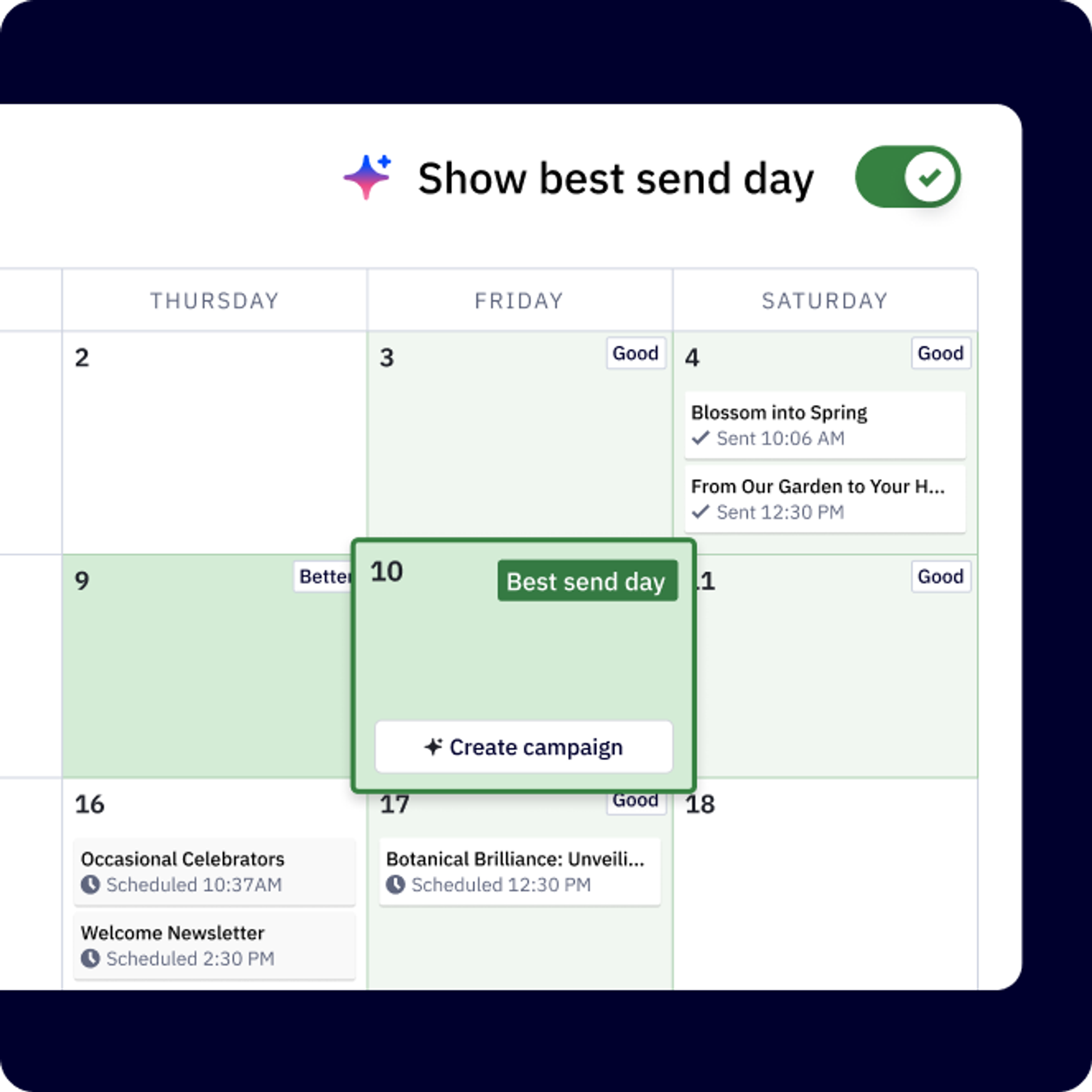
In ActiveCampaign, schedule your messaging based on historical behavioral data so it reaches your patients when they’re most likely to open it.
Leveraging AI ensures emails reach patients when they’re most likely to engage, and when they most need it.
Implement multi-channel patient communication
Respecting patient communication preferences isn’t just courteous, it’s essential for engagement and compliance. Preferences vary widely: some prefer detailed emails, others respond better to quick SMS reminders, while many engage most through app notifications.
ActiveCampaign’s cross-channel platform unifies email, SMS, and app notifications. By capturing and honoring individual channel choices, healthcare providers can reach patients where trust and convenience are at their highest.
Measure your healthcare business’s email marketing success
Measuring the effectiveness of healthcare email campaigns goes beyond tracking engagement. It requires understanding patient impact. ActiveCampaign’s reporting tools deliver detailed analytics that help healthcare providers pinpoint which messages drive real results, identify opportunities for improvement, and demonstrate ROI—all without compromising HIPAA standards.
Real-world success: 87% response rate in 24 Hours
Southern Orthodontic Partners faced a common challenge plaguing multi-location healthcare practices: inconsistent lead follow-up that was causing potential patients to slip through the cracks. "Most of our practices followed up with new leads only once, if at all," recalls Ben Goodman, Chief Marketing Officer. "We were leaving so many opportunities on the table simply because we didn't have the right tools to ensure consistent communication."
By implementing ActiveCampaign's HIPAA-compliant marketing automation platform, SOP transformed their patient acquisition process with immediate SMS and email responses to website inquiries, followed by systematic follow-up sequences.
The results were dramatic. 87% of leads now receive responses within 24 hours, and an additional 6% of previously lost leads are recaptured through automated follow-ups. This automation advantage has proven especially valuable during off-hours when competitors can't respond immediately.
The difference ActiveCampaign has made is night and day. It’s not just about generating more leads. It’s about building stronger relationships with our patients and providing a better overall experience.
FAQs about email marketing for healthcare providers
Email marketing in healthcare requires navigating a complex landscape of sensitive topics and stringent privacy regulations. Below are answers to common questions providers may have.
What types of healthcare information can be safely included in emails?
Avoid including Protected Health Information (PHI) in marketing emails, as these are protected by strict HIPAA safeguards. Instead, use transactional emails for appointment reminders or lab results, which can securely share sensitive information. Marketing emails should focus on general health tips, wellness updates, and service announcements without exposing PHI.
How can smaller medical practices implement email marketing with limited resources?
Start with scalable, easy-to-use templates and automation recipes that simplify setup and execution. Even small practices can deliver timely, relevant communications without a large team by leveraging pre-built workflows and step-by-step guidance.
What are the most common email marketing mistakes made by medical practices?
Key errors include sending PHI in unsecured emails, neglecting proper consent, and poor list management, leading to low deliverability. Avoid these by enforcing strict compliance protocols, regularly cleaning contact lists, and using encryption and secure platforms.