We're at a point where most people are using AI, but not everyone's happy with their results. Pam Didner keeps hearing the same complaint: It isn't what I wanted.
"The number one thing I hear is, 'This isn't what I was looking for' or 'It's not specific enough,'" says Pam, B2B Marketing Consultant and author of the Modern AI Marketer Series. This year alone, Pam has conducted more than 16 AI trainings for companies like Southwest Airlines, Intel, and the U.S. Army.
As Pam puts it: "Good prompting is re-prompting. If you're not getting the results you want, you have to think through how to say the same thing differently."
Solid prompts are the foundation of everything you can accomplish with AI and autonomous marketing. Good prompting is like briefing your agencies or contractors: You set the objective, give context, define success, and share references and tools. The clearer the brief, the better the results.
Hear from the AI expert herself: We sat down with Pam to talk about how the modern marketer can advance their AI maturity and the prompting techniques she uses to get the best results possible.
Avoid these common prompting mistakes
Before we get into specific examples, keep these tips in mind as you're crafting prompts:
Mistake #1: Being too general
Pulling up ChatGPT and telling it, "Write a 1000-word blog about cybersecurity" is a guaranteed way to get generic, surface-level output. Think about any AI tool as your junior assistant; it still needs context. For better results, add information about the audience you're writing for, your brand voice and tone, and the format you use for blogs (examples are great).
Pam sat down with us to explain how to get specific when prompting and why it’s crucial to getting good results from your AI tools. Watch the full webinar.
Mistake #2: Treating prompts as a “one and done”
Remember Pam's comment on re-prompting? The first draft will never be perfect; prompting is iterative. Think again about having a junior assistant: Sometimes you'd have to review that person's work and provide more info. This is how people (and AI tools) improve and start producing accurate, on-brand results.
Mistake #3: Over-relying on copy-and-paste
Once you have a good prompt, don't just slap it across every platform and call it a day. Different platforms require different strategies; for example, you'd be more informal on TikTok than you might be on LinkedIn. Be sure to adapt prompts to different tasks to get the highest quality results.
Mistake #4: Forgetting to fact-check
You've worked on your prompt enough to know it's sold gold—so your results must be too, right? On the contrary! AI can, and does, hallucinate and add in its own info. Be sure to always review your outputs and fact-check anything that you're not sure about.
Want to master prompting without the guesswork?
The Autonomous Marketer newsletter delivers expert-vetted prompts and frameworks to your inbox every other week—so you can skip the trial and error.
One note about context
It's standard best practice to teach AI everything it needs to know before you begin. That might mean uploading your entire brand guide so the bot can start to understand your tone, vocabulary, and guardrails.
Or, if you don't have a brand guide, you might feed AI examples of on-brand collateral and let it create one for you.
That said, Pam's seen AI becoming increasingly better at learning context, with less info from you.
"In the past, you had to provide a lot of information to actually brief the LLM," she says, "and now, you can just point to the website or the product page."
So: You can try giving AI less info and directing it to the correct websites, and see if that works well—if not, add the info yourself.
Whichever way you choose, build in a self-check step. Instruct the bot to explain how each piece of output aligns with your brand guidelines. You can also ask it to rate itself on tone, cadence, vocabulary, CTA style, and other elements from your brand guide. This extra step can help AI catch any "misses" before you review.
Campaign ideation prompts
Many marketers use AI to generate ideas when they're stuck and don't know how to move forward.
Say your email marketing campaign results have been in decline, and you are running out of ideas on what to do. If you only ask AI for “ideas,” you’ll get clichés. Instead, point the model at your actual performance data and ask it to surface patterns (by segment, time, cadence, wording). Then, convert those into testable experiments that fit your constraints.
Pam walks through how to make prompting AI for campaign performance analysis easy. Plus, what files and data you should be feeding the tool to get the best (and most relevant) results.
🔹 Data-driven diagnoses and solutions
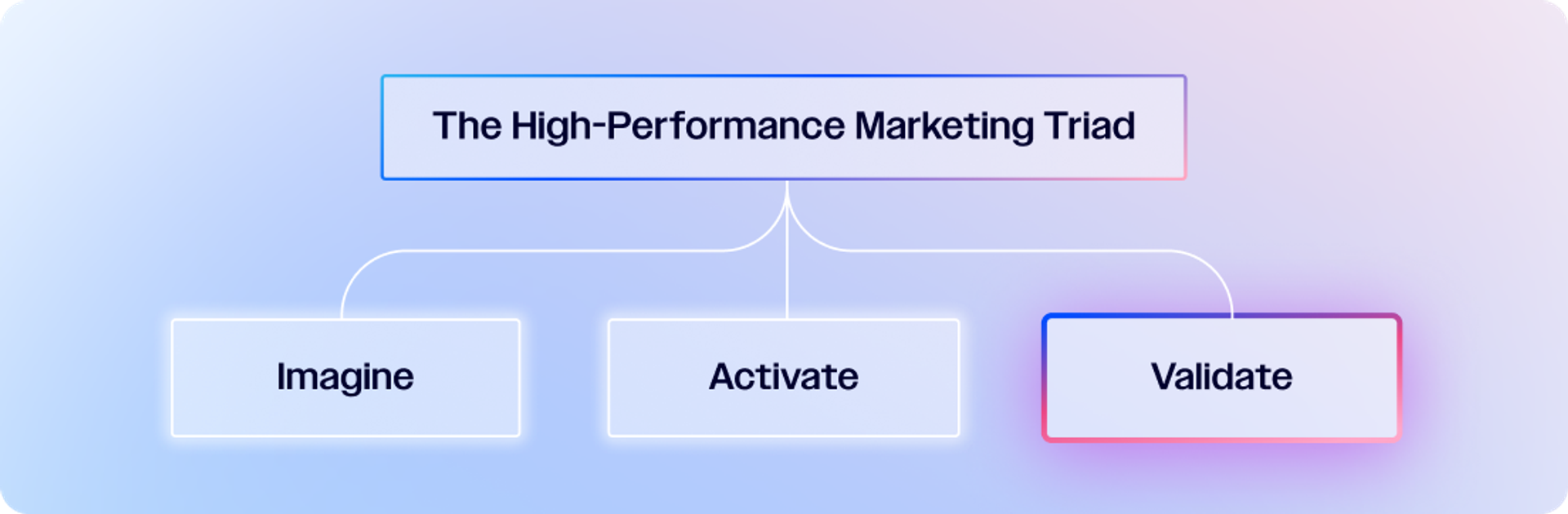
This prompt is best for the validate phase. To learn more about the Triad, read here.
Use this prompt to: start running experiments to quickly troubleshoot specific marketing issues.
Steal this prompt:
My monthly B2B email campaigns targeting [job title] in [region] have experienced a steady decline in open rates—from XX% last year to XX% today. These emails are newsletters that include industry insights and case studies, sent via [platform] on the first Tuesday of each month. Subject line examples include: [insert 2–3 examples]. I’ve attached a file containing monthly subject lines and sub-subject lines, along with performance indicators. Please analyze the file, identify possible reasons for the decline, and recommend specific, testable strategies I can implement over the next quarter to improve open rates.
You can also do a follow-up prompt to go deeper: I’ve already tried most of the strategies you suggested. Can you now provide less conventional or “novice” ideas—things that may not be widely used in B2B email marketing but could differentiate my campaigns and capture attention?
Real-world results: Pam often found that following up to request “novice” led to more creative, unexpected answers.
Customer research prompts
Many professionals may have switched from Google Search to AI Chatbots like ChatGPT to get specific answers, but enterprise buying behavior hasn’t changed. It still requires committees, (often lengthy) procurement cycles, and all the usual fixings.
AI isn't totally replacing the research, evaluation, and decision-making stages, but it is shaping the way customers evaluate options. Buyers today aren't Google searching your product category and then reading 15 different top search results to patch together an understanding of what to do next. Instead, they're asking AI for its top product recommendations and reasoning.
It's likely that your buyers are using AI to screen you early on in their research and decision-making process, so use prompts to uncover that behavior and optimize your marketing copy to increase the probability of showing up in their AI-generated shortlist.
🔹 Understanding when buyers use AI
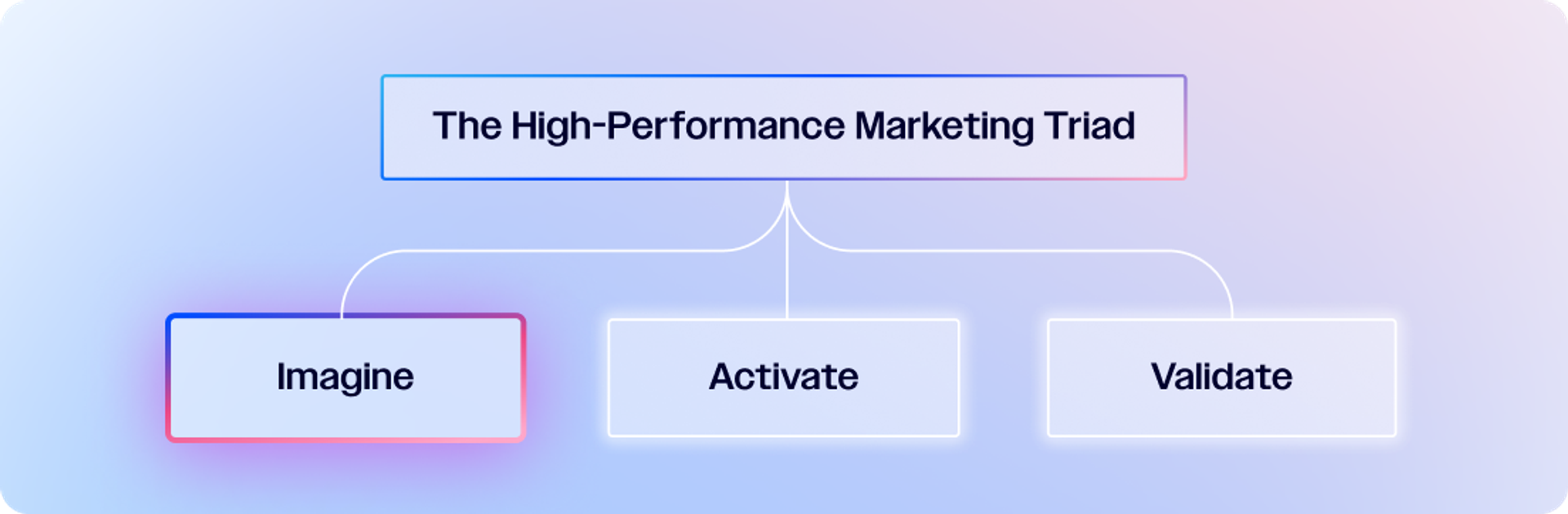
This prompt is best for the imagine phase. To learn more about the Triad, read here.
Use this prompt to: discover when buyers incorporate AI into the buying journey so you can show up to meet them.
Steal this prompt:
"Here's my ideal customer profile [paste ICP]. What role does AI likely play in their early evaluation process? At what stage of decision-making would my brand need to show up?"
For this one, you'll need to start with a POV and some info about your ICP. Use this prompt to gain an understanding of how AI is shaping your buyer journey.
If you discover that your ICP is likely using AI very early on in the decision-making process, you would then evaluate your marketing materials accordingly. Is your main landing page AI-optimized? You would also want to share that information with your sales team so they're aware that your typical buyer is relying on AI early on, as that may change the way they reach out to leads and nurture deals.
🔹 Understanding how buyers use AI
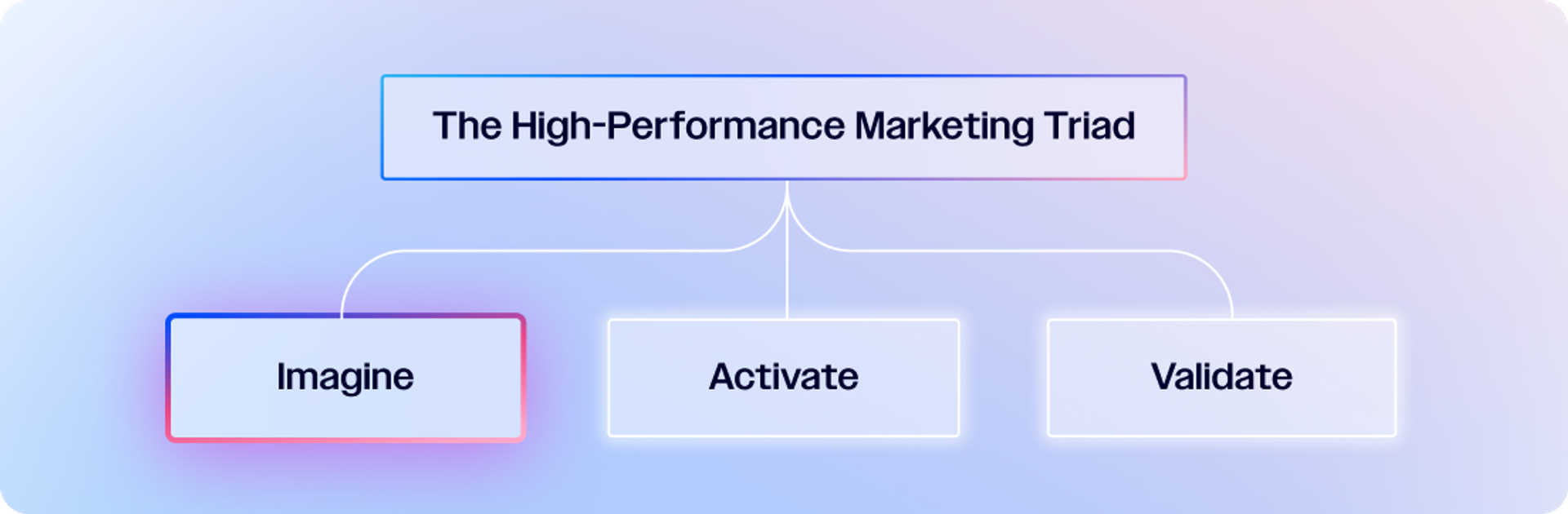
This prompt is best for the imagine phase. To learn more about the Triad, read here.
Use this prompt to: find out how your target audience is searching for answers.
Steal this prompt:
"Here's information from my website about my company [provide info], as well as information from my competitors [paste relevant content from competitor sites]. Show me how [insert position/ICP you're looking at] might use Google and ChatGPT together to research [your product category/offering]. What questions would they ask in each tool?"
Real-world results: One of Pam's clients, a technical products company, used this prompt to learn more about their ICPs' technographics and the specific technical challenges they were using AI to research. From there, they were able to better position their product to address ICP searches.
When Pam talked to her clients and attendees of her workshops, she noticed that many marketers are either starting on Google Search and then using ChatGPT to validate the findings, or vice versa. Leaders tend to go back and forth.
You can use the results you get from this prompt to address your product offerings and the way you explain them to your audience. For example, if you discover that people are asking search tools, "how is [your product] different from [competitor]," that's a good indicator to create content that clearly answers those questions.
"Many marketers are either starting on Google Search and then using ChatGPT to validate the findings, or vice versa."
🔹 Traffic analysis
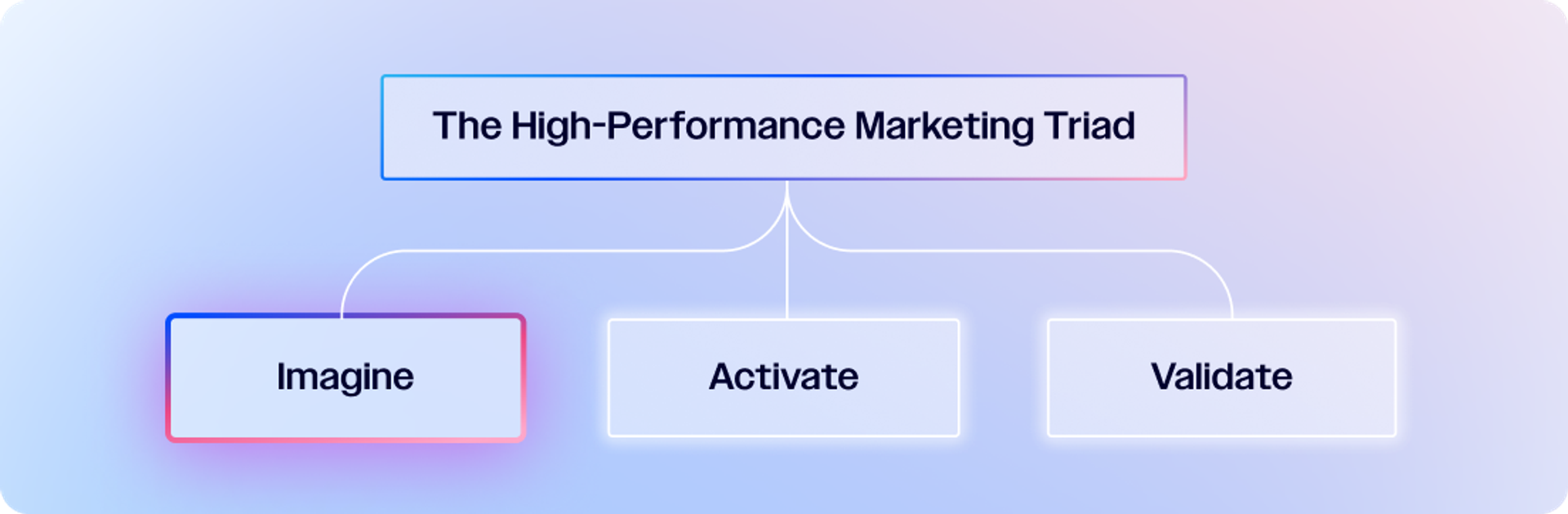
This prompt is best for the imagine phase. To learn more about the Triad, read here.
Use this prompt to: uncover the queries that are driving traffic to your page, so you can create new, related content.
Steal this prompt:
"Here are my top 5 traffic pages from ChatGPT referrals [list URLs]. Suggest the [5-8] likely prompts buyers are using to arrive at these pages."
Real-world results: Pam's annual post on the top B2B marketing conferences is a direct result of this prompt, which revealed that her first post on marketing conferences drove a ton of traffic. As a result, she made this topic an evergreen content page and updates it every year.
This one reverse-engineers the prompts buyers are using to find you in ChatGPT. For example, if your pricing page suddenly shows up in Google Analytics with ChatGPT as the referral, you can bet that buyers are creating prompts around price comparisons and you should tighten your pricing content.
Note: With thought leadership or educational content, prompts will be harder to infer. However, any time a page consistently brings you traffic, it's worth evaluating how you can add clarity for both of your audiences: AI bots and human searchers.
(And if you’d like more advice on prompting your way to customer understanding, read our post on How to Build Your Own Customer Knowledge Center.)
Website optimization prompts
SEO remains the backbone of website optimization, and many marketers have already pushed their sites hard on traditional tactics. As AI assistants like ChatGPT increasingly surface “best of” recommendations (think: “best products in [category],” “best marketing books,” “best products on G2 [category]”), teams are exploring Answer Engine Optimization (AEO) to earn visibility in AI results.
We're still early on with this development, but you can ask ChatGPT to audit your site for AEO, identify gaps (headline clarity, schema, FAQs, entity signals), and propose prioritized fixes to improve your chances of being cited by AI search tools.
🔹 Homepage clarity
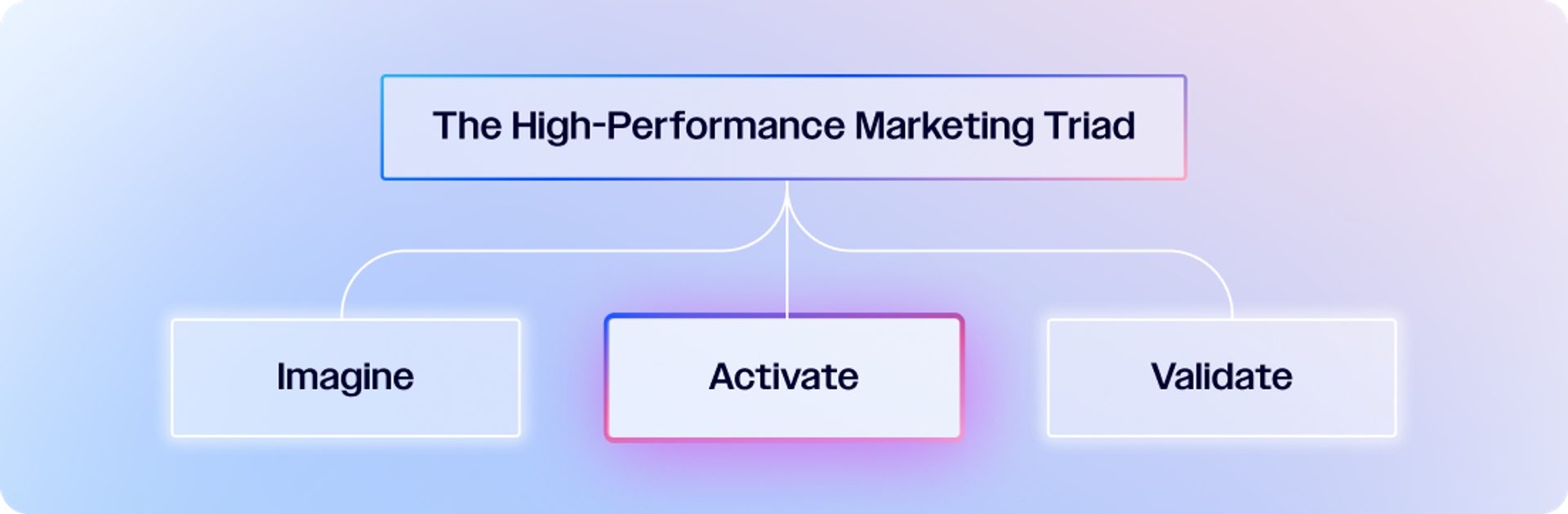
This prompt is best for the activate phase. To learn more about the Triad, read here.
Use this prompt to: help your website rank for AEO and optimize all website copy for search—without a full site rebuild.
Steal this prompt:
Evaluate the homepage of my website: [insert URL]. Analyze it specifically for Answer Engine Optimization (AEO) and AI Search Optimization. Look at elements such as headline clarity, metadata, structured data, keyword usage, content depth, FAQ coverage, and overall search intent alignment. Identify gaps where my homepage may not perform well for AI-driven search engines like ChatGPT, Gemini, or Perplexity. Then, provide a prioritized list of specific recommendations I should implement (e.g., schema markup, conversational content, query-style headings, better internal linking, etc.) to increase my chances of being surfaced as an authoritative answer in AI search results.
Real-world results: Pam has AI review her website using this prompt, and she'll use the specific recommendations it spits out. For example, the tool will tell her if she didn't explain something clearly enough, or if she needs to provide credibility or social proof on a certain page.
Buyer persona prompts
A solid persona provides every team with a consistent mental picture of the buyer—what they value, how they make decisions, and where they spend their time. Full surveys and interviews are ideal, but when time or budget is tight, you can use AI to draft a validated first pass that you then pressure-test.
Framing your prompt with clear inputs (site, messaging, research files) and a strict output format will provide the best results.
🔹Customer personas
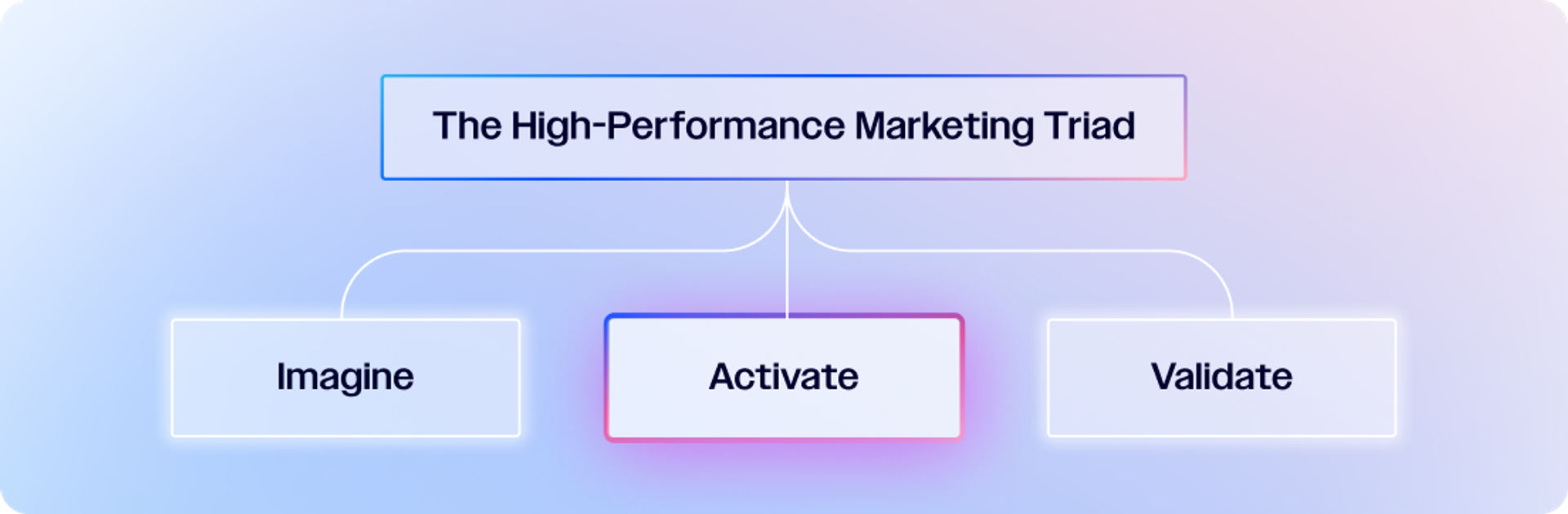
This prompt is best for the activate phase. To learn more about the Triad, read here.
Use this prompt to: update buyer personas without hiring a marketing research agency.
Steal this prompt:
[First, provide contextual info like:
- Company website pages
- Company blogs
- Product features and pages
- Customer journey notes
- Branding and messaging guides
- Customer testimonials and case studies]
Prompt: Create a customer persona profile for a [Job Title] at [Company] as part of our marketing plan.
Details to include:
- Assign the persona a realistic name.
- Approximate age: around [number].
- A quasi job title (not the formal corporate title, but a descriptive role).
- Family background: [provide details]
- Location: [provide location]
Persona structure:
- Name, Quasi Job Title
- 4 Personality Traits
- One summary statement capturing their needs for [Products or Brands].
- 2–3 short paragraphs describing how they use [Products or Brands].
- Goals/Aspirations: 4–5 bullet points
- Challenges/Pain Points: 4–5 bullet points
Real-world results: Pam uses this prompt with her clients to provide them with a first draft. Once she gets the output, she does some additional research on Google and makes adjustments before allowing the client to add their input and edits. (Of course, when it's finalized, upload it back to your AI tool so it has it as a reference.)
The most impactful thing Pam sees after the persona is created is more cross-functional collaboration because everyone is on the same page as far as who the company is targeting.
Remember: If you aren't getting the level of detail you want, or something is off, evaluate the context you're provided to the AI tool. Does it have enough information? Is it missing something foundational? If so, adjust and then re-prompt.
Turning good prompts into great results takes practice. Join The Autonomous Marketer for proven prompting strategies, real-world examples, and the frameworks that actually move the needle.
When a prompt isn’t working
Even good prompts can lead to strange outputs. Here's how to triage:
- Evaluate your prompt. If an answer is too generic or off-target, you may not have been specific enough with your original prompt. Can you add more context, examples, or directions?
- Re-prompt. Say things differently, add in the missing context, and see if that gets you any closer to the mark.
- Go back and forth. Talk to AI the same way you'd chat with a team member. Explain what you don't like about the output. Tell it to ask you if it has questions. Having a conversation can help identify what's feeling off and get you closer to a fix.
For complex questions, be patient and iterate. Rewrite the prompt, rotate source files (solo and combined), and, when needed, break the problem into sequential sub-questions and stitch the answers back together.
AI will give you endless answers. Your job is to apply your knowledge to vet responses and layer in human judgment. Experiment with these prompts and troubleshooting tips, and have fun!
The best marketers don't start from scratch
They ask their peers what they're doing, and take what works. Every other week, The Autonomous Marketer delivers battle-tested prompts, workflows, and strategies from marketers who've already done the hard work.
Get smarter about AI without spending hours experimenting. Subscribe to the newsletter →
Or, check out how prompting works in Active Intelligence.