Marketing teams comparing Brevo vs. Constant Contact are usually in the same spot: they've outgrown basic newsletter blasting and want a platform that can handle more structured campaigns. Both tools promise accessible platforms that will get you there.
But there's a larger force reshaping this decision. Marketing is shifting toward behavior-driven automation and AI that orchestrates entire customer journeys. The platform you pick today determines the kind of marketing you can execute tomorrow.
In this comparison guide, we’ll look at how both tools address modern marketing workflows to help you understand exactly what each platform actually delivers in practice. We’ll also explore what the new standard of accessible marketing looks like and whether Brevo or Constant Contact makes the grade.
Brevo vs. Constant Contact: Simple tools in an evolving market
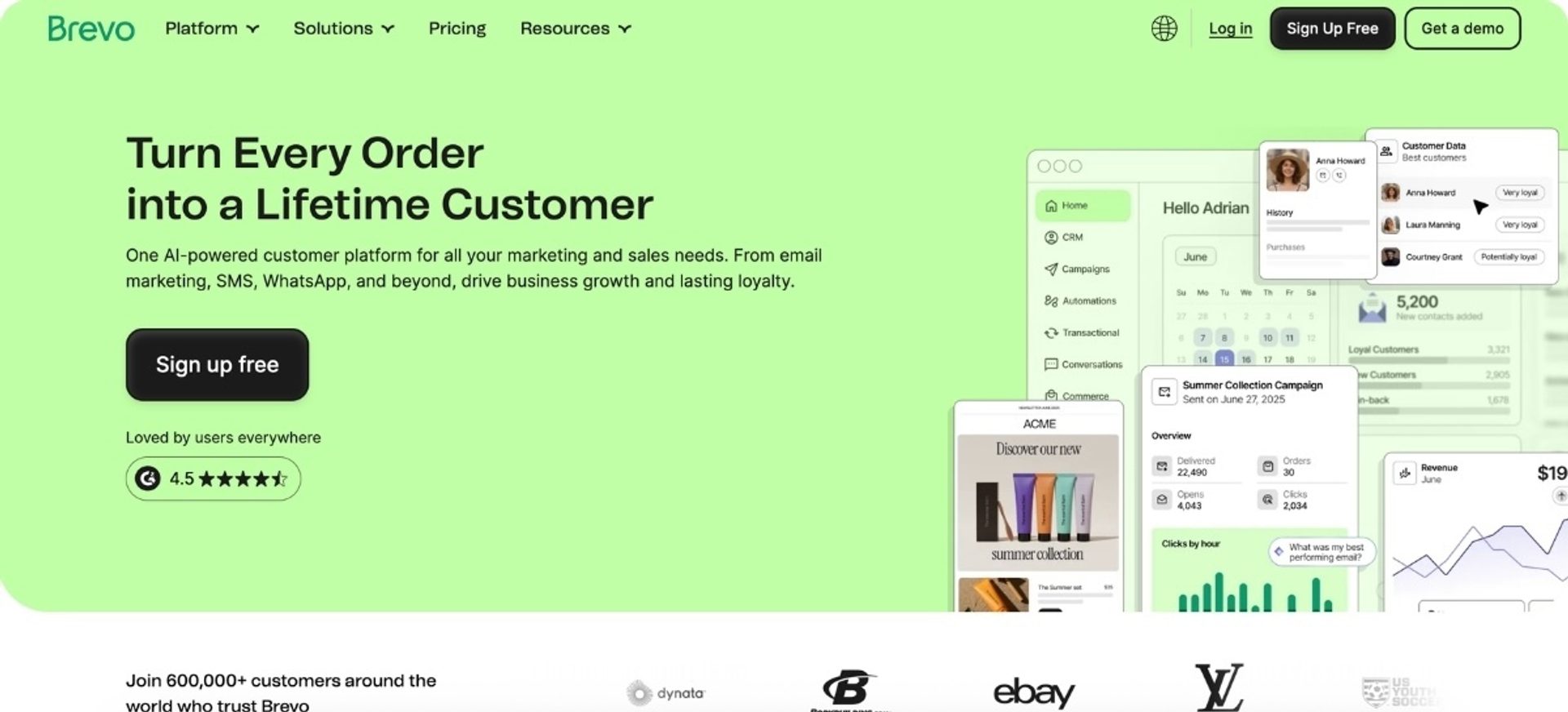
Brevo (formerly Sendinblue) is a CRM suite designed to help businesses build long-term customer relationships by unifying the customer journey in one platform. In practice, that means email, SMS, WhatsApp, chat, and transactional messaging all live under a single dashboard. Unlike most email marketing services that price primarily by the number of contacts, Brevo charges based on the number of emails you send per month. That makes it attractive for teams with large lists who don't email every day.
Constant Contact was launched specifically to help small businesses compete. It has evolved from email marketing into a broader digital marketing solution designed to reduce complexity and keep execution approachable. The platform built its reputation on simplicity, solid deliverability, and customer support that was genuinely accessible to non-technical users. Pricing is contact-based: the more people on your list, the more you pay.
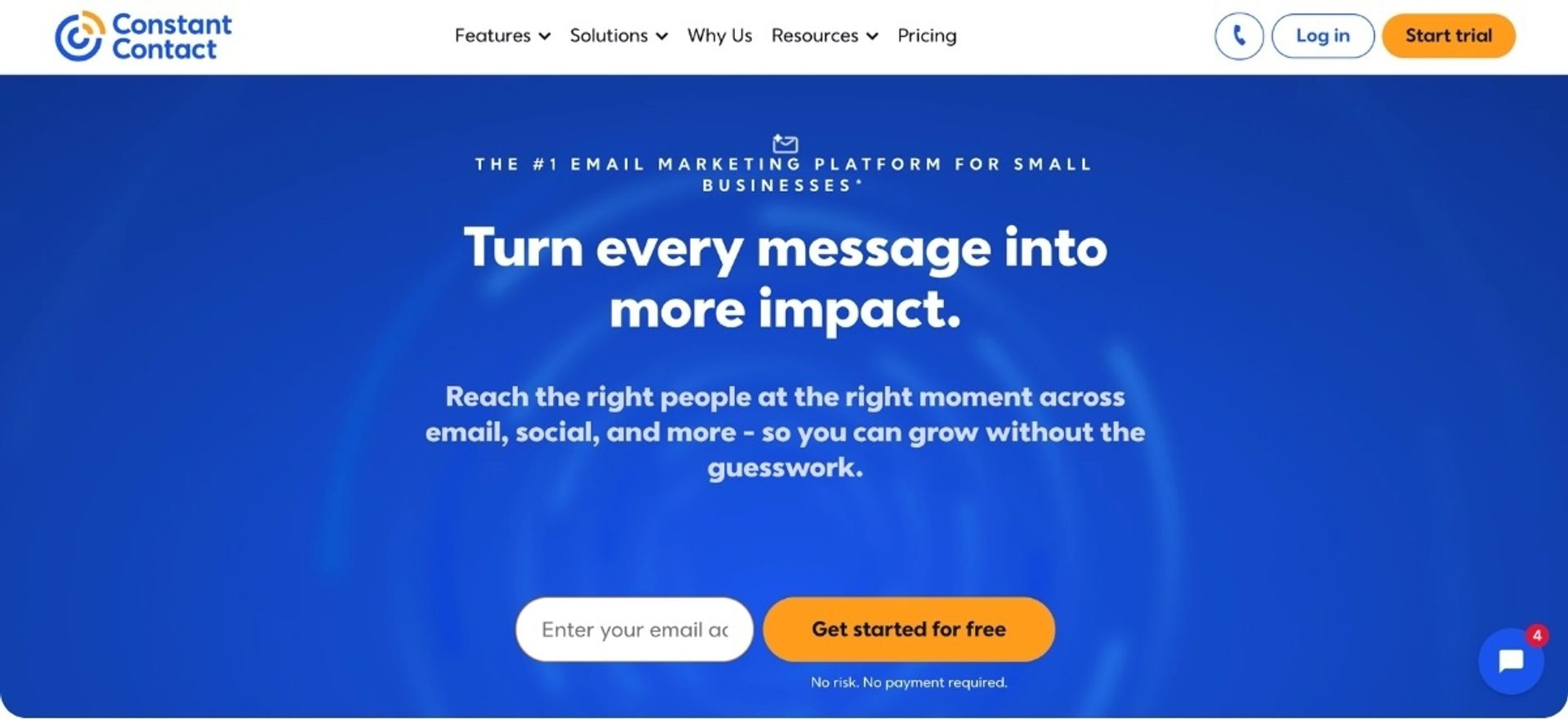
The two platforms both emphasize accessibility as a key selling point, but from different angles. Brevo supports more advanced configuration for multi-channel workflows, while Constant Contact prioritizes faster setup for small-team email programs.
But both face a common challenge as a new standard for accessible marketing emerges: AI marketing automation and autonomous marketing software have changed what "easy to use" actually means. A clean interface with fewer buttons no longer cuts it. Truly modern platforms offer execution-level AI that handles complexity behind the scenes so the marketer doesn't have to.
Traditional automation tooling and some level of multi-channel distribution can now feel just as limiting as a basic newsletter builder. Both Brevo and Constant Contact were built in an era when simplicity meant fewer features. Whether they can keep pace with this new definition of accessible is worth keeping in mind throughout this comparison.
Constant Contact vs. Brevo: Core feature comparison
Both platforms cover the basics, but growth-stage teams need more than basics. The following sections compare Brevo and Constant Contact across the features that matter most as a business scales, unpacking what they offer and where their limits appear.
Here's a quick preview of what we’ve found:
| Feature | Brevo | Constant Contact |
| AI Tools | Aura delivers four independent agents handling copy generation and send-time optimization. The most useful capabilities are gated behind Pro. | AI content generation covers email, social, and SMS with basic recommendations. Functional for speeding up production, but unlikely to meaningfully reduce manual workload for teams with complex needs. |
| Email Marketing | 40+ templates with a functional drag-and-drop editor cover the basics. Deliverability tools and transactional email via native SMTP are included across all plans. | 200+ templates built for speed over flexibility make it easy to launch campaigns without a design background. |
| Marketing Automation | Multi-step workflows available on lower tiers, making core sequences available earlier without a costly upgrade. | Multi-step journeys with branching logic are capable for lifecycle sequences, but require a Standard plan to access. |
| Cross-channel marketing | Email, SMS, WhatsApp, chat, and push notifications are all native. | Email is the clear strength, with SMS on Premium and social posting included. |
| CRM | Built-in CRM with deal pipelines keeps sales and marketing connected. Available on free plans. | No native CRM. List and tag-based contact management handles basic campaign data. |
| Integrations | 300+ native integrations | 300+ native integrations |
| Pricing | Limited free tier available. Paid plans start at $9/month for 5,000 emails (send-based rather than contact-based). Sudden pricing jump to $449+/month to access advanced features. | Free trial available. Plans start at $12/month for 500 contacts. Limited allowances for features on lower-tier plans. |
AI tools
Both platforms use AI mainly for content creation: writing subject lines, generating email body copy, and assisting with campaign setup.
Brevo's AI content generator can draft subject lines, email copy, and adjust tone. The platform’s Aura agents also extend into send-time optimization and, on the Professional tier, AI-powered segmentation.
Constant Contact offers tools for drafting basic content, primarily focused on simple text generation. The AI content generator takes a few details about your message and produces multiple draft options. These tools speed up the writing process and give teams a starting point.
But that's about where it stops. The marketer still makes every strategic decision: who receives the message, when it sends, and what the workflow looks like. More advanced platforms extend AI into workflow building, predictive sending, and performance analysis. Those are the areas where AI has a much larger impact on actual marketing outcomes than copy generation alone.
Email marketing
Email design and deliverability are the foundation of any marketing platform. Both Brevo and Constant Contact offer drag-and-drop email builders accessible to anyone without design experience.
Brevo's free plan includes 40+ email templates and the drag-and-drop editor handles standard layouts well. The platform offers dynamic list segmentation and conditional content blocks for personalization. You can insert merge fields like first name and company, and use contact-level details to customize messages.
EmailToolTester’s latest deliverability comparison puts Brevo’s deliverability score at 88.3% and transactional email is supported alongside marketing campaigns.
Constant Contact recently increased its email template library to 200+, giving it a clear edge in design variety out of the box. However, users frequently find templates rigid and boxy. The platform does not support saving or reusing custom content blocks, which limits efficiency for teams that send frequent, varied campaigns. There are limited ways to personalize emails. Dynamic content unlocks only on the Premium plan, so every recipient receives the same email on lower tiers.
Constant Contact wins on deliverability, with the latest score at 91.7%.
For teams sending a few campaigns per month, either platform handles the job. But as send volume and design complexity increase, template flexibility and deliverability will become real differentiators.
Marketing automation
Automation is where the gap between these two platforms becomes clear. Think of automation triggers like trip wires: each one sets a marketing action in motion the moment a customer takes a specific step. The more trip wires a platform supports, the more precisely it can respond to real behavior.
Brevo’s visual automation builder is fairly capable, with if/then branching and behavioral triggers. That said, Brevo's automation strength lies in straightforward, linear workflows like welcome sequences, abandoned cart campaigns, and lead nurturing. The platform handles these efficiently with reliable triggering and good performance tracking. Where it struggles is with complex conditional logic and multi-channel orchestration.
Constant Contact takes a more limited approach. Automations focus on autoresponders and function best when workflows are kept simple: a welcome email, a short onboarding sequence, a resend to people who didn't open. There are also some key limitations, with only one trigger allowed per automation and no branching logic on the Standard plan. If you're building deep branching journeys or behavior-based paths, you'll hit a ceiling.
For teams that need multi-step, multi-trigger workflows with conditional branching, both platforms require workarounds or leave gaps entirely.
CRM and segmentation
A CRM that connects marketing data to sales activity gives teams a single view of each customer. The depth of segmentation built on that data determines how personalized outreach can get.
Brevo includes a built-in CRM with basic pipeline tracking. It covers contact management and simple deal stages but does not offer the lead scoring, deal automation, or advanced segmentation conditions that dedicated platforms provide. Segmentation relies on standard contact properties and basic behavioral data.
Constant Contact does not include a native CRM. Contact management is limited to lists, tags, and basic segmentation by engagement or demographics.
For teams that want to segment by purchase history, engagement patterns, website behavior, and predictive attributes, both platforms require third-party integrations to fill the gap. This becomes a real bottleneck as teams grow. Teams end up stitching together disconnected tools for sales tracking and behavioral targeting, which introduces data gaps and slows response times.
Ease of use
Both Brevo and Constant Contact prioritize simplicity, and both deliver on that promise for basic use cases.
Brevo offers a clean interface with straightforward navigation across its multichannel tools. The free plan lets you test real campaigns before spending anything and setting up email, SMS, and transactional messaging in one place keeps things organized. The visual automation builder is intuitive for simple workflows but lacks the depth needed for complex sequences.
The interface feels slightly more complex than Constant Contact because it covers more channels but guided onboarding and contextual help smooth the learning curve.
Constant Contact is intuitive and easy to navigate, making it well-suited for creating and sending email campaigns efficiently. The platform is known for guided onboarding and strong phone and live chat support, with a gentle learning curve for teams setting up their first email campaigns. The tradeoff is that simplicity becomes rigidity, with some users reporting limitations in customization and advanced automation as needs grow.
The trade-off on both platforms is the same: simplicity in the interface often reflects simplicity in the functionality. The learning curve stays low because the ceiling is low.
Constant Contact vs. Brevo pricing: what ROI really looks like
The pricing structures of Brevo and Constant Contact follow fundamentally different models.
Brevo’s pricing is send-based, keeping costs lower for teams with large contact lists but moderate send frequency. A free plan allows 100K contacts and 300 emails/day. Paid plans start at $9 for 5,000 emails/month for Starter. The Standard plan runs $18/month, and the Professional plan starts at $499/month for 150,000+ emails.
Constant Contact uses a more common contact-based model with three main pricing tiers: Lite, Standard, and Premium. The Lite plan starts at $12/month, the Standard plan at $35/month, and the Premium plan at $80/month. All prices are for up to 500 contacts, and costs can climb quickly as subscriber counts grow.
On both platforms, the features growing teams actually need are locked behind higher-tier plans. Advanced automation and deeper segmentation are usually available only in the more expensive tiers on Constant Contact. Brevo similarly reserves A/B testing, landing pages, and advanced reporting for its Standard plan and above.
It’s also important to consider whether revenue has been left on the table when choosing a simpler platform. The cheapest entry point isn't always the most economical path if it forces you to add external tools for CRM or advanced automation as your needs grow.
Does Brevo or Constant Contact fit your business needs best?
Both platforms can be a strong choice depending on your needs.
Brevo is a stronger fit for teams that:
- Have a large contact list but send campaigns infrequently (send-based pricing saves real money)
- Are including SMS and WhatsApp are part of the communication strategy from day one
Constant Contact is the stronger choice for:
- Small, nonprofit, or local businesses that value guided onboarding and phone support
- Clean newsletters and basic automated follow-ups, not complex lifecycle campaigns
Both tools support foundational marketing structure. But they're primarily stepping-stone platforms that can become limiting as businesses shift toward deeper, behavior-driven customer journey orchestration.
The new standard for accessible marketing has moved past limited features and a simple interface. AI-powered depth feels just as approachable, and modern platforms can handle complexity so the marketer does not have to. For teams ready to cross that threshold, a different class of platform is the logical next step.
ActiveCampaign: The platform redefining ease of use in marketing
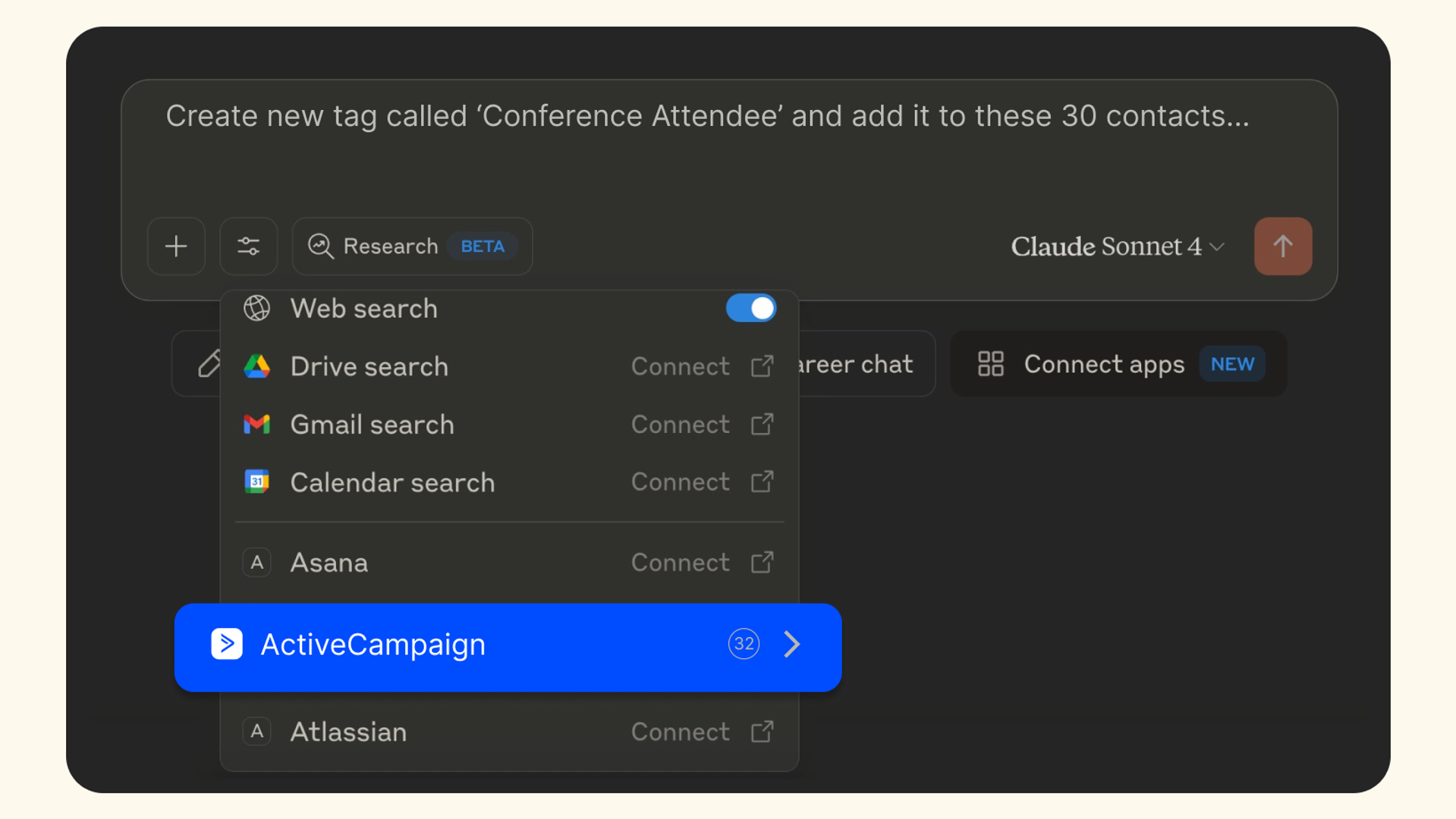
ActiveCampaign is built for a more modern definition of accessibility in marketing software. The autonomous marketing platform uses AI to handle the complexity of advanced automation, segmentation, and cross-channel orchestration so that sophisticated marketing feels as approachable as sending a newsletter.
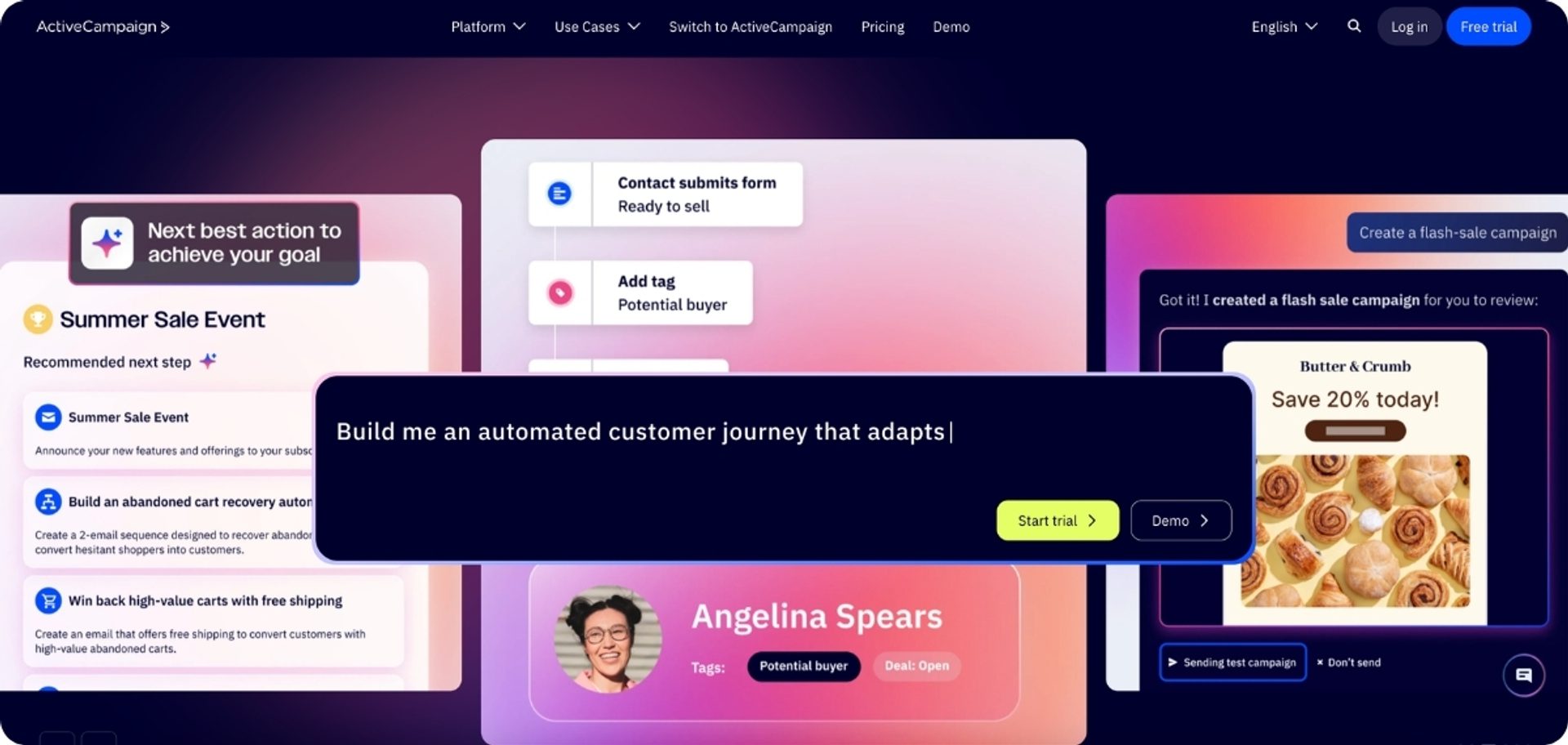
Let’s explore exactly where ActiveCampaign stands out from Brevo and Constant Contact, so you can see where it makes the biggest difference to your workflows.
AI that runs your marketing, not just your copywriting
Platforms that equate simplicity with limited functionality are at a growing disadvantage. More forward-looking platforms now provide AI that makes depth feel effortless. ActiveCampaign extends AI well beyond content generation into the operational core of marketing execution.
Active Intelligence is the autonomous conversational layer that powers the entire platform. Rather than asking you to configure every element manually, it lets you describe a goal and builds a marketing system around it.
A suite of 25+ specialized AI Agents are activated to execute custom campaigns from end-to-end, with no manual intervention required for optimization:
- AI Campaign Builder generates full campaigns from a single prompt — subject lines, body copy, layout, images, and CTAs included.
- AI-Suggested Segments analyze your entire contact database to surface high-value micro-audiences you didn't build.
Autonomous Insights proactively answer "what should we do next?" instead of just showing what already happened.

Where Brevo and Constant Contact use AI to help marketers write faster, ActiveCampaign uses AI to help marketers think, execute, and optimize smarter — without adding complexity to the day-to-day experience.
Real automation depth across channels
ActiveCampaign treats automation as the platform's foundation, not an add-on. It offers 45 automation triggers across 11 categories, A/B/C/D/E split testing within workflows, and automation goals that adjust paths dynamically based on contact behavior. Compared to Constant Contact's three pre-built workflows or Brevo's visual builder that strains under complex branching logic, it’s an incredibly powerful machine.
The AI Automation Builder generates complete multi-step workflows from plain-language descriptions, making sophisticated automation accessible to teams without technical resources. Cross-channel orchestration spans email, SMS, WhatsApp, and site messaging inside a single workflow with shared triggers and personalization logic, beating both Brevo's lighter orchestration and Constant Contact's email-centric approach.

ActiveCampaign also ranks number one in EmailTooltester's independent testing, with a 94.2% deliverability rate. You can be confident that your messages are in safe hands.
The platform also connects to 1,000+ integrations and offers a built-in CRM with pipelines, lead scoring, and deal automation. Segmentation draws from 86+ conditions across 10 categories, covering tags, custom fields, engagement data, and predictive insights.
The connected system treats your integrations, CRM, and audience data as unified elements, and feeds them directly into smarter automation.
Accessible pricing that scales
ActiveCampaign's pricing is designed for growth, not gatekeeping. The Starter plan begins at $15/month and includes core features like multi-step automation from day one. That's a fundamentally different value proposition than Brevo and Constant Contact, platforms that gate essential automation behind more expensive tiers.
Pricing scales predictably, with no steep jumps between tiers that force teams to pay for specialist features they do not need yet. Teams can add CRM and sales engagement as optional add-ons rather than forced upgrades.
ActiveCampaign delivers genuine depth that feels just as approachable as a simple interface; the learning curve remains manageable because AI handles the complexity. Because of this, ROI builds fast. AI handles campaign creation, audience discovery, and send-time optimization, which means fewer hours spent on execution and more spent on strategy.
Marketing teams that use ActiveCampaign save over 10 hours per week by reducing manual work with AI and automations.
Every plan also includes a 14-day free trial, free agentic migration and onboarding, and 24/7 support. A 30-day money-back guarantee ensures you see results right away, without risking budget.
Marketing software has moved on. ActiveCampaign makes sophisticated marketing feel effortless. Start your free 14-day trial.
FAQs
Is Brevo or Constant Contact better for small businesses?
Whether Brevo or Constant Contact is a better choice for your small business depends on your goals. Constant Contact is a solid fit for teams that need simple email newsletters and strong onboarding support. Brevo works well for businesses that want multichannel messaging at a lower entry price. For small businesses that plan to scale into automation, personalized journeys, and CRM-driven marketing, ActiveCampaign offers the depth to grow without switching platforms.
Does Constant Contact or Brevo have a free plan?
Brevo offers a free plan that includes up to 300 emails per day and basic automation features. Constant Contact does not offer a free plan, though it occasionally provides limited-time trials.
Which platform has better AI marketing features, Brevo or Constant Contact?
Both Brevo and Constant Contact offer AI for content generation, such as subject line suggestions and email copy assistance. Neither platform offers AI-driven automation building, predictive sending, or automated segment discovery. ActiveCampaign’s Active Intelligence layer includes AI Campaign Builder, AI Automation Builder, AI-Suggested Segments, Predictive Sending, and Predictive Content, covering the full marketing workflow from creation to optimization.
How can I switch from Brevo or Constant Contact to ActiveCampaign?
ActiveCampaign provides free agentic migration services for teams switching from Brevo or Constant Contact. The migration covers contact lists, automation workflows, email templates, and historical data. With a 14-day free trial and a 30-day money-back guarantee, teams can test the full platform before committing. ActiveCampaign’s support team is available 24/7, and customer enablement workshops help new users get up to speed quickly.