Most modern marketing platforms let you automate work to some degree. Teams are accustomed to creating sophisticated workflows that automatically handle welcome series, re-engagement sequences, contact organization, and scheduled ad campaigns. It's powerful, but it's still fundamentally rules-based. Someone has to define every condition, interpret every report, and reallocate budget by hand.
Autonomous marketing software takes a different approach. Instead of following rules a marketer defines step by step, it uses AI to analyze data and act with minimal manual input. You still own the strategy, brand direction, and final approvals, because that's where human judgment, creativity, and accountability can't be replaced. Set the goal, and the software figures out how to get there—handling the building, testing, optimization, and real-time coordination that often consume most of the workday.
It frees marketers to spend more time on sharper strategy, stronger creative, and faster responses to what the market is telling them.
The six tools below represent the best autonomous marketing software across major categories. They span content generation, paid media optimization, revenue intelligence, and end-to-end campaign orchestration. Here is what the modern autonomous marketing stack looks like.
1. ActiveCampaign: Best tool for autonomous campaign orchestration
ActiveCampaign is the autonomous marketing platform built for teams that want to move from campaign logistics to campaign leadership. Where most tools automate a single stage of the workflow, ActiveCampaign connects ideation, audience targeting, content creation, delivery optimization, and performance analysis inside one platform.

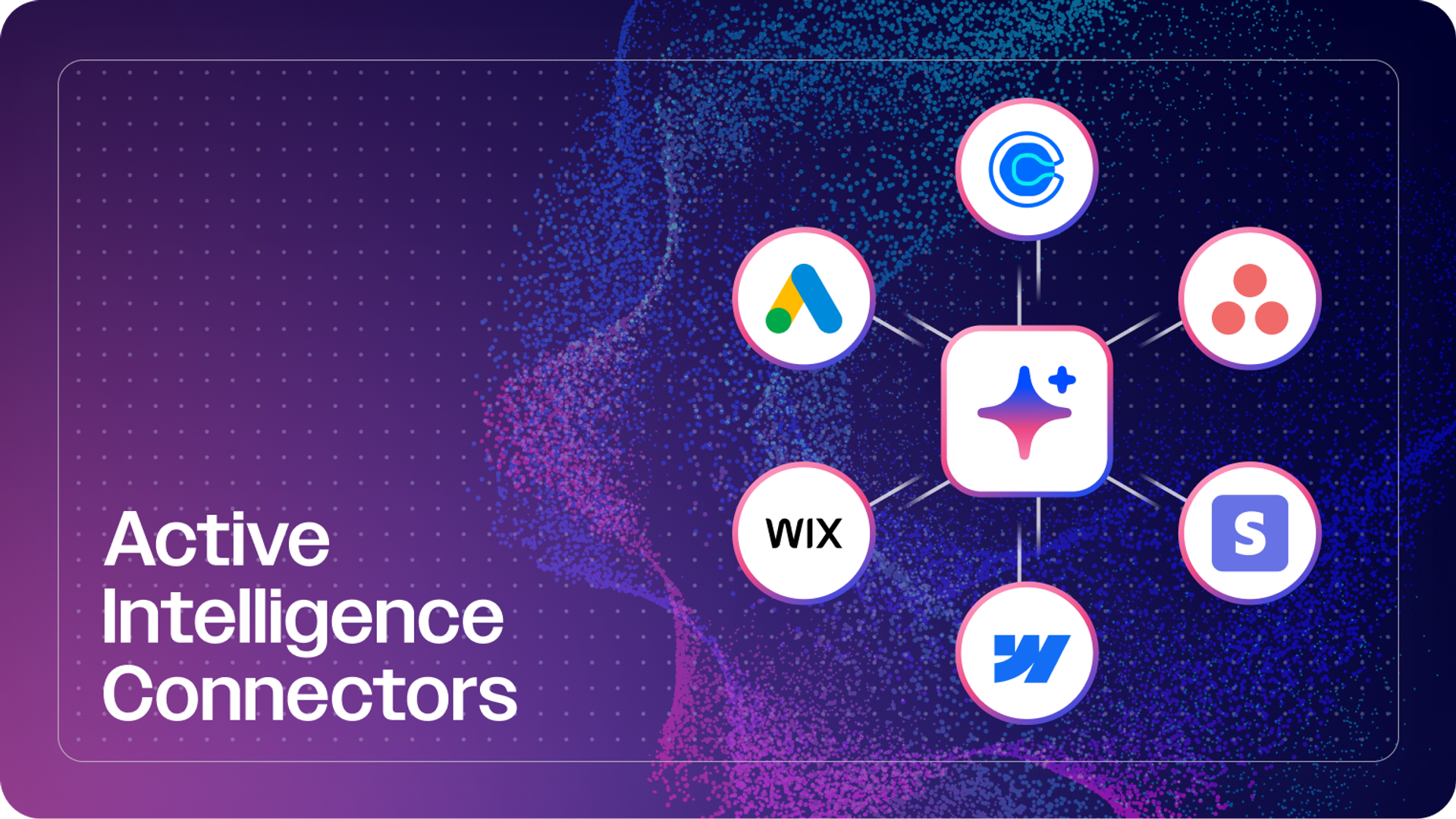
The engine behind this is Active Intelligence. Think of it as a command center that dissects your goals and deploys purpose-built AI agents to act on campaigns, automations, segments, forms, personalization, and insights. These agents run continuously in the background, monitoring performance data and customer behavior to proactively surface opportunities a marketer might not have time to find.
Marketers interact with these agents through a Conversational Workspace, describing goals in everyday language instead of configuring rules. You can type a campaign goal into the workspace like “I need a campaign optimized for customers who haven’t made a purchase in 90 days,” and a full suite of AI agents are triggered instantly. They review defined Business Goals, identify the right audience, and build the campaign structure. Rather than waiting for a marketer to pull a report or adjust a sequence, Active Intelligence can build a sophisticated, responsive workflow, create content, and automate execution across marketing channels. When results come in, it flags what's working and suggests next steps. You can step in to approve and refine at any stage; the software handles the rest.
Key autonomous capabilities:
- 25+ goal-oriented AI Agents autonomously handle specialized marketing tasks including campaign creation, audience targeting, cross-channel execution, and ongoing optimization based on real-time performance signals.
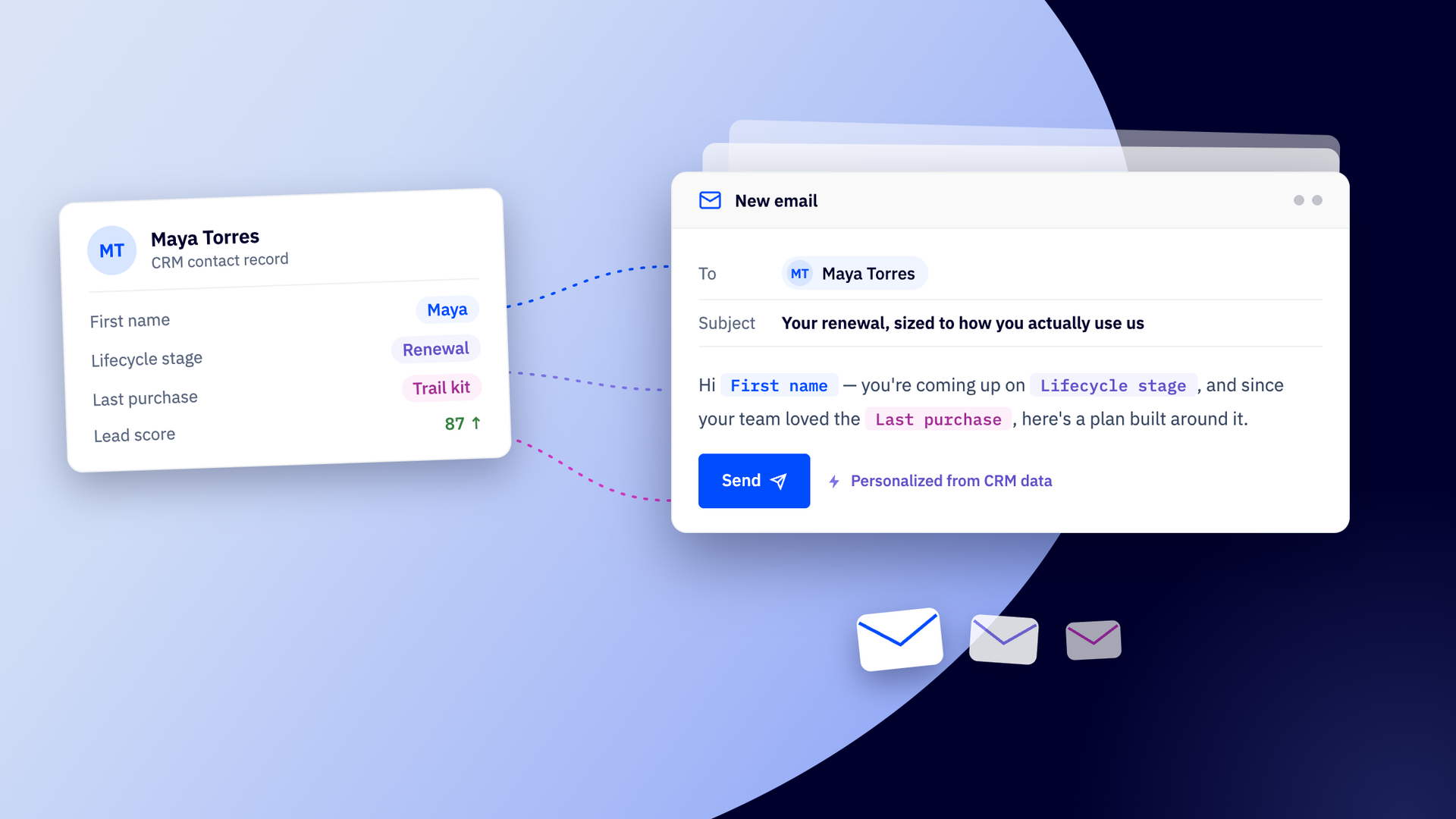
- AI Campaign Builder converts natural language prompts into fully formed campaigns including emails, subject lines, layouts, and CTAs, dramatically reducing end-to-end campaign production effort.
- AI Brand Kit keeps autonomous campaign generation brand-consistent by applying visual identity elements like colors, fonts, logos, and imagery, pulled directly from your website.
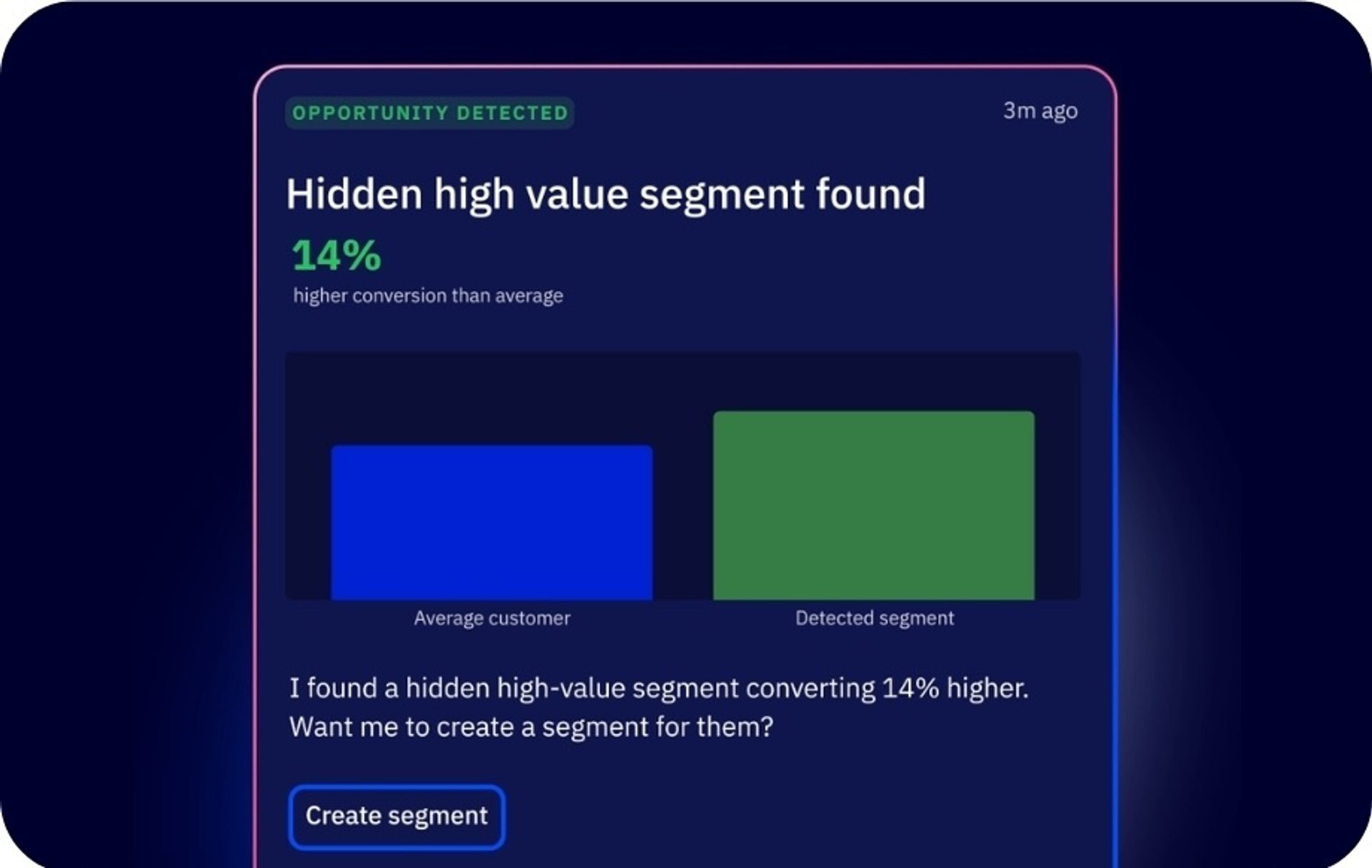
- AI-Suggested Segments continuously analyze behavioral and engagement data to identify and update high-value audience segments without manual list building.
- Predictive Sending automatically determines optimal send times for each individual contact based on engagement patterns.
- Autonomous Insights continuously and proactively surface performance observations and recommendations so users receive instant, AI-generated analysis and next-step suggestions that can be automatically actioned.
- AI Translations automatically localize campaign content across 75+ languages based on contact preferences without manual duplication or editing.
- MCP Connectors link your ActiveCampaign system to external AI tools like Claude and ChatGPT, so your team can check campaign stats and trigger automations from their favorite AI chatbot.
ActiveCampaign is a great tool for marketing teams that want to increase output and responsiveness through a single platform covering ideation through optimization, without stitching together point solutions.
ActiveCampaign solves the problem of fragmented customer data and manual workflow bottlenecks. By unifying email, CRM, and behavioral data into one automated pipeline, it saves me hours of manual tracking and allows me to scale personalized operations efficiently.
Pricing
ActiveCampaign pricing plans start at $15/month for 1,000 contacts, with AI capabilities available from day one and unlimited Active Intelligence usage unlocking at the Pro tier ($79/month for 1,000 contacts). A 14-day free trial is available with no credit card required.
2. Jasper: Best tool for autonomous content generation
Jasper was built with one problem in mind: producing on-brand marketing content at scale. Its AI engine generates blog posts, ad copy, social captions, email sequences, and landing page text based on brand voice profiles and campaign briefs.
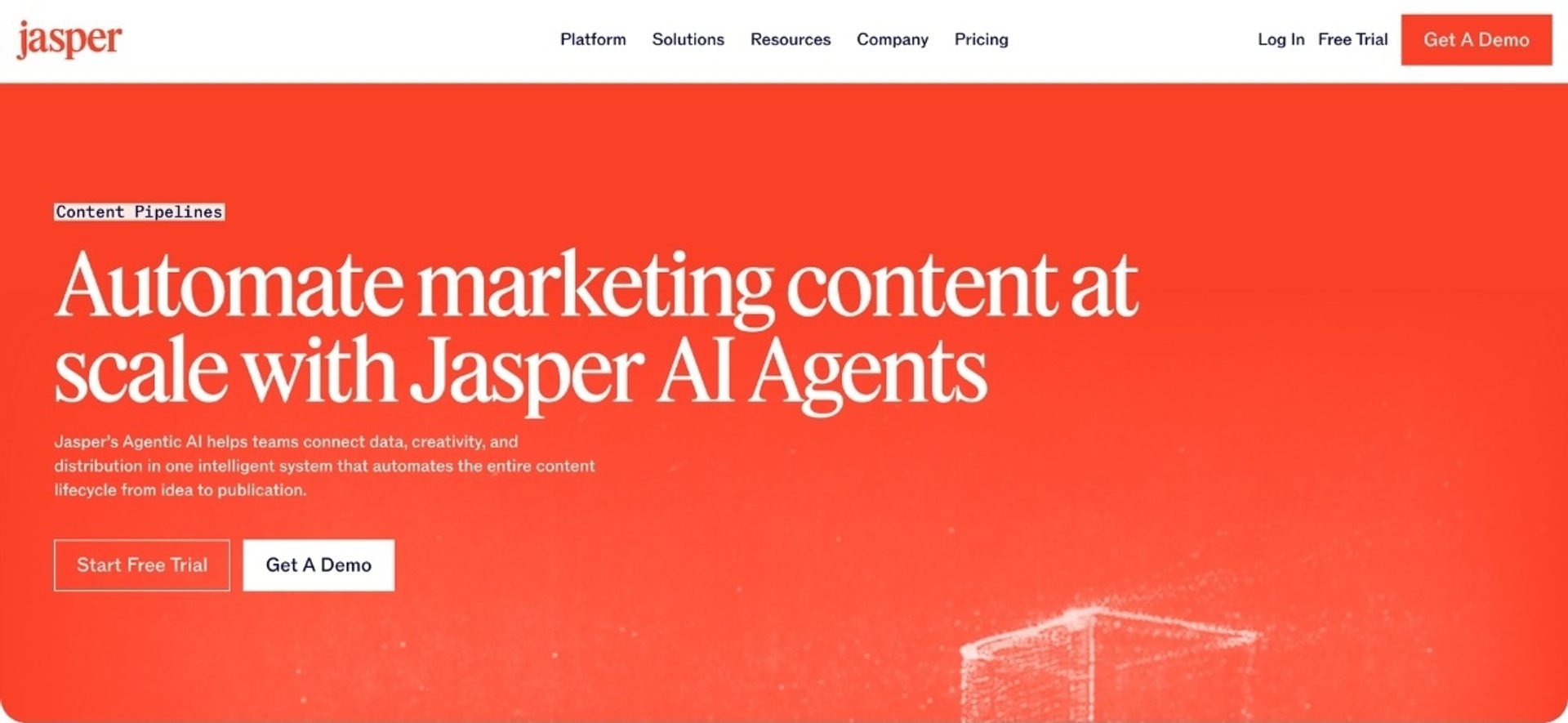
Since launching as a simple copywriting generator, Jasper has evolved and now brands itself as a broader “marketing AI platform”. However, its core mechanics are focused on text generation, campaign copy generation, and SEO editing, and that’s what it is best for.
Jasper's core advantage is brand memory. A content team that needs 15 variations of ad copy for a product launch across Google, Meta, and LinkedIn can input a single campaign brief and target audience. Jasper generates all variations, tailored to each platform's format and character limits, while maintaining the approved brand voice.
Key autonomous capabilities:
- Jasper Brand IQ trains the tool on your company-specific style, terminology, and tone so every piece of output sounds consistent across teams and channels.
- Multi-asset generation converts a single brief into content for email, ads, social, and landing pages in one pass.
- AI-powered content repurposing takes a single source asset and adapts it across formats and channels without starting from scratch each time.
- Built-in collaboration and approval workflows let teams review, comment on, and approve content before it ships, all within the platform.
For teams that find content production to be the main bottleneck holding up campaigns, Jasper can generate brand-consistent assets at the speed the rest of the workflow demands. This is especially helpful for teams managing multiple brands or product lines.
Jasper can also be connected with ActiveCampaign via Zapier, so teams can create content in Jasper and orchestrate delivery through ActiveCampaign's autonomous campaign workflows.
Jasper is solving the challenge of creating high-quality, on-brand content quickly and efficiently. It eliminates the time-consuming process of starting from scratch by providing accurate first drafts tailored to our tone of voice.
Pricing
Jasper pricing plans start at $59/month/seat. Enterprise pricing requires a custom quote. A 7-day free trial is available.
3. MarketMuse: Best tool for autonomous SEO strategy
MarketMuse uses AI to analyze entire content libraries, identify SEO gaps, and generate optimized briefs. The platform autonomously maps topical authority and recommends what to write, update, or remove, so marketers can skip the manual keyword and competitor research.
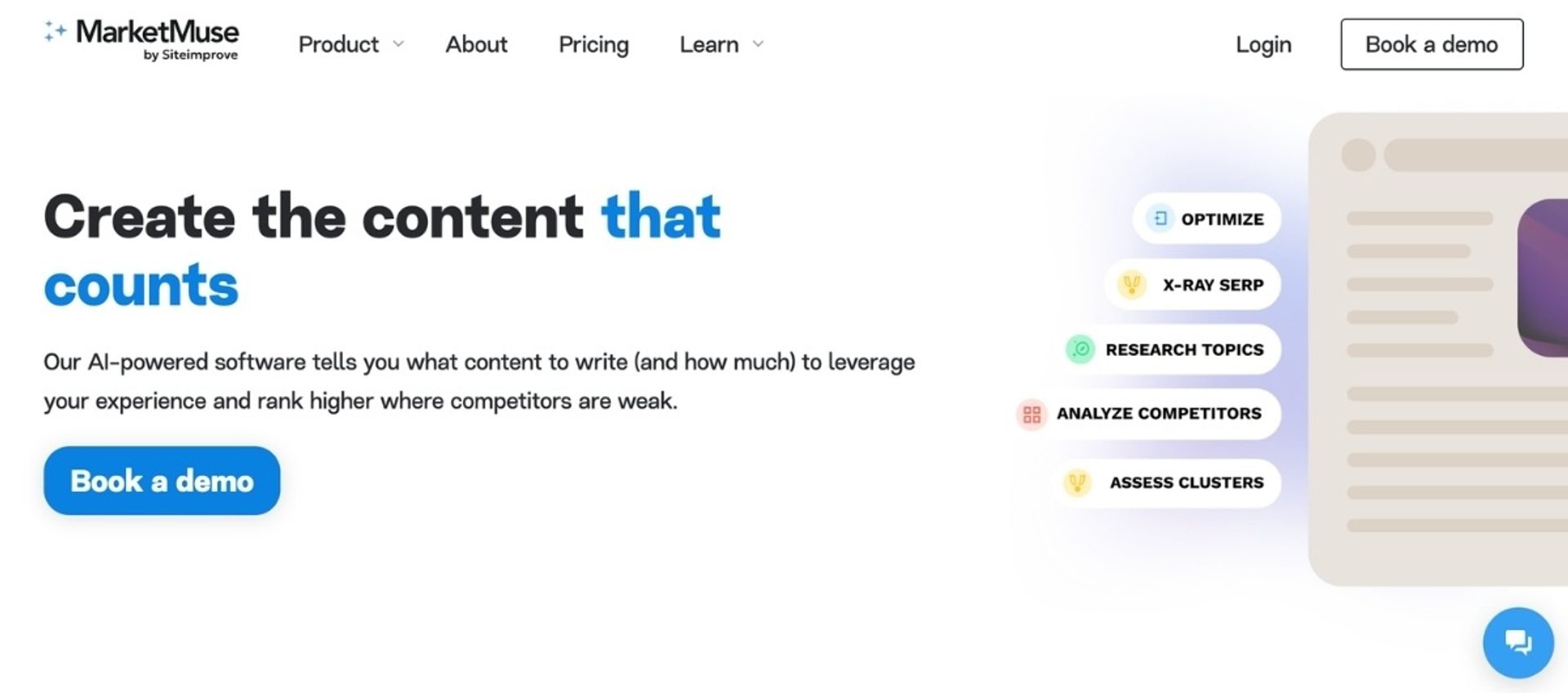
The tool goes beyond keyword research into what it calls "content intelligence." It scores existing pages against competitors, identifies cannibalization issues, and prioritizes content opportunities by their potential traffic impact. Rather than simply producing a list of keywords like common SEO automation tools, it provides a strategic plan with clear priorities.
A marketing manager looking to improve organic traffic can point MarketMuse at the entire library. The platform audits every page, identifies posts losing rankings due to thin content, and flags any keyword opportunities where the site has topical authority but no published page. It then generates optimized content briefs for the top-priority opportunities, complete with recommended word counts, subtopics, and internal linking targets.
Key autonomous capabilities:
- Content Planning tools run automated audits across entire domains, cataloging every page and scoring it against competitive benchmarks.
- Topic authority analysis uses AI to map topical coverage and identify gaps where new content can capture high-intent traffic.
- Content briefs are auto-generated based on target topics, questions, structure, and recommended word counts so writers start with a data-backed plan.
- Competitive content analysis compares performance at the page and domain level, showing where competitors are winning and where opportunities exist.
- Content scoring benchmarks draft and published pages against top-ranking results, providing a clear target score before publication.
For teams sitting on large content libraries without a clear picture of what is working, what needs updating, and where the gaps are, MarketMuse turns that ambiguity into a prioritized action plan.
MarketMuse solves the problem of lost opportunities and uncertainty in content marketing by giving me actionable insights based on my existing authority and the competitive landscape.
Pricing
MarketMuse pricing includes a limited free plan. All paid plans require customers to book a demo, with team and premium tiers offering additional seat licenses and inventory analysis.
4. Albert: Best tool for autonomous paid media optimization
Albert operates as a self-driving system for digital advertising. It autonomously manages campaigns across Google, Meta, YouTube, and other paid channels by analyzing performance data, reallocating budgets, adjusting bids, and testing creative variations without manual oversight.
Albert's cross-channel perspective sets it apart from rule-based bid management tools. It evaluates how spend on one channel affects performance on another and shifts budgets to maximize total return, rather than optimizing each channel in isolation.
Brands running paid campaigns across various channels connect Albert to their ad accounts. Albert can analyze historical performance, identify which awareness campaigns are driving higher-intent Google searches, and autonomously shift retargeting budgets in response.
Key autonomous capabilities:
- Cross-channel budget allocation continuously evaluates performance across all connected ad platforms and redistributes spend toward the highest-returning channels automatically.
- Autonomous creative testing runs multivariate experiments on ad copy, images, and formats, promoting winners and pausing underperformers without manual intervention.
- Real-time bid adjustments respond to performance patterns as they emerge, optimizing cost-per-acquisition throughout the day rather than relying on scheduled rules.
- Audience micro-segmentation uses AI analysis to discover and target high-performing audience slices that manual targeting would miss.
- Unified reporting aggregates data across all connected ad platforms into a single view, making cross-channel performance easy to evaluate at a glance.
For teams that lose hours to manual bid adjustments and budget shuffling across platforms, Albert takes over the optimization work so marketers can focus on creative strategy and campaign planning.
Pricing
Albert pricing is custom based on ad spend volume and connected channels. Prospective customers should contact the sales team for a quote.
5. 6sense: Best tool for autonomous revenue intelligence
6sense uses AI to identify which companies are actively researching a product category before those companies ever fill out a form. Its Revenue Marketing software analyzes anonymous buying signals, including web research, content consumption, and third-party intent data, to surface accounts that are in-market right now.
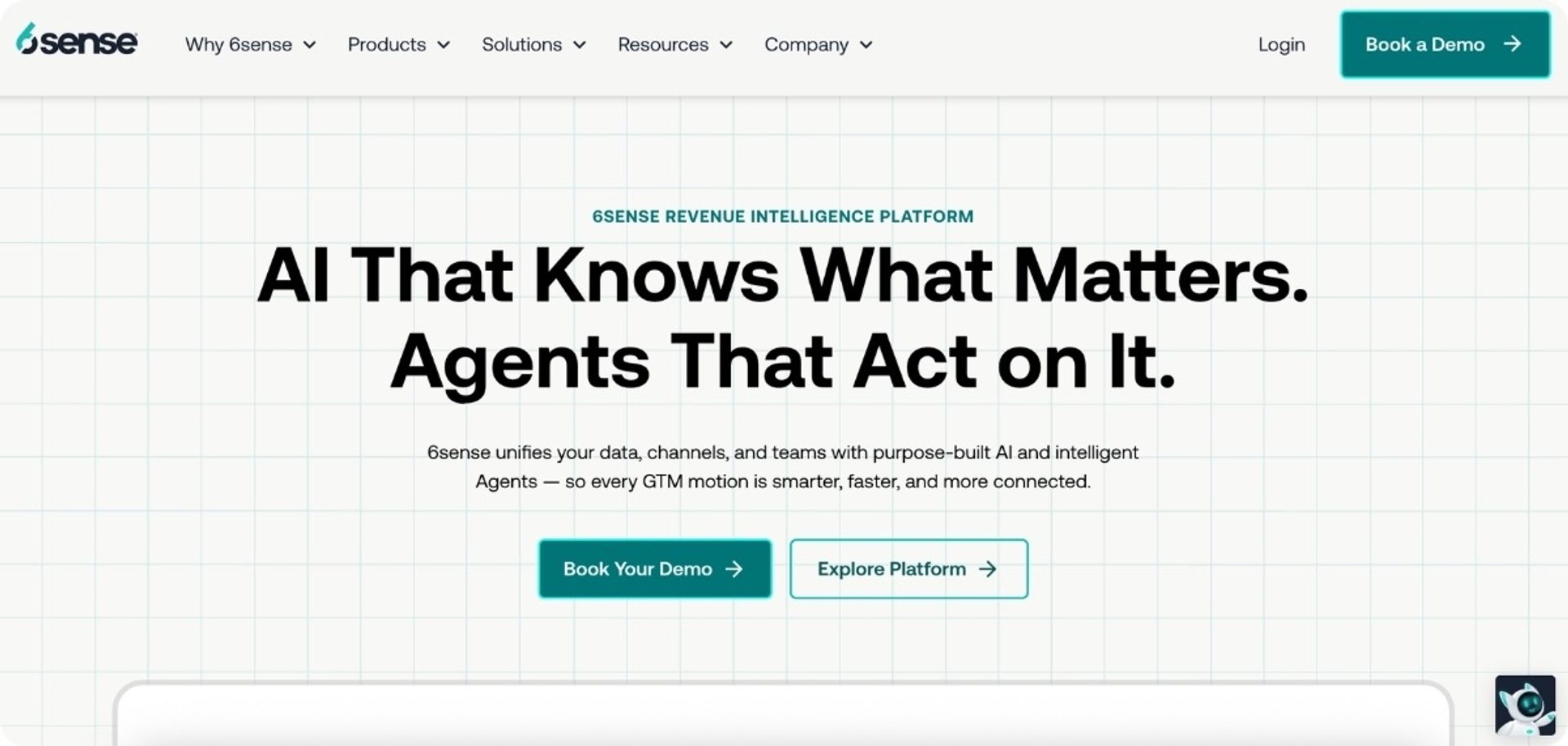
For marketing teams, this means targeted outreach based on real buying signals. Marketers can prioritize accounts showing genuine purchase intent and tailor campaigns accordingly, rather than sending the same nurture sequence to every contact.
Marketing teams connect 6sense to their marketing and sales stacks. The platform can detect whether target accounts have been researching relevant keywords or visited competitor websites recently. Based on this, 6sense will autonomously move any high-priority accounts into a new segment, trigger campaigns, and alert the sales team with a briefing on the account's research activity and likely buying stage.
Key autonomous capabilities:
- Intent data captures anonymous buyer research signals across the web, identifying accounts actively exploring a product category before they engage directly.
- AI-driven account scoring prioritizes accounts by purchase likelihood, so sales and marketing teams focus resources on the highest-potential opportunities.
- Predictive analytics forecast deal timing and close probability, helping teams align outreach to where each account sits in the buying journey.
- Autonomous audience segmentation groups accounts by buying stage, industry, and behavior for precision ABM campaigns that adapt as signals change.
- Multi-channel orchestration coordinates display ads, email, and sales outreach from a single platform, ensuring consistent messaging across every touchpoint.
For B2B teams where pipeline depends on reaching the right accounts at the right moment, 6sense solves the visibility problem by surfacing buying intent before prospects ever raise their hand. This is especially valuable for companies with longer sales cycles and buying committees, where early engagement shapes the outcome.
6sense Revenue Marketing helps solve the challenge of not knowing which accounts are actually in-market. As an SDR, that means less time guessing and more time focusing on accounts showing real buying intent.
Pricing
6sense pricing includes a free tier with limited intent data. Paid plans are custom-priced based on account volume and feature requirements.
6. Amplitude: Best tool for autonomous growth insights
Amplitude is an AI analytics platform that focuses on explaining why metrics change, not just what changed. Its platform autonomously monitors product and marketing data, detects anomalies, and surfaces insights that connect user behavior to business outcomes.
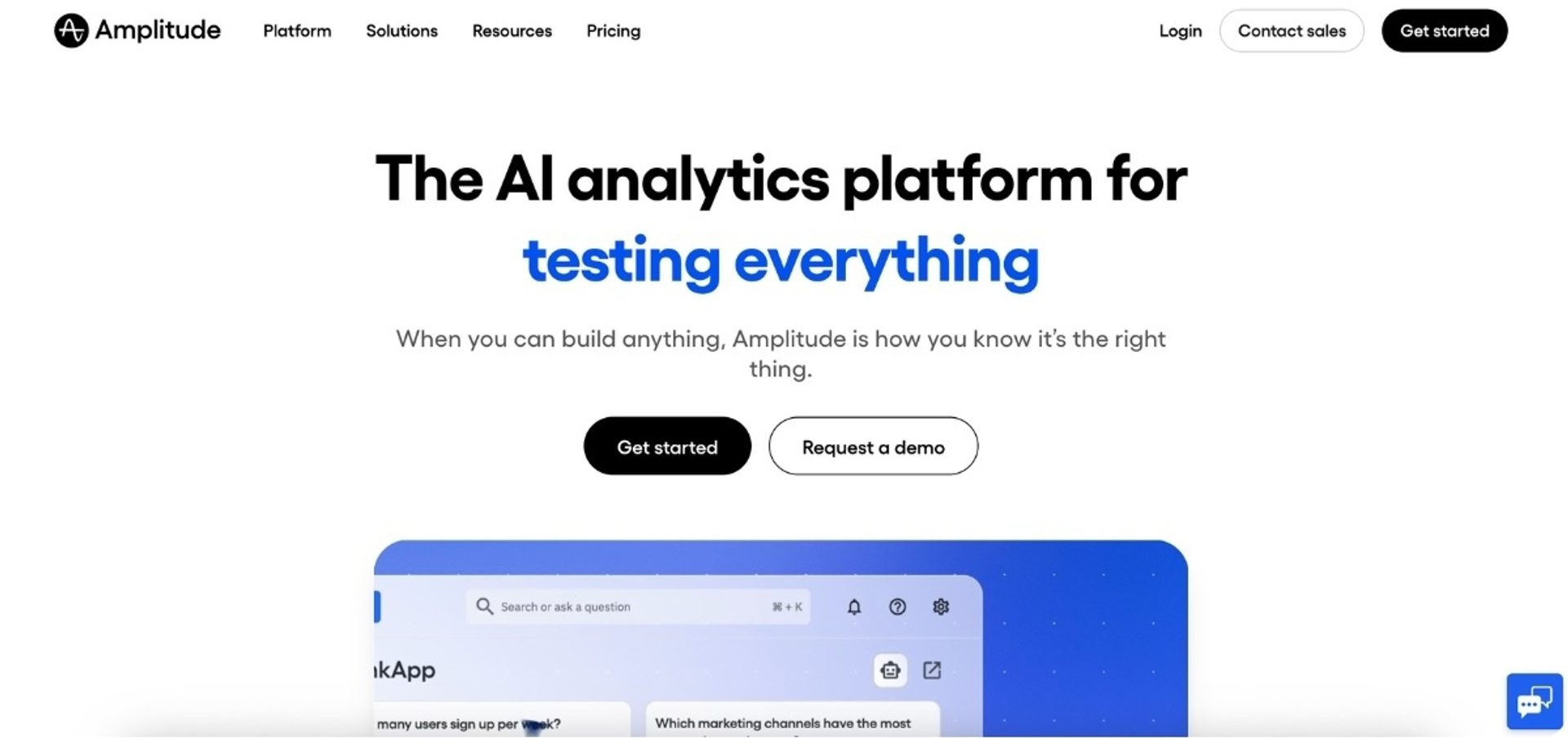
This means spending less time building dashboards and more time acting on what the data reveals. Amplitude's AI tools can automatically segment users by behavior, predict churn risk, and recommend experiments, all without a data analyst writing SQL queries.
A marketing team that notices a drop in trial-to-paid conversion can ask Amplitude's AI assistant what changed instead of spending days pulling reports. The platform might identify that users who skipped a specific onboarding step convert at a lower rate than those who completed it, then recommend a targeted in-app message for users who skip that step and predict the conversion lift from implementing it.
Key autonomous capabilities:
- AI-powered anomaly detection monitors metrics continuously and surfaces root cause analysis the moment something changes, so teams catch issues before they compound.
- Behavioral cohort analysis automatically groups users by actions and patterns without manual segmentation, revealing which behaviors drive conversion and retention.
- Predictive analytics forecast churn risk, conversion probability, and lifetime value, helping marketing teams prioritize outreach to the accounts and users that matter most.
- Natural language querying lets non-technical team members ask questions about performance data and get instant answers without writing SQL or building custom reports.
- Experiment recommendations suggest which tests to run based on behavioral data, so teams invest experiment cycles where the expected impact is highest.
For teams where metrics dashboards show what happened but not why, Amplitude closes the insight gap by connecting user behavior to business outcomes automatically. This is especially useful for product-led growth companies where product usage data is a core input to marketing decisions.
Pricing
Amplitude pricing includes a free Starter plan supporting up to 50,000 monthly tracked users. Paid plans start at $49/month for advanced analytics, predictive features, and higher event volumes.
How to start building your autonomous marketing stack
The tools listed above cover different stages of the marketing workflow. Building an effective autonomous stack does not mean adopting all eight at once. Follow the steps below to figure out where your team should start.
- Start with the biggest bottleneck. If the team spends most of its time assembling campaigns manually, a platform like ActiveCampaign that handles orchestration end-to-end delivers the fastest return. If content production is the constraint, a dedicated content generation tool makes more sense as the first investment.
- Prioritize tools that share data. Autonomous software gets smarter when it can access signals from other parts of the stack. Look for platforms with native integrations or open APIs that allow data to flow between tools without manual exports.
ActiveCampaign’s 1,000+ native integrations position it as an ideal connective orchestration layer that can help tie the rest of an autonomous stack together.
- Keep humans in the loop. Autonomous does not mean unattended. The best implementations hand AI the repetitive work while keeping strategic decisions and creative direction with the marketing team. Every tool on this list includes approval points where marketers stay in control.
- Evaluate based on time recovered, not features listed. The right metric for any autonomous tool is how many hours per week it returns to the team for strategic work. That time goes directly back into planning and customer relationships.
ActiveCampaign customers report saving 10 hours per week on campaign execution alone.
The shift from manual automation to autonomous marketing doesn't happen all at once. It starts with recovering the hours spent on work that software can handle better and faster. ActiveCampaign’s autonomous marketing software covers more of the marketing workflow than any other single platform on this list—from the first prompt to the final optimization.
See it for yourself with a 14-day free trial. There’s no commitment and a 30-day money-back guarantee if you don’t see results.
FAQs
What is autonomous marketing software?
Autonomous marketing software uses AI to make decisions and take actions on behalf of marketers, rather than simply following pre-built rules. These tools analyze data, identify patterns, generate content, and optimize campaigns with minimal manual input. The marketer sets goals and approves outputs while the software handles execution.
How is autonomous marketing software different from traditional marketing automation?
Traditional marketing automation executes pre-defined workflows based on rules like “if a contact does X, do Y.” Autonomous marketing software operates more intelligently, deciding what actions to take based on data analysis, rather than just following instructions a marketer programmed.
The difference is similar to a GPS that follows a route someone entered versus one that reroutes in real time based on traffic conditions.
What should marketers look for when choosing autonomous marketing software?
When choosing autonomous marketing software, start by evaluating the range of tasks the tool can handle autonomously and how well it integrates with the rest of the marketing stack. Then measure the hours per week it returns to the team. Look for platforms that offer end-to-end capabilities, like campaign creation, audience targeting, delivery optimization, and performance insights, all in one place.
Can small marketing teams use autonomous marketing software effectively?
Yes, small teams often benefit the most from using autonomous marketing software. A team of two or three marketers using autonomous tools can produce output that previously required a team twice that size.
ActiveCampaign, for example, enables 85% faster campaign creation. The learning curve is supported by extensive resources, conversational AI-powered workflows, and agentic onboarding, so lean teams can launch and optimize campaigns quickly. The key is choosing tools that reduce busywork rather than add complexity.
Do autonomous marketing tools replace human marketers?
No, autonomous marketing tools are not built to replace human marketers. They handle repetitive, data-intensive tasks so marketers can focus on strategy, creative direction, and customer relationships. Every tool in this list includes human approval points.
The marketer sets the goals, reviews the output, and makes the final call. Autonomy amplifies what a marketing team can accomplish. It does not replace the team.