Every major marketing platform now has an AI agent suite responsible for drafting emails, summarizing chats, recommending send times, and enriching contacts. The feature lists are starting to look the same, and so is the pitch.
That convergence makes the buying question almost unhelpful. "Does this platform have AI?" is now answered "yes" everywhere. Instead, we want to investigate how deeply these tools impact day-to-day work.
ActiveCampaign and Brevo approach AI enablement very differently. Brevo’s Aura is a suite of independent agents, each scoped to a specific job. ActiveCampaign’s Active Intelligence is a single engine that carries the same goals from ideation through reporting, building the campaign, the automation, and the optimization layer in one continuous flow.
We’ve compared both platforms at the workflow level to see how each handles a real marketing pipeline, the agents and capabilities behind each, and where they diverge on pricing and access.
| Feature | ActiveCampaign | Brevo |
| AI architecture | Active Intelligence: one continuous engine across ideation, creation, automation, optimization, and reporting. | Aura: four task-scoped agents (Marketing, Sales, Conversations, Data Management) operating independently. |
Prompt-to- -campaign | AI Campaign Builder generates full campaigns plus the automations behind them from one prompt. | Aura Marketing Agent generates individual assets from a prompt. |
| AI-driven segmentation | AI-Suggested Segments proactively surface high-value audiences from behavioral data. Segments Agent builds segments from plain-language descriptions. | Manual segmentation with filters, attributes, and behavioral conditions. AI can assist with light assembly once you’ve defined what you want. |
| Send-time optimization | Predictive Sending: optimized per contact based on individual engagement history, recalculated weekly. | Send at best time: per-contact based on engagement. |
| Predictive lead scoring | ML-based: infers conversion likelihood from behavioral history, updates dynamically across email engagement, site behavior, and custom events. | Rule-based scoring inside the Sales Platform only. Not AI-driven. |
| Brand consistency | AI Brand Kit applies your colors, fonts, logos, and imagery to every AI-generated asset. | Brand colors can be reused in templates; no dynamic application across AI outputs. |
| AI translation | 75+ languages, applied per-contact based on each contact’s preferred language field. | 18 languages, applied at the template level. Available on Professional and Enterprise plans only. |
| MCP integration | ActiveCampaign’s MCP server connects Claude, ChatGPT, and any other compatible AI assistant to account data. | Brevo’s MCP server provides connectivity to external tools. |
| AI pricing model | Core AI features included across paid plans. Advanced AI (e.g. Predictive Sending) on Pro from $79/mo. | Limited Aura capabilities are broadly available; advanced AI gated to higher tiers. Email-volume-based pricing. |
AI that runs your campaigns end-to-end vs. AI that helps with individual tasks
Both platforms check the AI box. But what shape does that intelligence take when you put it to work?
The task-level agent model is very common and consists of a toolkit of AI apps or agents, each built for a single job like drafting emails, generating images, or summarizing chats. Each tool does its job, hands you the result, and steps aside. What happens between steps is still on you.
Continuous intelligence is a different beast. One engine, one set of goals, moving through every stage: ideation, creation, execution, automation, optimization, reporting. You describe the goal once and the system carries it forward, step after step, without needing to circle back for clarification.
Brevo’s Aura follows the task-level pattern. Four independent agents (Marketing, Sales Assistant, Conversations, Data Management) cover the major content and operational jobs a marketing team runs through.

Each generates outputs well:
- The Marketing Agent gives you a usable email.
- The Conversations Agent summarizes a chat thread fairly.
- The Sales Assistant Agent creates deals.
- The Data Management Agent dedupes and enriches a contact list.
What the agents don't do is share a single goal across the full pipeline. The Marketing Agent can generate the email, and Aura can scaffold an automation structure from a separate prompt. But the two don’t connect. The marketer is the one carrying the campaign objective from one Aura interaction to the next, deciding which segment the welcome series should target, which automation it belongs in, and how performance gets tracked.
ActiveCampaign’s Active Intelligence is continuous intelligence. One AI engine runs across the platform with full context on your goals, data, campaigns, and automations. When a marketer types “launch a welcome series for new ecommerce customers” into the Conversational Workspace, Active Intelligence doesn’t just generate a welcome email. It builds the segment, the automation sequence, the email content, the brand-consistent design, and the goal-tracking layer beneath it. The same prompt drives every step. The marketer simply reviews and adjusts, while the system handles the connective work.

With task-level AI, you trade manual work for a new job: managing agents and stitching their outputs together. With continuous intelligence, you set the direction and let the platform do the running. Both save you time on the basics, but only one saves you from playing air traffic controller.
In this comparison, we’ll look at what happens at each stage, and where you, the marketer, have to step in to keep the wheels turning.
ActiveCampaign AI vs. Brevo AI across the marketing pipeline
Let’s look at how each platform’s AI shows up at every stage of the marketing process, and where the work either flows or stalls.
Ideation and goal setting
Ideation is where the difference between the two AI tool sets first rears its head. One platform treats your prompt as a one-off request; the other treats it as the thread that runs through the whole pipeline.
ActiveCampaign’s Conversational Workspace is the entry point for Active Intelligence. A marketer types an objective in plain language (e.g., “launch a welcome series for new e-commerce customers,” or “re-engage subscribers who haven’t opened in 90 days”), and Active Intelligence turns it into a plan that carries through every step that follows:
- The audience the segmentation agent surfaces.
- The content the campaign builder generates.
- The structure the automation agent assembles.
- The metrics the reporting layer watches.
The marketer doesn’t redefine the objective at each stage. An objective can be formalized as a Business Goals, ActiveCampaign’s framework for tying campaigns, automations, SMS broadcasts, and forms to a tracked conversion event.
Each Business Goal acts as a container: every asset linked to it is monitored against the same outcome, and Active Intelligence surfaces recommendations and AI-generated assets aligned to that outcome as performance data comes in. The pipeline isn’t only goal-aware in the moment of creation; it stays goal-aware as the work runs.
Brevo’s Aura Marketing Agent operates in response to single prompts. A marketer asks for an email, a subject line, an SMS, or an image, and the agent returns that asset. The interaction is contained: the prompt produces the output, and the next prompt produces the next output. Brevo offers automation workflows and template-based campaign building elsewhere in the platform, but the AI layer doesn’t connect those pieces back to the goal that informed the work.
The difference is structural. Active Intelligence carries your goal through every stage while Aura resets with every prompt. Both produce an output, but only one stays oriented to what you’re actually trying to achieve.
Campaign creation and content generation
ActiveCampaign and Brevo can both take a prompt and generate marketing content. The difference is what counts as the unit of output: an asset, or a campaign.
ActiveCampaign’s AI Campaign Builder takes one natural-language prompt and returns a complete campaign. That includes subject lines, copy, layouts, CTAs, and images, all formatted and ready to send. Through the Active Intelligence Workspace, the same prompt also builds the automation sequence around the campaign. A welcome series isn’t just one email; it’s the email, the trigger, the wait conditions, and the branching logic. One prompt produces all of it.

Learn more about generating custom campaigns by clicking the image to take a product tour.
Every output runs through the AI Brand Kit, which imports your colors, fonts, logos, and imagery once and applies them to every AI-generated asset after that. A campaign generated from a prompt arrives on-brand without a manual design pass, and a different team member generating a different campaign produces output that matches without re-specifying brand context.

SparkJoy New York, for example, reported building campaigns 85% faster after adopting these tools, and Active Intelligence users build campaigns 3x faster on average.
Brevo's Aura Marketing Agent generates strong individual assets like email copy, subject lines, SMS messages, and AI-generated images directly inside the email editor, with the Brand Library applying brand assets automatically once configured. For teams whose bottleneck is content production, the agent does meaningful work.
Aura responds to one prompt at a time: generate this subject line, refine that paragraph, scaffold this automation, build that segment. Each request is self-contained. The marketer is the one carrying the campaign objective from one Aura interaction to the next: deciding which audience the welcome series should target, which automation it belongs in, how the brand voice should shift for re-engagement vs. onboarding, and whether last week's send-time data should change next week's plan. Aura executes well at the task level, but the connective layer above it stays human.

Audience segmentation and targeting
AI-assisted segmentation usually assumes that the marketer already knows which audience they want. The AI just helps build it faster. But that can leave audiences sitting in your data that nobody's thought to ask about.
ActiveCampaign’s AI segmentation surfaces these missed opportunities. The Segments Agent lets a marketer describe an audience in the traditional way (“contacts who engaged with our content in the last 90 days but haven’t downloaded a lead magnet”) and builds the segment with the right conditions applied.
Meanwhile, AI-Suggested Segments take on discovery, analyzing behavioral data across the contact database and proactively surfacing audiences a marketer wouldn’t have known to ask for. For example, repeat buyers who’ve gone quiet, high-spend contacts on the verge of churn. Engagement clusters that don’t match the manual segments already in the account.

See AI Segmentation in action. Click the image above for a product tour.
Active Intelligence reads across email engagement, site behavior, ecommerce purchase data, custom events, and CRM context simultaneously. Surfacing a “quiet high-spender” cohort requires correlating purchase history, recency, and engagement decay in the same query, which is the kind of analysis manual segmentation rules don’t realistically reach.
Brevo’s AI segmentation helps you combine filters, attributes, behavioral conditions, dynamic lists quickly, covering the segments most teams already know to build. The difference is initiative: Brevo helps you reach the audiences you think to define, while ActiveCampaign surfaces the ones you didn’t know you were missing.
If your segmentation strategy is already dialed in, that difference might not matter. But if you’re still hunting for the audiences you’re missing, this is another area where ActiveCampaign pulls ahead.
AI agents and automation intelligence
Naturally, both platforms ship AI agents. Said agents, however, do different jobs, and they sit in different relationships to the rest of the platform.
ActiveCampaign’s 25+ AI agents are purpose-built for marketing execution and operate inside the same data layer as automations, CRM, and cross-channel messaging. The Campaigns Agent, Automations Agent, Segments Agent, Personalization Agent, Insights Agent, and others all read from the same context: triggered events, sent messages, contact responses, behavioral signals, brand kit, business goals.
An agent generating a campaign is also building the automation behind it, applying the brand layer, and tying its recommendations back to the goal the campaign was created to serve. The agent isn’t producing an output you then apply to a workflow; it’s acting inside the workflow.
The AI Actions Library extends this further. Marketers can:
- Drop AI capabilities directly into any automation step using plain-language instructions.
- Categorize a contact’s sentiment from an open-text response.
- Extract a topic from a form submission.
- Generate a personalized recommendation based on purchase history.
The intelligence happens inside the automation, not adjacent to it.
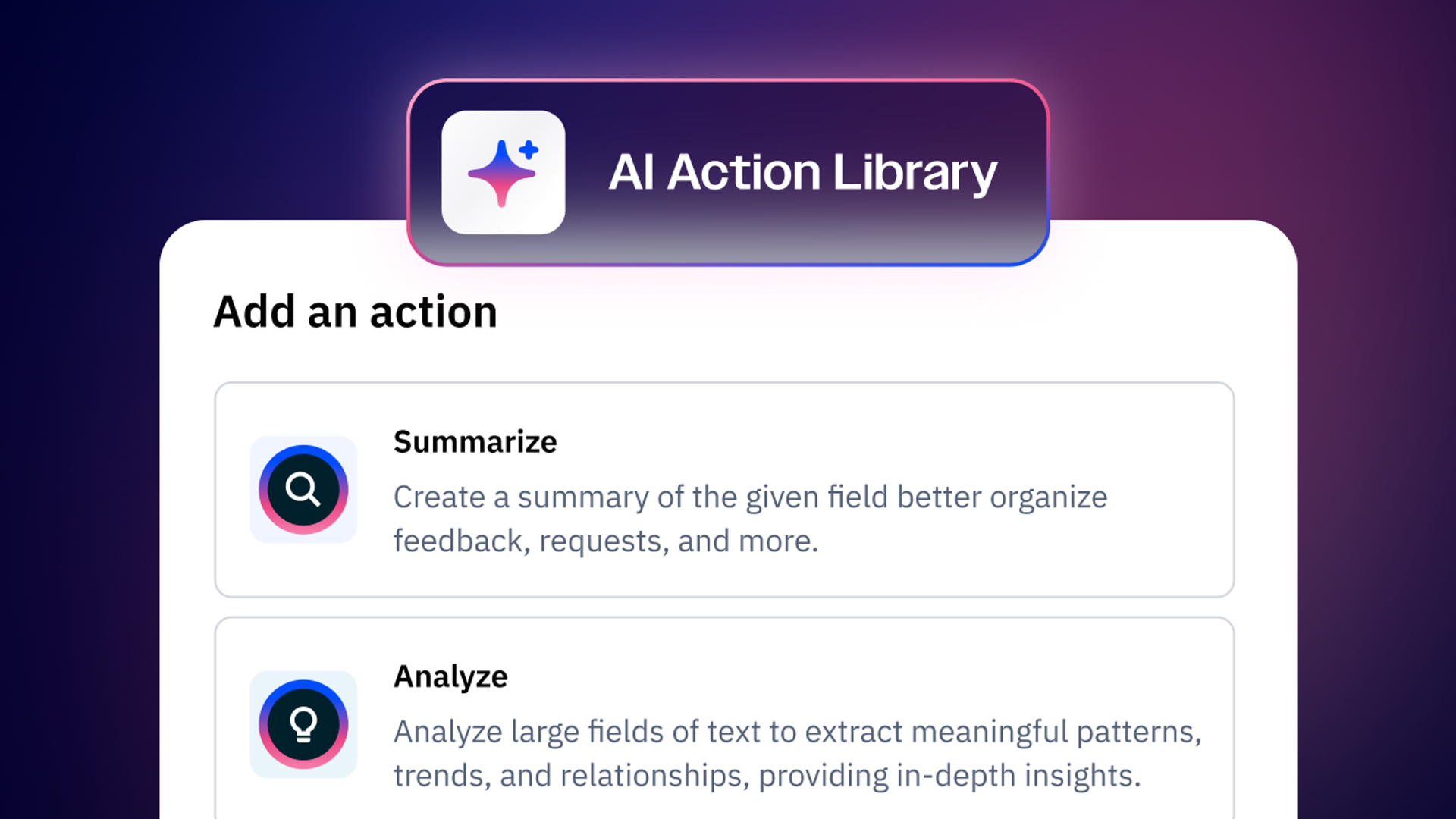
Explore ActiveCampaign’s AI Actions Library by clicking the image and taking a product tour today.
Overall, ActiveCampaign’s automation engine offers 45+ triggers and 50+ actions, which means more behavioral signals for agents to read and more actions to chain together. Predictive lead scoring updates dynamically across email engagement, site behavior, and custom events, then routes high-scoring contacts into sales workflows automatically.
Brevo’s Aura agents are attached to four specific functions:
- The Marketing Agent handles content.
- The Conversations Agent summarizes chats and drafts replies.
- The Sales Assistant drafts sales emails and helps create deals.
- The Data Management Agent enriches contacts.
Each operates well in its own lane, and Brevo's Aura Control Center lets teams activate or deactivate each agent independently. Aura can also scaffold automation structures from a plain-language prompt and build segments from a description.
What it can't do is act inside individual automation steps the way ActiveCampaign's agents do. Intelligence is at the build stage, not embedded into the activated steps themselves.
Brevo's automation engine has the core building blocks: branching workflows via Conditional Split, Percentage Split for A/B testing entire workflows, if/else conditions, and lead scoring built through a custom SCORE attribute in the workflow editor. The pieces are there, but they're configured rather than inferred by AI.
Optimization and personalization
Both platforms offer per-contact send-time optimization. The difference shows up downstream: does personalization stop when the message arrives or does it extend to what’s inside it?
ActiveCampaign’s Predictive Sending calculates an optimal delivery time for each contact based on personal engagement history, recalculating weekly as patterns change. The feature delivers an average 17% CTR lift across the platform and, once activated, runs natively inside automations, so a contact entering a campaign receives each email at their personal optimal time without the marketer scheduling around it.
Personalization extends past timing into content. Predictive Content supports up to five variants inside a single email, and machine learning picks the best variant for each contact based on click history. Two contacts on the same send can receive meaningfully different content without the marketer building separate sends.

Custom Instructions run underneath every AI output. An admin sets the target audience, tone of voice, content guidelines, and business context once at the account level. Then, Active Intelligence applies that context to every AI-generated asset and recommendation from there. Personalization isn’t only behavior-driven; it’s brand-consistent, regardless of who on the team initiates the work.
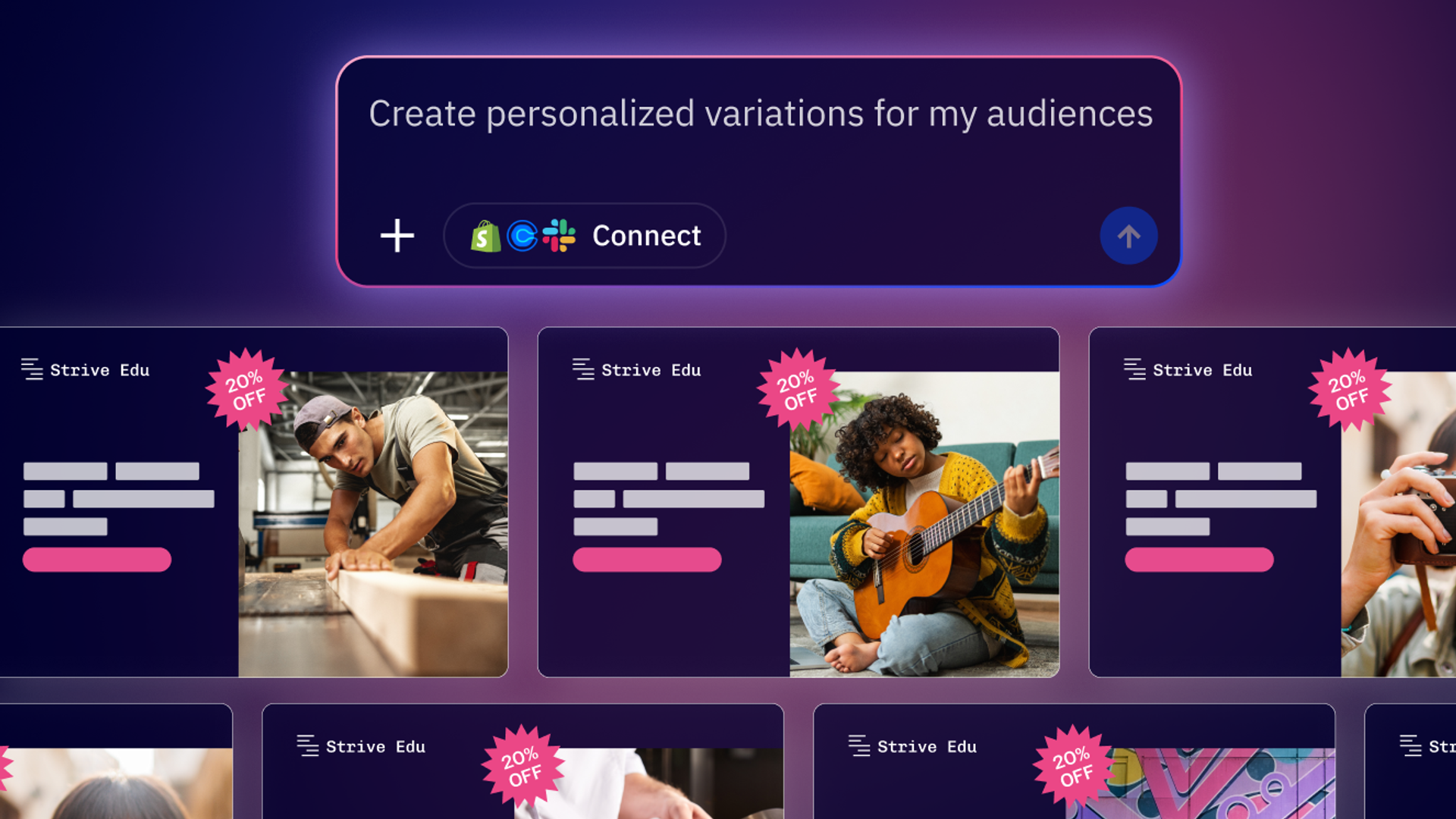
Discover how you can personalize your Active Intelligence experience with Custom Instructions:
Brevo’s “Send at best time” delivers per-contact timing optimization based on engagement history and supports conditional content at the message level. However, the marketer defines which contact attributes or behaviors trigger specific pieces of content. Personalization runs on the rules the marketer wrote, not on a preference identified by AI.
Deliverability is a related concern. EmailToolTester’s most recent benchmark placed ActiveCampaign first out of fifteen platforms tested, with a 94.2% deliverability rate, and Brevo eighth, at 88.3%. Send-time optimization doesn’t help if the message doesn’t land in the inbox.

There's also the matter of translation depth. ActiveCampaign’s AI Translations for email cover 75+ languages and apply translation per-contact based on each contact’s preferred language field, so a single campaign renders in different languages automatically without the marketer building parallel versions. Brevo’s Aura translates email templates into 18 languages at the template level, and the feature is restricted to Brevo’s Professional and Enterprise plans.
Reporting, analytics, and AI-driven insights
The standard reporting model is a dashboard that displays what happened. AI tools are now able to answer why and what happens after the dashboard surfaces a number.
ActiveCampaign’s Autonomous Insights make reporting active. Insight cards appear in the dashboard automatically, flagging performance shifts, identifying anomalies, and recommending specific next actions inside the tools where marketers would act on them. A sudden drop in a segment’s engagement doesn’t sit waiting to be noticed. It surfaces with a recommendation attached.
The natural-language analytics and reporting interface handles the sharper questions. A user can ask “why did our open rate drop last week” and get a root-cause analysis, a visualization, and a tailored recommendation. The recommendation can be implemented directly in the platform without leaving the report.
Business Goals connect your reporting to outcomes. An automation linked to a Business Goal stays aware of whether the goal is being met and feeds performance data back into the AI layer’s recommendations. The Goals Agent monitors progress and surfaces next-step suggestions aligned to those objectives, so the gap between what the platform reports and what it does in response stays narrow.
Brevo's Aura AI Data Analyst lets you ask questions in plain language and get a summary or chart back. That's useful if you already know what to ask. What it won't do is surface insights on its own. The marketer chooses what to interrogate and the platform answers. A drop in segment engagement sits in the data until someone notices and queries it.
The difference is AI that waits to be asked versus proactively telling you what you need to know.
Connecting external AI tools: MCP and AI Connectors
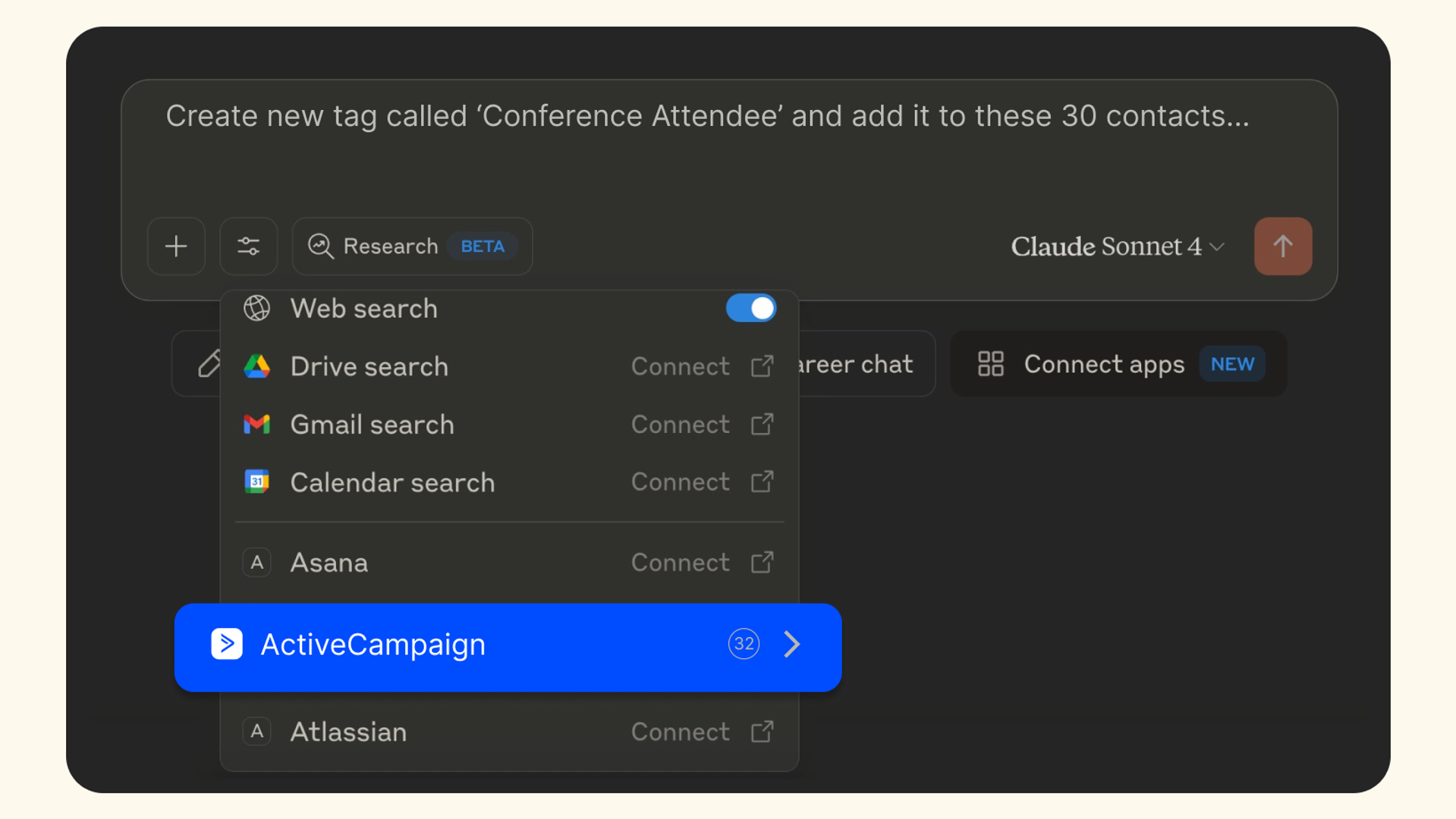
Both platforms offer MCP (Model Context Protocol) servers that let Claude, ChatGPT, and other MCP-compatible AI assistants connect to account data: contacts, lists, campaigns, basic actions. From outside the platform, the connection points look similar.
Once you start using each platform, the difference in reach becomes more apparent.
ActiveCampaign's AI Connectors give external AI tools access to the data and operations that run a marketing account day-to-day. From inside Claude or ChatGPT, a marketer can pull reporting insights, update contacts and tags, query campaigns, and act on automations without opening the platform. For example, a marketer can ask "How did yesterday's campaign perform?" or "Review my tagging structure and suggest improvements" or "Add Alice Chen to my Meeting Follow-up automation." The connector reaches into segmentation, contacts, campaigns, automations, and reporting, the same data layer Active Intelligence works with internally.
Brevo's MCP server connects external AI tools to Brevo's full API surface. Claude or ChatGPT can schedule email campaigns, manage automations, build contact lists, run reports, and update CRM records, the same operations available through any direct API call.
What changes when you connect Claude to ActiveCampaign is what happens on the other side of the request. A prompt to Claude saying "launch a welcome series for new ecommerce customers" reaches a platform that orchestrates the segment, the automation sequence, the email content, the brand layer, and the goal-tracking, all from a single plain-language objective. The same prompt sent to Brevo would only create the campaign itself. The relevant segments, content, and automation steps each need to be specified separately.
Both connectors offer similar access points, but what differs is the depth of what each one can read and act on. Brevo's MCP exposes the platform's task-level surface, while ActiveCampaign's reaches across insights, contacts, tags, campaigns, automations, and the data behind each.
What AI truly costs: Pricing, tiers, and access limits
Most marketing platforms gate their best AI capabilities behind upgrade tiers, consumption credits, or both. The headline number on the pricing page often represents an entry fee; the bill once your team is using the AI in earnest is a separate matter.
ActiveCampaign’s core AI capabilities are included in plan pricing rather than gated behind enterprise tiers. The core AI tools are available to all users, and incremental increases in plan pricing unlock wider access to tools like Predictive Sending. Pricing is contact-based and predictable: you know what you’re paying month-to-month, and AI usage doesn’t add a separate consumption layer on top of it.
Brevo’s pricing model is built on email volume rather than contact count, which is a meaningful differentiator for some teams. However, to unlock meaningful AI tools, users may need to upgrade before their audience size even reaches their plan’s limits. Aura’s basic capabilities, including content generation in the Marketing Agent and chat summaries in the Conversations Agent, are available across plans, including the Free tier.
The deeper functionality sits higher up. Aura’s AI segmentation and AI Data Analyst features are restricted to the Professional plan ($499/month for 150,000+ emails) and Enterprise. Multi-channel campaigns, advanced reporting, and several agent capabilities are similarly tier-gated. Teams that adopt Aura broadly will move up the pricing ladder faster than the entry price suggests.
| ActiveCampaign | Brevo | |
| Entry plan | Free 14-day trial. Starter from $15/month for 1,000 contacts. | Free plan with 300 emails/day, up to 100,000 contacts. Starter from $9/month for 5,000 monthly emails. |
| AI features at entry | Basic features available including access to: -Active Intelligence -Business Goals -AI Campaign Builder -AI Automation Builder -AI Suggested Segments -AI Brand Kit and more. | Aura’s Marketing Agent (for subject lines, content generation) are available on Free and Starter. Advanced Aura capabilities require higher tiers. |
| Core AI Plan | Available on Plus plan from $49/month for 1,000 contacts ($95/month for 2,000 contacts). All core features included. | Aura translation, multi-channel agents, and advanced AI features require Professional plan ($499/month) or Enterprise. |
| Per-Contact Send-Time optimization | Predictive Sending available on Pro plan from $79/month for 1,000 contacts ($375/month for 10,000 contacts). | Available on Standard plan from $18/month for 5,000 sends. |
| Pricing model | Contact-based, flat monthly. | Email-volume-based, scales with monthly send volume. |
The two pricing models suit different team shapes. Brevo’s volume-based model may be cheaper for teams with large contact lists who send very infrequently. But that argument breaks down for teams that want AI embedded across all their workflows. Aura’s most differentiated capabilities, including translation and the multi-channel agent depth, sit at $499/month minimum, which is a meaningful jump from the Standard plan where most growing teams start.
ActiveCampaign’s model is built for teams that want AI accessible without an enterprise-tier upgrade. Core AI capabilities are included at the Pro plan and below, with no consumption meter running in the background as usage scales. For teams that plan to rely on AI as part of daily marketing operations, the predictability of flat pricing compounds in their favor.
Which AI marketing platform is the best choice for your team?
Both Brevo and ActiveCampaign are credible, capable AI marketing platforms. The decision comes down to which approach to AI matches how your team actually works.
Before committing to either, these are the questions worth working through:
- Does the AI act on individual tasks, or operate inside the workflows we run every day? Task-level AI saves time per asset. Continuous intelligence saves time across the whole pipeline.
- Are the AI features we need included in the plan we can afford, or gated behind higher tiers? Headline pricing rarely tells you what the AI you actually want will cost.
- How sophisticated is the underlying automation, segmentation, and personalization engine the AI is acting on? The AI is only as good as the substrate beneath it.
- Will our team realistically use these AI features in daily work, or will they go unadopted? Features that require setup, training, or context switching tend to sit unused.
- How does pricing scale with contact volume and AI usage? Predictable scaling matters for any team building a long-term plan, as surprise costs compound just as fast as the savings do.
Brevo may be the stronger fit if your team runs straightforward email and SMS programs, prioritizes content production speed, and operates in a budget where Brevo’s email-volume pricing model makes sense. Aura’s task-level agents do real work for teams whose bottleneck is content creation, not orchestration. For small teams with simple journeys, the trade-off between manual stitching and lower entry pricing can make sense.
ActiveCampaign is likely the better choice if your team runs multi-step customer journeys, relies on behavioral segmentation, or wants AI to scale beyond drafting individual assets. Active Intelligence is purpose-built for marketing execution where intelligence and action live in the same place: the AI builds the segment, generates the campaign, applies the brand layer, runs the automation, monitors the goal, and surfaces what to do next, all from the same engine. Most of the AI capabilities that matter to a working marketing team are accessible without enterprise pricing.
Keep in mind that embedded AI improves over time as the system processes more data. Segmentation gets sharper, send-time predictions get more accurate, recommendations get more relevant, and none of it requires manual reconfiguration. The return on AI adoption grows with usage, which is only possible when usage isn’t gated by tiers.
If you’re evaluating AI marketing platforms, you’re probably already feeling the limitations of your current setup. More campaigns, smaller teams, higher expectations on personalization. ActiveCampaign is built to meet those needs by embedding intelligence into the work that’s already happening.
ActiveCampaign users save an average of 10 hours per week across tasks like campaign building, content creation, and lead follow-up. Start free today and step into the age of AI orchestration.
FAQs
What’s the difference between AI agents that perform tasks and AI embedded in marketing workflows?
Task-level AI agents are independent tools, each scoped to one job. The agents don’t talk to each other, so the marketer becomes the connective tissue between them. AI embedded in marketing workflows operates as one continuous engine, carrying the same goals from ideation through reporting.
Both approaches reduce manual work. Only one reduces the coordination work that comes with stitching outputs together.
What is the difference between ActiveCampaign’s Active Intelligence and Brevo’s Aura?
ActiveCampaign’s Active Intelligence is a single AI engine embedded across the platform’s core workflows, while Brevo’s Aura is a suite of four task-scoped agents operating independently of one another.
Active Intelligence carries one set of business goals and context across every stage of the marketing pipeline. A prompt in the Conversational Workspace doesn’t just generate an email; it builds the segment, the automation sequence, the brand-aligned content, and the goal-tracking layer behind it. Aura’s agents each generate strong individual outputs, but connecting those outputs to the right workflows remains the marketer’s responsibility.
Which AI marketing platform is more affordable: ActiveCampaign or Brevo?
Brevo may be more affordable at entry-level email volumes, while ActiveCampaign is more affordable for teams that want core AI capabilities without upgrade or consumption fees.
Brevo’s pricing is based on monthly email volume and starts at $9/month on the Starter plan. Aura’s deeper capabilities, however, including AI translation, sit at the Professional plan which starts at $499/month, or Enterprise. ActiveCampaign’s pricing is contact-based, with core AI features included in plan pricing rather than gated behind enterprise tiers.
Is ActiveCampaign or Brevo better for teams running complex customer journeys?
ActiveCampaign is better suited for teams running complex customer journeys. The Active Intelligence AI engine operates inside the same data layer as automations, CRM, and cross-channel messaging, with 45+ triggers and 50+ actions available in the automation engine.
Active Intelligence’s agents operate natively inside workflows, and its AI is broad enough to support multi-step, behavior-driven journeys at scale.
Brevo’s automation engine has the core building blocks (branching workflows, conditional splits, lead scoring), but Aura’s agents don’t operate inside automations the way Active Intelligence does. For teams running simple welcome series or transactional sequences, Brevo’s automation tools are sufficient. For teams running multi-step journeys with branching logic, dynamic personalization, and behavioral routing, ActiveCampaign is purpose-built for that scope.