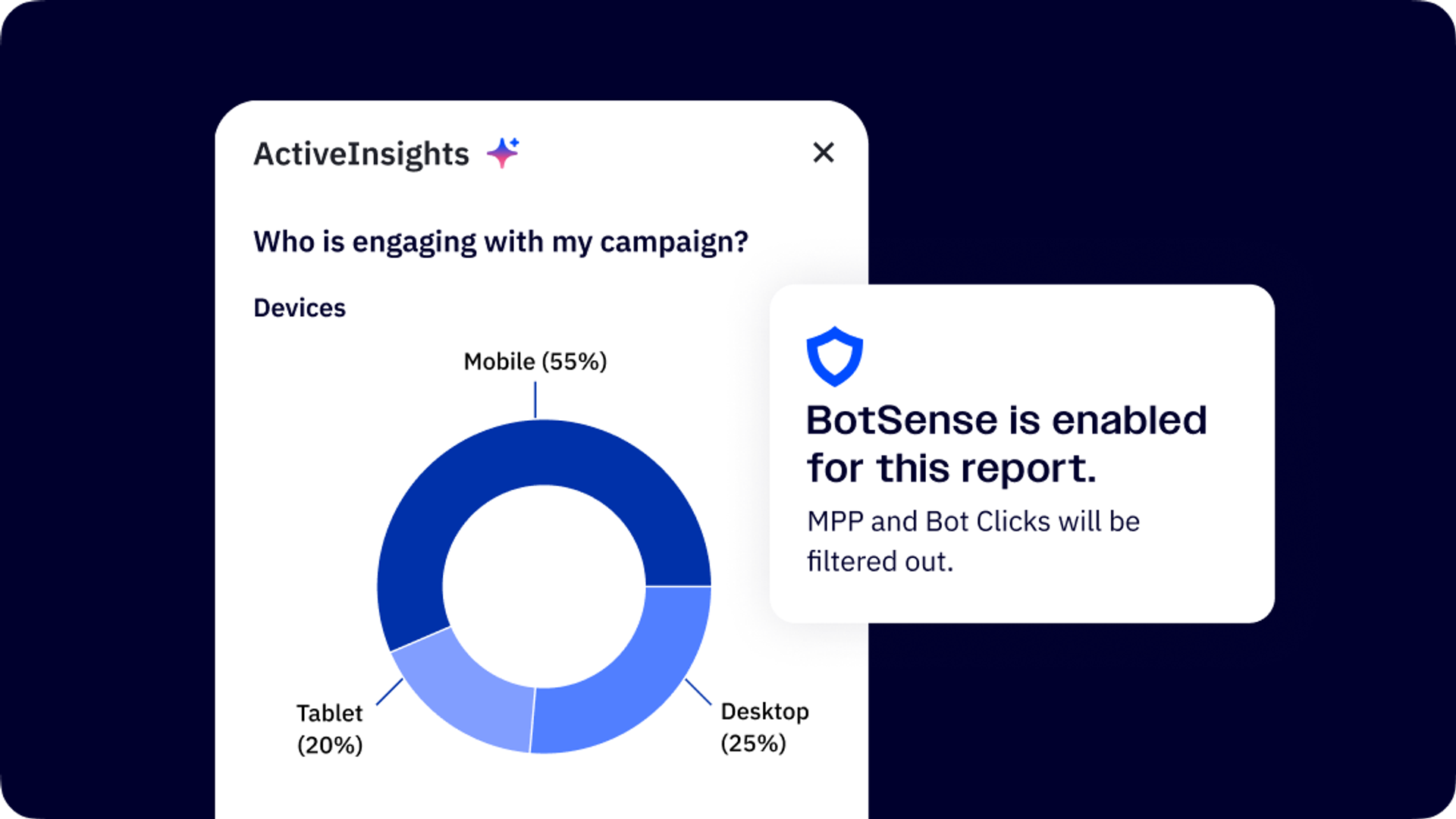
Marketing teams have never had more data. They’ve also never spent more time wrestling with it. 56% of marketers don’t have enough time to analyze their data properly. Before any decision gets made, someone has to pull it, sort it, and figure out what it's actually saying. For many teams, that work consumes a significant portion of every week, leaving less room for the strategy and execution work that actually moves the business forward.
AI now has the ability to give marketers more data and help them do more with it. AI marketing analytics and reporting systems can monitor performance continuously, surface meaningful shifts before you’ve thought to look for them, and translate findings into recommended next steps, sometimes even executing them directly.
In this guide, we’ll show you the specific AI marketing analytics and reporting capabilities that growth-focused teams should look for in a tool, and how to put them to work without adding complexity to your stack.
From data dumps to a continuous growth engine
Traditional marketing analytics answers one question: what happened? A campaign is run, the data comes in, someone pulls a report, and the team reviews it. Human analysts can only process so many variables at once, so everything else waits. Meanwhile, the data keeps accumulating and most of it is never looked at, because there just aren’t enough hours to do so. By the time anyone acts on what is found, critical opportunities have been missed.
AI marketing analytics replaces that system with a closed loop. Machine learning models can ingest and analyze data at a scale no team can match, across every campaign, every segment, and every channel simultaneously. But volume alone isn't the advantage. The more important shift is speed and application. AI can proactively identify what matters faster, apply it to a specific context, and deliver a recommendation before the opportunity closes. A human analyst reviewing last week’s numbers might catch a trend in retrospect. An AI system monitoring in real time catches it while there’s still time to act.
The most advanced and capable systems don’t function like traditional reporting tools at all. Instead of waiting to be queried, they work continuously in the background on an optimization loop to:
- Monitor: AI continuously tracks campaign performance, automation metrics, and engagement signals across multiple channels. No one needs to log in and check a dashboard.
- Detect: Algorithms spot meaningful changes in real time, like a sudden drop in open rates for a specific segment, a spike in click-through on a particular automation, or an underperforming campaign relative to its historical average.
- Explain: Instead of dumping raw numbers, AI contextualizes each signal. It shows why a shift matters by comparing it to benchmarks, historical trends, and segment behavior.
- Prioritize: Not every data point deserves the same attention. AI ranks recommendations by potential impact, so teams focus on the highest-value opportunities first.
- Act: Insights connect directly to execution. That might mean generating a campaign draft, adjusting an audience segment, or triggering a new automation. The gap between knowing and doing shrinks to minutes.
The progression from descriptive analytics (what happened) to diagnostic (why it happened) to predictive (what will likely happen) to prescriptive (what you should do about it) has been discussed for years. AI makes predictive and prescriptive analytics accessible, even to teams without dedicated data analysts or a custom BI stack.
Integrating AI in marketing analytics offers a host of operational and strategic benefits, changing the way marketing teams actually operate.
It changes when decisions get made. Instead of weekly reporting cycles, insights are continuous. By the time a human review would have caught a problem, AI has already flagged it, explained it, and recommended a response.
It changes who can make those decisions. Analytical work that previously required a specialist becomes accessible to any marketer working directly in the platform.
It changes how fast insight reaches execution. When the path from detected problem to launched response runs through a single platform, the gap between knowing and doing collapses. No export, no ticket, no handoff.
Every modern marketing platform boasts AI tools. The category has become crowded enough that "AI-powered" has largely stopped being a differentiator and started being a baseline expectation. But not all platforms deliver on the model described above equally.
Some tools automate reporting without connecting insights to action. Others surface recommendations but require marketers to execute them elsewhere. The best tools close the loop fully within the same platform. ActiveCampaign, for example, is a fully AI-native marketing platform. The Active Intelligence AI engine runs underneath every touchpoint in the platform to imagine, activate, and validate entire marketing campaigns and strategies from end to end.
Capabilities that power responsive AI marketing analytics and reporting
Better data alone doesn’t make a better marketer. How quickly that data is interpreted, what it connects to, and whether it leads somewhere actionable all make a significant impact on actual outcomes.
The following AI capabilities address specific bottlenecks that would have traditionally required manual work, specialized skills, or additional tools. Each one represents a meaningful step away from manual analysis toward a system that works continuously on your behalf.
Predictive analytics and forecasting
Predictive models analyze historical engagement, purchase behavior, and lifecycle data to forecast outcomes like conversion probability and revenue potential. Instead of guessing which leads deserve attention next month, a predictive engine can identify which contacts are most likely to convert in the next 30 days based on patterns in their engagement history.
Active Intelligence analyzes billions of data points, aggregating campaign and engagement data to detect trends and forecast performance. A full suite of purpose-built AI agents then transform your goals into fully realized marketing strategies. These tools continuously learn from your specific industry, use cases, and customer journey.
Predictive lead scoring software provides deal-level Win Probability for sales teams tracking pipeline, so marketing and sales share a data-backed view of which opportunities deserve the most attention. For teams making decisions without a dedicated analytics resource, these resources replace gut-feel with data-backed insights.
Automated segmentation and audience discovery
Manual segmentation has a ceiling. Most teams build lists around the variables they can see easily: last purchase date, location, spend tier. AI-driven segmentation scans behavioral and engagement data to identify high-performing or at-risk audiences that manual approaches would miss entirely.
ActiveCampaign’s segmentation software automatically detects these patterns and surfaces high-value or at-risk audiences as AI-Suggested Segments, without requiring anyone to construct the logic from scratch. You can preview the segment size, review the criteria, and save it as a permanent segment with one click. The AI continuously updates its recommendations as your data changes.
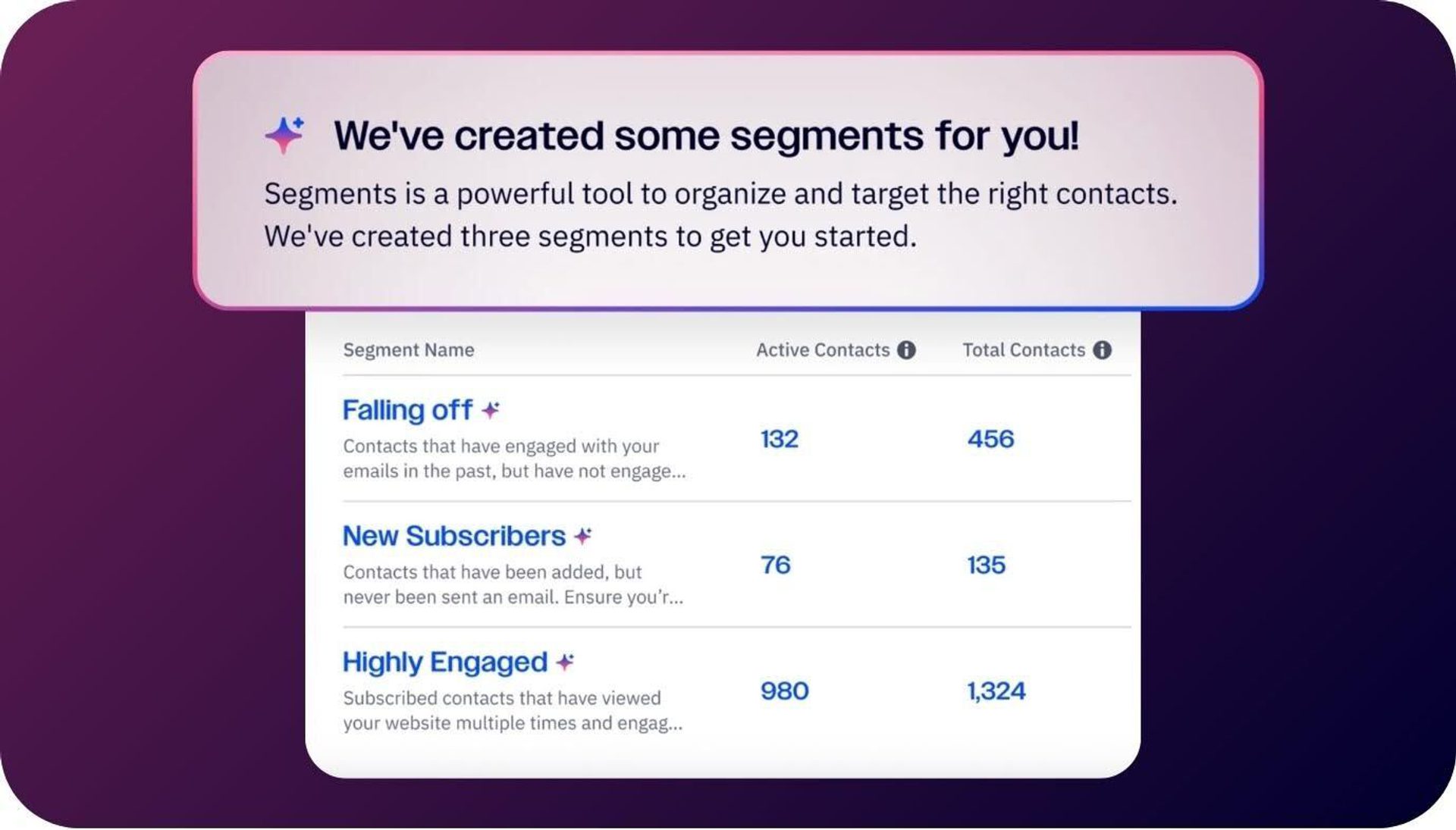
Critically, these segments don’t sit in isolation; they feed directly into campaigns and automation workflows for targeted messaging, automating the path from discovered audience to launched campaign. This can replace hours of manual filtering with audiences that arrive ready to act on.
Intelligent campaign optimization
Every campaign contains optimization opportunities that are extremely beneficial, but equally time-consuming to pursue. Send time, frequency, subject line approach, content type, channel: each variable affects performance, and testing all of them manually across a growing contact base isn’t practical at scale.
AI-driven optimization addresses this by applying behavioral data and engagement trends to campaign decisions continuously, not just when a marketer thinks to test something. The effect compounds over time: each campaign cycle adds data, which improves the accuracy of the next round of recommendations.
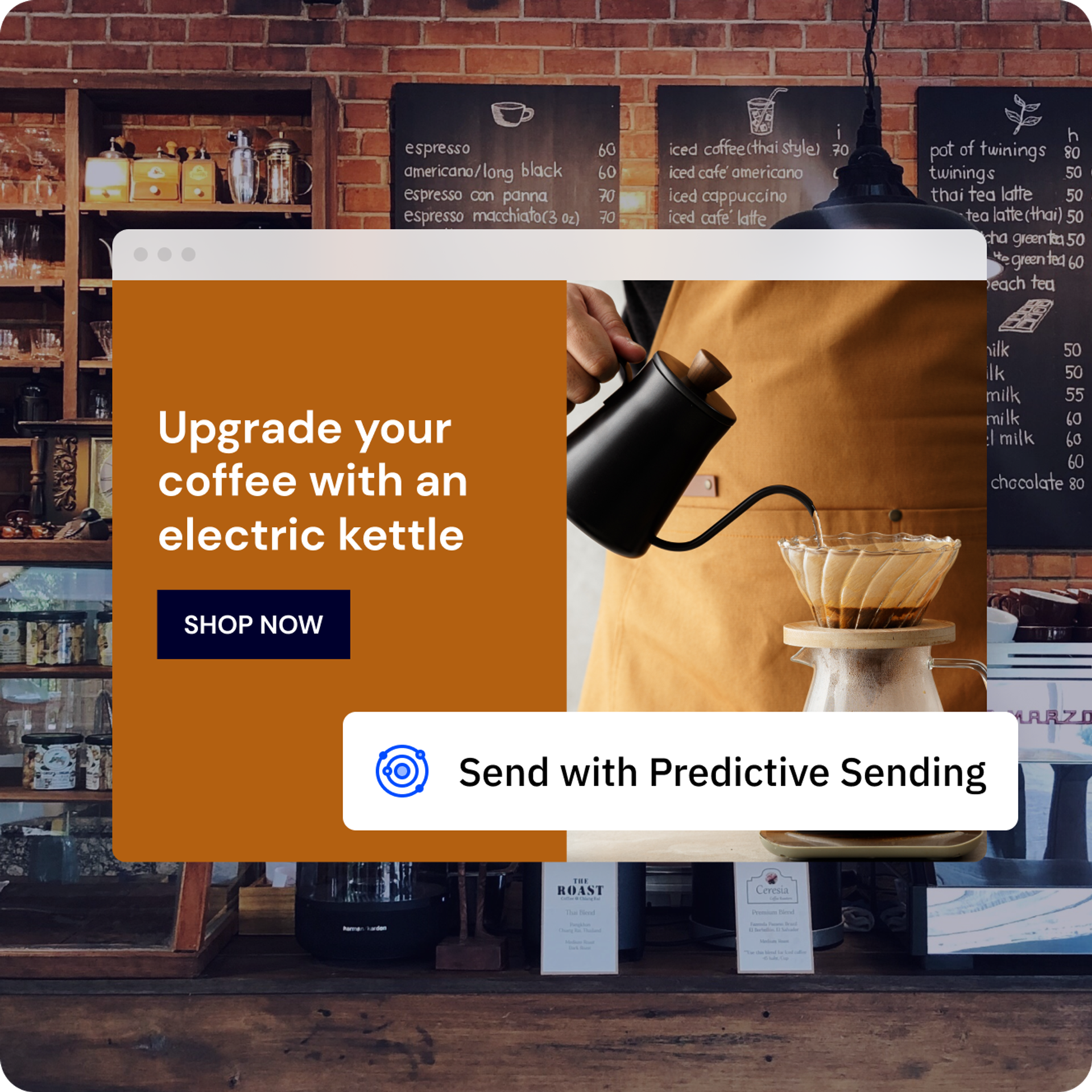
ActiveCampaign’s Predictive Sending determines the optimal delivery window for each individual contact based on their personal engagement history. Instead of one "best time" for your entire list, the delivery window is optimized for each person, improving open and click rates without manual testing.
Explore how Predictive Scoring works in this interactive tour.
Click the image below to launch it:
Autonomous Insights also surface campaign optimization recommendations, with actionable suggestions for content and structural improvements benchmarked against account trends and industry data.
The compounding effect of these tools is particularly impressive for optimizations. Every campaign benefits from the previous one’s results, because AI marketing analytics applies each round of performance data to refine the next. Over weeks and months, that continuous optimization stacks up in measurable ways across engagement and revenue.
Fast reports and insights
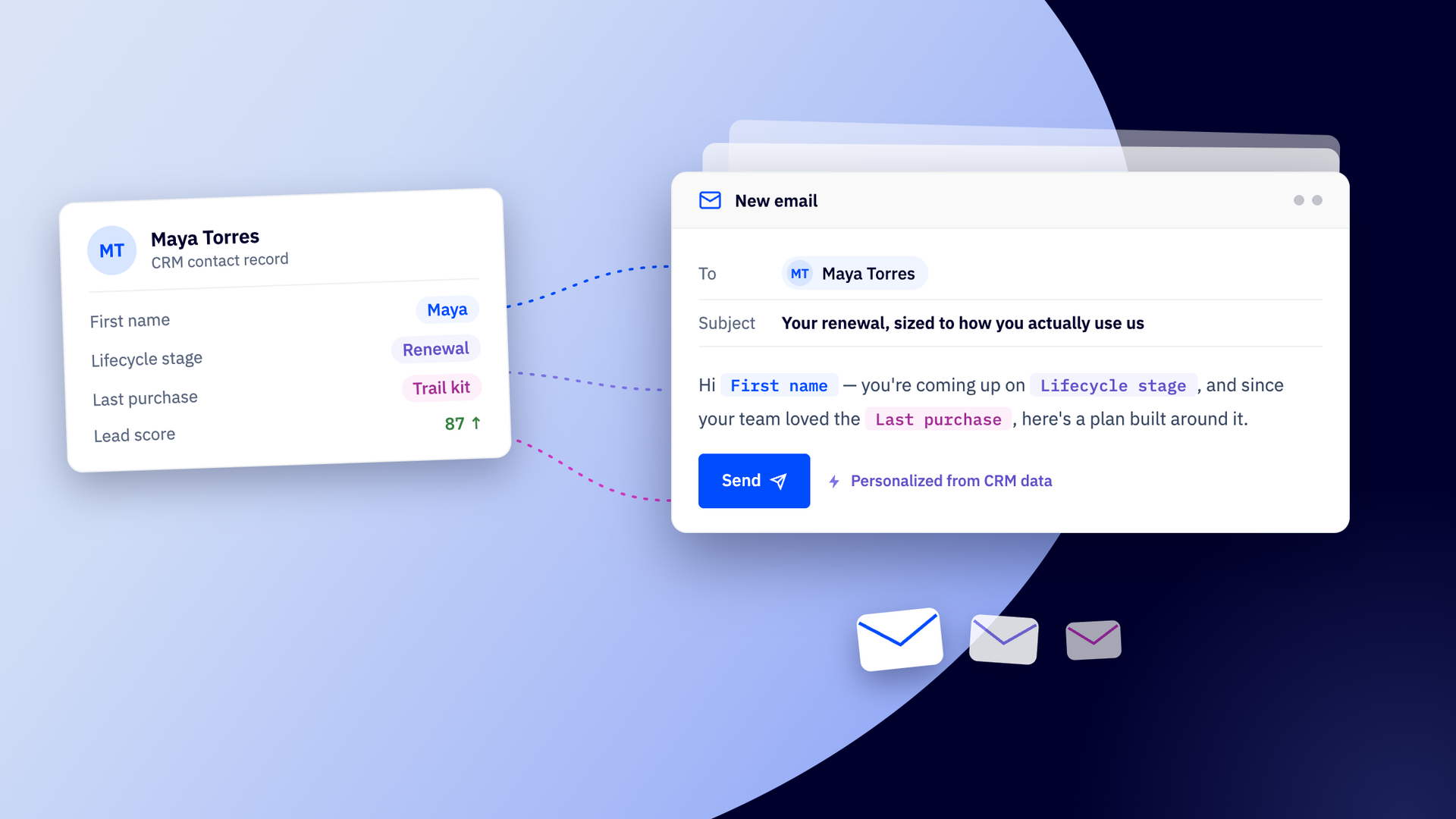
To many marketers, the traditional reporting workflow (export, pivot, format, present) has always felt like a significant hurdle in getting to the point. AI reporting eliminates most of that overhead by generating prioritized summaries, trend analyses, and actionable insights automatically, without requiring anyone to build the report first.
The practical benefits land in several areas:
- Hours of manual report building become seconds of conversational queries.
- Anomalies surface before they become problems.
- Underperforming campaigns and high-impact opportunities are flagged with context, not just numbers.
- Trend analysis and industry comparisons happen continuously, not quarterly.
ActiveCampaign’s reporting layer covers the full picture. Campaign performance, automation metrics, deal pipeline, SMS, and contact engagement data are all tracked in one place, with no manual aggregation required. The platform's conversational analytics layer lets marketers ask plain-language questions like "Which campaign drove the most revenue this month?" and receive instant, contextual answers.
The AI Actions Library includes capabilities like text summarization, large-scale data analysis, and sentiment analysis available directly within automations. These are useful for processing contact responses, flagging tone shifts across a segment, or condensing engagement patterns into something actionable.
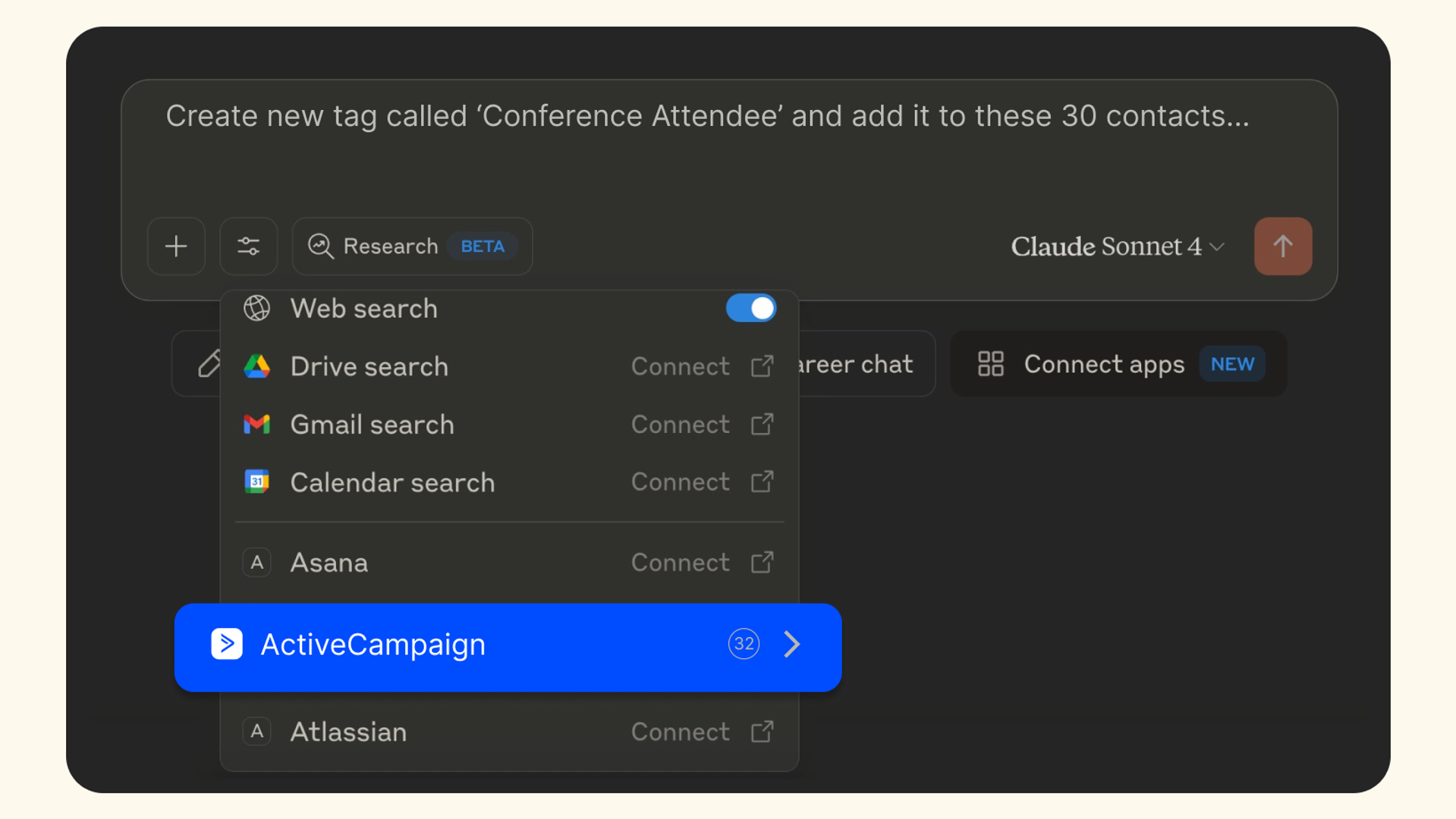
For teams already using external AI tools like Claude or ChatGPT in their day-to-day workflows, AI MCP Connectors let you interact with your ActiveCampaign data inside those systems. Users across the organization can query performance, surface trends, and trigger automations directly through their favorite chat interface.
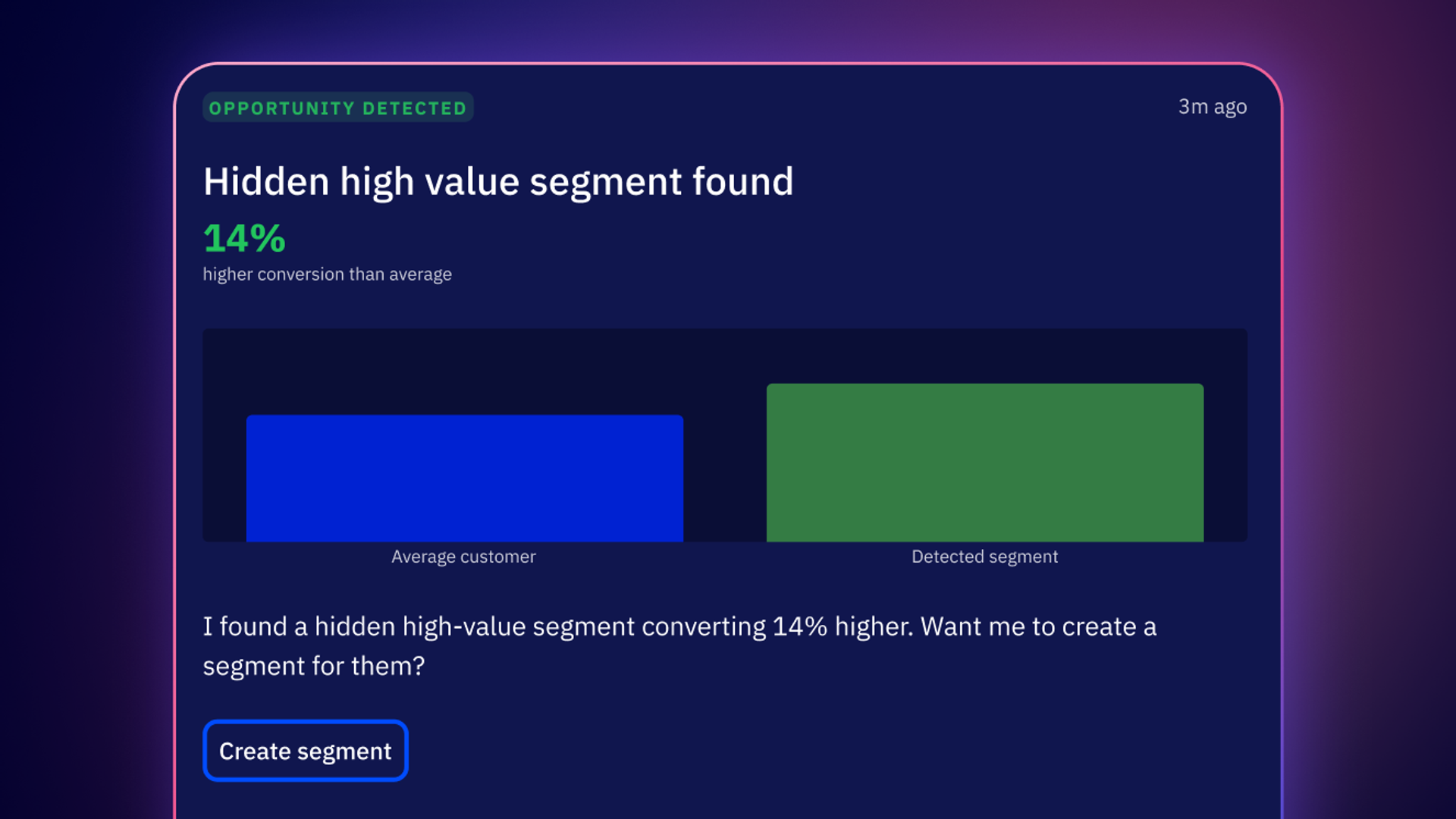
But faster reports are only half the value of AI reporting. Knowing what happened is useful; knowing what to do next is what drives growth. ActiveCampaign’s Autonomous Insights take real-time performance data to proactively surface anomalies, underperforming campaigns, and high-impact opportunities ranked by potential value. It flags them with context and even translates them into specific, prioritized guidance. You get not just list of observations, but a directive.
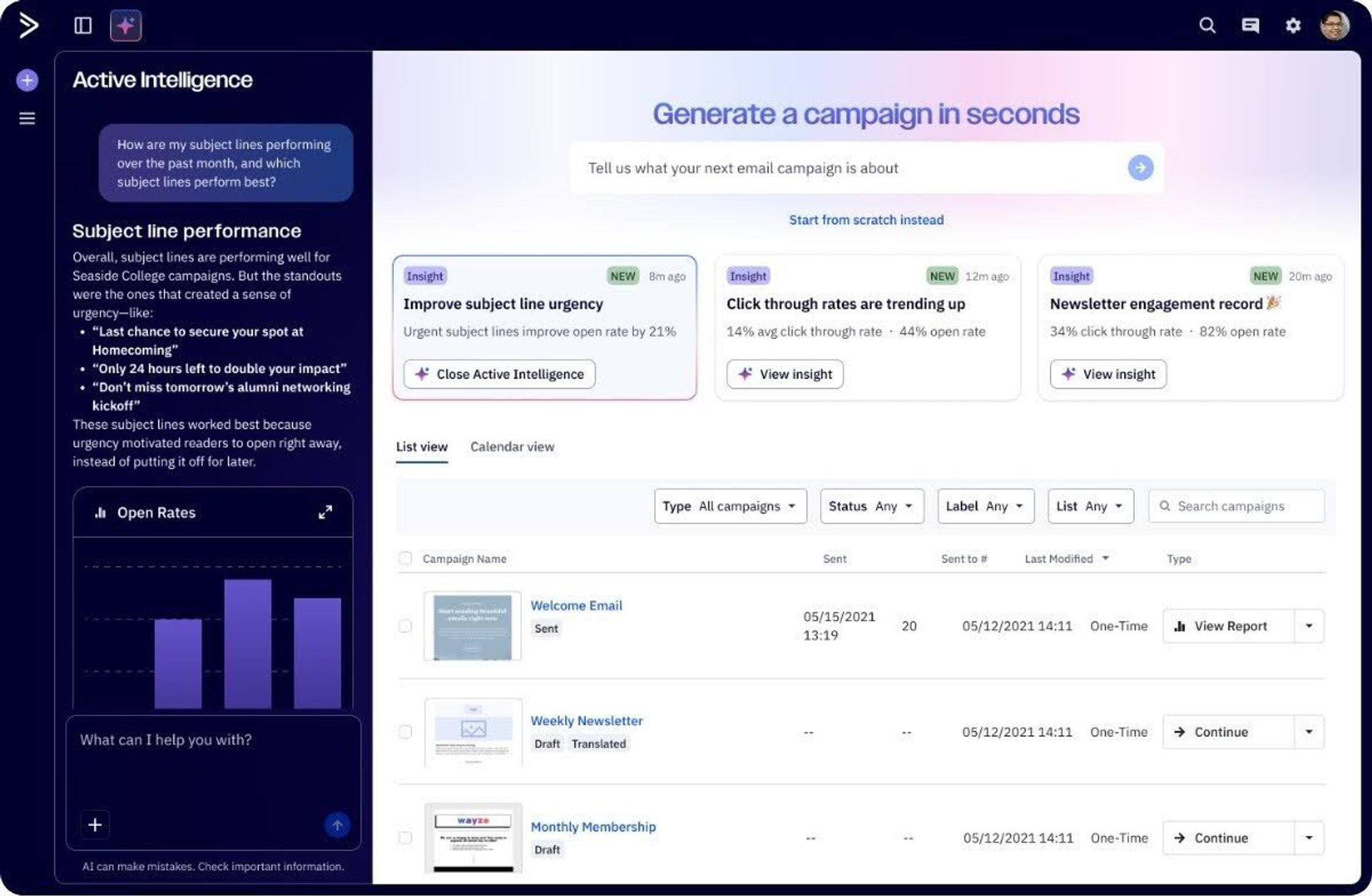
These insights are actionable directly in campaigns, automations, or segments, without exporting data to another tool, so insight and execution become the same motion.
Learn more about how to get proactive insights from Active Intelligence by exploring the tool yourself.
Click the image below to start:
Closing the loop from insight to execution
Insight that doesn’t connect to action is just expensive reporting. Marketing platforms that deliver on the closed-loop model described earlier share one defining characteristic: the path from detected opportunity to launched response runs entirely within the same system.
The workflow is straightforward in practice. AI detects a performance opportunity or risk. It generates a campaign draft informed by historical data and brand guidelines. The marketer reviews, makes adjustments, and sends. The new campaign data feeds back into the system, improving the accuracy of the next round of insights. The loop closes, and then it runs again.
Autonomous Insights connect directly with ActiveCampaign’s automations and AI Campaign Builder, which generate complete campaigns from a single, plain-language prompt. Meanwhile, an AI Brand Kit ensures every output aligns with brand guidelines automatically, by independently analyzing your existing business URL.
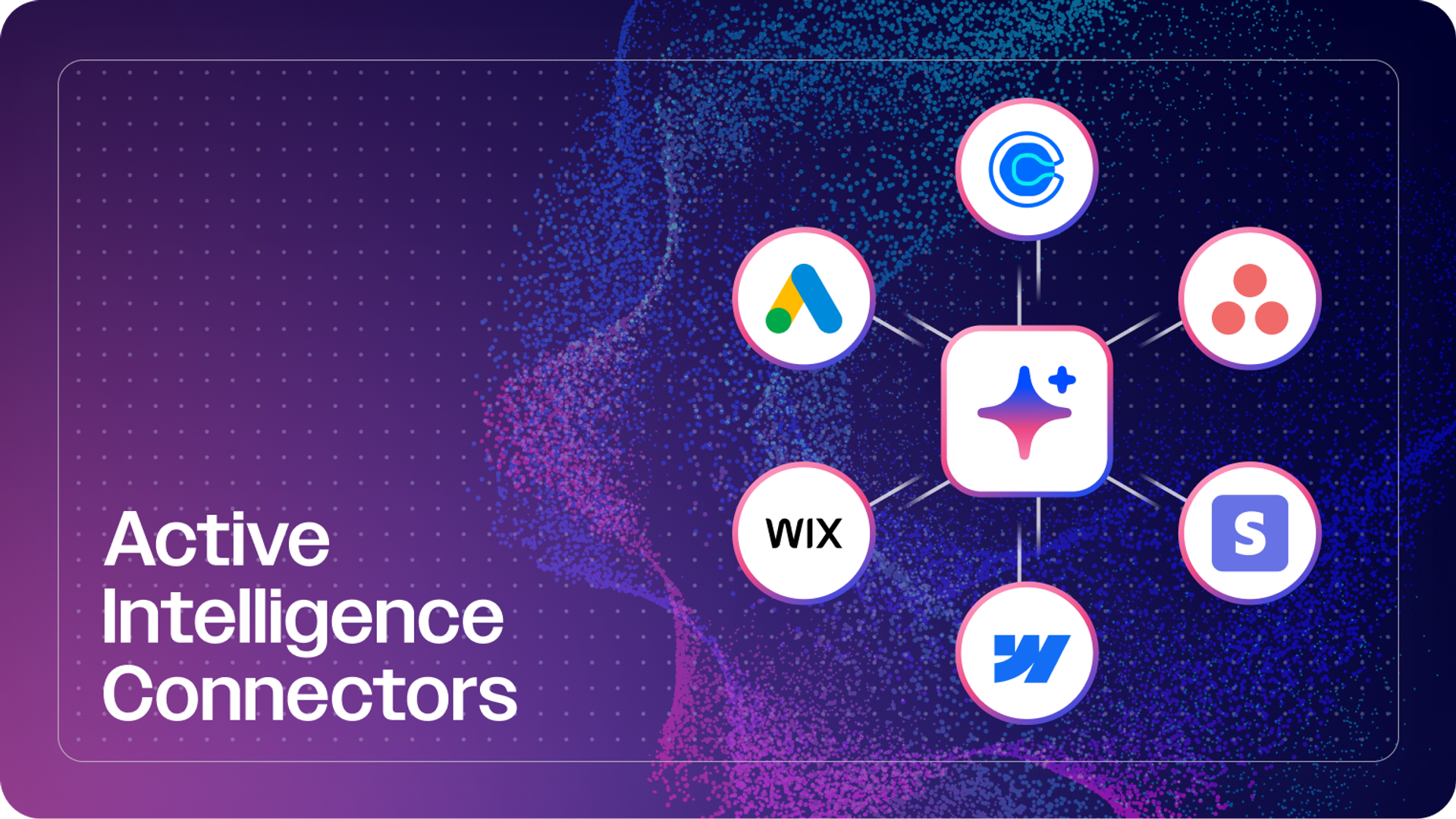
Data flows into the analytics layer from every cross-channel touchpoint—email, SMS, WhatsApp, web, CRM, and more than 1,000 native integrations—so the analytics powering your insights are unified.
Most marketing tools help you do the same work faster. This system gets smarter with every campaign you run: each send adds data; each insight sharpens the next recommendation; each action feeds the loop. The gap between knowing and doing narrows continuously, until analytics stops being a function you perform and starts being a system that performs for you.
A practical roadmap for adopting AI marketing analytics
AI marketing analytics doesn’t require a data science team, a complex implementation project, or a new standalone tool. The roadmap below is designed for teams that need results quickly.
ActiveCampaign provides the tools to adopt AI marketing analytics and connect existing data sources today, without adding headcount or engineering resources.
Phase 1: Consolidate your data foundation
AI-driven insights are only as strong as the data feeding them. Before any model can surface meaningful recommendations, it needs a reasonably unified view of your contacts, campaigns, and customer behavior.
Start by auditing your core data sources, including:
- CRM records
- Email engagement history
- Ecommerce transactions
- Website behavior
- Form submissions
The goal is clean consolidation. ActiveCampaign’s native integrations make it practical to connect disparate sources without custom development, pulling data from hundreds of tools into a single platform.
Don’t wait for a fresh data environment that may never arrive. Start with what’s available now. You can always connect additional sources as you go, and the AI will improve its recommendations as more data flows in.
Phase 2: Activate built-in AI and pursue quick wins
Once your core data is flowing, the fastest path to value is activating platform-native AI features. These require no configuration, no model training, and no technical expertise. They work from the account data already present in the platform.
Start with three ActiveCampaign capabilities that deliver immediately visible results:
- Autonomous Insights surface prioritized performance opportunities and benchmark comparisons without any setup.
- AI-Suggested Segments automatically identify high-value and at-risk audiences your manual filters would likely miss.
- Predictive Sending optimizes delivery timing per contact, improving open and click rates without any manual A/B testing.
These high-impact starting points give teams a fast, concrete demonstration of what AI analytics can do.
AI agents are also useful to demonstrate ROI for particular functions like creating content, optimizing send times, or analyzing performance. Active Intelligence is designed to be approachable for beginners and experts alike, with a conversational interface that makes setup simple. You won’t need any technical expertise or dedicated analytics staff to prove your case for AI marketing analytics.
Phase 3: Build the insight-to-action loop
Once AI is surfacing insights, establish a regular cadence for reviewing and acting on them. This is where AI marketing analytics tools start paying real dividends.
Connect insights directly to execution by:
- Responding immediately: Activate AI-generated campaign drafts to act on recommendations right away rather than adding them to a backlog.
- Automating based on signals: Create automations triggered by predictive signals, such as engagement scores dropping below a threshold.
- Building on AI-identified patterns: Create new segments based on what the AI finds and feed them directly into targeted workflows.
The goal of this phase is to compress the gap between identifying a trend and responding to it. Active Intelligence’s unified interface lets you create instant campaigns based on real past data. You can review underperforming content, then immediately create improved versions.
Phase 4: Validate, refine, and scale
Before scaling AI-driven decisions broadly, validate that they’re producing real results. Use these methods to confirm impact:
- Run before-and-after performance comparisons on campaigns informed by AI recommendations.
- Test AI-identified segments against manually built holdout groups.
- Attribute revenue to AI-recommended campaigns to build a clear picture of incremental impact.
- Document early wins and share them with stakeholders. Internal confidence in AI recommendations grows faster when results are visible and specific.
- Once confidence grows, expand AI analytics into additional channels, automations, and customer lifecycle stages.
Keep in mind that data governance matters at every stage. Governance frameworks must be embedded from the start. Clear audit trails, explainable models, and human review processes are no longer optional. The organizations that succeed will pair AI efficiency with human judgment.
Keep these governance priorities in mind as you scale:
- Ensure compliance with GDPR, CCPA, and relevant data protection standards.
- Maintain transparency about how AI uses customer data.
- Monitor for potential bias in recommendations.
- Apply human review before scaling automated actions broadly.
ActiveCampaign does not use data that you input about your contacts or marketing content to train AI models.
ActiveCampaign helps turn AI marketing analytics into measurable growth without adding complexity. The time-to-value is immediate: marketers can start seeing insights and opportunities on day one while building confidence in AI recommendations over time. Each action generates new data, making AI insights more accurate and recommendations more impactful with every cycle.
And because insights, campaigns, and optimizations all happen in one platform, you avoid tool fatigue. No context-switching between analytics dashboards and campaign builders. No manual exports bridging two disconnected systems. One environment, from data to decision to execution.
Ready to spend less time in dashboards and more time driving results? Start a free trial with ActiveCampaign and see AI-driven insights in action from your first login.
FAQs
Do I need a data team to use AI marketing analytics tools?
No. Platforms like ActiveCampaign are designed so that any marketer can access AI-driven marketing analytics without SQL skills or custom model training. Features like AI-Suggested Segments, Autonomous Insights, and Predictive Sending work out of the box using your existing account data.
How do I know if AI-generated insights are accurate?
To test whether your AI-generated insights are accurate, start by comparing AI recommendations against your own historical data and known performance benchmarks. Run holdout tests where one segment follows the AI’s guidance and another follows your existing approach, then measure the difference. Over time, accuracy improves as the system ingests more of your data and results.
How do I connect external AI tools to my marketing platform for deeper analytics?
MCP (Model Context Protocol) is an open-source standard designed to link AI applications with external systems. ActiveCampaign’s MCP Connectors allow AI tools such as Claude and ChatGPT to securely access and manage ActiveCampaign data through natural language commands.
Setup requires no coding: just copy your unique MCP URL from your account settings and paste it into your AI tool’s connector settings. From there, you can pull campaign stats, manage contacts, and trigger automations through conversation.