Email Templates That Create Themselves: The AI-Powered Future of Email Marketing
Using AI to build intelligent email templates is now the norm. Discover how to move from static to dynamic with the help of AI agents.
Using AI to build intelligent email templates is now the norm. Discover how to move from static to dynamic with the help of AI agents.
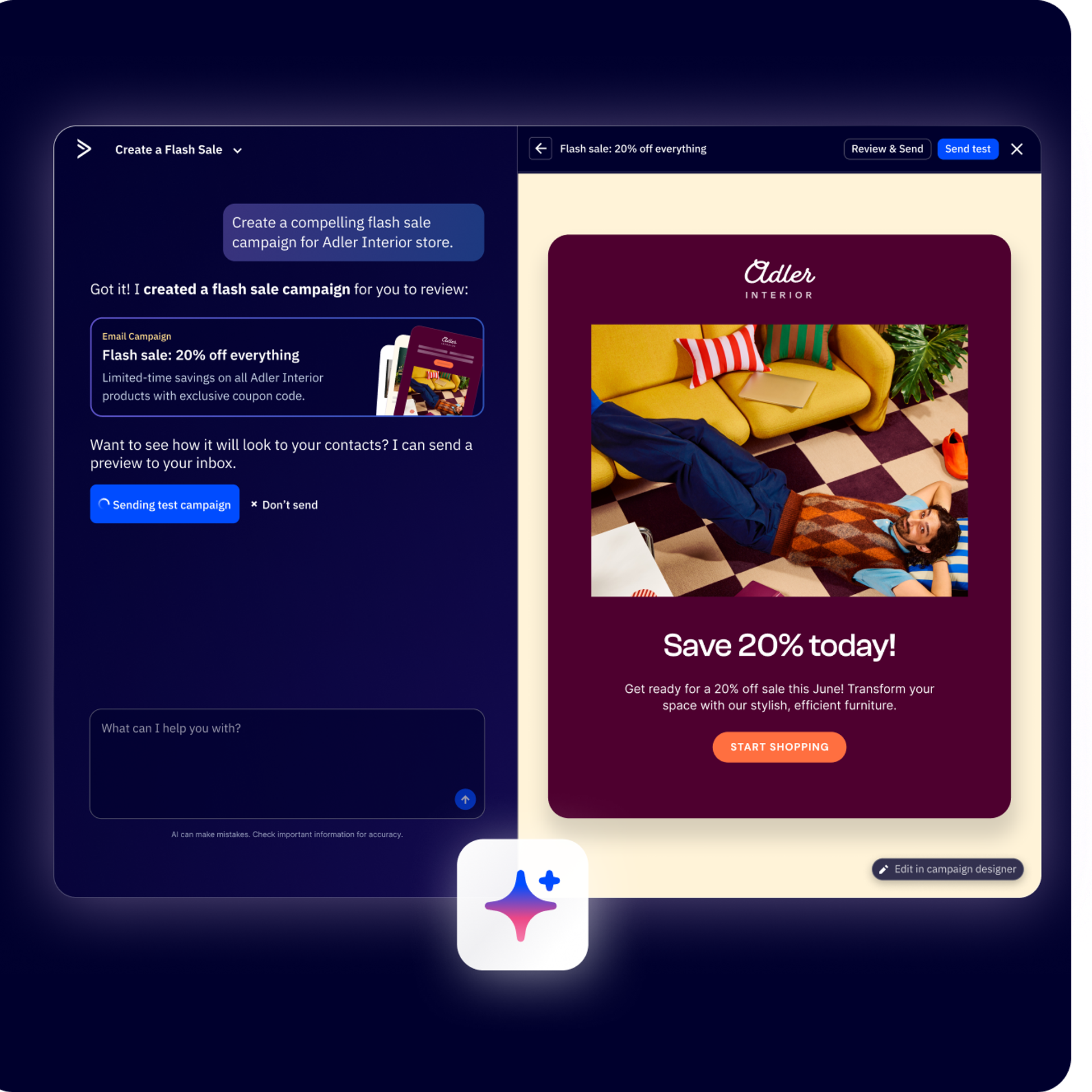
Bottom line up front: While most businesses still search for static email templates, the future belongs to AI agents that create personalized, on-brand templates instantly based on your goals. ActiveCampaign’s autonomous marketing approach doesn’t just give you templates; it builds entire email campaigns tailored to each user’s preferences and customer data.
Email templates have been the backbone of digital marketing for decades. But here's what's changing: instead of choosing from a library of pre-designed templates, AI now creates custom email designs that adapt to your brand, audience, and goals in real-time.
The traditional approach requires browsing through hundreds of static templates, picking one that’s “close enough”, manually customizing it, and hoping it works across devices. The AI-powered approach is fundamentally different. You simply describe your goal, AI analyzes your brand and audience, a custom template appears instantly, and it’s automatically optimized for engagement.
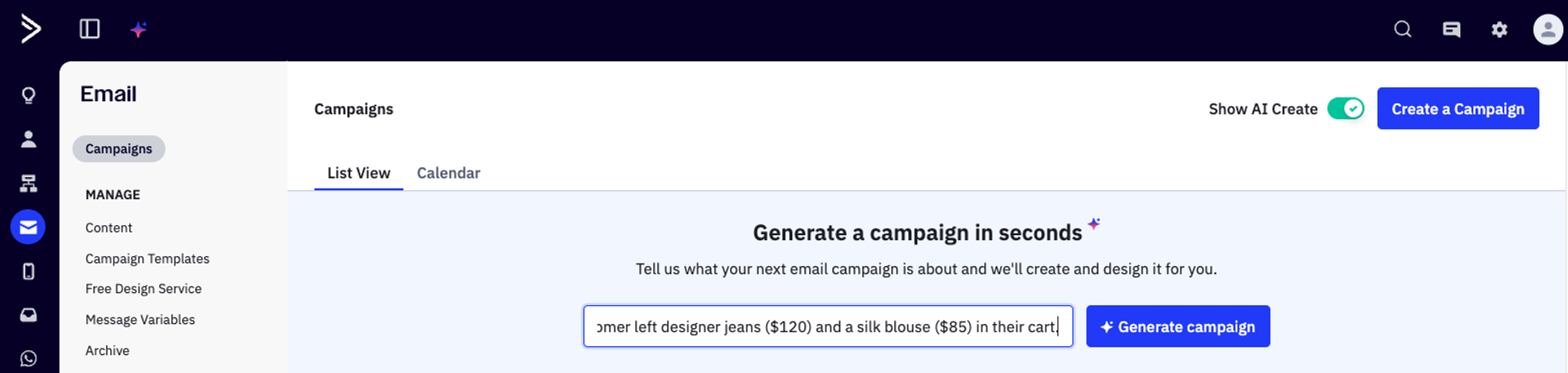
This is particularly easy in ActiveCampaign, where you can input a prompt and watch Active Intelligence build the campaign for you.
This isn’t just a marginal improvement—it’s a complete shift from static design resources to dynamic, intelligent marketing assets that make your life a whole lot easier (and building a whole lot quicker).
AI can create better campaigns and content because it considers your goals, analyzes your customer data, and delivers tailored templates/ messages/recommendations specifically for them, improving engagement and relevancy.
Most email template galleries still operate like a digital Blockbuster storefront with endless rows of pre-made designs that someone else created for generic use cases. But modern marketing demands personalization at scale.
The good news is that while your competitors are still browsing those digital aisles, ActiveCampaign can build campaigns tailored to your brand and audience in minutes—no templates required.
Traditional, static templates present several fundamental limitations that increasingly hold businesses back:
Consider this: The most successful email newsletters typically share one trait; they’re highly customized to their specific audience and brand, which is tough to pull off when you’re starting with a one-size-fits-all template.
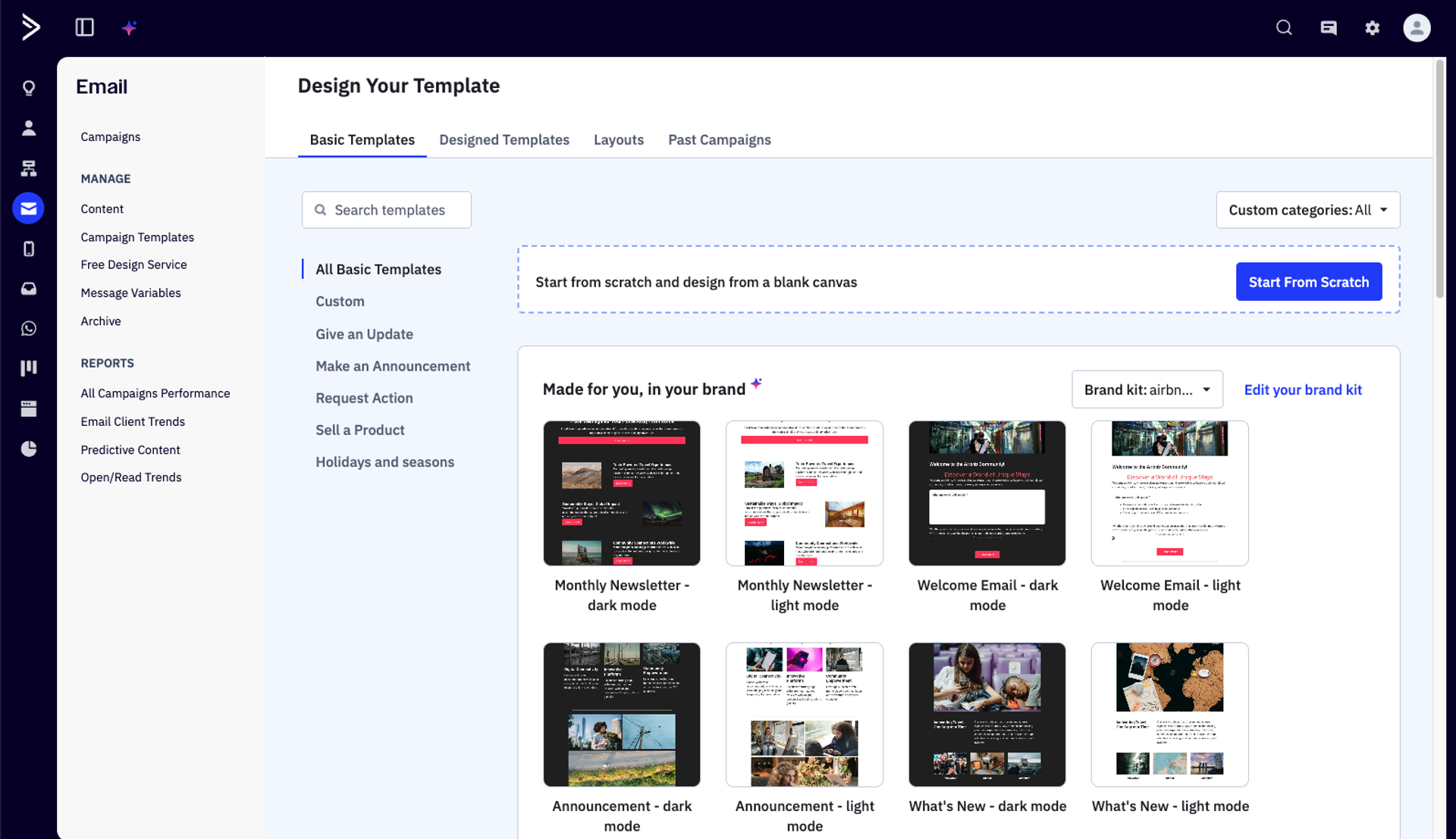
AI-first brands like ActiveCampaign let you easily pull in your brand colors, fonts, logos, etc., and instantly create a series of email templates tailored to these settings. For this example, we used Airbnb’s site and ActiveCampaign took just five clicks and one minute to import brand details before creating a handful of beautiful email templates. This is customization in motion.
To understand how AI transforms email template creation, it's helpful to examine how different AI systems approach the same challenge and prompting. Rather than simply choosing between pre-made templates, AI systems generate custom content based on your specific prompt and brand context.
The key to AI-generated templates lies in how you structure your request. Instead of browsing through categories like "E-commerce > Abandoned Cart > Modern Style," you describe your specific situation in natural language.
Example prompt structure:
"Create an abandoned cart email template for [business type] selling [specific products]. The customer left [specific items with prices] in their cart. The email should [tone/approach guidance]."
This approach allows AI to consider multiple variables simultaneously: your business context, specific products, price points, and desired communication style.
To test three different AI tools, we used the prompt above and got more specific:
Create an abandoned cart email template for an e-commerce clothing store. The customer left designer jeans ($120) and a silk blouse ($85) in their cart.
ChatGPT delivered a template with a few subject line options, including:
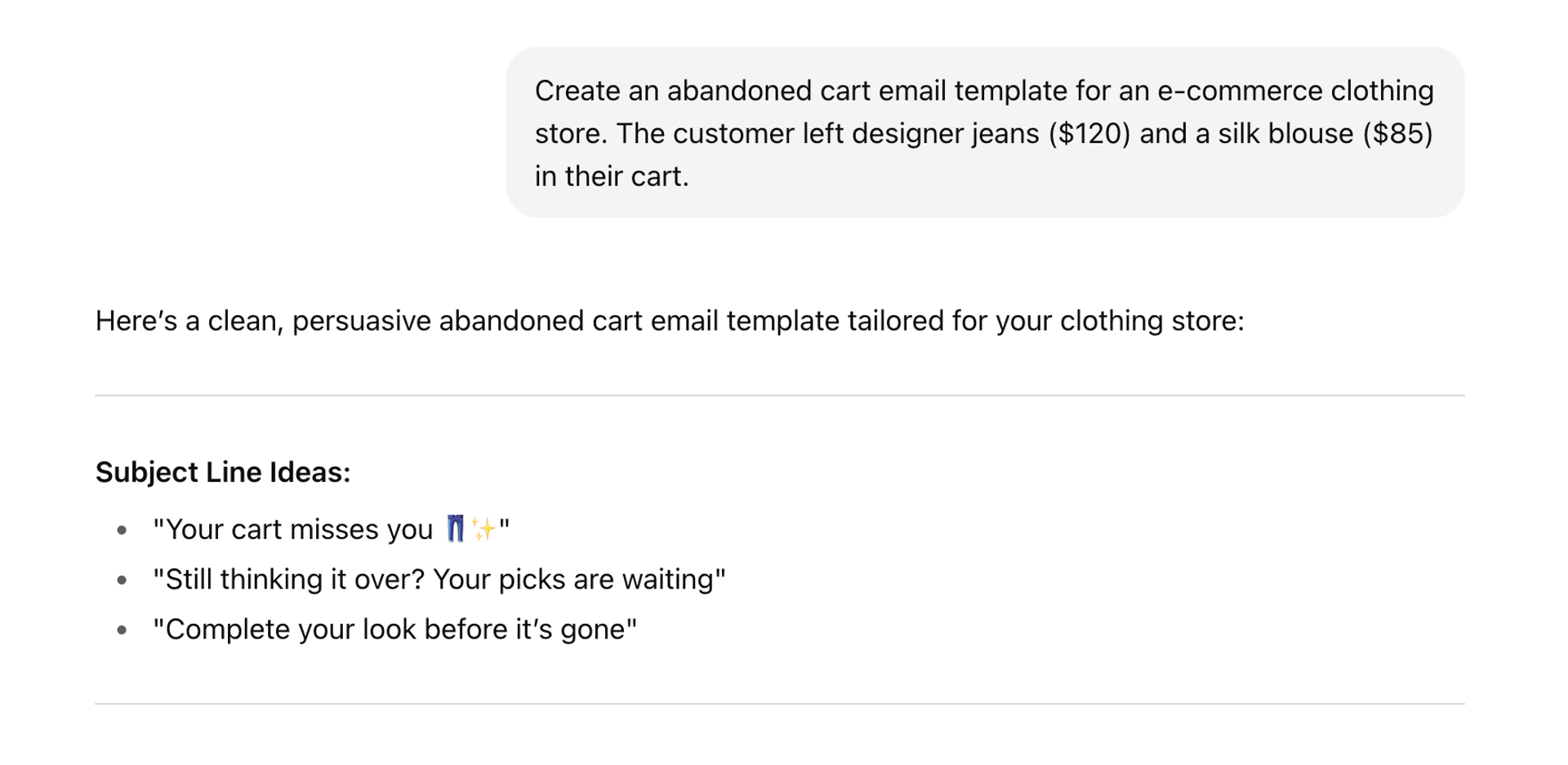
The approach felt familiar but generic, relying on standard e-commerce language and conventional urgency tactics. The email body used phrases like “Great style deserves a second chance. Complete your purchase today and make them yours before they sell out.”
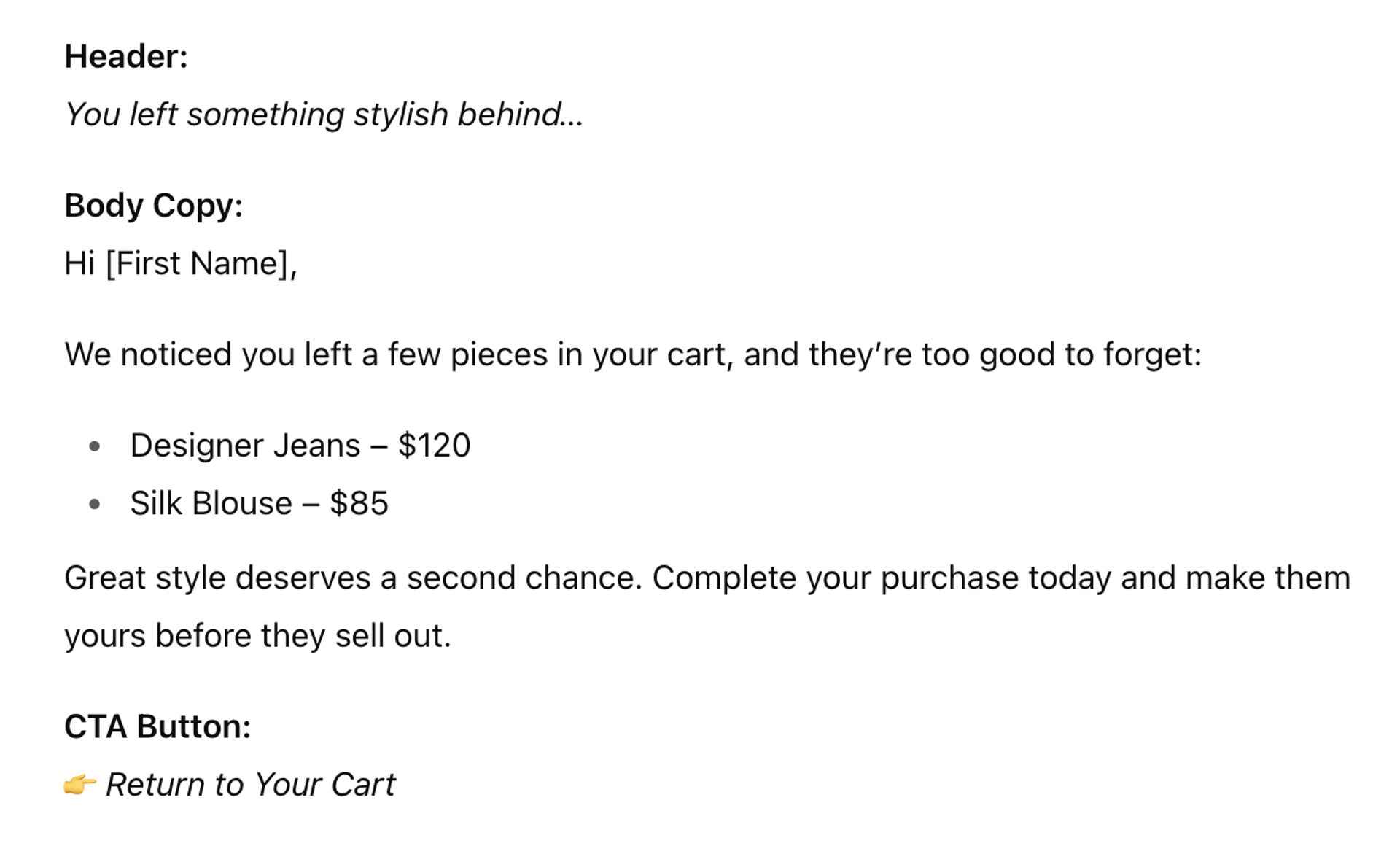
It also included the exact price of the items left behind and an “optional sweetener” that would give the user free shipping if they ordered within the next 24 hours.
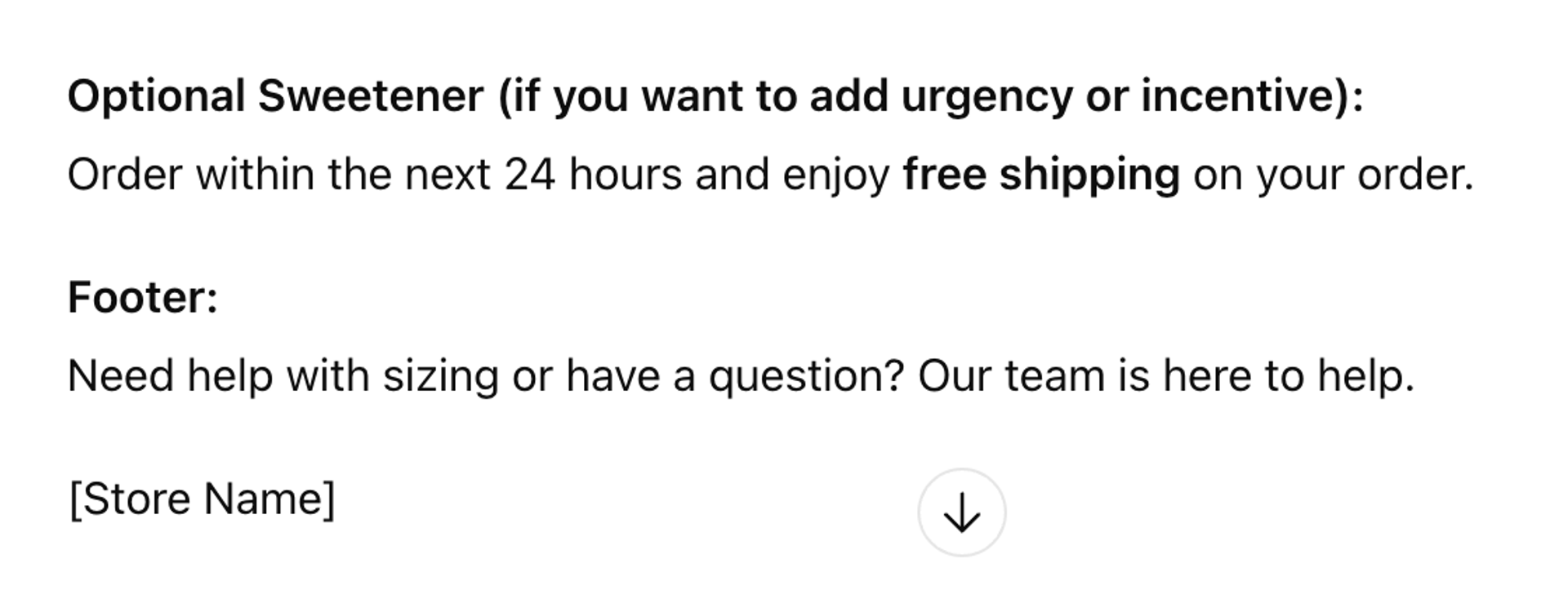
While competent, the response felt template-like, something that could have been written for any clothing brand selling any products.
Analyzing ChatGPT's standard AI email generation:
Advanced AI prompt engineering: How to get more sophistication out of your prompts
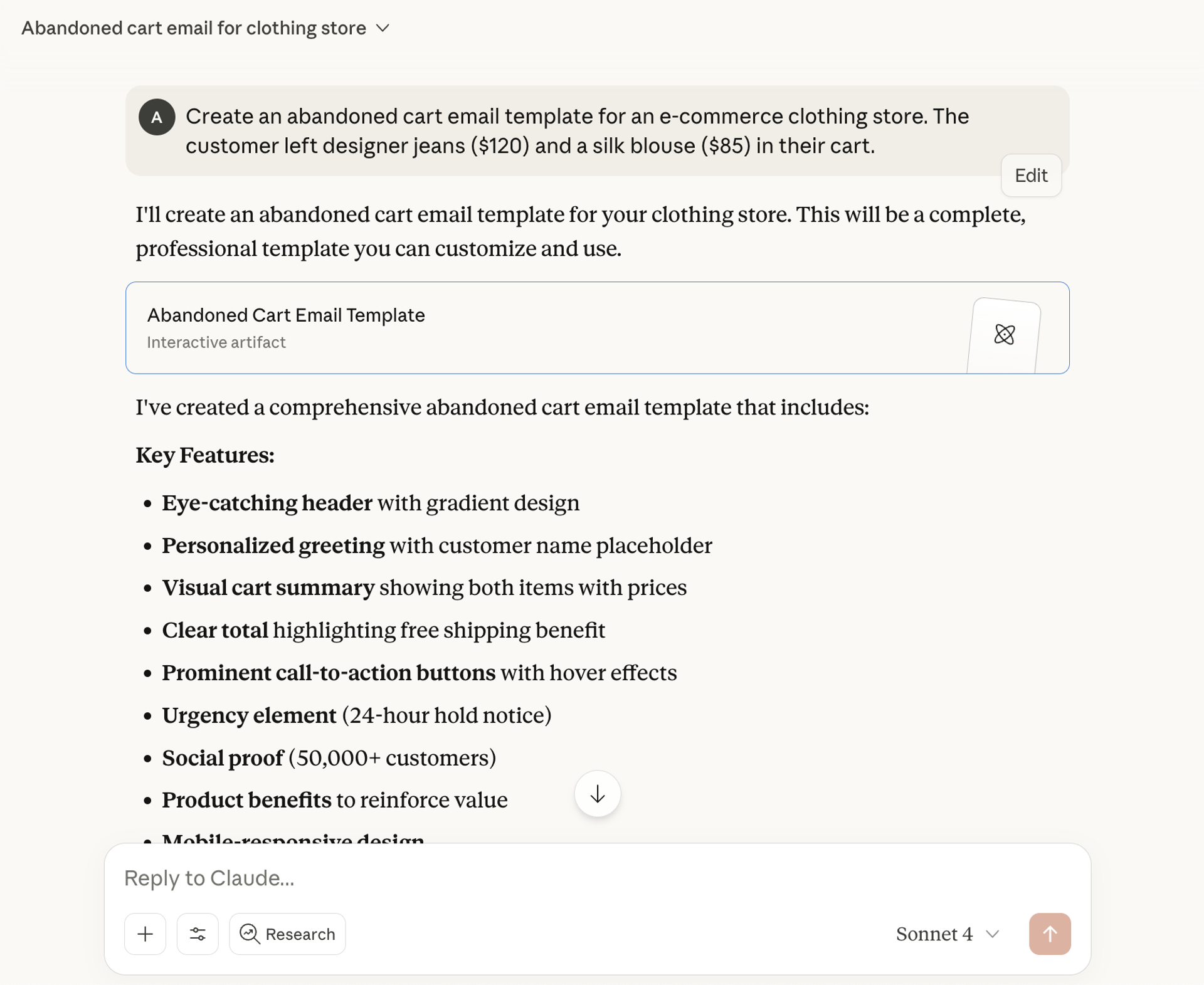
Claude took a more hands-on approach to creating this email template. From the start, Claude provides more to work with than ChatGPT (though you may be able to find the same results if you prompt ChatGPT a bit more).
It returns with a summary of key features it has worked into the email template, giving you a glance at what you can expect.
Plus, a list of customization notes you can take or ignore to further personalize the template in your own email builder:
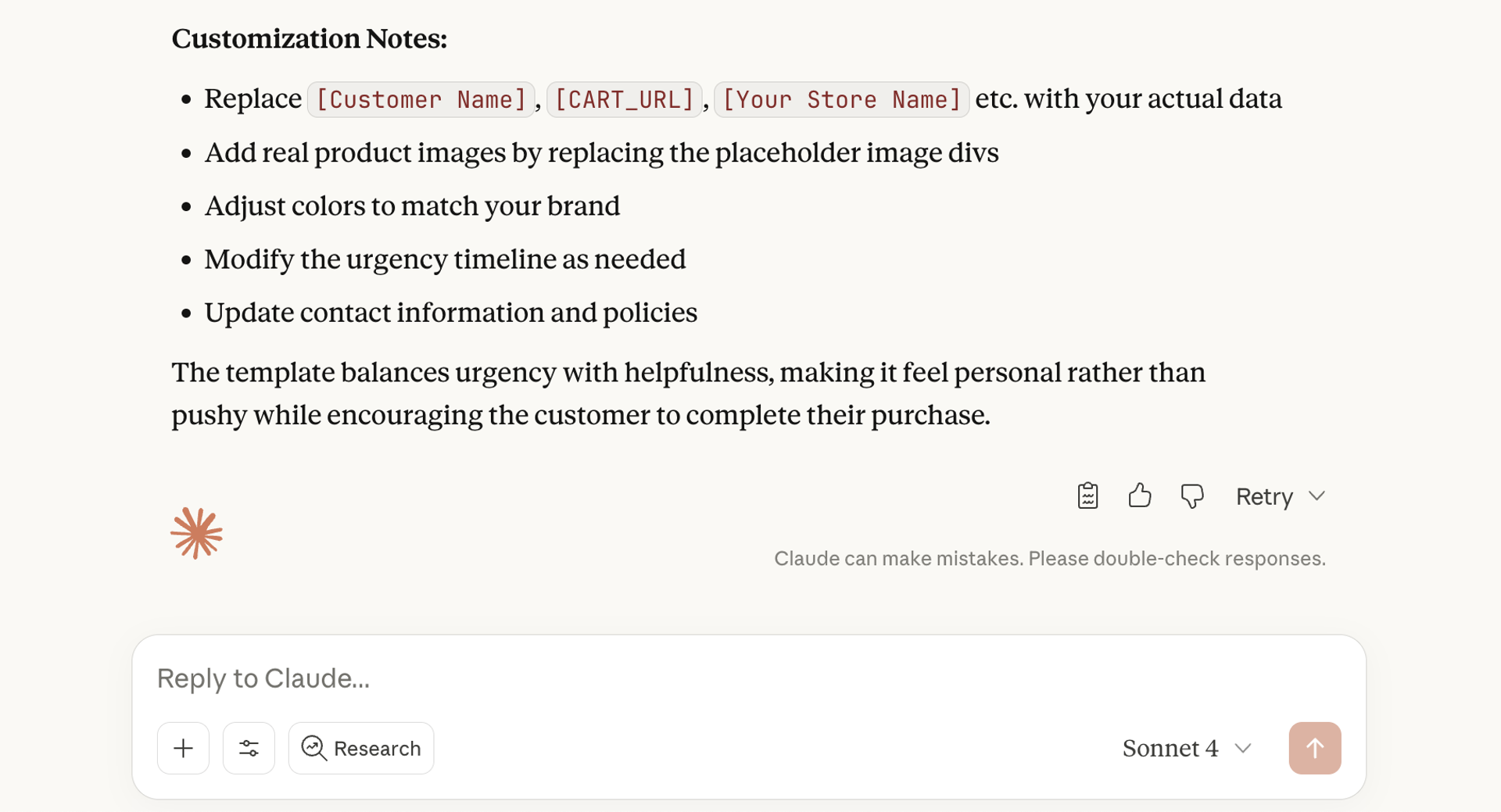
This is already a good start, but Claude truly stands out because of one thing: the creation of an artifact.
Claude Artifacts are interactive, shareable outputs that appear in a dedicated window alongside your chat with Claude. They can include text documents, code, games, flowcharts, and web applications. You create them through conversation with Claude, then customize, share, and reuse them in your projects, turning ideas into functional tools.
You have the option to download the email template as HTML that you can import into your email builder, although the specific method may vary depending on which platform you use. Claude earns one point here as they’ve done some extra legwork that ChatGPT did not, actually designing a template.
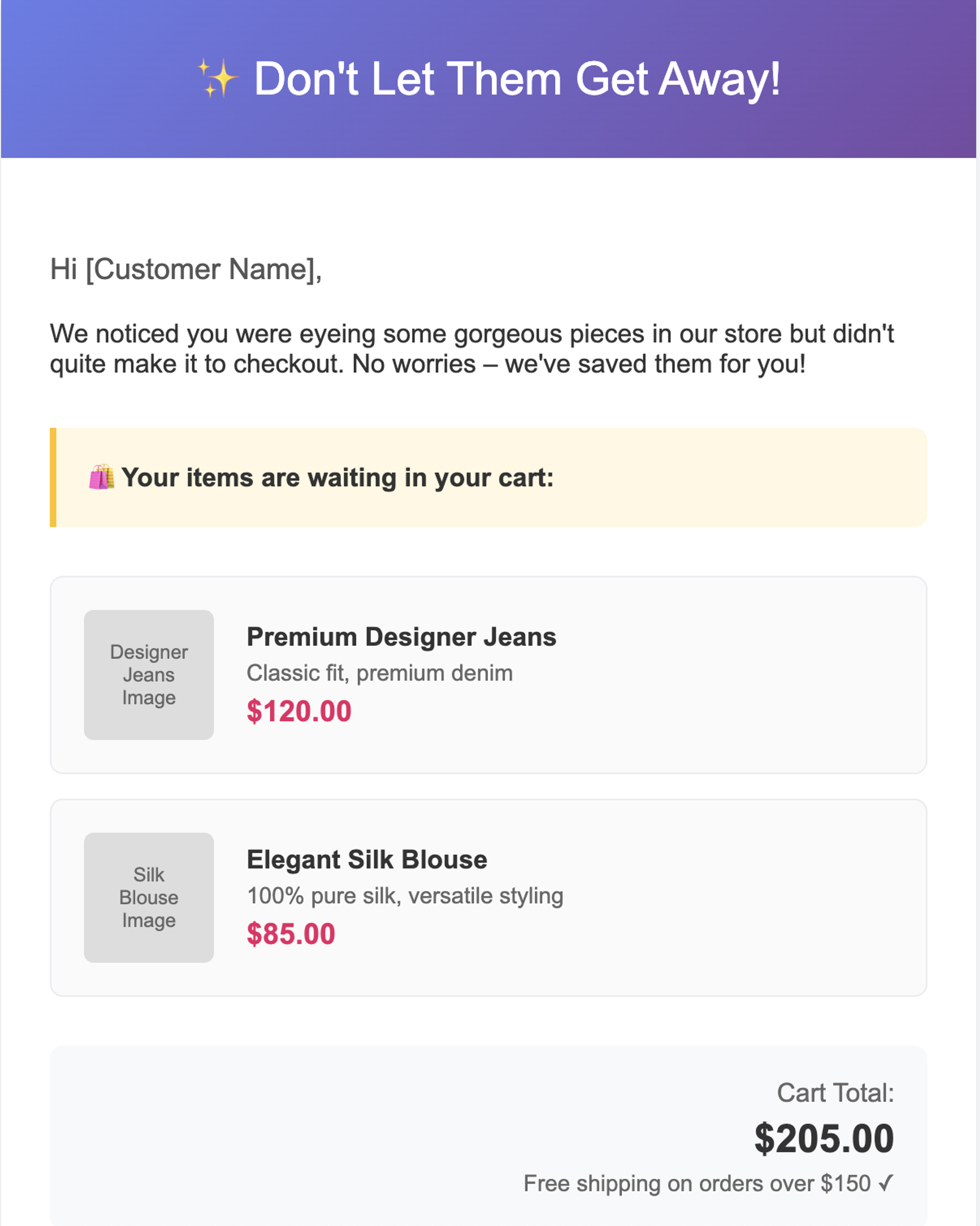
It’s important to call out how standard this template is, with no custom brand fonts or colors. No thought about your brand’s tone. You simply get the bones of an email template with a better idea of how it could look inside the email designer.
Claude also adds a “limited time” callout that creates urgency and FOMO if the customer doesn’t act and claim their products. The email copy pushes further and stresses that the items are popular and selling fast, to act in the next 24 hours if the customer wants to guarantee they remain in their cart.
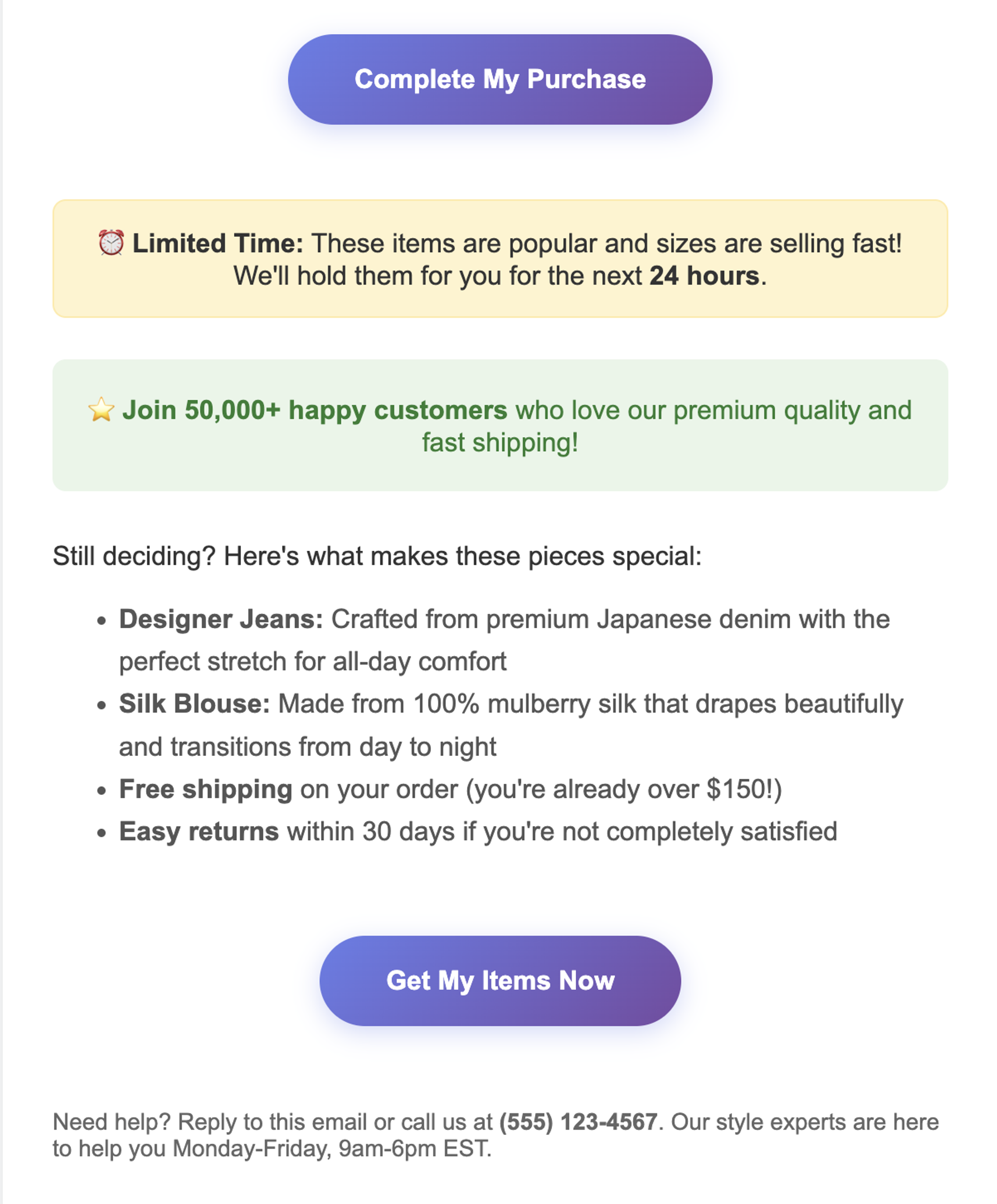
Plus, Claude has written a set of bullets detailing what makes the pieces the customer left in their cart special, with a CTA at the bottom reading “Get My Items Now”. Like we saw with ChatGPT, all of this leans into the typical urgency tactics that most abandoned cart emails use.
This response from Claude is certainly more than ChatGPT offered. But there’s a tool that gives you more with your AI prompting.
Here’s where autonomous marketing demonstrates true power. ActiveCampaign’s Active Intelligence doesn’t just write the email—it creates a complete marketing system. For this example, we prompted Active Intelligence with the same prompt we fed to ChatGPT and Claude. With the AI Brand Kit pulling from loft.com, we watched as ActiveCampaign built out a personalized and on-brand email template.
Feed Active Intelligence a prompt, and it begins building your template or campaign immediately.
The result goes beyond just a template—you’re able to prompt Active Intelligence and build a fully autonomous marketing campaign that adapts and improves over time. That’s the future many marketers are already living in.
Active Intelligence:
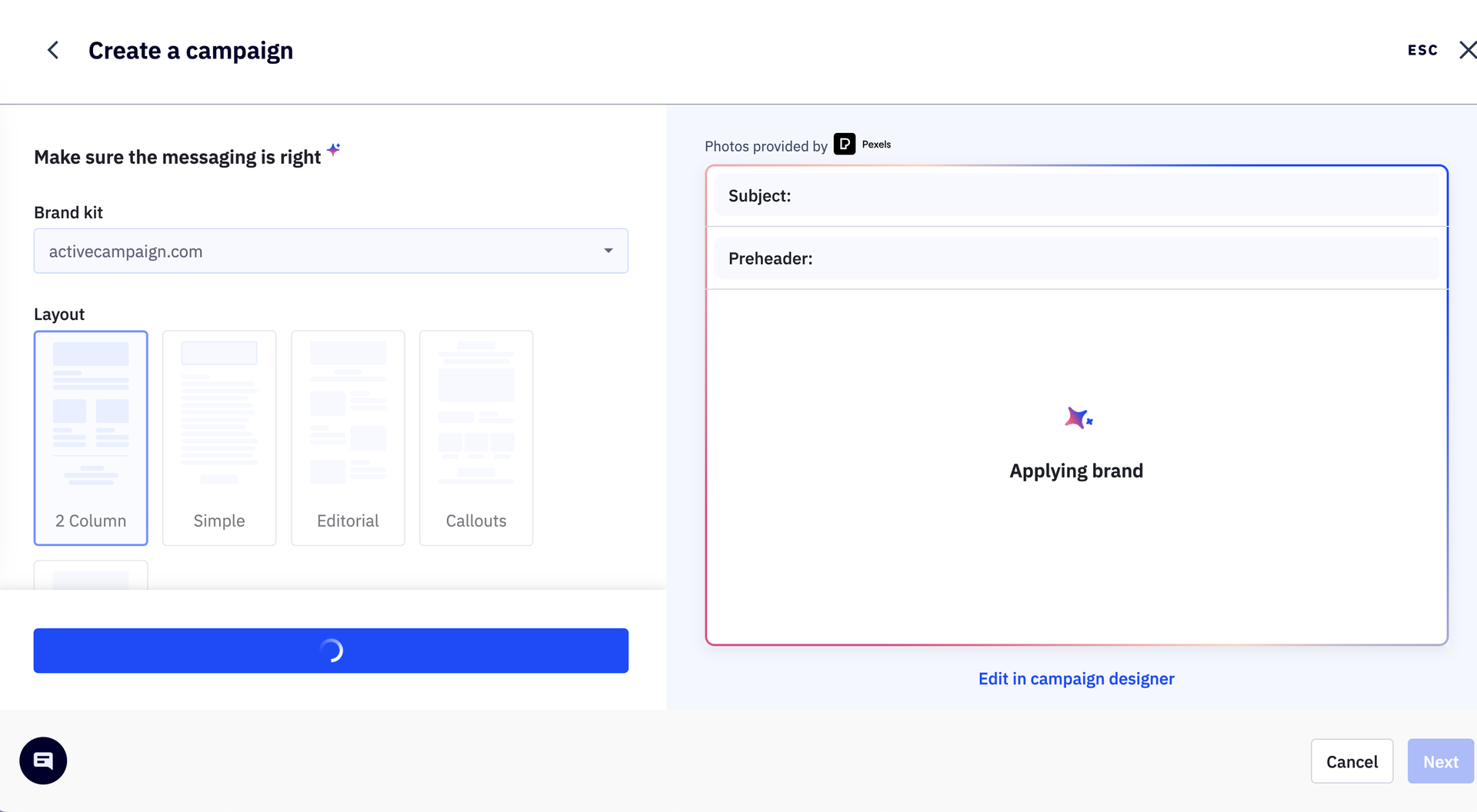
Simply add your website and ActiveCampaign pulls in your fonts, colors, logo, and more.
You can also use AI Image Generation to create all-new photos if you’re in a pinch.
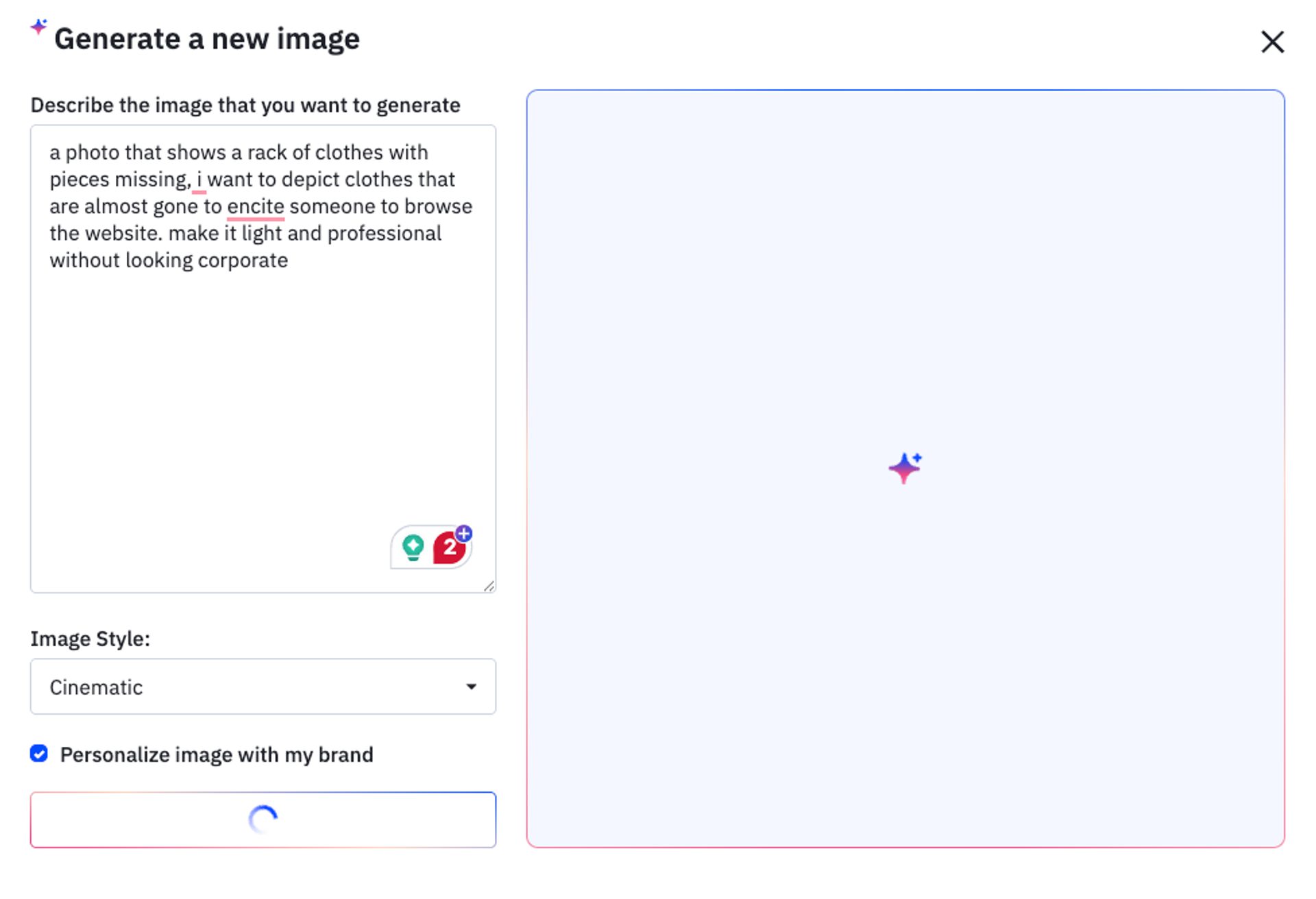
Prompt Active Intelligence with the exact image requirements you need and watch it work in real-time to generate an image for your email.
The key difference? Most AI tools give you content, while ActiveCampaign’s autonomous marketing gives you a complete campaign from start to finish.
Her First 100k, a feminist finance company, switched from template-based email marketing to ActiveCampaign’s AI-powered approach and achieved remarkable results:
189% contact growth year-over-year and a 54.6% open rate (far above the industry standard of 35.6%).
Her First 100K faced the same challenge many growing businesses encounter: their email platform offered "aesthetically nice" templates but "didn't have a lot of the more technical features, more complex automations, for example, the ability to segment more," according to Elizabeth McCumber, their email marketing strategist.
Key limitations of traditional email templates:
With nearly 300,000 subscribers and growing, they needed something more sophisticated than static template selection.
Instead of continuing to manually create templates for each campaign, Her First 100K implemented ActiveCampaign's autonomous marketing approach. Here's exactly what changed:
| Before: Manual approach | After: Autonomous approach |
|---|---|
| 1. Manually browse a template library for the closest match | 1. Set business goals and audience parameters, pull in brand kit to stay on brand |
| 2. Manually select colors, fonts, and layout | 2. AI automatically generates brand-consistent templates |
| 3. Write content from scratch for each segment | 3. Content personalizes dynamically for each subscriber |
| 4. Set up basic automation rules and build the automation | 4. Workflows adapt based on engagement behavior |
| 5. Run manual analysis, as needed, sometimes pulling from multiple tools. | 5. System optimizes and improves automatically |
“I would say the most important role of ActiveCampaign for us is to move people through the funnel,” McCumber explains. The platform doesn’t just provide templates; it creates intelligent workflows that guide customers from awareness to conversion.
Her First 100K's transformation from static templates to autonomous campaigns produced remarkable, measurable improvements:
Key performance indicators:
The takeaway: Her First 100k’s 54.6% open rate wasn't achieved through better subject line writing—it came from AI-powered personalization that made every email feel relevant to each subscriber's specific financial journey.
This shows that the future of email templates isn't about design—it's about intelligence. Their exceptional performance came from AI-powered personalization, not prettier graphics.
Understanding the most-requested email template types and how AI transforms each category will help you identify the biggest opportunities for your business. Let's dive deep into each category with specific implementation guidance.
Traditional newsletter templates offer clean, professional layouts for regular content sharing. But AI takes this concept much further by analyzing your content patterns and automatically generating layouts optimized for your specific topic mix, reader engagement levels, and brand personality.
Smart campaign creation with AI:
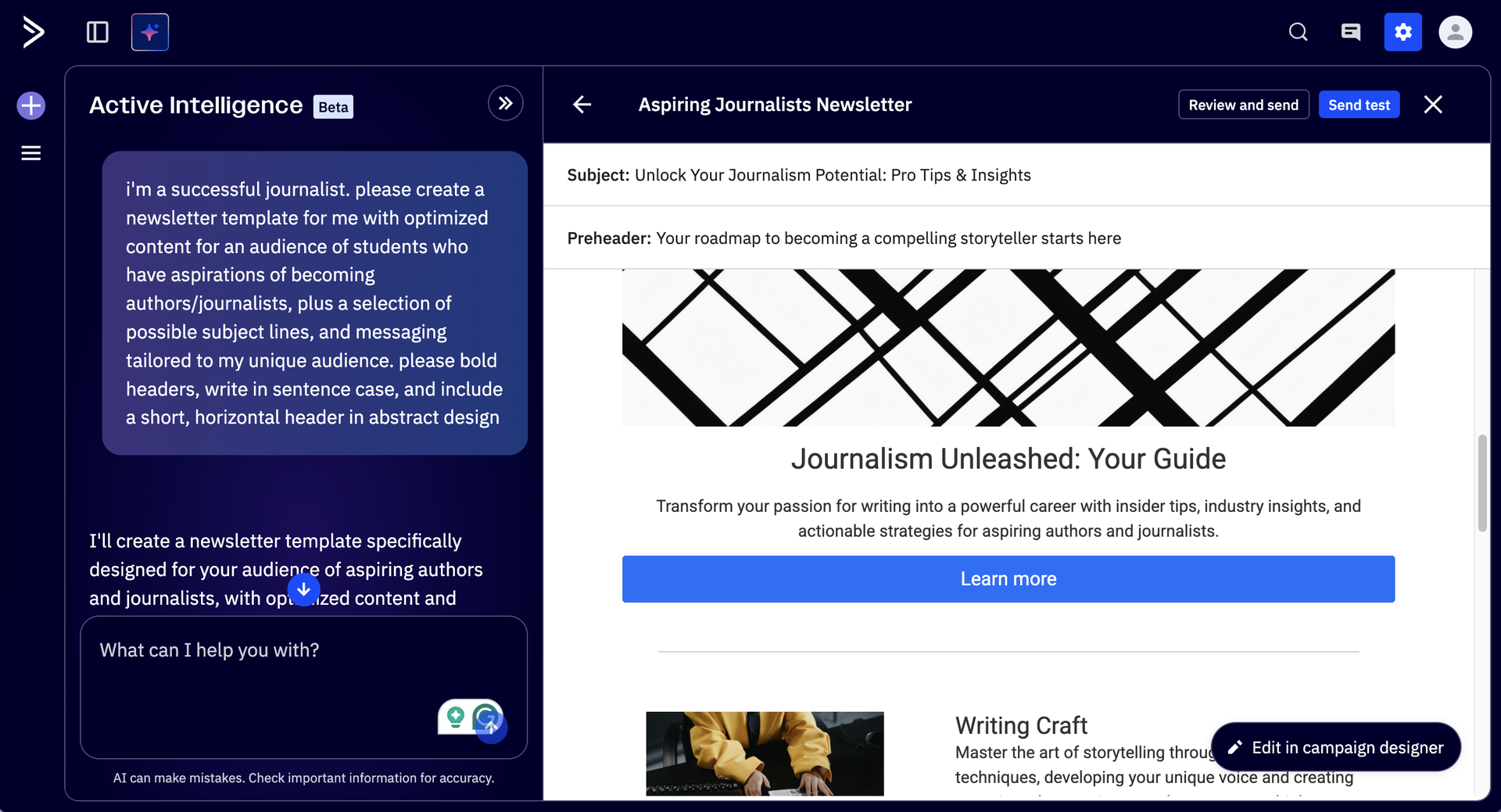
By feeding Active Intelligence a unique prompt, the platform gets to work and builds you a newsletter template that’s customized to your unique audience and brand.
AI-powered campaign optimization and editing:
Building automated workflows with AI:
The best AI-enhanced newsletters draw inspiration from successful examples, like Morning Brew, which transforms dense business news into engaging content through conversational headlines and simple visual elements.
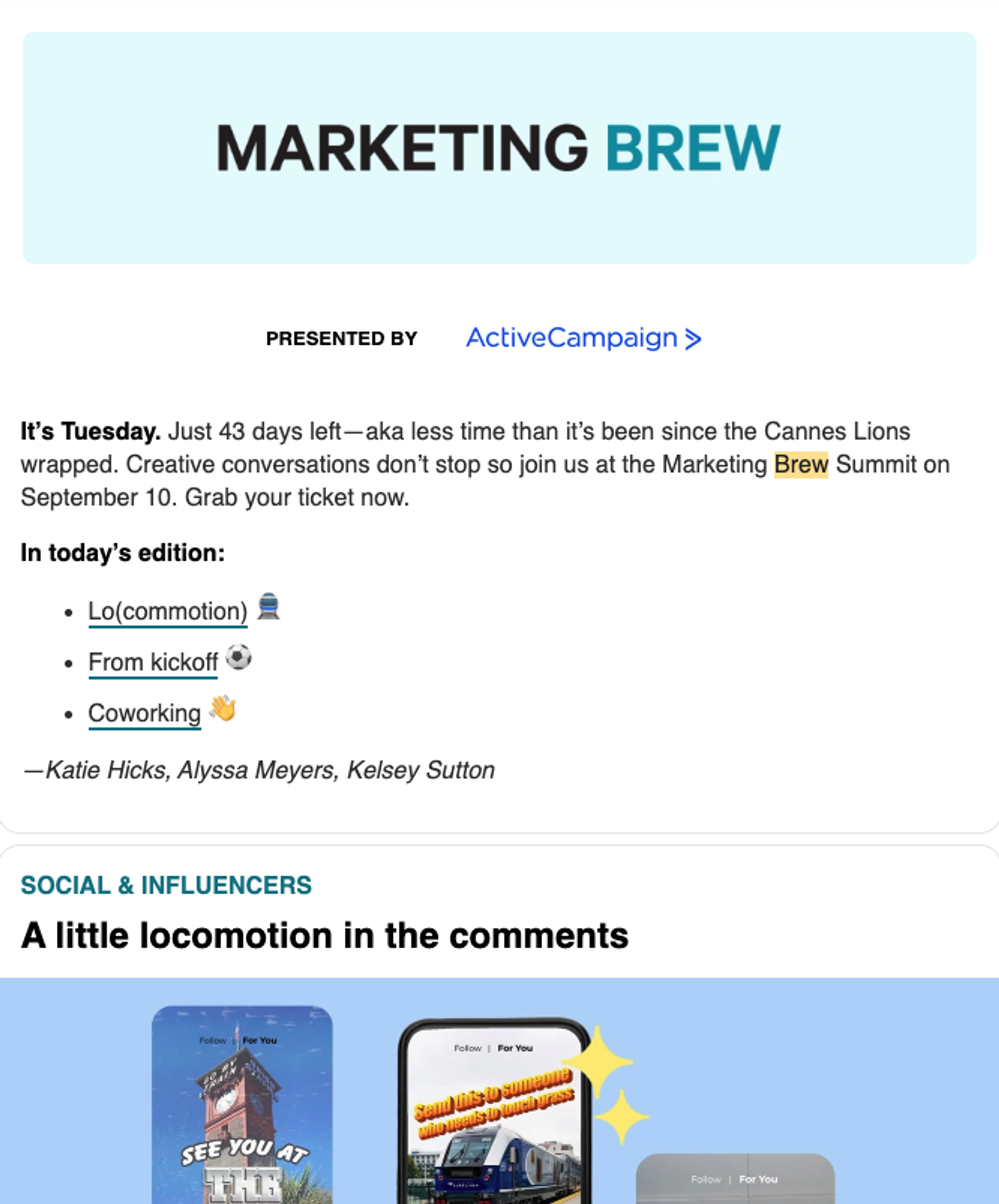
Marketing Brew, aimed at marketers across all industries, is approachable and easy to read, making it an enjoyable but still actionable read.
Another standout is The Marginalian, known for its thoughtful tone and in-depth analysis that appeals to engaged readers.
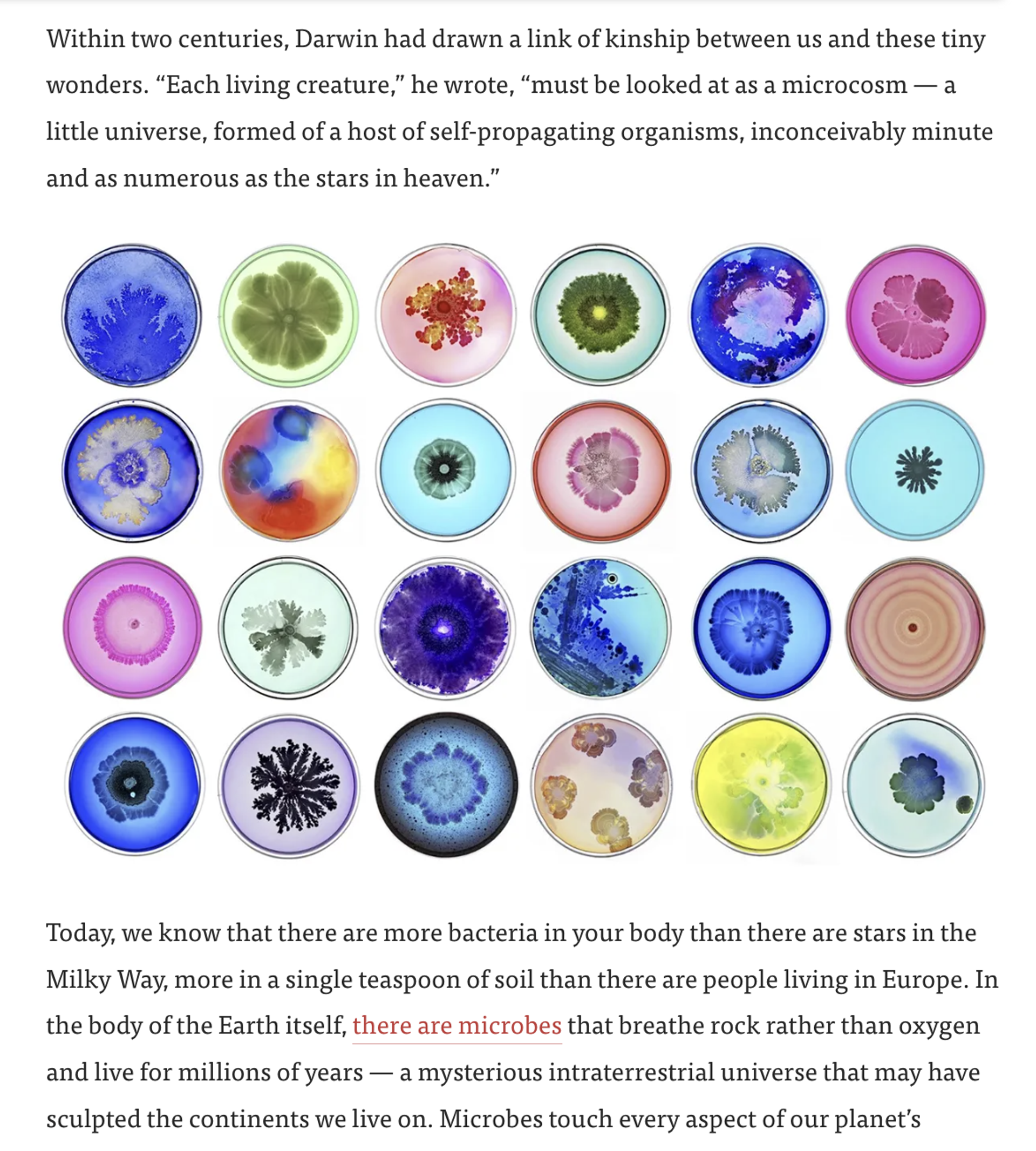
Formatted in an article-style newsletter, The Marginalian appeals to those who enjoy reading in-depth analyses of topics they might not come across in their day-to-day.
AI advantage: Instead of choosing between “business” or “creative” newsletter templates, AI can build templates that match your brand style and work from the prompt they’ve been given.
Recovery emails that bring customers back to complete purchases represent one of the highest-ROI email types. Traditional templates use generic urgency tactics, but AI creates personalized recovery sequences based on cart contents, customer purchase history, and optimal timing for each individual.
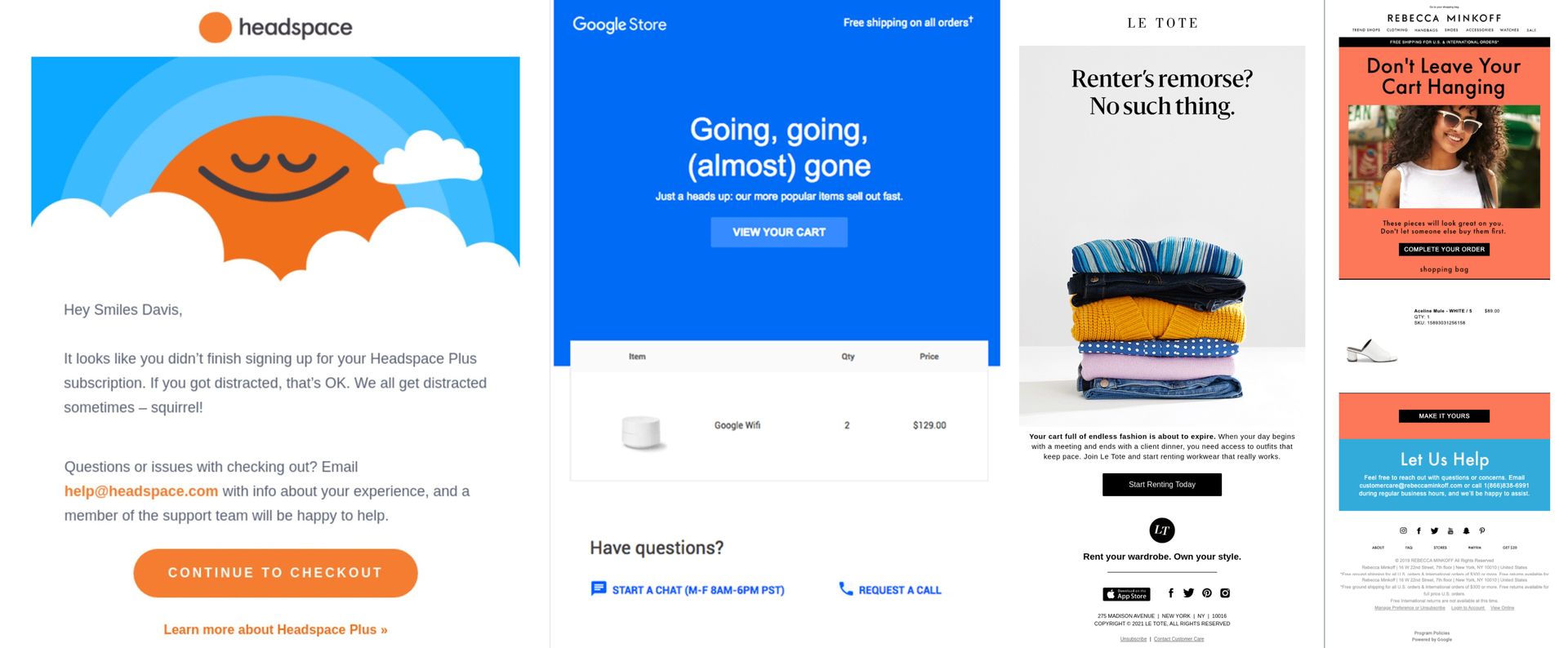
These examples showcase different abandoned cart template styles from a variety of brands.
Active Intelligence can create and edit campaigns and automations, as well as adjust messaging and segments. Other functionality includes:
Industry data shows that average abandoned cart rates sit around 70%, making recovery campaigns essential for any e-commerce business. AI-powered templates don't just address the abandonment—they analyze why it happened and craft messaging accordingly.
Engaging onboarding sequences for new subscribers set the tone for the entire customer relationship. Traditional welcome templates follow predictable patterns, but AI can build a series of emails based on your prompt requests, hitting each detail you provide.
Source-based customization with AI:
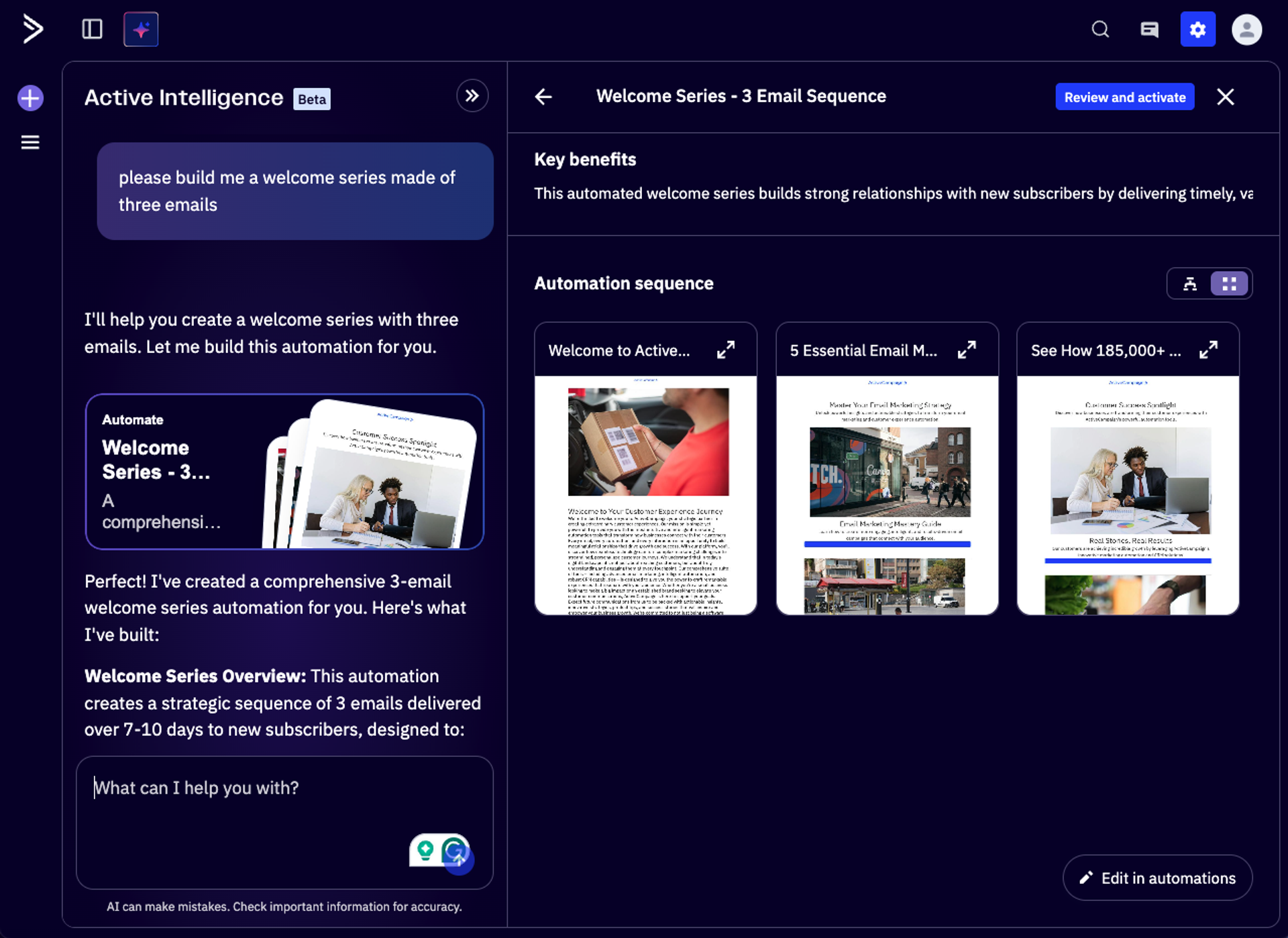
Building a welcome series doesn’t have to be arduous. Prompt Active Intelligence and the entire thing is built in under a minute.
Progressive data collection in AI welcome series:
The most effective welcome series, like those used by Her First 100K, deliver "at least three value-focused emails before any product mention," building trust and positioning the company as a source of high-quality education rather than just another vendor.
Sales-focused designs for product launches, discounts, and events require careful balance between excitement and authenticity. AI generates urgency and scarcity messaging that feels genuine to your brand voice while optimizing offer presentation based on customer segments and past purchase behavior.
AI for segment-specific promotional messaging:
Crafting authentic urgency with AI:
Professional templates for receipts, confirmations, and notifications serve functional purposes but also represent valuable touchpoints for relationship building. AI ensures consistent branding while automatically including relevant product recommendations and next-step guidance tailored to each customer's journey stage.
AI enhancements for purchase confirmations:
AI optimization for shipping and delivery:
AI for post-purchase engagement:
Drawing on an analysis of top-performing emails on platforms like Really Good Emails, the best modern email templates share specific characteristics that go far beyond visual appeal.
Visual excellence: A cornerstone of modern email templates.
Content intelligence separates good templates from great ones.
Technical performance can make or break a beautiful design.
Did you know: According to our own research, marketers using AI across all aspects of email creation save an average of 13 hours per week and $4,739 a month in operational costs? That makes you think twice about whether or not you’re leaning into the new era of AI enough.
Here’s what email templates look like in an autonomous marketing world, and why this shift is a huge opportunity for everyone.
Traditional workflows require browsing template libraries, choosing the closest match, manually customizing design elements, writing all content from scratch, setting up basic automation rules, and sending campaigns while hoping for the best.
Autonomous marketing tools mean a paradigm shift.
Instead, you simply say, “Create a welcome series for new customers interested in sustainability.” AI then generates brand-consistent templates with relevant messaging, content adapts automatically based on the actions subscribers are taking, send times are optimized for each contact, and performance data feeds back to improve future templates.
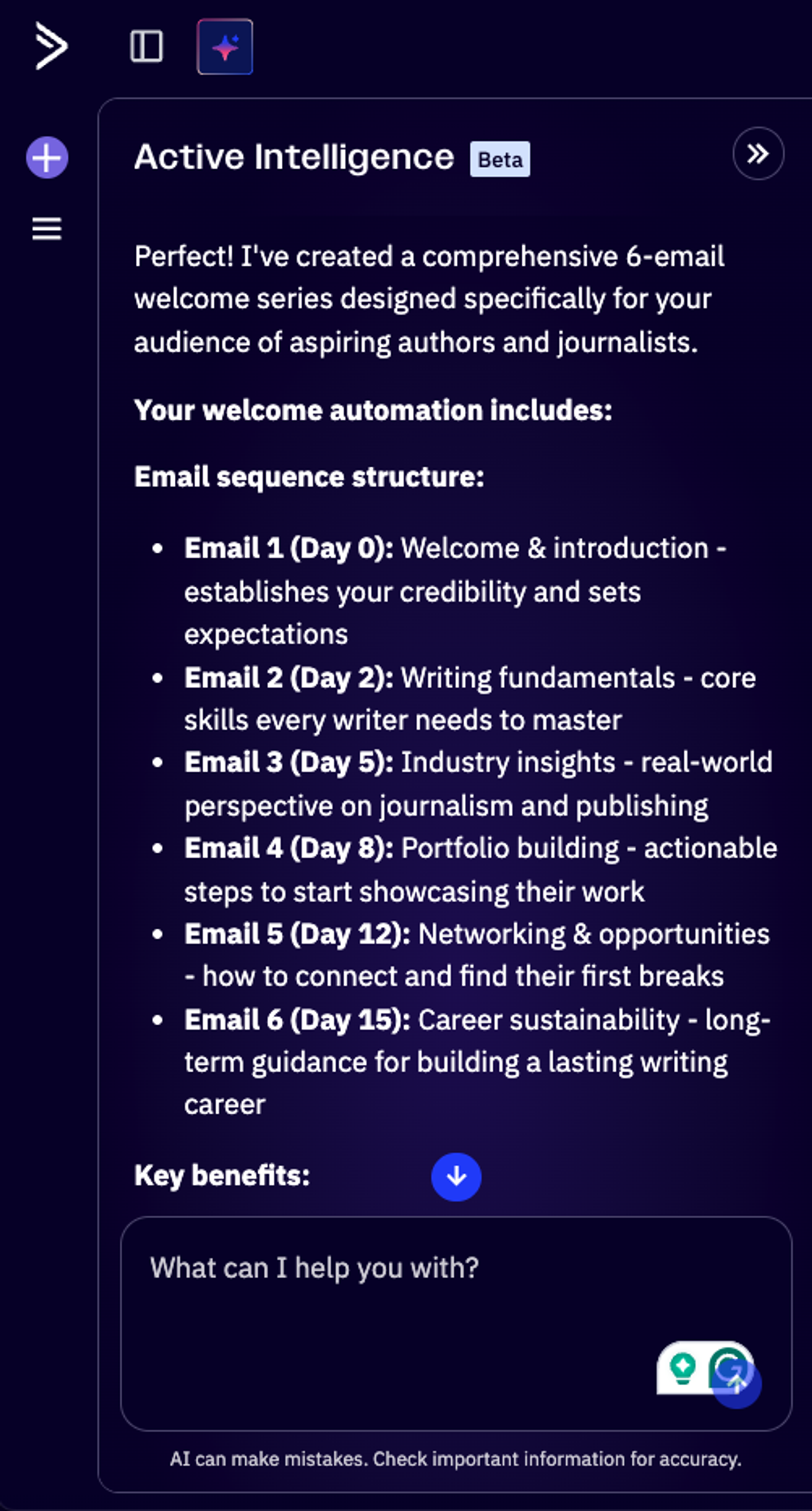
Active Intelligence is your new AI assistant, building out templates and campaigns like another member of your team.
AI agents are beginning to replace entire workflows rather than just assisting with individual tasks. Instead of “Help me write an email,” you can say “Build a 7-day nurture sequence for new subscribers,” and the agent creates the complete automation, content, timing, and personalization rules.
The transformation: We’re moving from template selection to goal articulation. The future belongs to marketers who can clearly define outcomes, not those who can best navigate design galleries.
This shift changes what it means to be a marketer. Rather than becoming workflow engineers who build complex automation sequences step-by-step, marketers become strategic visionaries who define goals and let AI handle execution.
The shift to AI-powered email marketing isn't theoretical—it's happening right now with measurable impact. According to our recent research, 97% of marketing professionals say incorporating AI has already changed how they feel about their work, with marketers using AI to save an average of 13 hours per week and $4,739 a month in operational costs.
And the benefits are nearly double for Power Users (those who use AI daily). They’re saving 36% more in operation costs and 57% move in time savings just by using AI.
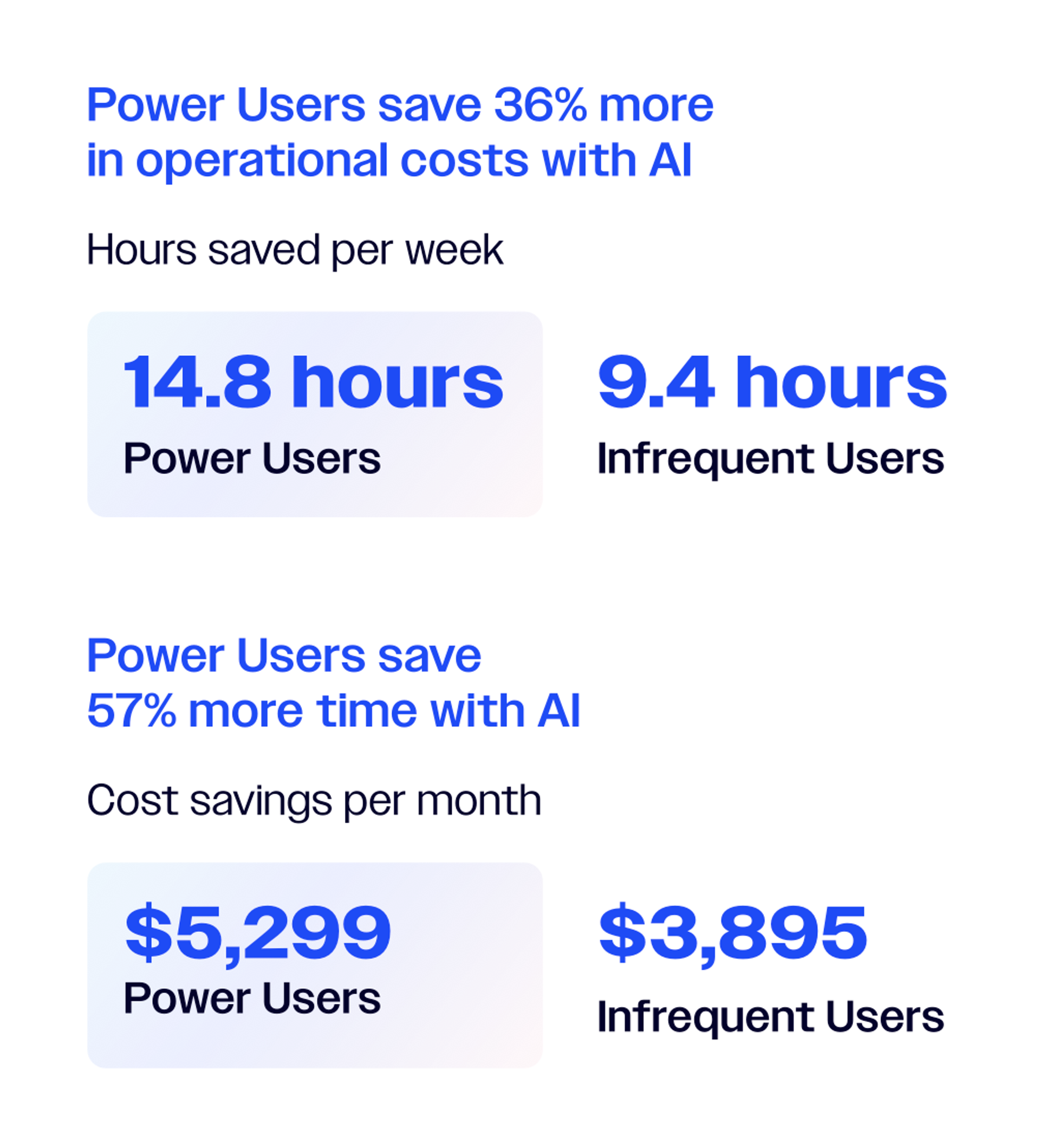
It pays (literally) to use AI.
But here's the critical insight that separates the winners from everyone else: while 82% of marketers use AI, only 23% use it across all three pillars of the marketing cycle (imagine, activate, validate). Most remain stuck in the old template mindset—using AI for ideation but not for execution and optimization.
The opportunity becomes clear when you examine the results.
Businesses that embrace autonomous marketing across the complete cycle see dramatically better outcomes:
These aren't incremental improvements—they represent fundamental competitive advantages that compound over time. Companies that still manually build email templates are competing against businesses with AI agents working around the clock to optimize every aspect of their email marketing.
The competitive reality: 75% of marketers say AI makes them more competitive against larger businesses. The question becomes: are you in that 75% or being disrupted by them?
ActiveCampaign’s autonomous marketing platform goes beyond traditional templates through integrated AI agents that work together in lock step.
These AI agents (and many more) fit into one of the three pillars of the marketing cycle we touched on above (imagine, activate, validate).
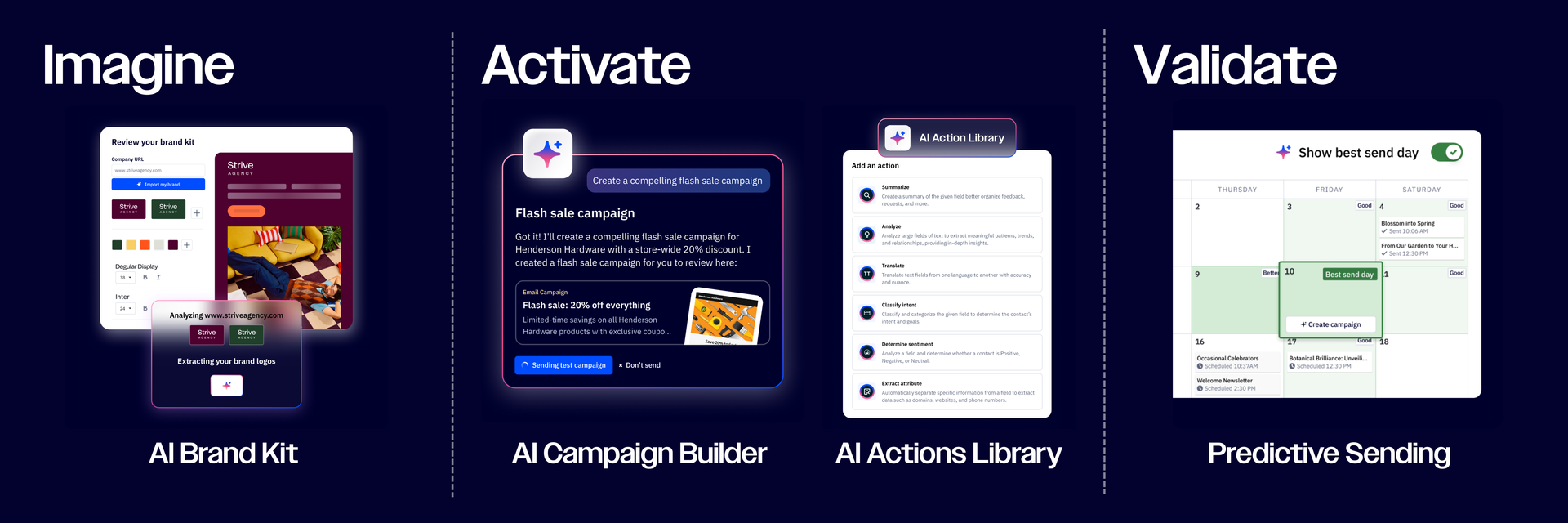
By spreading AI across all three pillars, you create a looping, autonomous workflow that conducts audience research, builds your campaigns, optimizes your messaging, measures your results, suggests next best steps, and improves upon itself with every campaign. That’s smart marketing.
Traditional email templates solve yesterday's problem: how to create professional-looking emails without design skills. But today's challenge is different: how to create personalized, behaviorally-targeted communications at scale without exponentially increasing workload.
ActiveCampaign's autonomous marketing approach addresses this through integrated intelligence rather than bolting AI onto existing systems. True autonomous marketing requires a completely integrated ecosystem where every component works in harmony, from brand analysis to content generation to send optimization.
Active Intelligence learns your brand voice and audience preferences, then incorporates them into every piece of content. The result is more personalized and on-brand communication than you could create manually, even with unlimited time and resources.
Perhaps most importantly, autonomous marketing enables strategic focus by eliminating time-consuming tactical work that pulls marketers away from creative strategy. When AI handles campaign setup, A/B test management, and performance optimization, marketing teams can spend time understanding audience motivations and crafting compelling brand narratives.
Ready to step into autonomous marketing? Here’s how to create your first AI-generated email template in ActiveCampaign and begin the transition from static design selection to intelligent campaign creation.
AI email template creation: Your checklist:
The key is treating this as a workflow transformation rather than just a new tool. You're moving from template selection and manual customization to goal articulation and AI execution.
Start with one template type (like welcome emails) and gradually expand as you see the time savings and performance improvements. This approach helps teams adapt to the new workflow without overwhelming existing processes.
Email templates were always a means to an end: professional, effective email marketing. Autonomous marketing achieves that same end more efficiently while opening up possibilities that static templates never could.
The businesses that thrive in the next decade won't be those with the most extensive template libraries—they'll be those with the smartest marketing systems. Systems that learn from every interaction, adapt to changing customer behavior, and optimize performance automatically.
The transition from template selection to autonomous marketing represents more than a technology upgrade—it's a fundamental reimagining of what marketing teams can accomplish:
Stop spending hours browsing template libraries
Start describing your goals to AI systems
Focus on strategy while AI handles operational execution
Scale personalized marketing without proportional workload increases
The question isn't whether to embrace autonomous marketing; it's how quickly you can integrate it across all aspects of your email strategy. Early adopters gain compounding advantages as their AI systems learn and improve over time, creating increasingly sophisticated campaigns that would be impossible to build manually.
Ready to experience autonomous email marketing for yourself?
Start your free trial of ActiveCampaign and discover how AI agents can transform your email marketing from template selection to strategic execution.
I’m worried about a learning curve with building email campaigns, how do email templates make email marketing easier for beginners?
ActiveCampaign’s email templates are designed to eliminate the learning curve by providing ready-made, professionally designed layouts you can use right away. The intuitive drag-and-drop editor and AI-powered tools mean you can launch beautiful, effective emails in minutes, even if you’re brand new to email marketing.
How quickly can I get started using email templates if I’m new to email marketing?
You can get started in minutes. Just choose a template, personalize it with your content and branding, and you’re ready to send. ActiveCampaign’s onboarding and AI-powered setup make it easy for beginners to launch their first campaign without delay.
Try it free for 14 days.


