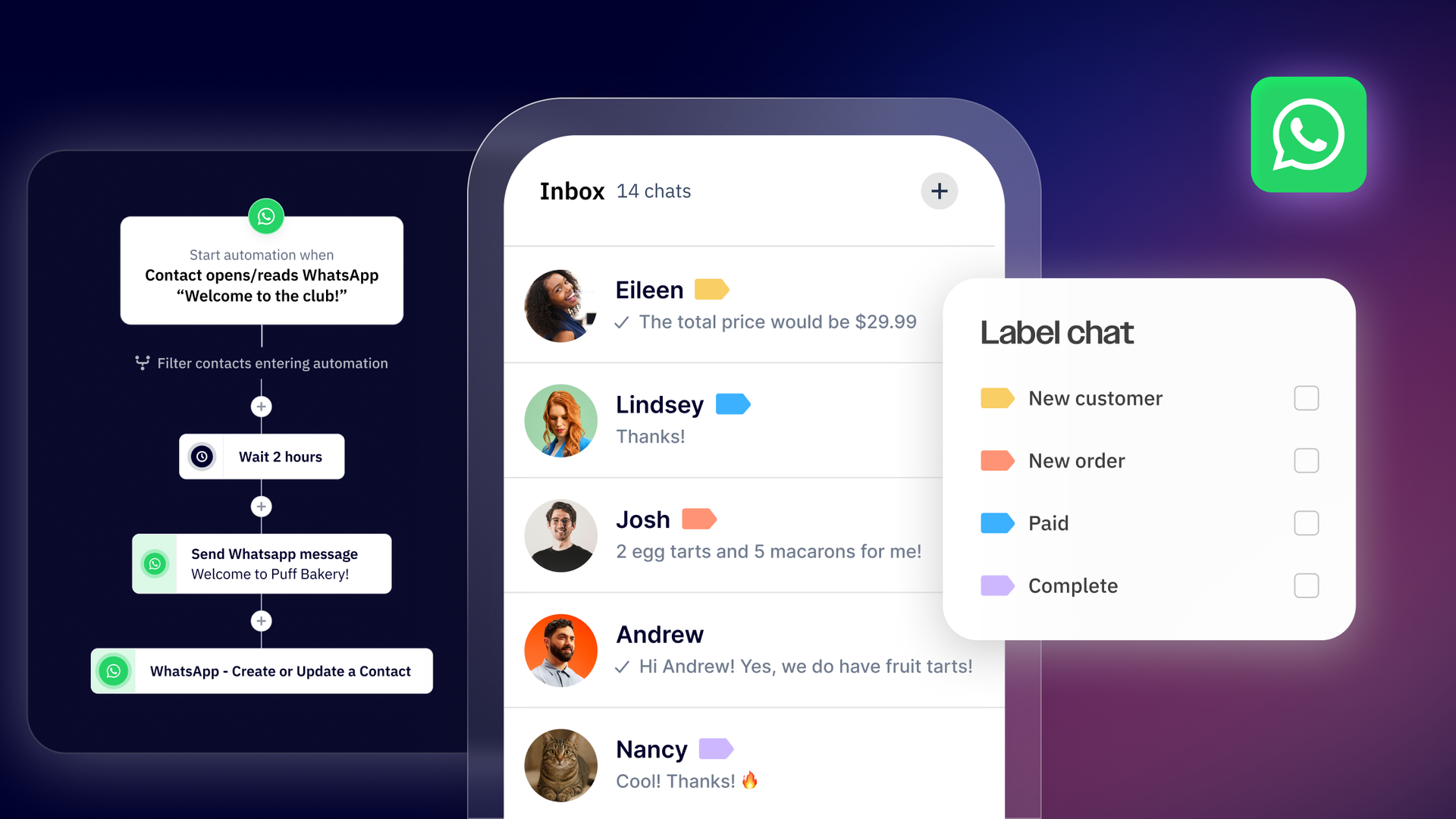
For ecommerce businesses, WhatsApp presents an opportunity to communicate and engage with customers on every step of their journey. And with the right automations, you can simplify and improve the overall customer experience from abandoned cart recovery to post-purchase support.
WhatsApp can transform your entire customer experience from the moment someone discovers your products all the way through to post-purchase loyalty and retention.
In this guide, we’ll walk you through how to build a complete WhatsApp ecommerce strategy that spans the entire customer lifecycle.
Why use WhatsApp for your ecommerce needs?
WhatsApp is more than a messaging channel—it’s a complete ecommerce platform that meets customers where they are and supports every stage of the buyer journey.
Unmatched global reach
WhatsApp officially reached 3 billion active users every month across 180+ countries earlier this year, making it the world’s most popular messaging app. It dominates key markets like Latin America, Europe, India, and has since made headway into North America, giving brands direct access to customers all over the world. For ecommerce businesses selling internationally, this global reach is invaluable.
Strong engagement rates
With a 98% engagement rate and rich media support, WhatsApp delivers a level of engagement that traditional ecommerce channels struggle to replicate. High open rates and a stronger conversion rate is what led Clarins, a French cosmetics company, to use WhatsApp for their National Lipstick Day campaign. The result? A 90% open rate and a conversion rate that was seven times higher than email.
Streamlined product discovery and shopping
Another advantage WhatsApp offers ecommerce brands is its catalog feature, making it a complete shopping platform. Brands can display their products and services in a digital catalog, making it easy for customers to browse and even select items to add to their shopping cart right in WhatsApp. Carrefour Group, for example, digitized its print promotional catalogue to host on WhatsApp, with the goal of offering more personalized discounts and improving the in-store shopping experience. Since building their catalog on WhatsApp, the multinational hypermarket chain successfully achieved a 35% higher engagement rate compared to email.
When to use WhatsApp Business App vs. WhatsApp API
The WhatsApp for Business portfolio gives brands several business solutions to choose from. Whether you choose the free business app or the more sophisticated API version will depend largely on what you’re hoping to achieve.
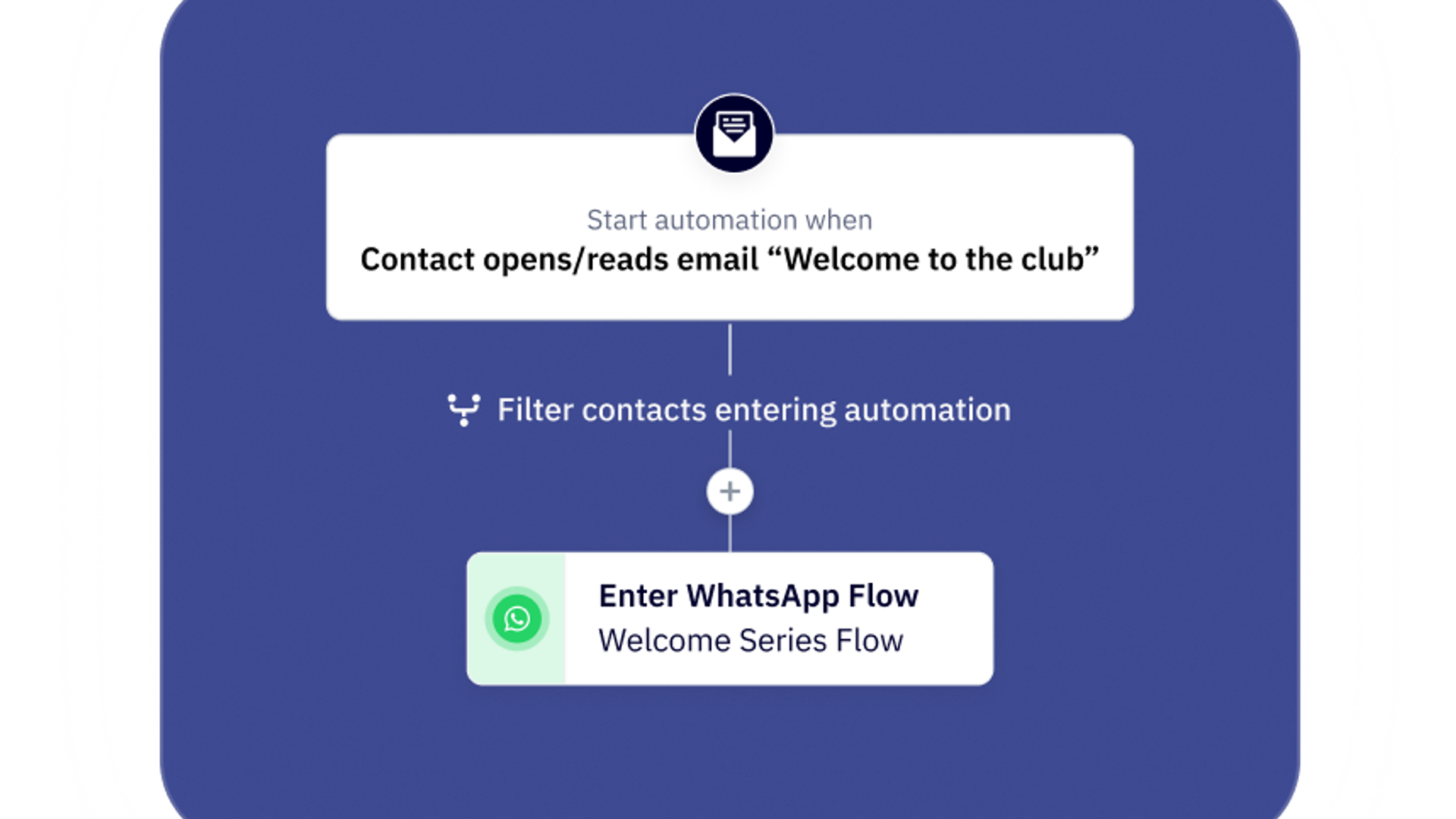
A significant benefit to the WhatsApp API is it allows for greater automation, can handle significantly more customer messages per month, and offer personalization at scale. It also integrates with ActiveCampaign’s WhatsApp Messaging solution, allowing brands to send messages in bulk, keep track of messages in a shared inbox, and automate workflows to turn prospects into leads. Plus, you can build sophisticated automations without ever writing a line of code thanks to ActiveCampaign’s more than 1,000 integrations with ecommerce platforms like Shopify, WooCommerce, and more.
Automating chatbots with the WhatsApp API can also accelerate your customer response times, a critical key to ecommerce success. Chatbots can not only answer frequently asked questions more quickly, but they can also collect information from customers before passing queries off to the appropriate team member. While you can still message customers directly using the free WhatsApp Business app, manually managing those conversations can become difficult especially if your business continues to grow.
6 common ecommerce use cases: Beyond transactional messaging
Let’s dive into the most effective ways to use WhatsApp Business API in your ecommerce strategy. In addition to abandoned cart recovery and post-purchase support, here are six other use cases to consider using WhatsApp for in your customer journey lifecycle.
1. Consultative pre-purchase support
For high-ticket items or products that require more consideration, customers are most likely going to have questions before they commit to a purchase. In a physical store, they’d talk to a salesperson to get the answers they need. On WhatsApp, they can message your brand directly for the same personalized support.
This is especially valuable for more costly purchases like electronics, home appliances, or any other category that calls for detailed information. With WhatsApp, you can enable consultative sales by:
- Adding a click-to-WhatsApp button on product pages so customers can easily start a conversation while they’re actively browsing
- Automating conversation flows for different stages of the buying journey to qualify customer needs and offer relevant information
- Routing queries to the right team member automatically, directing complex questions to team members with specific expertise
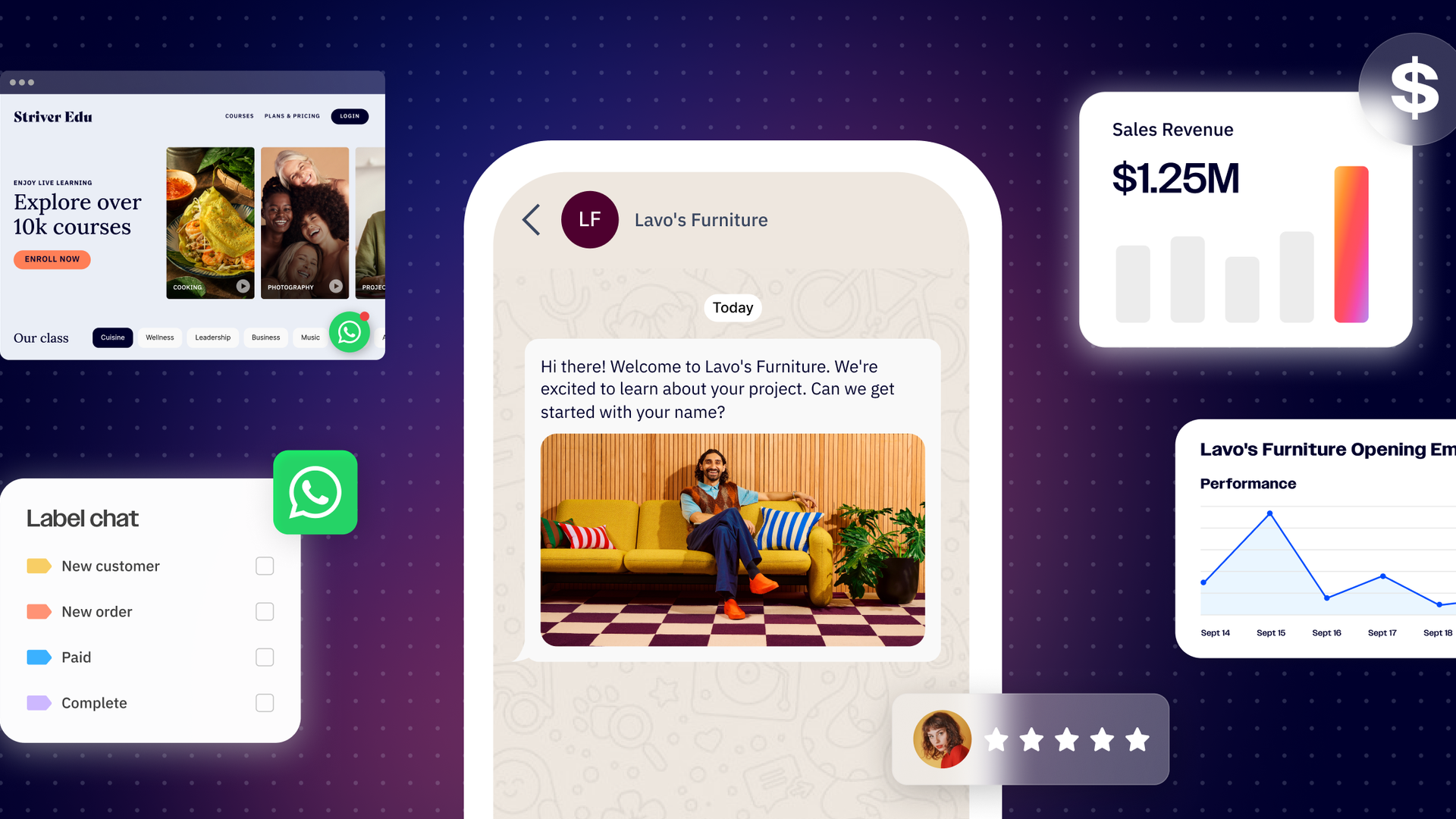
- Organizing your conversations with labels and assignments so no lead goes unanswered
2. Product discovery and catalog browsing
Another unique WhatsApp feature is the digital catalog, which lets customers browse products and services directly in the app. This creates a seamless shopping experience that feels more conversational than transactional, and is especially valuable for businesses that rely on product images or that frequently update their inventory.
As part of this low-friction experience, brands can use WhatsApp to:
- Launch new products: Send notifications to engaged customers whenever you add new items or services.
- Personalize recommendations: Share filtered catalog views based on a customer’s browsing or purchase history.
- Promote seasonal collections: Highlight limited edition or seasonal products for the holidays and other special events.
- Alert customers when inventory is limited: Notify customers when popular items are back in stock or when to expect a restock.
3. Strategic promotional campaigns
Because WhatsApp is viewed as a highly personal channel, every marketing campaign you send needs to be thoughtful and provide customers with value. Broadcast Campaigns, for example, make it easy to send messages in bulk but what you send and when you send it matters just as much. As you craft your next WhatsApp campaign, keep in mind the following best practices:
- Relevance over everything else: Don’t send a generic message that could apply to anyone. Use purchase history, browsing behaviors, and customer preferences to send highly targeted offers to your contact lists.
- Pay attention to frequency: Spamming your audience with messages is a surefire way to get your account blocked or reported. Instead, limit your frequency and timing based on your product categories and customer expectations.
- Deliver actual value: When you send a message to your customer, ask yourself if you would be encouraged to take action based on the content of your message. Things that can capture your customers’ attention include discounts, tips, product care guides, personalized recommendations, and invite-only exclusives.
4. Post-purchase reviews and feedback
The journey doesn’t end once a customer makes a purchase. After their item is delivered, send a WhatsApp message asking customers to rate their experience. This provides valuable data and creates natural follow-up opportunities for future upselling or cross-selling. When asking for feedback or a review, consider the following:
- Don’t wait too long: While you want to wait a couple of days after delivery so customers have a chance to test their purchase, you also don’t want to wait too long to send a form for feedback.
- Keep it simple: Don’t overwhelm your customers with a 10 question survey. Instead, start with one or two questions using a 1-10 rating scale before asking for additional details.
- Keep it conversational: Formal survey language can be a turn off. Keep your language simple and casual, making it feel more like a conversation instead of a stiff review process.
- Close the loop: Always make sure to thank the customer for their time and input, regardless if the feedback is positive or negative.
5. Ongoing self-service and support
Businesses that deal with high message volume can use WhatsApp to automate common support requests, saving their team time and resources while making sure every question is answered. With WhatsApp API, brands can build automated chatbots that integrate with their ecommerce platform’s knowledge base to tackle questions like product information and specifications, shipping policies, return processes, and more. Use the WhatsApp API to bolster the support experience by:
- Offering 24/7 support: Unlike your human team members, chatbots can instantly answer questions and provide support even outside of working hours.
- Minimize the support team’s workload: Automating your support workflows gives your team more time back to tackle complex issues that require human intervention.
- Improve the customer experience: Minimize customer frustration by ensuring every query is addressed in a timely and efficient manner.
- Accelerate resolution times: Automation handles simple questions immediately, reducing the need for a long queue and minimizing wait times for customers.
6. Order status and returns
With the WhatsApp API, brands can create sophisticated integrations and workflows to automate order statuses and returns. These workflows can look like:
- Order status automation: Customers can start a conversation on WhatsApp asking about their order and a chatbot asks for their order number. The chatbot then verifies this information with an internal system and shares back real-time tracking information with the customer.
- Automated returns: A customer opens a WhatsApp chat asking to return their order. The chatbot asks for the order number and reason for return, then checks the return eligibility before generating a return label and providing instructions. If an item is not eligible for return or requires additional context, they can then route this request to a human agent.
Take your ecommerce strategy to the next level with WhatsApp API
Getting started with WhatsApp API for your ecommerce business is as simple as connecting your platform and setting up tools like ActiveCampaign WhatsApp Messaging. As an official Business Solutions Provider, ActiveCampaign connects directly with your WhatsApp API and makes setup, handling, and compliance a breeze.
From consultative guidance to robust feedback collection, WhatsApp enables engagement that is both timely and personal to every customer. The most successful brands don’t just rely on WhatsApp for customer communications; they also use it as a complete engagement platform that touches every part of the buyer journey.
Ready to build your WhatsApp ecommerce strategy? See how ActiveCampaign WhatsApp Messaging can help you go beyond basic transactional messages and create meaningful customer experiences today.
Frequently Asked Questions
How does ActiveCampaign’s WhatsApp Messaging solution help ecommerce businesses engage customers more effectively?
ActiveCampaign’s WhatsApp Messaging solution empowers ecommerce businesses to engage customers with timely, personalized conversations throughout the entire buyer journey. By automating responses, sending targeted promotions, and providing real-time order updates, brands can deliver a seamless, conversational experience that feels both personal and efficient. The platform’s unified inbox and automation tools ensure every customer inquiry is tracked and addressed, helping businesses optimize WhatsApp marketing campaigns, build stronger relationships, and drive more conversions.
Can I automate WhatsApp messages and workflows using ActiveCampaign without any coding experience?
Yes, ActiveCampaign enables you to automate WhatsApp messages and workflows without any coding required. The platform features an intuitive, no-code automation builder where you can set up behavioral triggers, personalized responses, and multi-step customer journeys in just a few clicks. This makes it easy for marketers and business owners to launch sophisticated WhatsApp campaigns quickly and confidently.
What integrations does ActiveCampaign offer for connecting WhatsApp with ecommerce platforms like Shopify or WooCommerce?
ActiveCampaign offers seamless integrations with leading ecommerce platforms such as Shopify and WooCommerce, allowing you to connect WhatsApp Messaging directly to your store. This integration enables you to trigger WhatsApp messages based on customer actions—like purchases or abandoned carts—and unify your marketing data for more effective segmentation and automation across channels.
How can WhatsApp’s broadcast messaging feature help streamline marketing campaigns for ecommerce brands?
WhatsApp’s broadcast messaging feature lets ecommerce brands send personalized promotions, product launches, or updates to targeted customer segments at scale. With ActiveCampaign, you can automate these broadcasts, ensuring each message is relevant and timely, which increases engagement and drives more sales without manual effort.
What tools are available in WhatsApp to personalize product recommendations for customers at scale?
ActiveCampaign enables you to use WhatsApp templates and dynamic variables to personalize product recommendations based on customer behavior, purchase history, or preferences. Automated workflows can segment audiences and deliver tailored messages, making each interaction feel one-to-one—even at scale.