For Marianna Sachse, founder of the sustainable kids’ clothing brand Jackalo, which just launched in 2020 and already sells in Nordstrom and Target, using AI isn’t about cutting out the human element—it’s about amplifying it.
With a lean team (she is the only full-time employee, supported by two part-timers and a handful of contractors), efficiency is essential. “I've been pleased by the number of people who look at my company and think we must be 10 people,” Marianna shared. “I’d love to have a bigger team, but I can’t right now. So what that means is I need to be really smart about how I use all tools, AI and otherwise.”
Sachse’s approach is textbook autonomous marketing: using AI agents to handle repeatable workflows so she can focus on bigger stuff.
For Jackalo, autonomous marketing isn’t replacing customer conversations or gut-level intuition—it’s speeding up the parts of the process that don’t need to be manual. From analyzing shopping data to surfacing action items buried in customer interviews or surveys, Sachse has built a lightweight but powerful AI workflow that helps her make smarter decisions faster.
Finding ways to make customer insights more accessible and actionable has resulted in an 80% increase in their website conversion rate and an over 250% increase in conversion rate from our emails in the last six months, as compared to the same period last year.
Here’s a closer look at how she’s integrating AI across customer research and strategy to help her achieve more even with her small team—and what other brand marketers can learn from her approach.
“I've been pleased by the number of people who look at my company and think we must be 10 people."
An 80% increase in website conversion by making insights more actionable? That's the power of autonomous marketing. Join The Autonomous Marketer to learn workflows that turn data into decisions faster.
3 customer research AI workflows to try
Even six months ago, Marianna did not have a lot of AI knowledge, and was even a bit skeptical. But she realized being a forward thinker with the available tools was one of the smartest things she could do as a business owner, so she made it her mission to learn how to use AI and continually take new steps to integrate it. (She was also grateful to have the opportunity to work with an AI coach as part of a founder community she’s in, Goodie Nation).
By honing in on what AI is best at—like synthesizing, identifying trends, categorizing feedback, and surfacing common language—as well as what really needs the human touch, Marianna landed on three powerful ways of partnering with the tools to understand her customers better.
1. Analyzing customer calls with AI
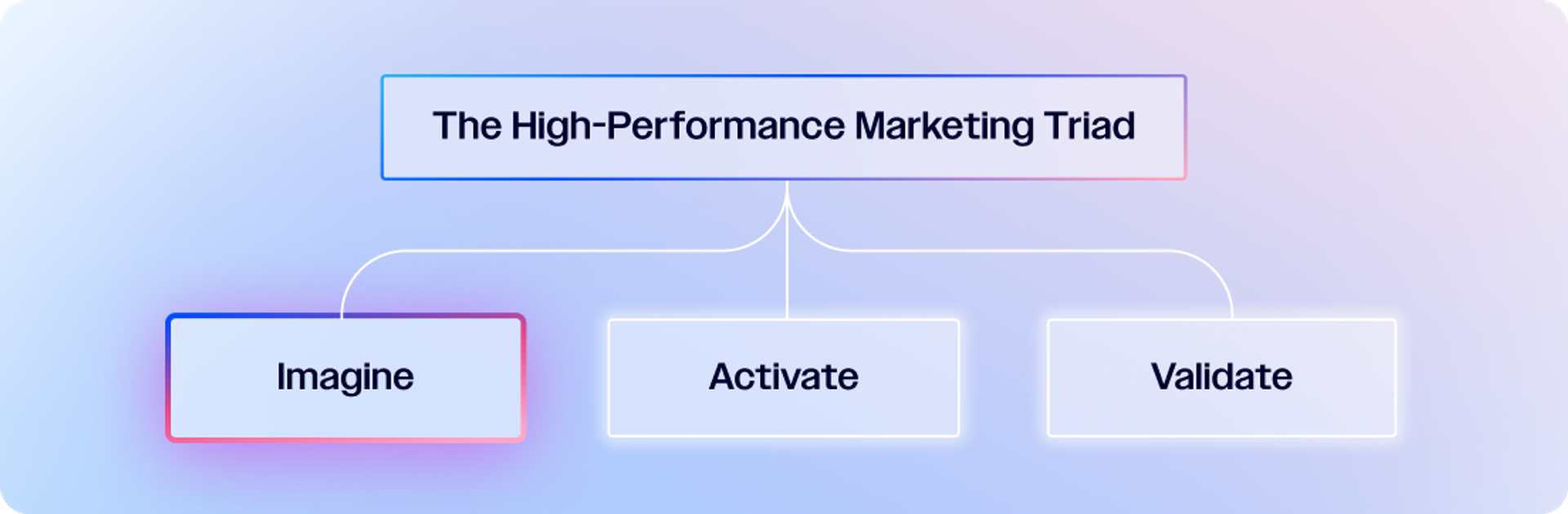
This prompt is best for the imagine phase. To learn more about the Triad, read here.
Marianna thinks customer calls are one of the most valuable tools she has, not only helping her more deeply understand her customers’ pain points and motivations but also increasing loyalty, since people like to buy from people. But they are also a very high-touch, one-to-one activity that takes a significant amount of time—a big investment for a solo founder.
To ease the burden without losing the benefit, she uses AI to help her process the discussions.
“I want to be able to give a half hour here and there for customer calls, but I want the analysis to be really fast,” she explained.
She uses Fathom to record and transcribe all of her customer calls and, while she finds the AI summaries available in that app valuable for surfacing some core themes, she finds each app tends to surface different things. So, she drops the transcripts into multiple AI programs and asks: What do you see that's important? What would you surface? How can I turn these insights into marketing actions?
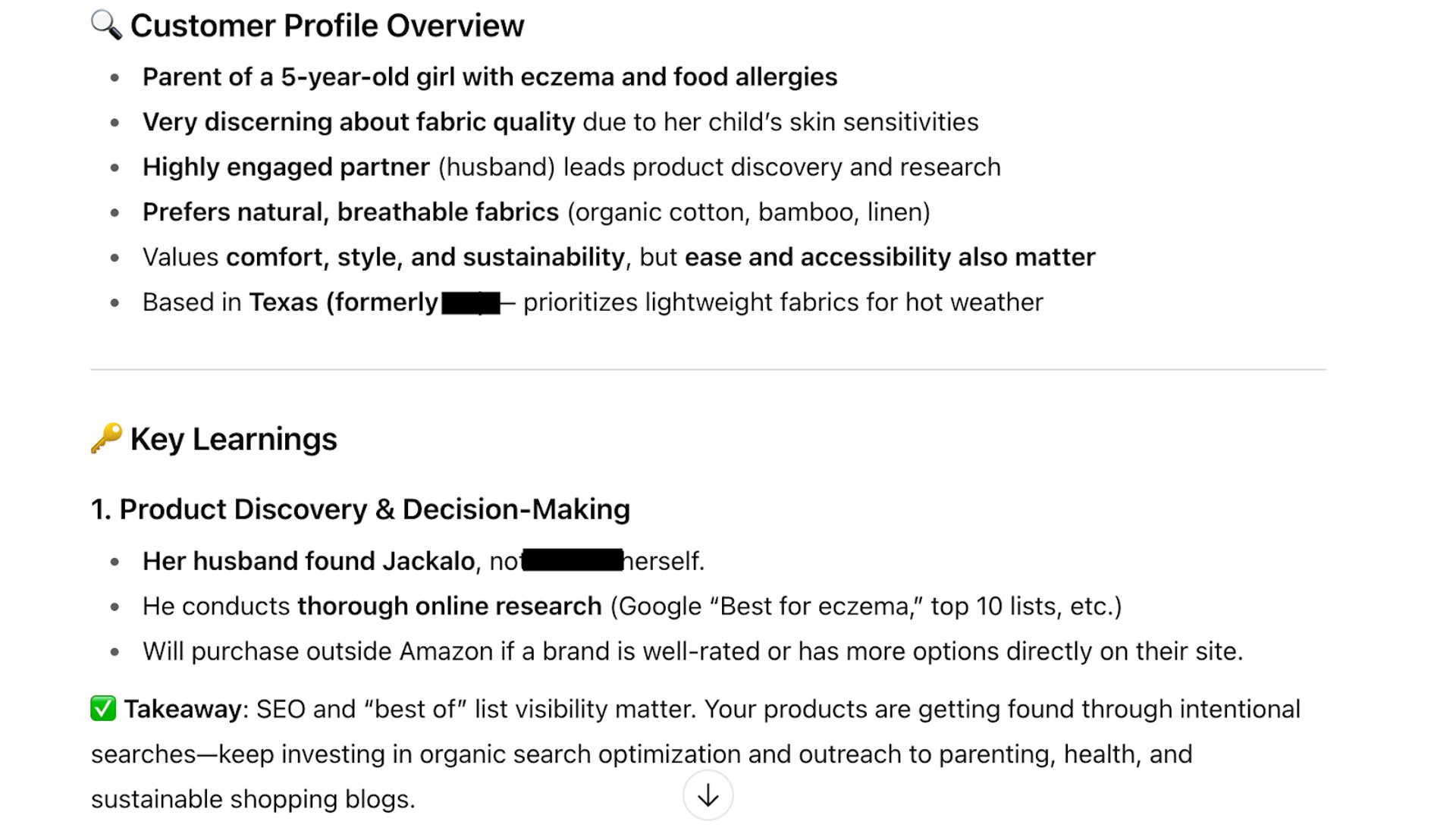
ChatGPT answers the prompt “Provide me with an analysis, key learnings, and suggested action items based on this customer interview.”
This process has accelerated new content, messaging, and outreach ideas. For example, after learning that a customer discovered her brand from searching “best clothes for kids with eczema,” Marianna researched the current top-ranking articles for those keywords and reached out to those bloggers, in addition to creating some of their own content on the subject.
Marianna looks like a team of 10 with autonomous marketing.
Want to amplify your impact without scaling your team? The Autonomous Marketer delivers the playbook every other week.
Occasionally, she has to have a conversation with the tool to elevate information—using a prompt like “You missed this whole section—tell me what I can learn from that section.” But, usually, she’s able to take the list of action items and then decide what’s most important to move forward with. Her dream next step is an automatic workflow that generates a task list from ChatGPT directly into their team’s Notion, which she hopes to figure out with her AI coach.
Step-by-step AI workflow for customer calls
- Record the call using Fathom or another tool that automatically transcribes the conversation.
- Paste the transcript into an AI tool like ChatGPT, Claude, or Gemini—or even all three to compare what themes each one surfaces.
- Start with a high-level prompt like “provide me with analysis, key learnings, and suggested action items based on this customer interview.”
- Have a conversation with the AI, particularly if you feel like it missed a section or key themes from the conversation.
- Layer on your own intuition and brand context to make sense of what’s surfaced—identifying marketing angles, product gaps, or storytelling opportunities that align with your brand values.
Move action items to your to-do list based on your human intuition of what’s most important.
2. Reviewing customer surveys with AI
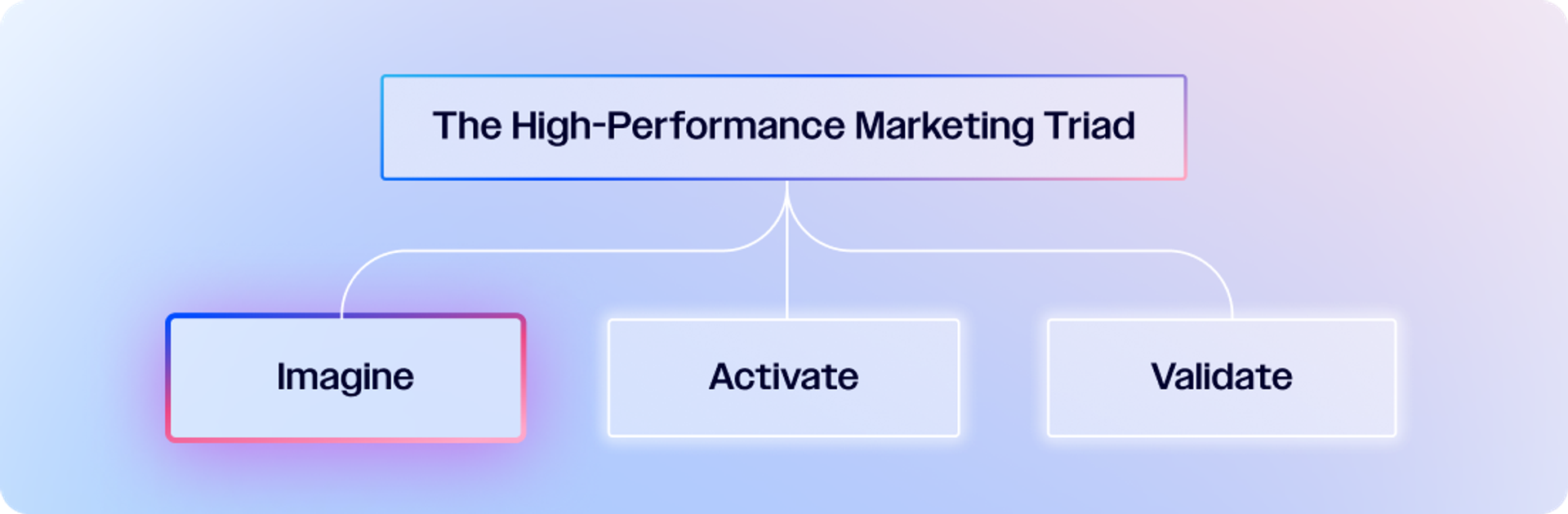
This prompt is best for the imagine phase. To learn more about the Triad, read here.
Marianna will similarly use AI chat tools to dig into customer surveys—analysis that could otherwise take hours of her time. Typically, this looks like downloading a CSV of survey data from surveys she has run, uploading it to ChatGPT or a similar tool with an overview of what she’s looking for (she loves using the dictation tool in ChatGPT to brain dump this): “I’m going to provide you with a CSV of this research I did on this date, here’s what we were looking for, here’s what I want to know now.”
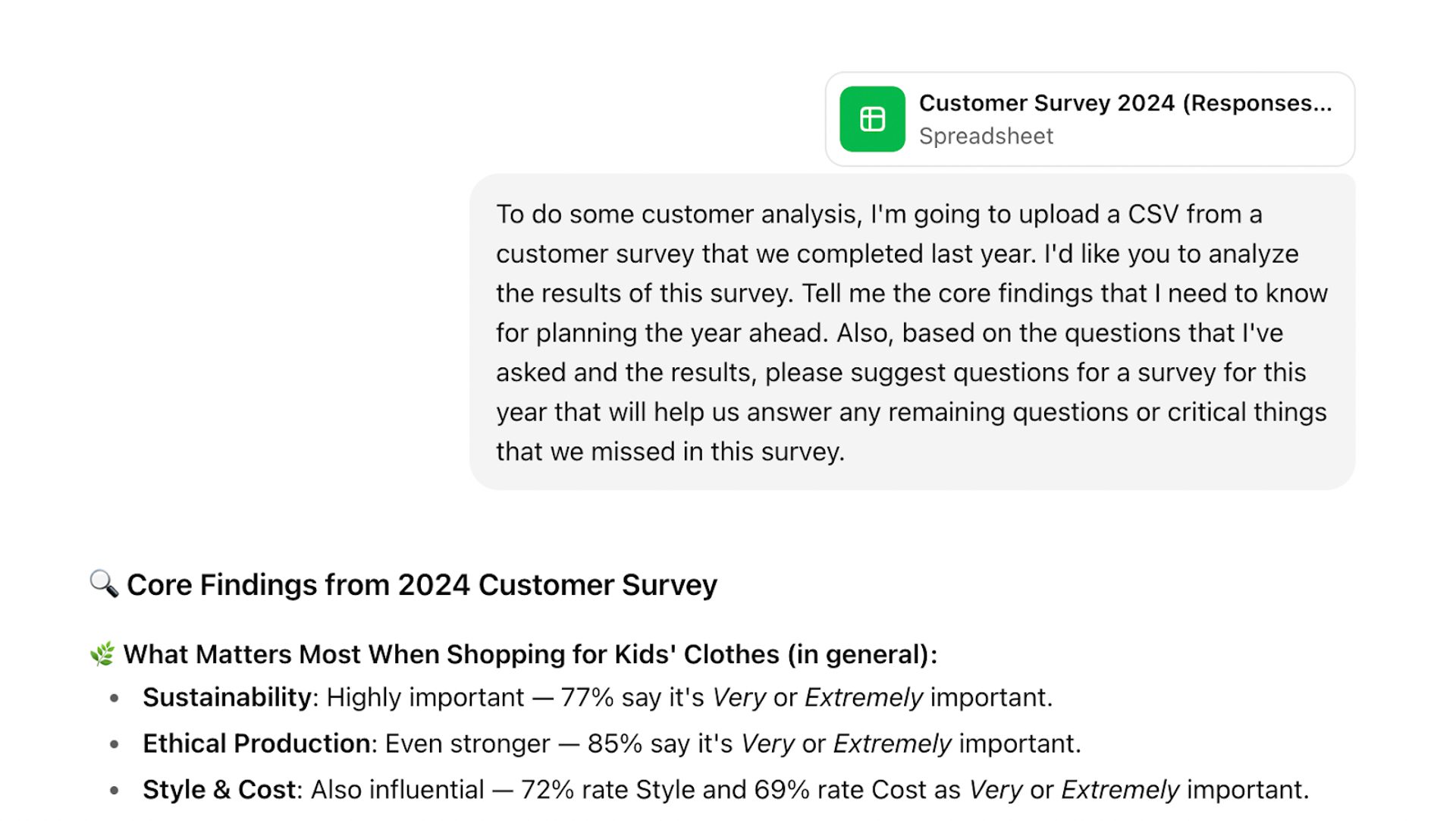
ChatGPT gives core findings from a customer survey Jackalo ran in 2024.
From there, she may have further conversations with the tool to dig into different areas.
“Sometimes it focuses on what it thinks is most important and will miss a whole part of the survey. So then I may have to go back and forth and say, ‘I also need analysis of these questions, like from a product standpoint. Give me some feedback on what our customers are saying about the products and what we should be producing next.’”
With that information, she can make informed decisions about what to prioritize, which she captures in her Notion to-do list. Additionally, the results from these surveys, along with customer interviews, contribute significantly to Jackalo’s messaging and the keywords they incorporate into our product descriptions, such as by verifying that sustainability is something customers care about, which should be emphasized in marketing.
She will also sometimes use AI to help her improve her surveys moving forward. “I might take a past survey that I did and say, ‘Based on the analysis and based on the responses you're seeing and the questions I asked, where could I be asking different questions? Sometimes it flags that I asked a leading question or that people were confused by the wording. That feedback is gold,” Marianna shared.
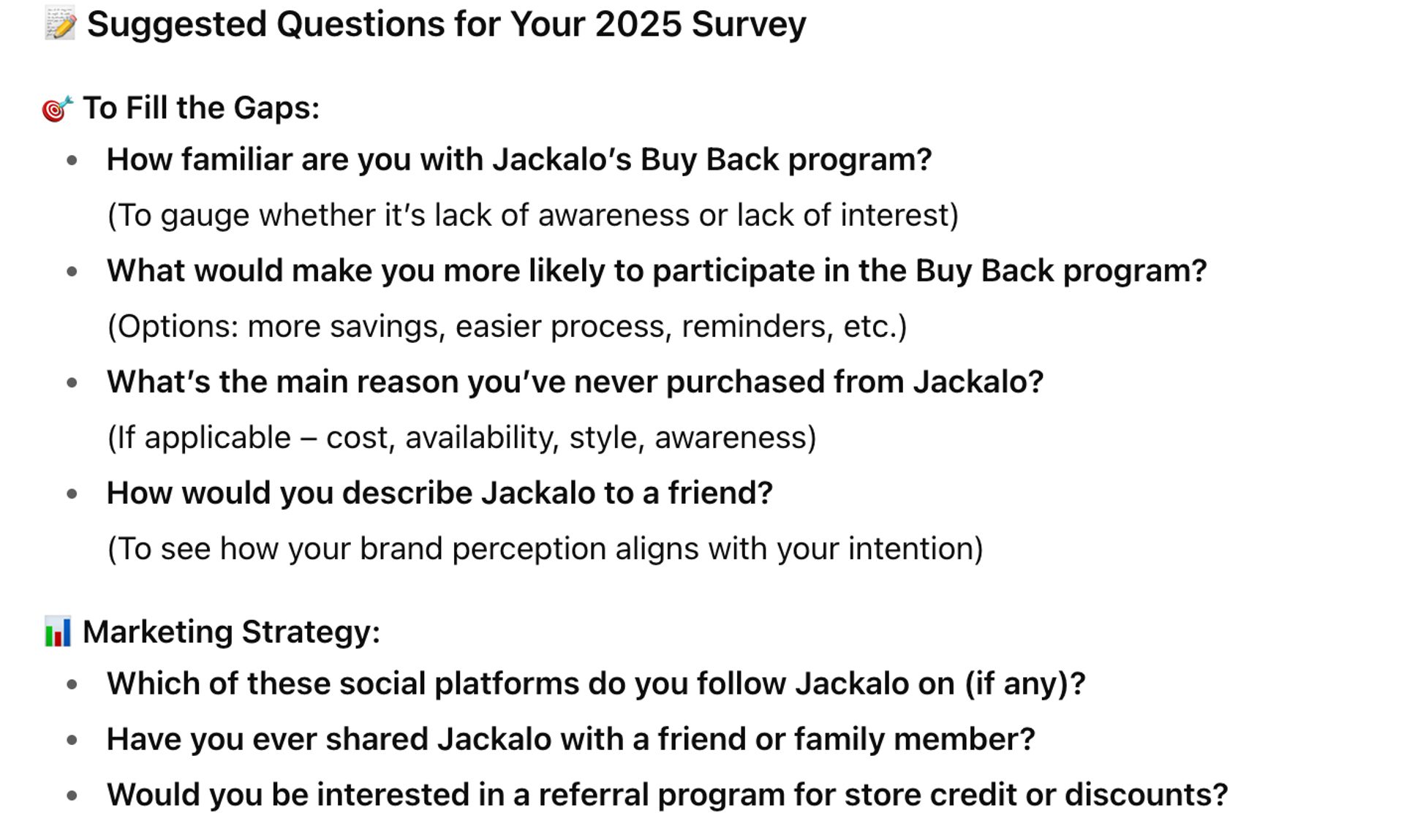
ChatGPT makes suggestions for improving questions on future surveys.
AI is helpful with survey design since it can pull from a scientifically-based repository, but it doesn’t always get the framing right for her audience, Marianna said. “I'm always going to look at what it's offering and then make tweaks.”
Step-by-step AI workflow for customer surveys
- Launch a survey through Google Forms, Typeform, or a similar tool.
- Export responses as a CSV and upload to ChatGPT, Claude, or Gemini.
- Provide a short brief—often as a voice memo—about what you’re investigating, e.g., “Why have repeat purchases dipped this quarter?”
- Have a conversation with the AI if you feel like it missed something or want to dig in further.
- Ask if there are ways to refine the survey moving forward, such as tweaks to question wording.
3. Digging into Shopify data with AI
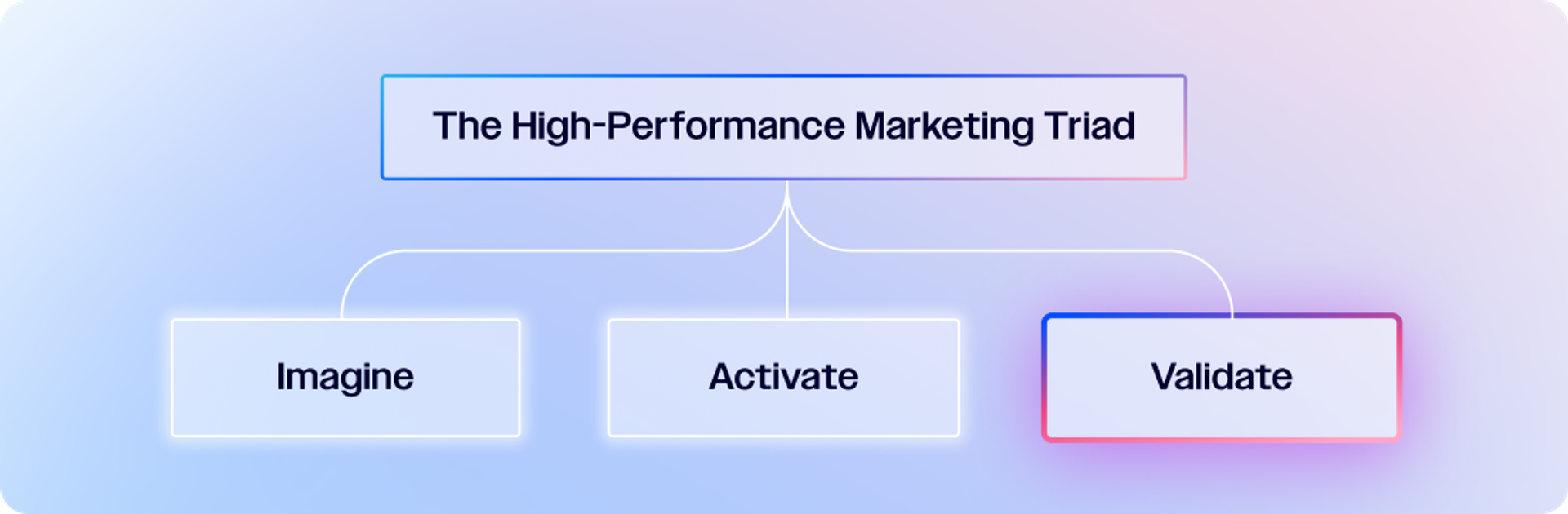
This prompt is best for the validate phase. To learn more about the Triad, read here.
While Shopify has its own data analysis capabilities, Marianna finds them a little clunky, and prefers AI chat tools for analyzing large swaths of numbers and coming up with recommendations (she’s found Claude is especially good for this).
She’ll download relevant reports from Shopify based on the question she wants to ask, and then give the chat a focus area. For instance, she may download an inventory report and a sell-through report for a certain period, and ask which products she should promote and why, or what messaging she should be focusing on in her marketing.
“It'll say things like, ‘You're running low on this item. So now would be a good time to prioritize urgency on it.’ Or, ‘Your pants sold well during back to school, so let's prioritize messaging on pants.’ Some of that's obvious, but it's always nice to have it backed up with data.”
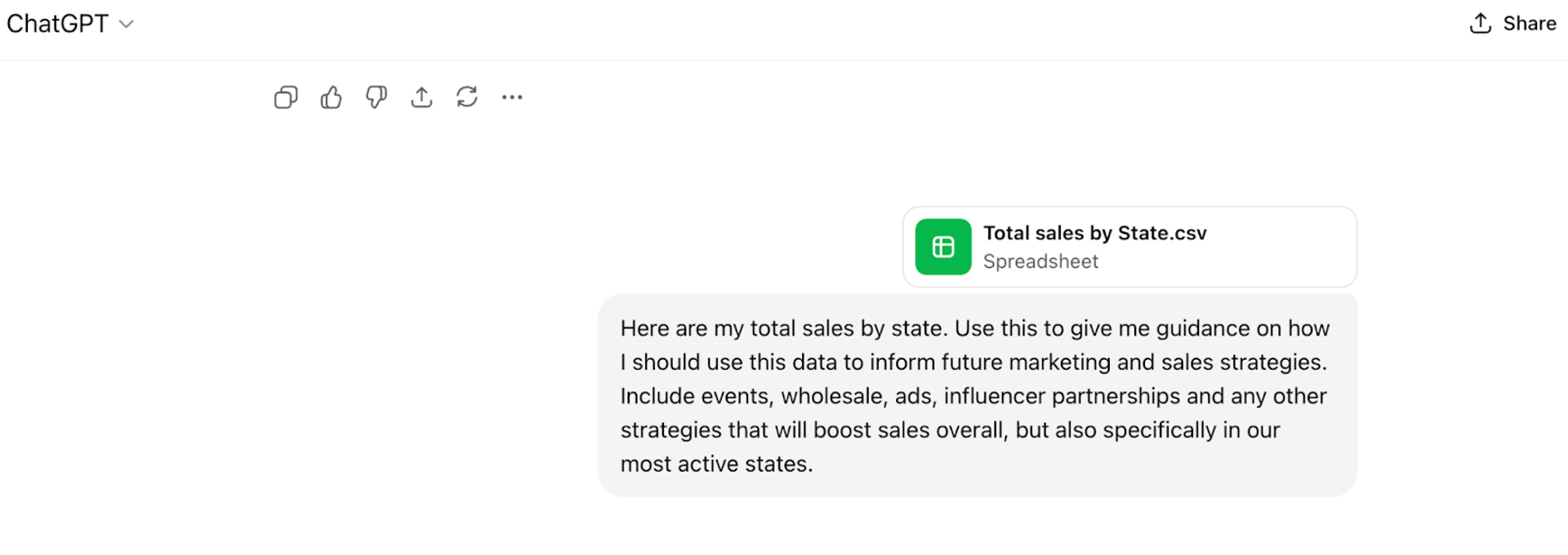
ChatGPT prepares to analyze state-by-state Jackalo sales.
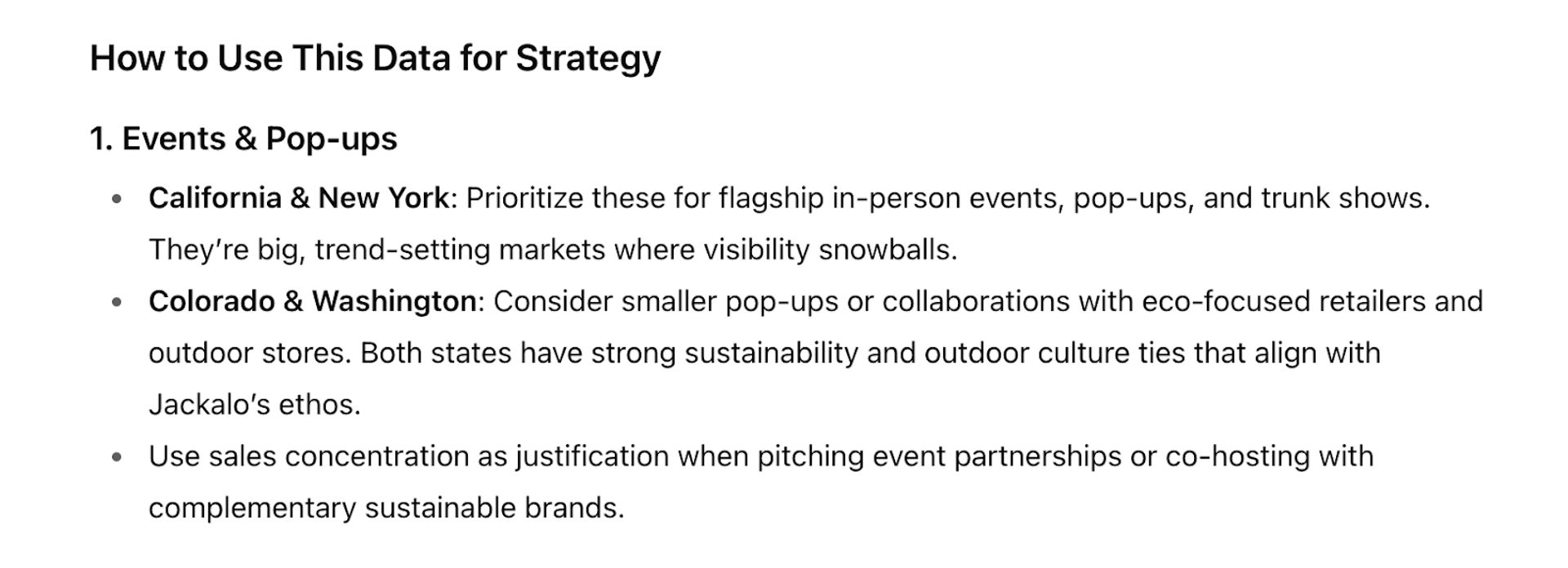
ChatGPT makes strategy suggestions based on Shopify data.
She’ll also usually gut-check the recommendations with human expertise from advisors or people in her network before moving forward. “I’ll talk to one of my advisors and say, ‘I've pulled the data, done analysis with ChatGPT, looked at the data myself, and here's what I'm thinking. Does that sound right?” Marianna explained.
Step-by-step AI workflow for using customer shopping data to inform decision-making
- Download customer data from your e-commerce platform or POS, focusing on specific reports based on the question you hope to dig into (e.g., sales by SKU, inventory levels, abandoned carts, or customer lifetime value)
- Upload spreadsheets into ChatGPT, Claude, or Gemini and ask targeted business questions—for example: “Based on this sales and inventory data, what products should we prioritize in promotion or messaging this month?”
- Cross-reference advice with sales or marketing expertise to gut-check recommendations before making changes.
- Adjust strategy—whether that’s reordering a bestseller, launching a targeted email campaign, or repositioning a product based on perceived value.
“I think where AI is best is this human-machine interaction,” summarized Marianna. It’s autonomous marketing at its finest— collaborating with these tools to open up more brain space for deep thought and more time to really show up for your customers, but not completely relying on them. “Use it for where it's really going to be useful and valuable, and then put it down and get your own thoughts on a piece of paper.”
Marianna believes that she’s better at using AI tools because she’s constantly flexing her critical thinking skills and staying connected with her customers in a real, human way. “You need to have human interaction, conversations with people who disagree with you, so that you can constantly get better at being what we all are—human—and finding responsible and useful ways to use technology.”
Look like a team of 10. Work like a solo founder.
Marianna's 80% conversion rate increase and 250% email performance boost prove you don't need a big team—you need smart systems. The Autonomous Marketer delivers:
- Workflows for customer research, surveys, and data analysis
- Real strategies from founders and small teams seeing major results
- Practical AI tactics that amplify your impact, not replace it
Learn how to build AI workflows that scale. Subscribe to The Autonomous Marketer →