Your customers' pockets hold the most direct line to their attention, and 98% of them answer when you come knocking. While email inboxes overflow and social media feeds blur into noise, text messages arrive like a tap on the shoulder.
SMS marketing taps into the psychology of personal communication. When a text arrives, your brain treats it with the same urgency as a message from a close friend.
Yet most marketers treat SMS as an afterthought, bolting it onto existing campaigns or sending generic blasts. The result is missed conversions and prospects who slip away during those critical moments between interest and action.
This guide will provide you with tactical, actionable strategies that turn those pocket-sized screens into profit-driving touchpoints. You'll discover how to craft messages that feel personal at scale, automate conversations that build genuine relationships, and seamlessly weave SMS into campaigns powered by AI and cross-channel intelligence.
What is SMS marketing, really?
SMS marketing is direct communication with your customers via text messages. It’s like having a VIP line to your audience's attention, where your message arrives instantly on the device they check over 50 times a day.
SMS marketing is uniquely powerful. It offers:
- Instant visibility: Near-perfect open rates mean your message gets seen, compared to email's average of just 20%
- Lightning-fast engagement: 90% of texts are read within 3 minutes, with response rates of 45%—8x higher than email
- Direct action: SMS click-through rates average 25%, while email lingers around 3.8%
But here's why SMS marketing is essential right now: consumer behavior has fundamentally shifted. 98% of US adults own a smartphone. These devices have evolved from communication tools into digital command centers for daily life.
A decade ago, customers might check email twice daily from a desktop computer. Today, Americans spend over 5 hours of each day on their phones. That's nearly a third of their waking hours. The phone isn't just nearby; it's become an extension of their consciousness. They use it to wake up, navigate traffic, pay for coffee, resolve arguments, and fall asleep to Netflix.
This shift has created an entirely new psychological relationship with digital communication. Email feels like work—something to process later. Stuffed social media feeds can’t capture shortened attention spans. But text messages? They carry the urgency and intimacy of personal communication.
SMS is the channel that meets customers where they already live, with the speed and personal touch that modern commerce demands. When a flash sale launches, an order ships, or a cart sits abandoned, SMS bridges the gap between intention and action in real-time.
How does SMS marketing work?
Behind every text message is a surprisingly straightforward system. Understanding the basics will help you to send more effective campaigns and stay compliant.
The technical essentials (simplified)
Short codes vs. long codes: Think of these as your business's phone number for texting. Short codes (like 12345) handle high-volume campaigns and look professional. Long codes are standard 10-digit numbers (Ex: (123) 456-7890) that work well for smaller lists and conversations.
A2P 10DLC: This is the current standard in the US that allows businesses to send Application-to-Person (A2P) messaging. It requires registration with carriers and ensures better deliverability and compliance. All of the best SMS marketing platforms handle this automatically.
P2P vs. A2P messaging
Person-to-Person (P2P) messaging is what happens when you text your friend—it's personal, conversational, and typically low-volume.
Application-to-Person (A2P) is business messaging—your marketing platform sending promotional texts, order updates, or reminders to customers. A2P messages go through additional carrier screening to prevent spam, which is why proper registration and compliance matter.
The critical rule: Opt-in is everything
Before sending any marketing message, customers must explicitly consent to receive texts from your business. This isn't just best practice—it's required by law in most jurisdictions, including the TCPA in the US, CASL in Canada, Australia's SPAM Act, and GDPR regulations across Europe. Proper opt-in means clear language about what they're signing up for, frequency expectations, and easy opt-out instructions.
How delivery works
The journey from campaign to customer happens in seconds.
- Message creation: Your SMS platform triggers the sending of an SMS message. This could be an order confirmation, a security code, or a marketing promotion.
- Smart routing: The application sends the message to an A2P messaging service provider. This provider ensures the message is formatted correctly and handles compliance checks.
- Delivery: The messaging provider forwards the message to your customer’s mobile network, which delivers it to their phone instantly.
- Two-way conversations: A2P messages can be set up for two-way communication. Customers can reply directly, turning broadcasts into real conversations (perfect for customer service or feedback).
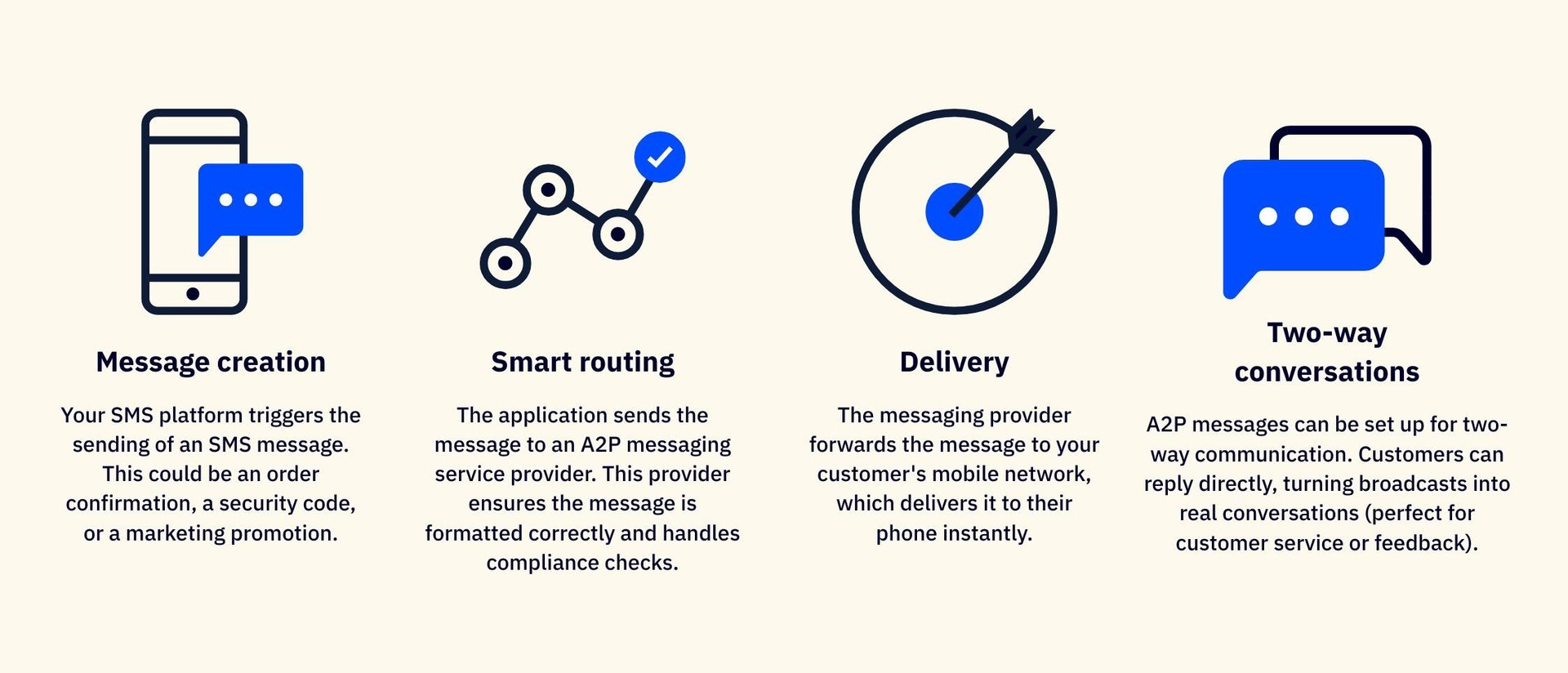
Modern SMS marketing platforms like ActiveCampaign handle the technical complexity (carrier relationships, compliance, delivery optimization) so you can focus on crafting messages that convert.
Types of SMS marketing messages you should know
Different message types serve distinct purposes in your customer journey. The difference between a deleted text and one that drives action often comes down to sending the right type of message at the right moment. It’s crucial not to blast the same promotional content to everyone. A customer browsing your website needs a different message than someone whose order just shipped.
Here are the four core message types that successful strategies use, with specific SMS marketing examples for each.
Promotional messages
These are your revenue drivers: flash sales, limited-time offers, new product announcements, event invitations, seasonal/holiday promotions, and exclusive deals that create urgency and drive immediate action.
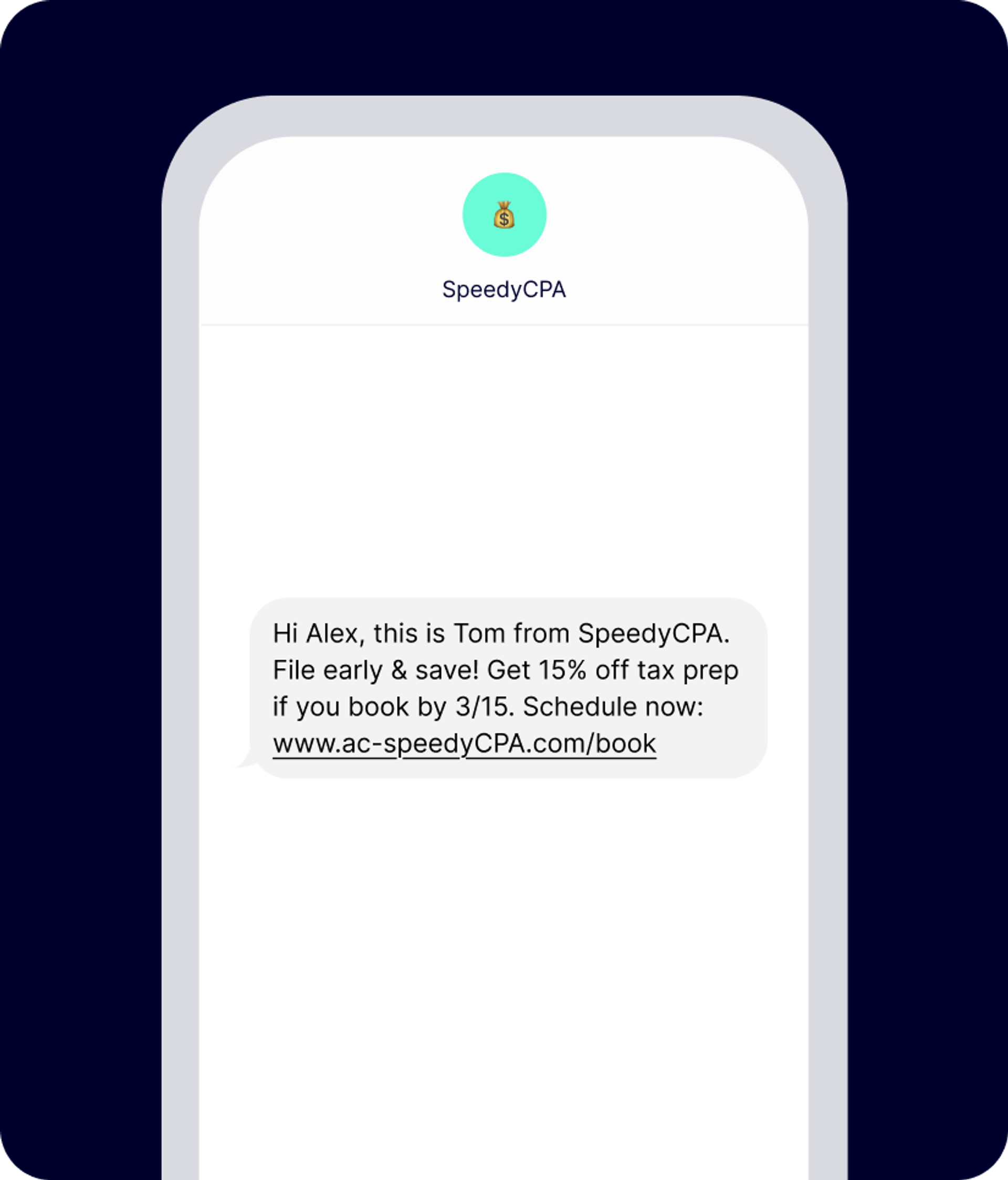
Why it works: Creates urgency with time limits, includes a clear discount, and makes the next step obvious with a direct link.
ActiveCampaign has a pre-built automation recipe that finds the right customers for campaigns and will follow up with a relevant promotional SMS after they’ve looked at a specific product or landing page.
Transactional messages
These are order confirmations, shipping updates, and delivery notifications that keep customers informed about their purchases. Typically, they have the highest open rates because customers expect and want them.
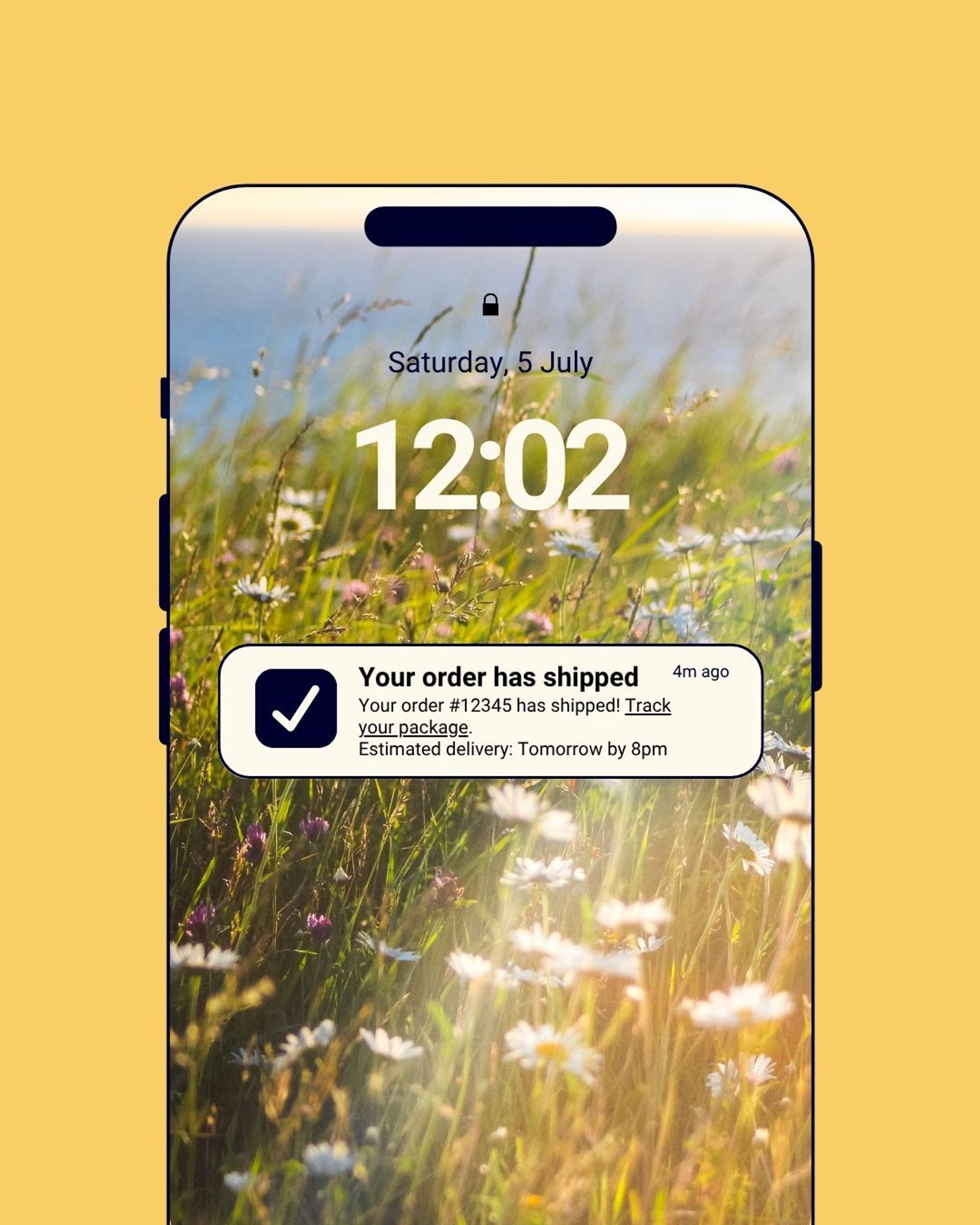
Why it works: Provides immediate value with tracking information and sets clear delivery expectations.
Using a templated automation flow makes it easy to send an SMS to customers who have made a purchase.
Informational messages
Informational messages include educational content, tips, and updates that position your brand as helpful rather than purely sales-focused. They build long-term trust and engagement.
Why it works: Offers genuine value first, then invites deeper engagement with additional resources.
Conversational messages
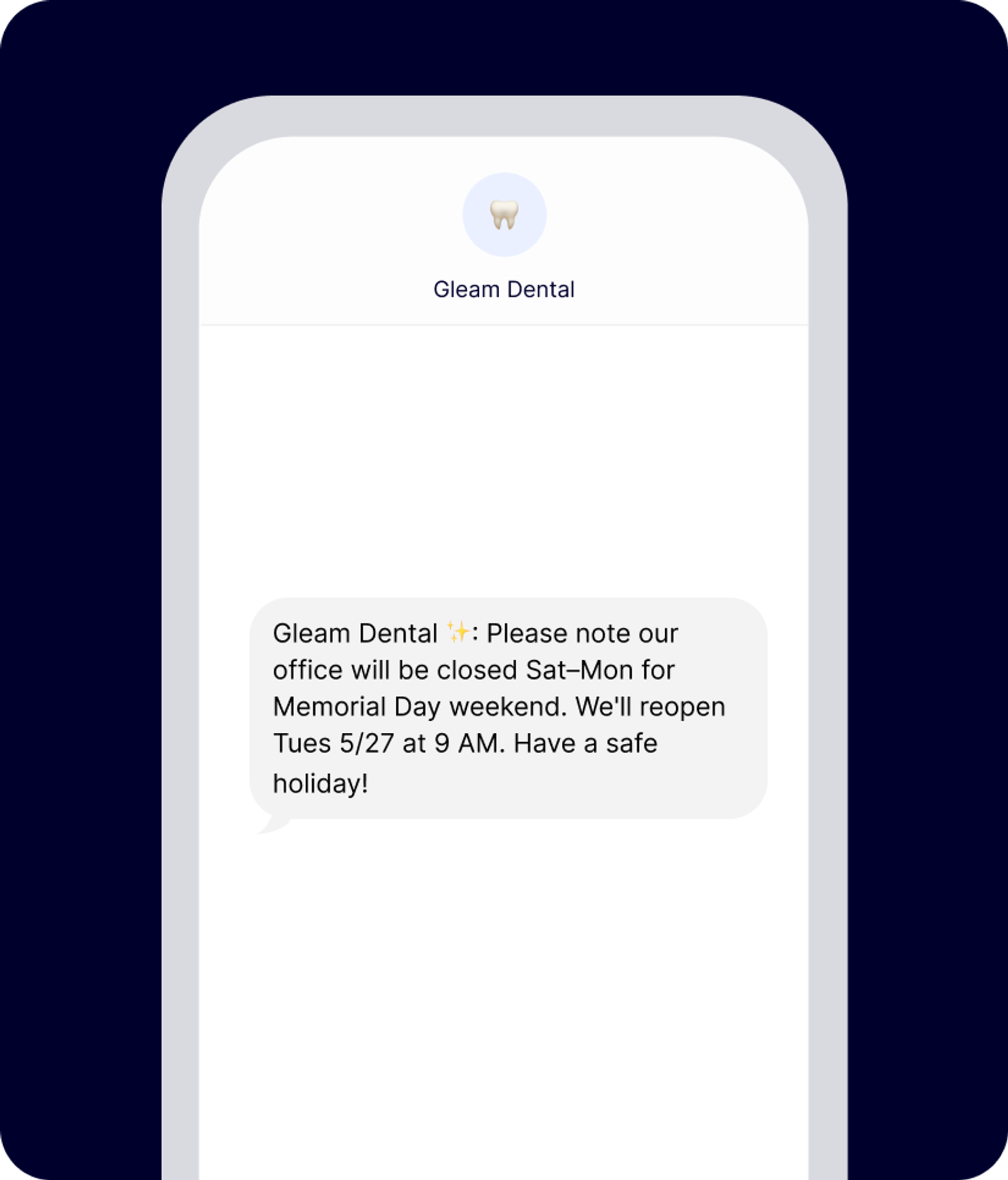
These are two-way interactions that feel personal—appointment reminders with reply options, feedback requests, or customer service conversations.
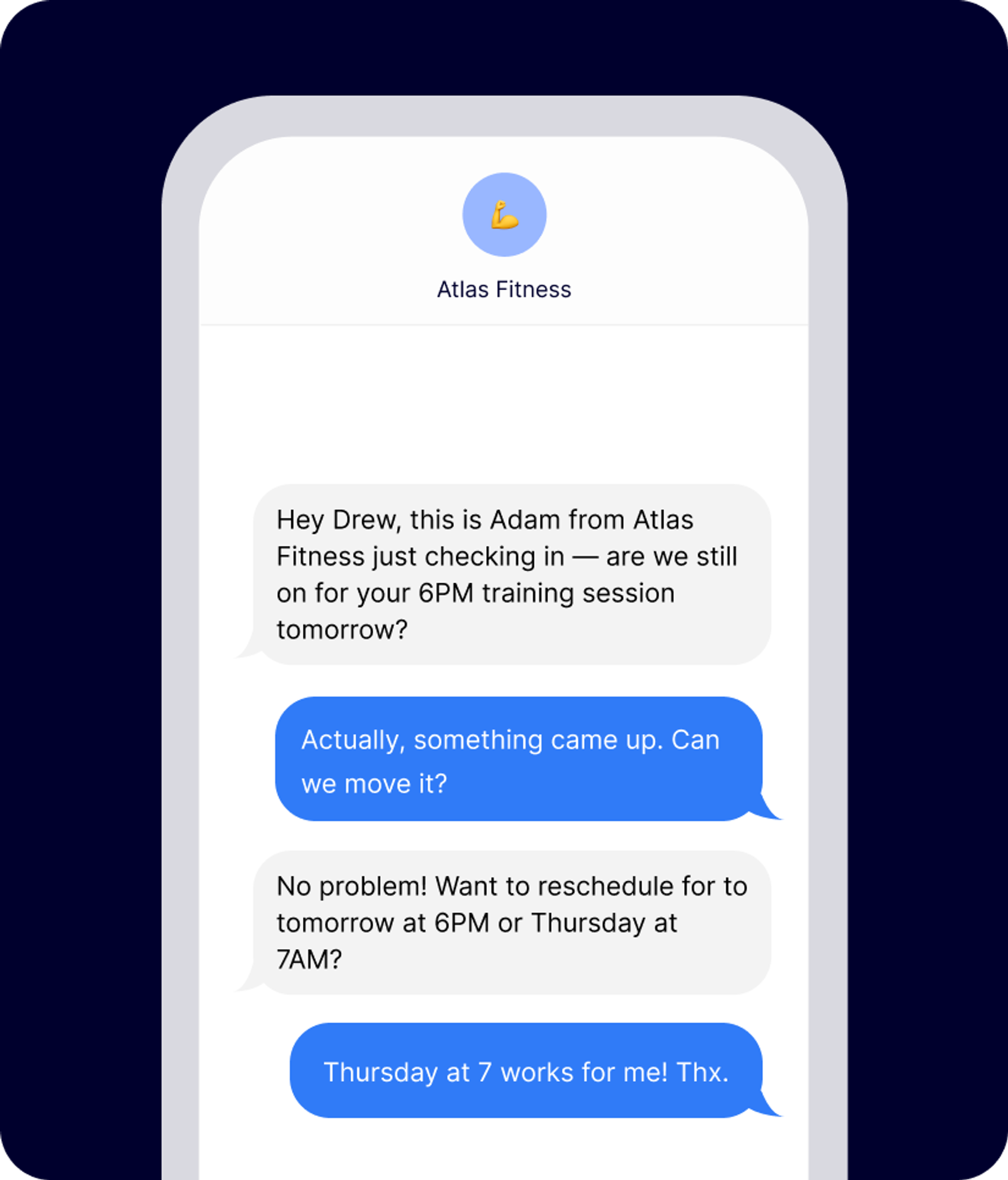
Why it works: Makes responding effortless with simple reply options and provides a backup contact method.
The most effective SMS strategies blend these message types throughout the customer lifecycle. A new customer might receive a welcome text (informational), get notified about sales (promotional), track their orders (transactional), and eventually participate in feedback surveys (conversational).
The key is matching the right message type to your customer's current mindset and needs.
Core SMS marketing best practices
Here are five best practices that separate the SMS pros from the spammers.
1. Craft compelling SMS messages
You have 160 characters and about 3 seconds of attention. Every word counts.
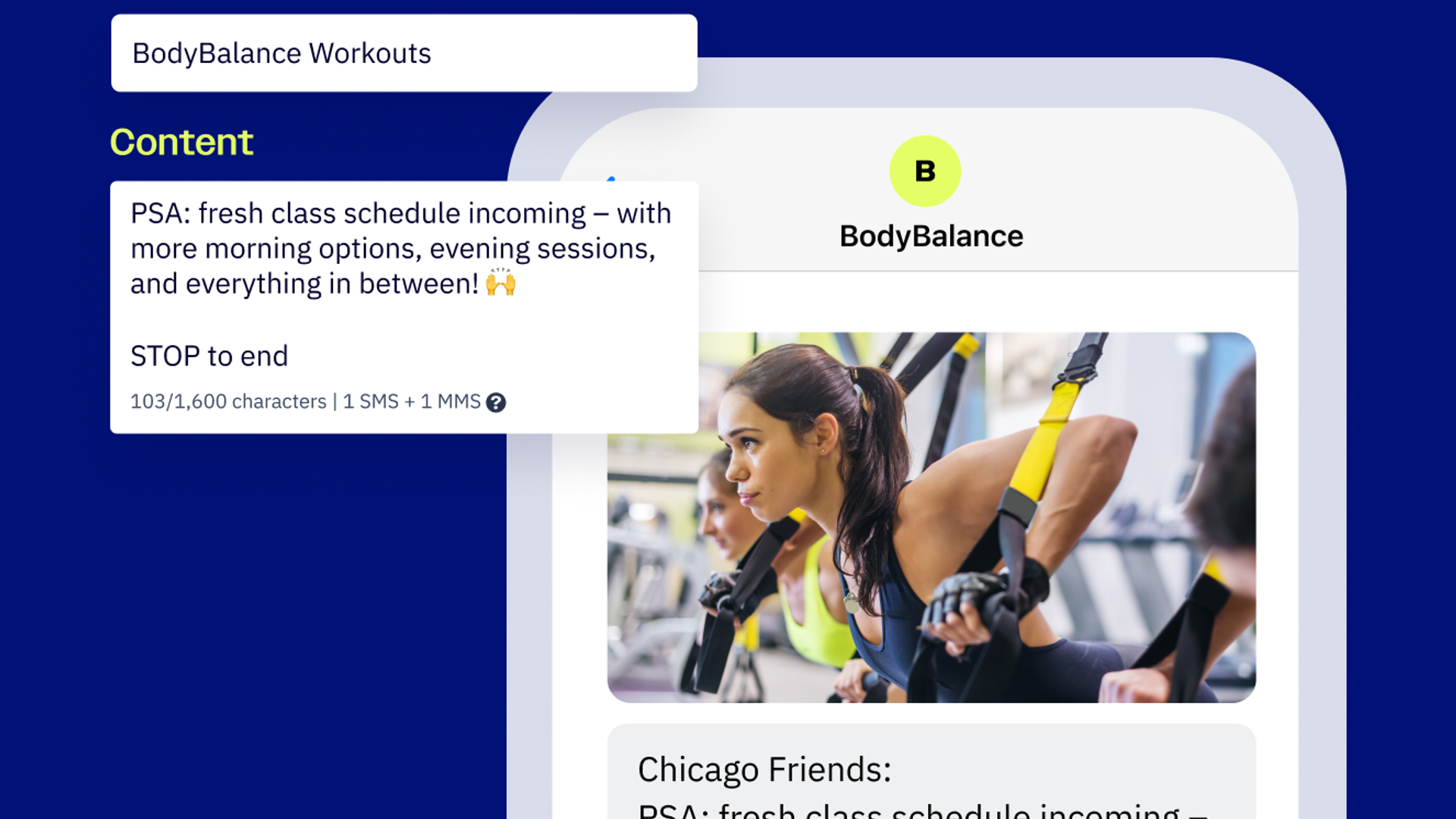
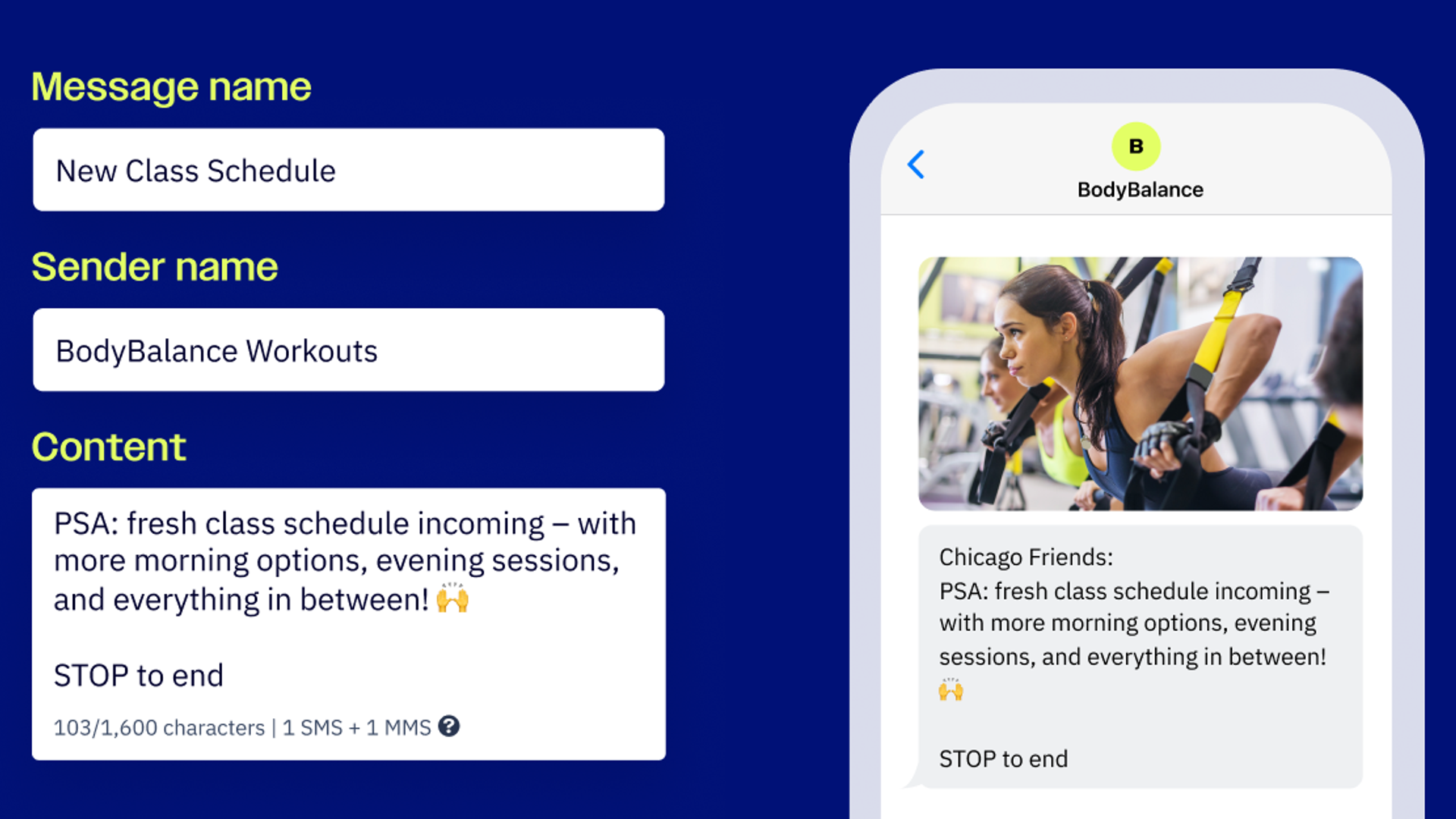
- Keep it short and scannable: Lead with the most important information—the offer, the deadline, or the key benefit. Bury the details and you've lost them. If you can, try to identify yourself or your business. i.e. "Hey this is Alex from Modern Day Spa..."; "Shine Fitness: We have some summer specials..."
- Write like you're texting a friend: Skip the corporate speak. "Hey Sarah, your favorite jeans are back in stock!" beats "Dear valued customer, we are pleased to inform you..."
- Use emojis strategically: A single well-placed emoji can grab attention and convey emotion, but don't overdo it. 🎉 for celebrations, ⚡ for urgency, 💙 for personal moments.
- End with a clear next step: "Shop now," "Reply YES," or "Get directions" work better than vague phrases. Tell them exactly what to do next.
2. Send at the right time (and frequency)
Timing can make or break your campaign. Peak SMS engagement tends to happen between 10-11 AM and 5-8 PM when people are transitioning between activities. Keep in mind that you should avoid messaging contacts during “off hours” of the day to avoid potentially being flagged as spam, but more importantly, damaging your reputation with your customers.
How frequently should you be sending SMS messages?
Based on industry averages, you’re safe to stick to the following email cadences across different email types:
- Promotional messages: 2-4 per month maximum
- Transactional updates: As needed (order confirmations, shipping alerts)
- Informational content: 1-2 per month
We also asked our Senior Lifecycle Marketing Manager for her opinion on email frequency. Here’s what she had to say about best practices she’s observed across the industry.
“Promotional messages and information content combined should be a max of once per week as it could be annoying to be constantly bombarding customers. The important thing is making sure the content is either time-sensitive like a flash sale, an appointment reminder, or super important information that affects their account. Reserving SMS for the business critical messages ensures it’s not overused.
Monitoring response rates will allow businesses to determine the optimal frequency that’s appropriate for them.”
— Elaine Chau, Senior Lifecycle Marketing Manager at ActiveCampaign
Avoid the danger zones: Early mornings (before 8 AM), late nights (after 9 PM), and Sunday mornings. Your customers' goodwill is precious—don't waste it on poorly timed interruptions.
ActiveCampaign's AI-powered send time optimization analyzes each subscriber's engagement patterns to deliver messages when they're most likely to read and respond. You can also automate SMS messages for special dates, like birthdays, anniversaries, or contract renewals.
3. Make every text personal
Generic blasts feel like spam. Personal messages feel like conversations.
- Start with basic data: Use first names, location, or purchase history. "Maria, your Dallas store has new arrivals" immediately feels more relevant than "New arrivals now available."
- Segment by behavior: Send different messages to first-time buyers, repeat customers, and window shoppers. Each group needs different motivation to act.
- Let AI do the heavy lifting: ActiveCampaign's responsive automation recipes can automatically respond to customer behaviors, like clicking on an email link—scaling one-to-one messaging without manual effort.
- Dynamic content wins: Instead of static promotions, use messages that adapt. Show browsed products to cart abandoners, recommend complementary items to recent buyers, or surface trending products to frequent shoppers.
4. Enable conversations, not broadcasts
The future of SMS isn't one-way megaphone marketing; it's building relationships through real dialogue.
- Invite responses: Open questions like "Need guidance on sizing? Just reply!" or "How did we do? Rate your experience!" turn broadcasts into conversations.
- Set response expectations: If someone texts you back, set up automated messaging to respond within an hour. Ignored messages destroy trust faster than any discount can build it.
- Use conversational flows: ActiveCampaign's Salesmsg integration lets you create automated but personal conversation paths that feel natural while capturing valuable customer insights.
- Train your response team: Whether automated or human-powered, ensure responses are helpful, friendly, and on-brand. Every reply is a chance to strengthen the relationship.
5. Measure what matters
High open rates mean nothing if they don't drive business results. Focus on SMS marketing metrics that connect to revenue.
In ActiveCampaign, you can see both aggregate and individual SMS campaign reports, which report on:
- Number of campaigns sent: How many SMS campaigns have you deployed over a certain period of time?
- Click rate: What percentage of recipients clicked on links within your messages?
- Reply rate: Are customers engaging in two-way conversations with your brand?
- Opt-out rate: How many contacts are unsubscribing from your SMS list?
- Delivery rate: What percentage of your messages successfully reached recipients’ phones?
- Click-through rate: Are people taking action? Remember that SMS averages a CTR of 25% across industries
- SMS volume: How many messages are being sent?
- Conversion rate: What percentage of clicks become purchases?
- List growth rate: Are you gaining quality subscribers faster than you're losing them?
With a baseline on metrics, you can start to think about optimization tactics.
- A/B test send times, message length, and CTAs
- Track performance by segment to identify your most valuable audiences
- Monitor opt-out rates—spikes indicate you're sending too much or targeting poorly
ActiveCampaign's Aggregate Campaign Performance Reporting provides a centralized view of your broadcast SMS campaign performance so that you can better analyze impact, make faster decisions, and demonstrate value.
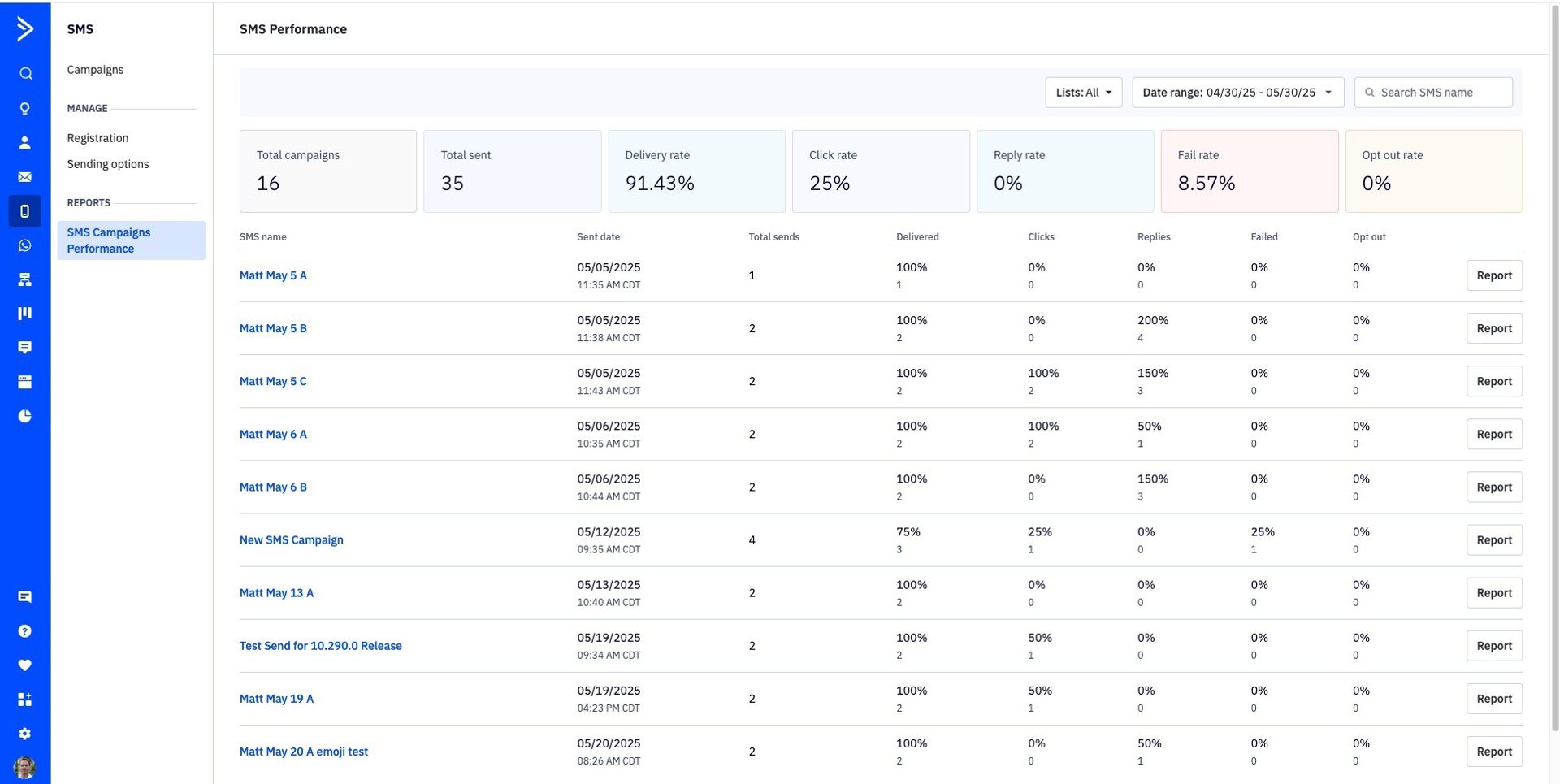
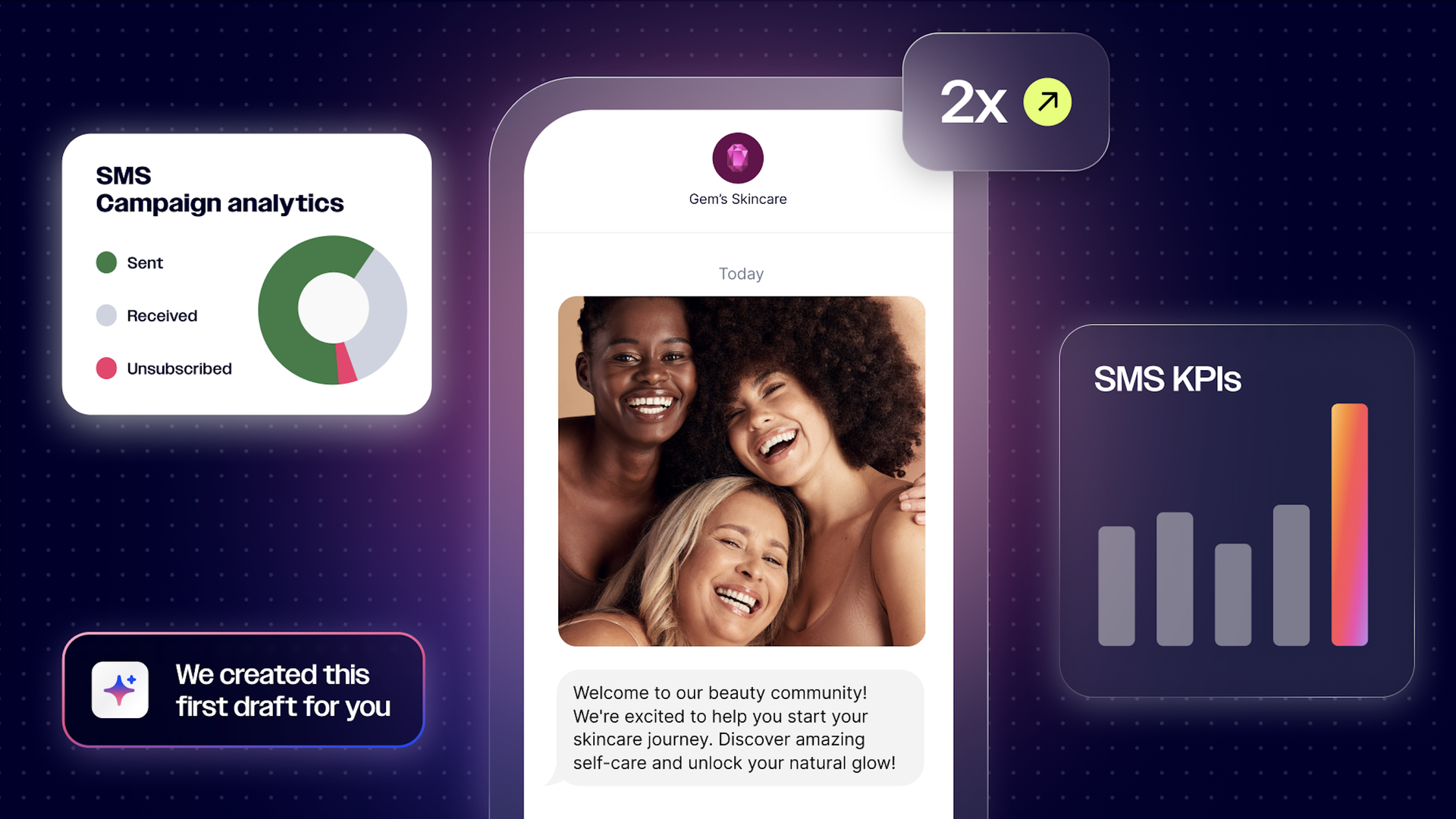
The SMS Performance Report in ActiveCampaign shows you metrics like delivery rate, click rate, reply rate, fail rate, and more across all SMS messages.
With this data, you may discover that Tuesday afternoon messages generate 40% higher revenue than Friday sends, and optimization becomes simple.
Integrating SMS marketing with your existing channels
SMS doesn't replace your other marketing channels. Text messages should work in harmony with email, social media, and your website to create seamless customer experiences.
Email + SMS
A classic power duo that combines the two most direct marketing channels. Send an email, then follow up with an SMS 2-4 hours later. This combination can increase campaign effectiveness by 20-30%.
Website + SMS integration
Instead of generic "Subscribe" banners, design pop-up opt-ins that really command attention. Try "Get exclusive text alerts for flash sales! 10% off your first order."
And have you thought about how to amplify this across social media?
- Instagram Stories: "Text STYLE to 12345 for outfit inspo delivered daily"
- Facebook: Include SMS opt-in CTAs in high-engagement posts
- TikTok bio: Drive followers to SMS for exclusive drops and early access
ActiveCampaign’s seamless multi-channel integration capabilities provide an unbeatable advantage. Customer preferences, purchase history, and engagement behavior automatically inform messaging across email, SMS, and 950+ integrated apps.
All customer interactions feed into one intelligent system, so you can trigger smart automation flows that hit every channel. When someone opens your email but doesn't click, automatically send them a follow-up text to win them back. When they engage with SMS, trigger personalized email sequences.
Key integration tips
- Respect channel preferences: Let customers choose their communication mix.
- Avoid message fatigue: Don't send the same promotion via email AND SMS on the same day. Coordinate your calendar.
- Maintain consistent branding: Your voice should feel cohesive across every channel.
- Use SMS for immediacy, email for depth: Text for flash sales and urgent updates. Email for storytelling and detailed product information.
Stay compliant (without overthinking it)
SMS compliance isn't as scary as it sounds. Follow these essentials, and you'll stay on the right side of the law while building trust with your customers.
The three compliance pillars
- TCPA (US): Get explicit written consent before sending promotional texts
- GDPR (EU): Transparent consent and easy data management for EU customers
- A2P 10DLC (US): Register your business with carriers (ActiveCampaign handles this automatically)
Your compliance checklist
✓ Clear opt-in process
- Use double opt-in: "Reply YES to confirm."
- Never add numbers without permission
- ActiveCampaign maintains complete audit trails of when and how customers opted in
✓ Required disclosures
- Include frequency expectations
- Add "Message & data rates may apply."
- Always include "Reply STOP to opt out."
✓ Easy opt-out process
- Provide various opt-out methods (customer service, website)
- Don't make customers jump through hoops to unsubscribe
- ActiveCampaign automatically processes keywords like STOP, UNSUBSCRIBE, and QUIT to instantly trigger a block
✓ Smart sending controls
- Set quiet hours to prevent off-hours messaging (automated in ActiveCampaign)
- Use frequency caps to prevent over-messaging
- Keep promotional content relevant to what they signed up for
Compliance best practices
- Document everything: Keep records of opt-ins, especially for high-value campaigns.
- Regular list hygiene: Clean your lists quarterly and honor opt-out requests promptly.
- When in doubt, ask: Most compliance issues come from assumptions. Consult your legal team or platform support.
Advanced SMS tactics (if you’re ready to level up)
Once you've mastered the basics, these advanced strategies separate good SMS marketers from revenue-driving pros. Each tactic builds on what you already know while unlocking significantly better results.
AI-driven SMS marketing
Let artificial intelligence handle the heavy lifting while you focus on strategy and creativity.
Predictive send time optimization: Instead of guessing when to send, let AI analyze each subscriber's behavior to deliver messages when they're most likely to engage.
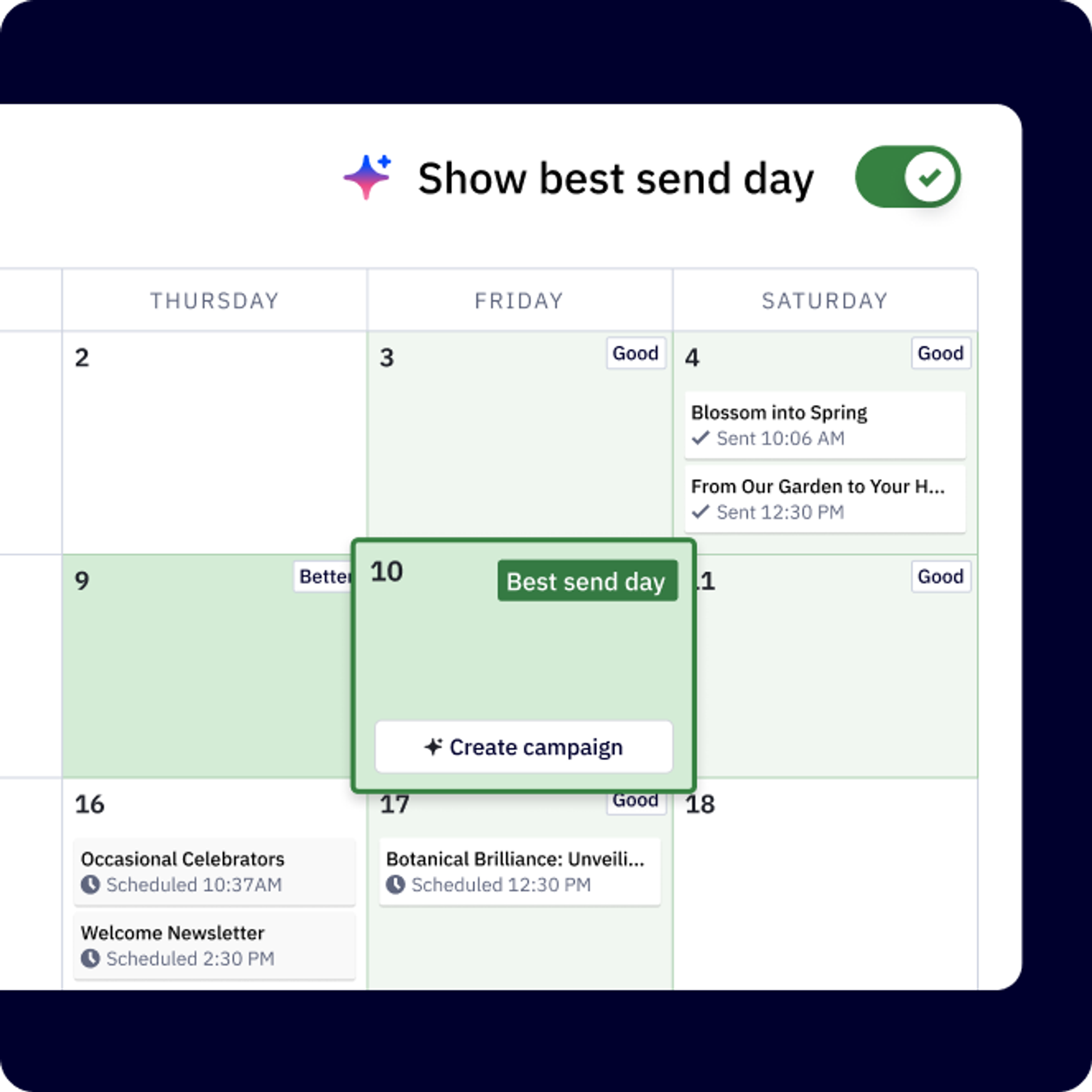
Dynamic content personalization: AI-powered SMS marketing automatically tailors message content based on browsing history, purchase patterns, and engagement data.
Automated A/B testing: Set up tests for subject lines, message length, or CTAs, then let AI automatically send the winning version to the rest of your list.
Smart audience prediction: AI identifies which subscribers are most likely to purchase, churn, or engage, letting you prioritize your messaging efforts and personalize offers accordingly.
Automated workflows
Transform one-time sends into intelligent conversation series that nurture relationships over time. We’ve put together a few examples you can swipe.
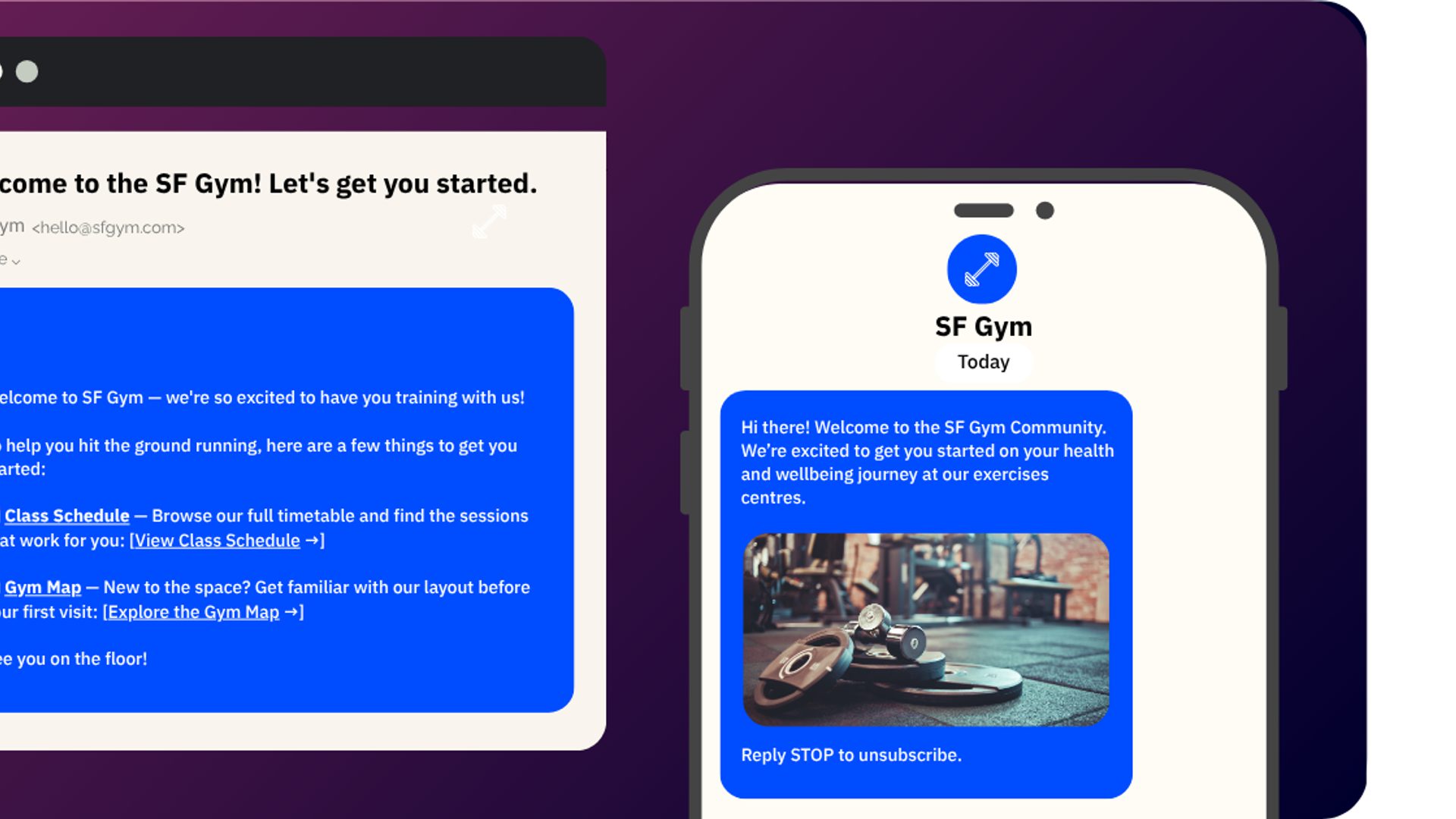
Welcome series
- Message 1: Immediate welcome + brand story
- Message 2 (2 days later): Educational content + soft product introduction
- Message 3 (1 week later): Social proof + first-purchase incentive
- Message 4 (2 weeks later): Personal check-in + customer service availability
Abandoned cart recovery sequence
- 1 hour: Gentle reminder with product image
- 24 hours: Add urgency + limited-time discount
- 3 days: Social proof + alternative product suggestions
- 1 week: Final chance + customer service offer
Post-purchase engagement
- Immediate: Order confirmation + tracking
- Delivery day: "Your package arrives today!"
- 3 days post-delivery: Care instructions + review request
- 30 days: Complementary product recommendations
- 90 days: Replenishment reminder (for consumables and refills)
Smart segmentation
Move past basic demographic targeting to behavior-based segments that predict purchasing intent. While age, location, and income provide a foundation, they don't offer much opportunity for niche targeting. By analyzing actual customer actions (how they browse, when they buy, and what triggers their engagement) you can create segments that anticipate needs and optimize timing for maximum impact.
Building behavioral segments that matter
Start by tracking meaningful interaction patterns across your customer journey. This could mean monitoring website dwell time on product pages, email open rates during specific time windows, or cart abandonment triggers.
For example, customers who spend more than three minutes on pricing pages but leave without purchasing often respond well to limited-time discount offers sent within 24 hours. Meanwhile those who browse during lunch hours (11AM-2PM) may prefer quick, mobile-optimized checkout experiences.
Purchase behavior segments
- High-value customers: Significant lifetime value
- Frequent browsers, rare buyers: High engagement, low conversion
- Seasonal shoppers: Only purchase during sales periods
- Brand loyalists: Multiple purchases of the same product type
Engagement-based targeting
- SMS super-fans: Always open and click within minutes
- Email-preferring customers: Low SMS engagement, high email response
- Deal hunters: Only engage with discount messages
- Content consumers: High engagement with educational messages
Lifecycle stage automation
- Brand new subscribers: Focus on education and trust-building
- First-time buyers: Emphasize product value and customer service
- Repeat customers: Offer exclusive perks and early access
- At-risk customers: Win-back campaigns with compelling offers
ActiveCampaign's AI segmentation automatically identifies patterns in customer behavior you might miss manually. It can predict which customers are likely to churn, which are ready for upsells, and which segments respond best to specific message types, then adjusts your campaigns accordingly.
Why ActiveCampaign for SMS marketing?
While most SMS marketing platforms treat text messaging as a standalone channel, ActiveCampaign integrates SMS into your complete marketing ecosystem, where it becomes exponentially more powerful.
An AI-first approach: ActiveCampaign offers features like AI Content Generation to help you draft entire campaigns in minutes by quickly generating text and images.
You enjoy true cross-channel integration: In the platform, SMS connects seamlessly with email, automation, and customer data.
Built-in compliance: Don’t worry about compliance regulations. ActiveCampaign offers A2P 10DLC registration, automatic opt-out processing, and GDPR-ready features that handle the legal complexity so you can focus on results.
950+ integrations: Connect SMS to your existing tools—from Shopify and WooCommerce to Salesforce and beyond—for unified customer experiences.
You don’t have to take our word for it. Businesses are seeing real impact with ActiveCampaign’s SMS marketing. Power Bespoke has increased referral sales by 30% by using high-intent tags to track visitor movements on their website and send personalized SMS messages via ClickSend.
“It’s just a self-fulfilling process that allows us to really nurture those happiest with Power Bespoke and most likely to provide a referral. It’s amazing.”
— Perry Power, Founder of Power Bespoke
FAQs about SMS marketing
What's the typical ROI on SMS campaigns?
Small and medium business marketers report an average ROI of $21 to $40 for every $1 spent on their SMS campaigns, significantly outperforming most digital channels. The key to maximizing ROI is focusing on revenue per message rather than just open rates.
How much does SMS marketing cost?
SMS pricing typically ranges from $0.01 to $0.05 per message, depending on volume and features. Most platforms charge based on message credits. You should budget based on your list size and campaign frequency.
How can I grow my SMS subscriber list quickly (and ethically)?
High-converting strategies include pop-up offers, social media CTAs, and point-of-sale requests during checkout. Focus on quality over quantity—a smaller list of engaged subscribers always outperforms a large list of uninterested contacts.
What's the difference between SMS and MMS?
SMS is text-only and works on all phones, perfect for quick updates and offers. MMS includes images and videos and requires smartphones, ideal for product showcases and visual storytelling.
How exactly does AI enhance SMS marketing results?
AI analyzes individual subscriber behavior to optimize send times, personalize content, and predict customer actions automatically. It continuously tests message variations and coordinates SMS with other channels based on customer preferences.