“I pretty much use AI all day every day,” says James Goodwillie, the Head of Growth for Stack Influence, a micro‑influencer marketplace platform that pairs brands with micro‑influencers through product gifting.
Stack Influence operates as a matchmaker between companies and content creators. Brands approach the platform wanting to promote a product, and micro‑influencers—creators with smaller but highly engaged audiences—choose products to purchase, review, and feature in user‑generated content.
Goodwillie acknowledges that Stack Influence is still very much in startup mode. The team of about 50 is eager to expand both revenue and staff, but they’re also dealing with the reality of limited resources. Something they overcome with the help of autonomous marketing.
“The goal is to stay as lean as possible,” explains Goodwillie. “We try to do what we can with AI and then hire where we have holes.”
One of the most impactful ways Stack Influence has applied its philosophy is by streamlining how it tracks and measures newsletter ad campaigns—a channel Goodwillie says consistently ranks among the company’s top performers for attracting new brands.
“We try to do what we can with AI and then hire where we have holes.”
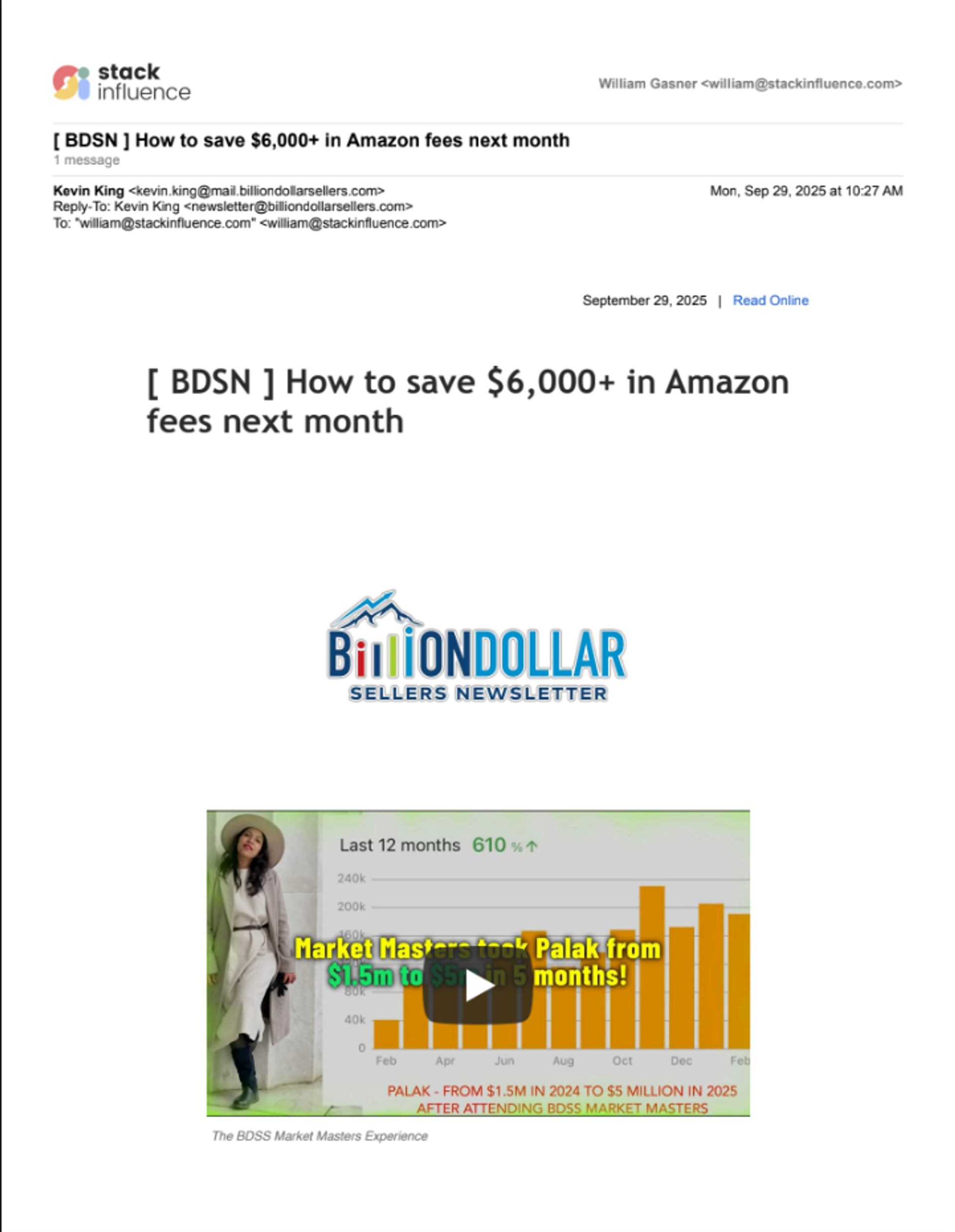
A preview of the Stack Influence newsletter. You can sign up here.
The streamlined process, he says, "saved anywhere from 5 to 10 hours a week and that’s just now. This is infinitely scalable and doesn’t require more time as we grow. Without it, we’d be spending much more time on the task.”
The team can now quickly and accurately identify the emails and campaigns that are performing well, and reallocate time and budget to higher-value opportunities.
Assessing the newsletter issue
Previously, the newsletter process was chaotic.
“It was scattered and very clustered in different locations and hard to find,” Goodwillie explains. “A lot of the time was spent upfront putting together all the information we need and then on the back end, going and trying to find the data from Google Analytics or our email service provider and pairing it together and then going back and finding the creative and saying this copy performed better than that one but nothing was in a central location.”
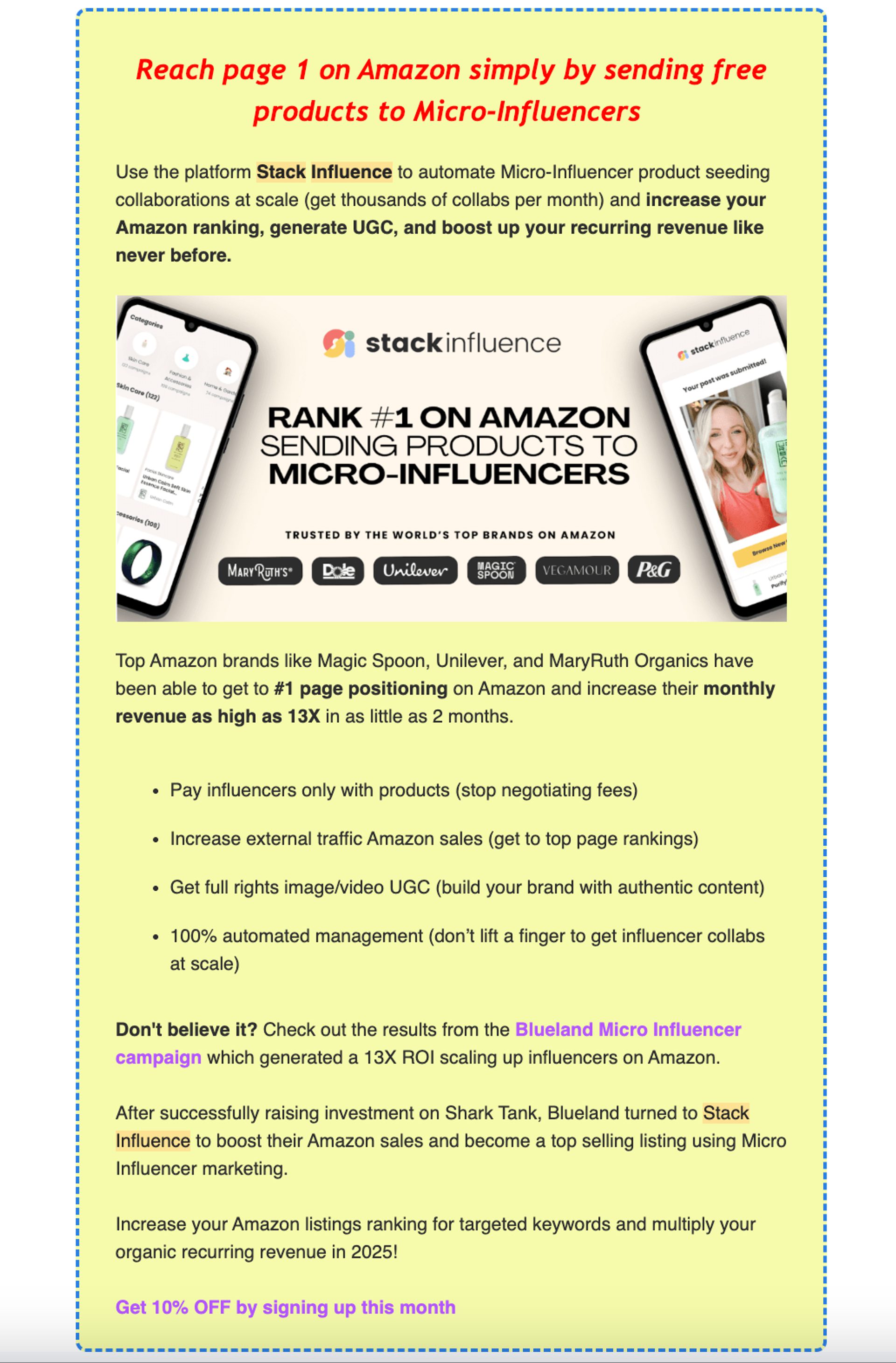
A sample ad created via the autonomous marketing process below
Drowning in scattered data across multiple platforms? You're not alone. The Autonomous Marketer shows you how to build systems that work smarter, not harder—delivered every other week.
Before the overhaul, ad performance data and creative assets were spread across emails, shared drives, and analytics platforms. If someone wanted to see how one ad compared to another, they had to dig through Google Analytics, match those results to our CMS lead data, and then track down the right creative file.
Goodwillie built his system using Google Gemini. Each time a new newsletter ad runs, the Stack team fills out a simple Google Form with key details:
- the send date
- newsletter name
- invoice number
- cost
- ad placement type
- ad copy
- creative file
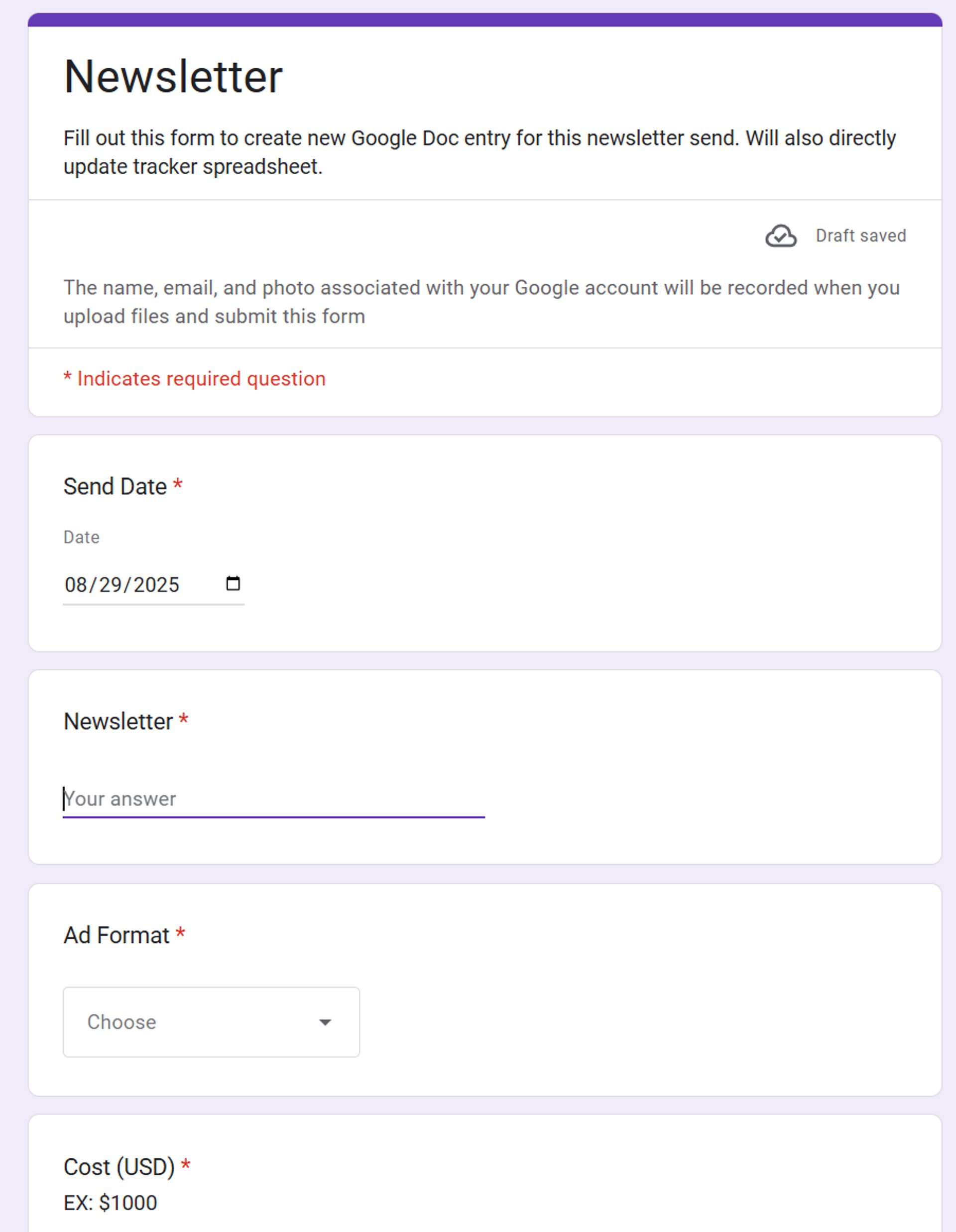
Goodwillie’s Google Form in action.
All of the data, assets, and details are then stored in one place, making it easier to analyze results, compare campaigns, and share performance with clients.
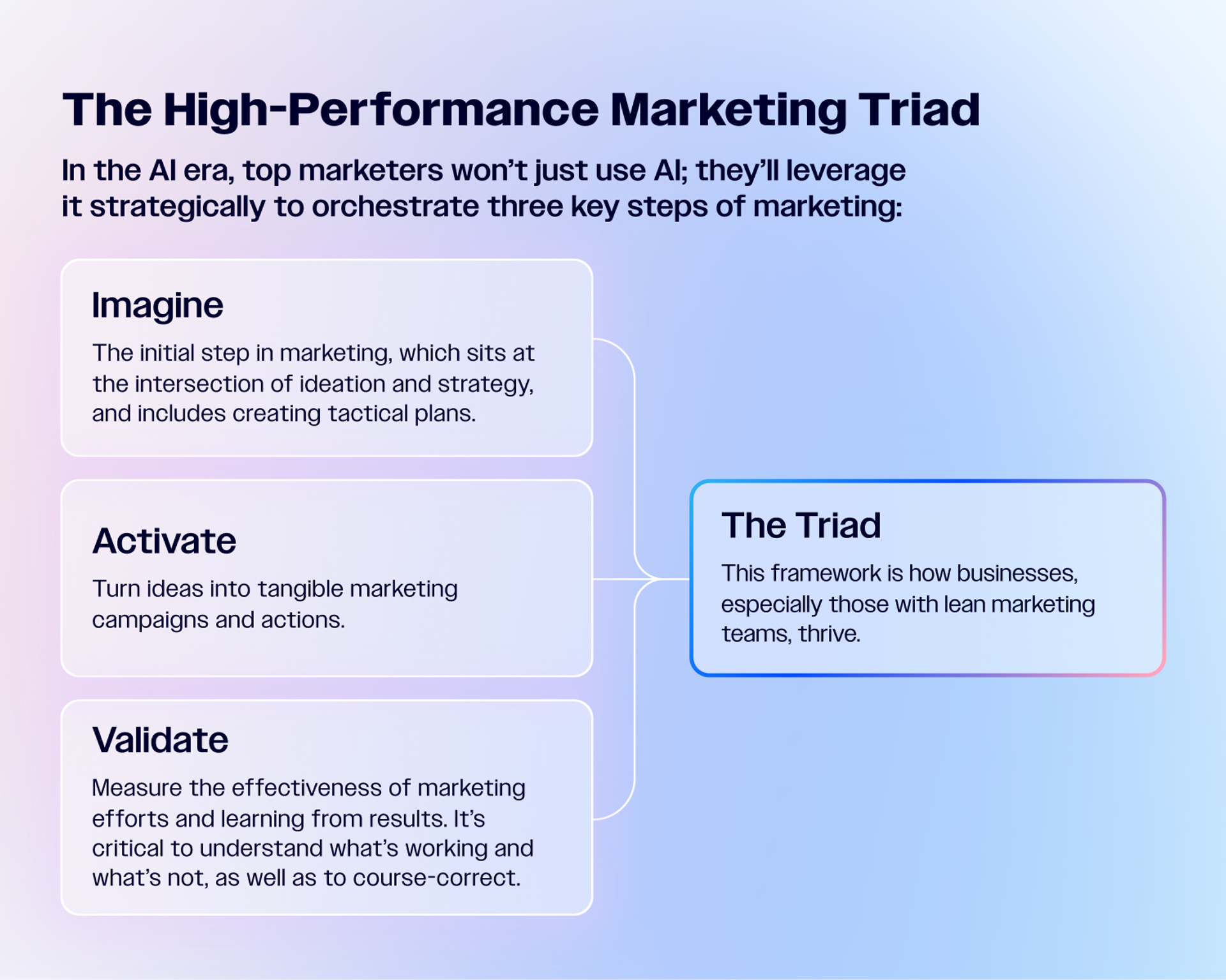
The three aspects of the High-Performance Marketing Triad. Read on to see how James’ workflows fit in.
The streamlined workflow covers the activate and validate parts of the Triad. It not only centralizes data but also frees up time, allowing the team to quickly evaluate which ads perform best and make smarter decisions for future campaigns.
Here’s how it works:
1. Automating storage and organization
Once the Google form is created, Goodwillie uses the Apps Script function to kick off each step. You can do the same. And if you don’t know how to code, don’t worry. Goodwillie used Google Gemini to generate the code he needed.
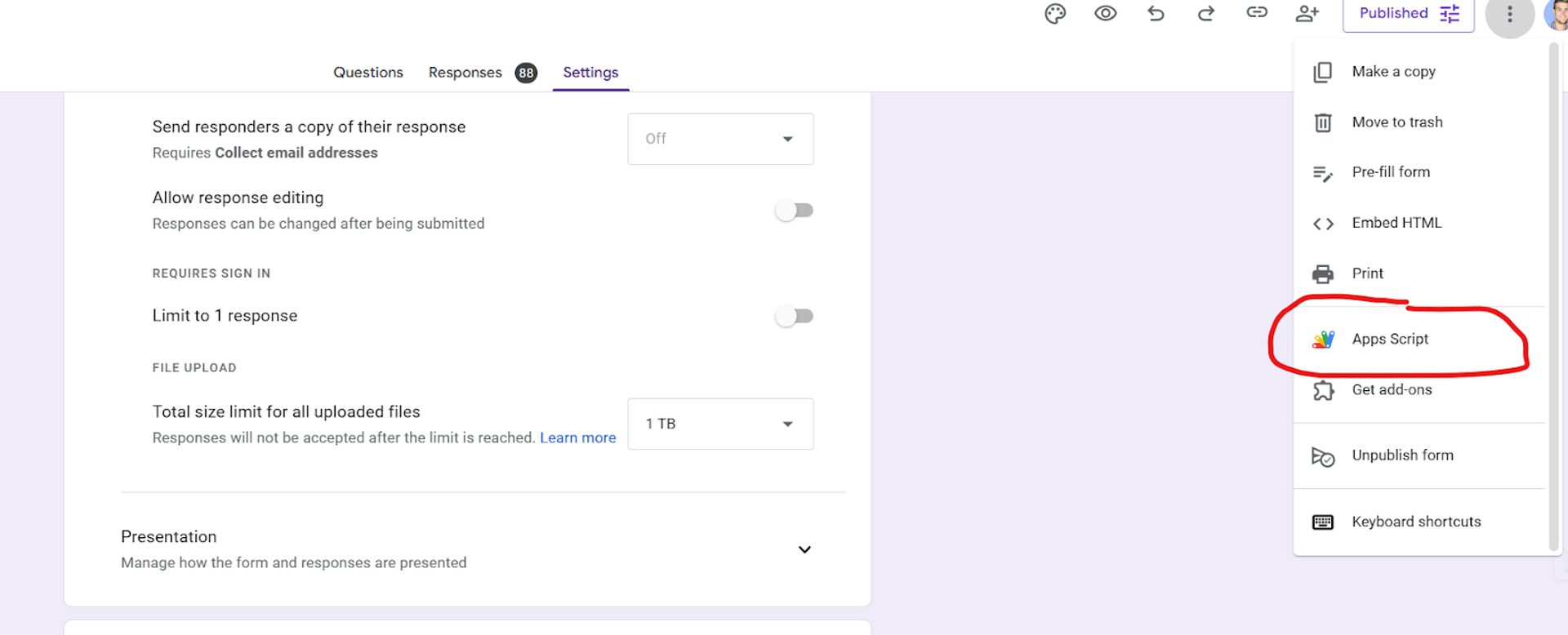
You can find “Apps Script” in the Google Forms menu.
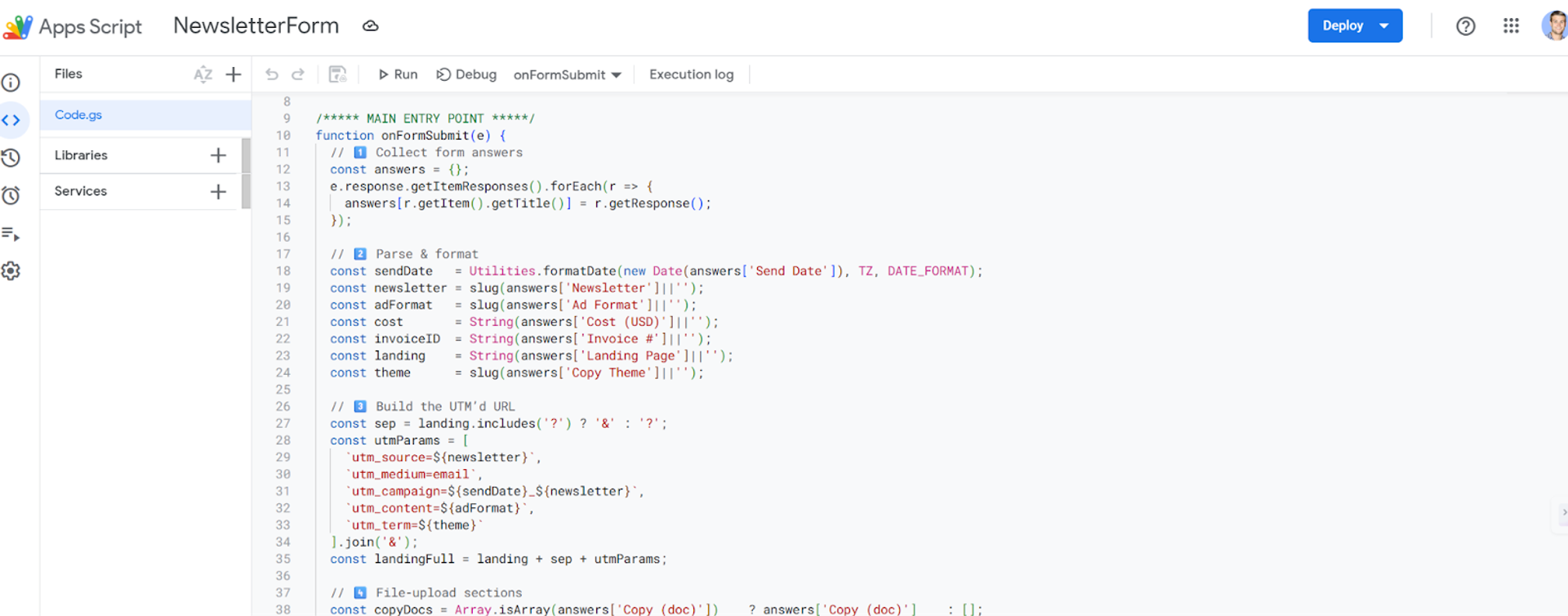
Code that kicks off the workflow, generated by Gemini.
When a form is submitted, it:
- Triggers the creation of a new Google Drive folder labeled with the newsletter and date.
- Inside that folder, the system automatically generates a Google Doc with all campaign details—including tracking URLs—and a subfolder containing the ad images.
- At the same time, the campaign details are fed directly into a master tracking sheet, eliminating the need for anyone to copy and paste data.
2. Pulling in performance data
Using another Gemini-generated script, Goodwillie connected Google Analytics directly to the tracking sheet. Each time a newsletter runs, the script automatically pulls in UTM data the following day (things like impressions, clicks and a newer “Google value” field). This gives the team an immediate snapshot of how the ad performed without having to manually log into multiple platforms.
Here is a visual:

James’ tracking sheet.
Everything seen in columns A through H is generated based on what was filled in the Google Form. Columns I through K, on the other hand, are generated through the Google Analytics connection.
3. Data enrichment to improve lead quality
Goodwillie customized those forms with the help of ChatGPT so that responses are assigned values—high-potential leads, for example, score higher. Those values feed back into Google Analytics and the tracking sheet, giving the team richer insights into whether an ad attracted the right kind of client, not just the cheapest lead.
Here is the criteria that the system uses to make those decisions and the Gemini thread that guided the process:
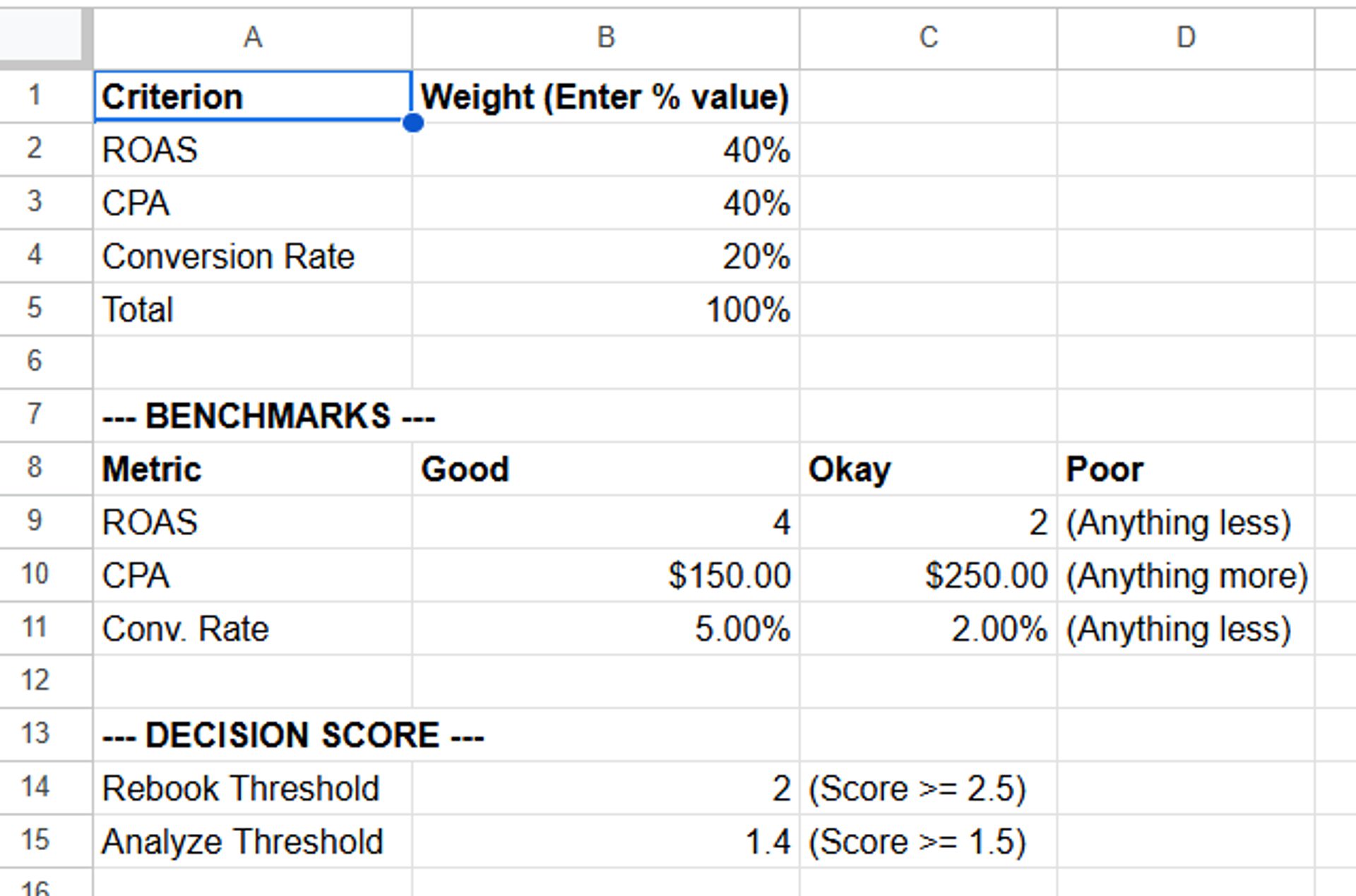
Aligning leads with opportunities.
4. Easy external sharing
On the client side, the new workflow makes sharing simple and secure. If a brand wants to review the copy or creative from a specific campaign, Stack Influence can give them access to the relevant Google Drive folder without exposing any other internal files. Each campaign has its own neatly packaged folder with all assets and data ready to share.
Campaign data that used to take hours to assemble is now instantly available and centralized. The marketing team can see performance, creative, and cost details at a glance, making it easier to optimize ad spend and quickly share materials with clients when needed.
While it’s still early to measure direct revenue gains, the system has already influenced budget allocation. In some cases, newsletters that the team was hesitant to invest in have proven to deliver high‑quality leads, prompting a shift in marketing dollars.
“The biggest value is being able to make those adjustments without deep‑diving into Analytics and our CMS every time,” notes Goodwillie.
"Campaign data that used to take hours to assemble is now instantly available and centralized."
James saved 5-10 hours per week with one automated workflow. Want more tactics like this? Subscribe to The Autonomous Marketer for no-fluff automation strategies that actually scale.
A culture of experimentation
“Our team is surprisingly very receptive to trying new things,” Goodwillie says.
When asked about AI skeptics more broadly, Goodwillie says dismissing the technology is a mistake. “I think ignoring AI is the wrong approach,” he says. His advice is to start small.
“Don’t look at AI for massive, grand projects,” he says. “Ask yourself: what’s the day‑to‑day stuff that wastes time? How can we automate it to work faster? Sometimes it replaces human work, but mostly it makes us faster.”
“Ask yourself: what’s the day‑to‑day stuff that wastes time?"
He also warns against chasing every new tool. Many AI products are just “wrappers” on top of existing models, like ChatGPT, he notes.
“Some are fine for making ad images, but you can do the same thing in ChatGPT if you know how to ask, so there’s no point paying a lot for others,” he says.
For Stack Influence, AI isn’t about replacing people but about freeing them to focus on higher‑impact work. As the company continues to grow, Goodwillie plans to keep using tools like Google Gemini to make marketing processes faster, more organized, and more targeted without sacrificing quality.
“If AI can help, fantastic—let’s try it. If not, we hire,” he says. “Optimizing systems, processes, and ourselves so we can move faster without losing quality has been the biggest focus over the past two years.”
"For Stack Influence, AI isn’t about replacing people but about freeing them to focus on higher‑impact work."
Build systems that scale without you
Ask yourself: what's the day-to-day stuff that wastes time?" Then automate it. Every other week, The Autonomous Marketer shows you how—with workflows, tools, and tactics from marketers already seeing results.
Reclaim your time. Subscribe to the newsletter →