The deregulated energy market is confusing. Customers receive letters from multiple providers, each claiming to offer the best call-out rates. Utility bills are filled with jargon. Rate changes happen constantly. For most people, comparing energy plans feels like reading a foreign language.
Adam Cain, VP of growth and marketing at ElectricityRates.com, knows this problem intimately. His company exists to solve it by connecting consumers in deregulated energy markets with live rates from over 40 energy suppliers. Since 2011, the platform has helped more than 250,000 people switch energy providers.
But Cain faced his own scaling challenge: how do you send relevant, timely messages to hundreds of thousands of customers when energy rates change daily, and contract end dates vary widely?
The answer: an autonomous marketing workflow centered on a "Switch Readiness Score" that drove a 200% increase in monthly conversions, 150% more email traffic, strong open and click rates, and just a 0.2% unsubscribe rate.
Developing a “Switch Readiness Score”
Cain built what his team calls the "Switch Readiness Score"—a proprietary metric that identifies customers with the highest likelihood to switch energy providers. The system uses Google Gemini to analyze customer engagement data and live market data.
When Cain started experimenting with AI for customer segmentation, he didn't engineer elaborate prompts or build complex decision trees.
"We started by telling Gemini to just have at this and tell us what you think," he says. "Look at this data, tell us which customers you think have the highest likelihood to switch to a new energy provider and why."
When Cain started experimenting with AI for customer segmentation, he didn't engineer elaborate prompts or build complex decision trees.
This open-ended approach worked better than he expected. Gemini started identifying patterns his team hadn't explicitly programmed it to find. For example, Gemini surfaced insights like "email this segment of customers this week because there's a good rate available for their area this week, and there wasn't last week."
Once Gemini showed the team what it could see, Cain refined the prompts to incorporate business logic. Here's how his prompts evolved:
- Version 1 (Broad analysis): "Analyze the customer's contract end date, engagement history, and available savings percentage for their utility areas, then assign a Switch Readiness Score (0-100)."
- Version 2 (Introducing timeliness and urgency): "Assign a Switch Readiness Score >70 only IF the customer's Contract End Date is less than 60 days away."
- Version 3 (Adding urgency and value): "Assign a Switch Readiness Score >85 only IF the customer's Contract End Date is less than 60 days away AND the available savings are 7% or greater."
"My advice is don't go and ask AI for specific things," Cain reflects. "If you have a data set, just upload it, and then it can make sense of what it's looking at first."
Event-triggered email campaigns that run themselves
That Switch Readiness Score became the foundation for ElectricityRates.com’s marketing strategy, including the company’s email marketing efforts, which are managed through ActiveCampaign.
Cain created a custom object in ActiveCampaign specifically for the Switch Readiness Score. The score acts as a clear signal that aids ActiveCampaign's native AI features—on-brand email writing, predictive sending, and personalized campaigns that ensure customers get offers that they can use when they can use them.
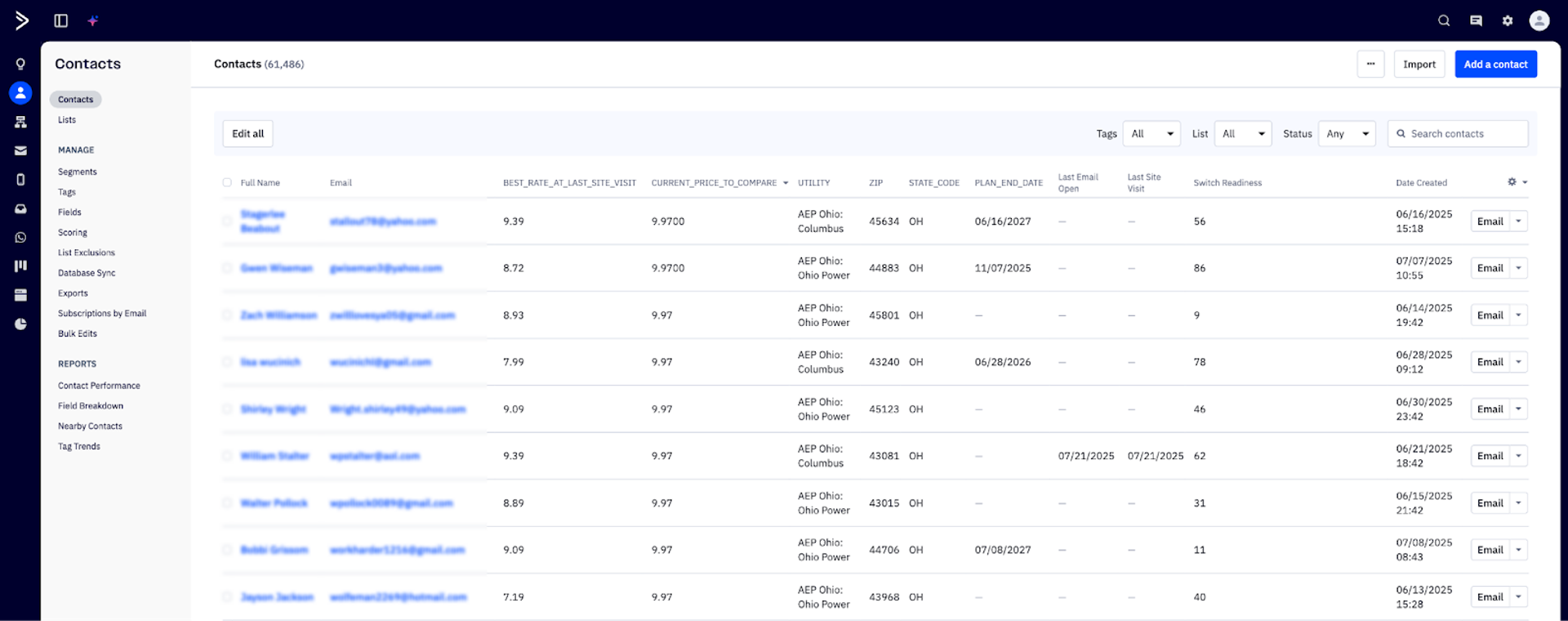
ElectricityRates.com’s ActiveCampaign contacts database showing Switch Readiness Score field.
Someone with a high Switch Readiness Score might get 14 emails in a week when their contract is ending, and a great rate appears. Someone with a low score gets put on a drip schedule. The AI handles the frequency decision based on the score and engagement patterns.
Autonomous Marketing in action
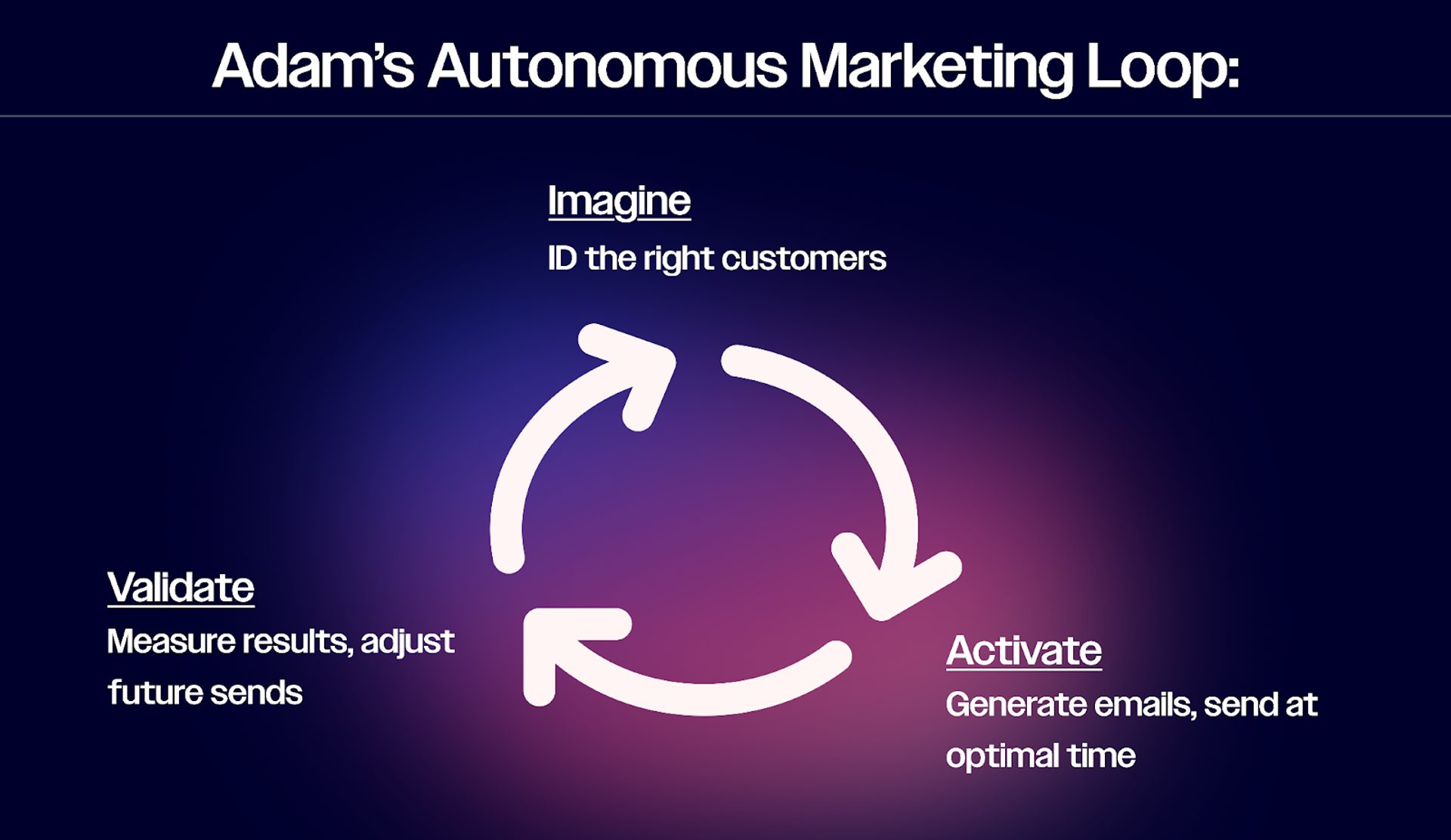
Here's what ElectricityRates.com’s automated email marketing efforts look like in action.
When PPL Electric Utilities, which serves eastern Pennsylvania, announced a rate increase to 12.95¢ per kWh effective December 1, 2025, this is what happened automatically:
- System identifies every form submission on their site that is in the PPL service area Filters for high Switch Readiness Scores
- Generates personalized emails referencing the exact rate change and available alternatives, using the company’s collection of utility company API connections that aggregates real time energy pricing
- Sends at the optimal time for each recipient
- Adjusts follow-up cadence based on opens and clicks
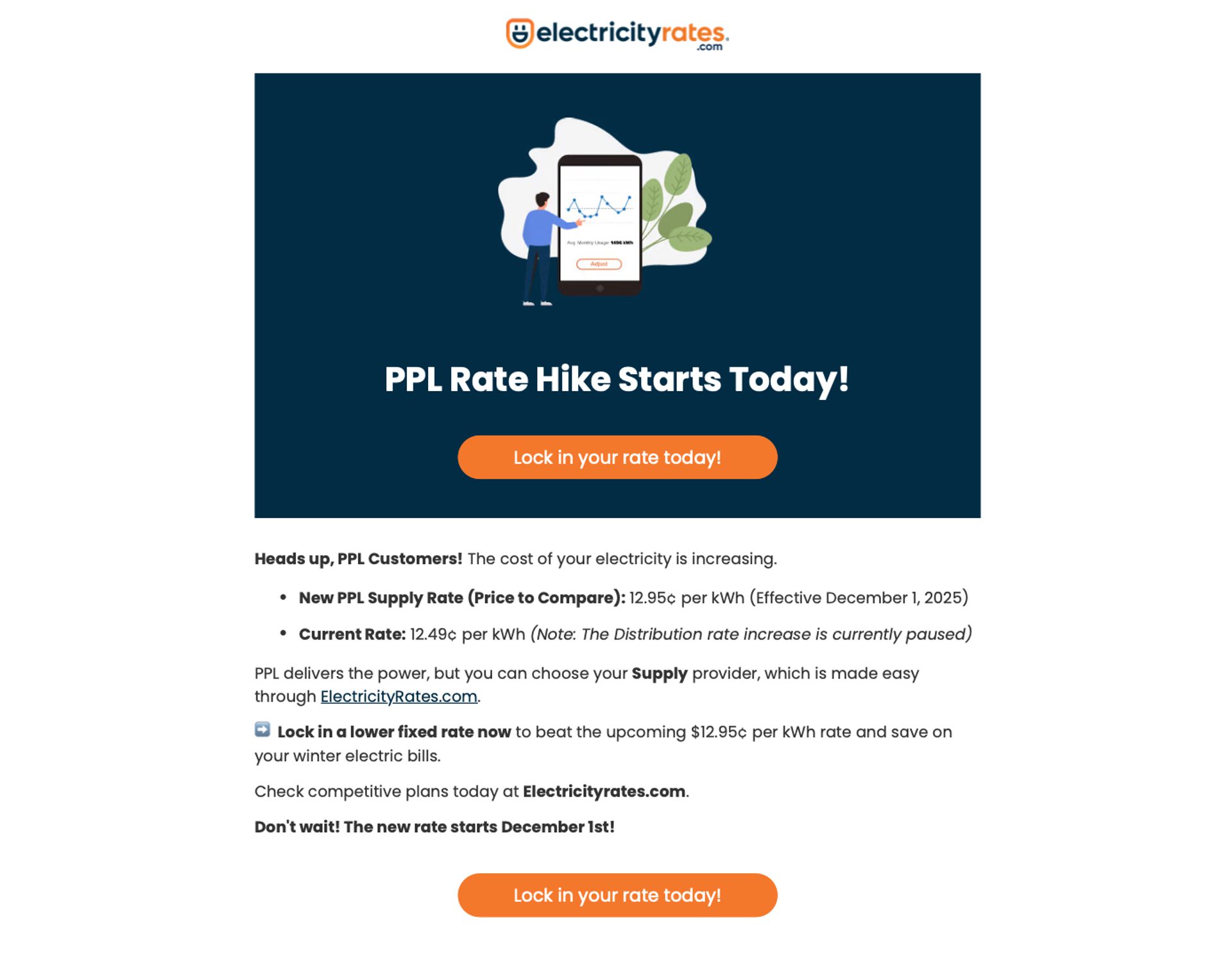
Sample of an email sent using ActiveCampaign to PPL customers to encourage them to switch providers
No one manually drafted this campaign. No one scheduled the sends. No one decided which customers should receive it.
The key is connecting external data, like rate changes, to internal signals (customer scores, engagement history) in a way that triggers action automatically. Cain's team maintains more than 25 segmentation lists organized by utility area, state, and customer status, but they're not manually managing them.
No one manually drafted this campaign.
No one scheduled the sends.
No one decided which customers should receive it.
"By having the content and the messaging all handled by ActiveCampaign’s AI, as long as the base source that it's pulling from is correct, there isn't the human element of a typo," Cain notes.
When you're advertising specific rates in specific areas, that accuracy matters.
Cain's team maintains more than 25 segmentation lists organized by utility area, state, and customer status, but they're not manually managing them.
The results: Better metrics with a one-person team
Cain started using ActiveCampaign in April 2025. He built the entire email program from scratch with this autonomous approach. In just a few months, ElectricityRates.com has experienced a:
- 200% increase in monthly conversions
- 150% increase in monthly traffic from email campaigns
- 1.77% click-through rate
- 0.2% unsubscribe rate
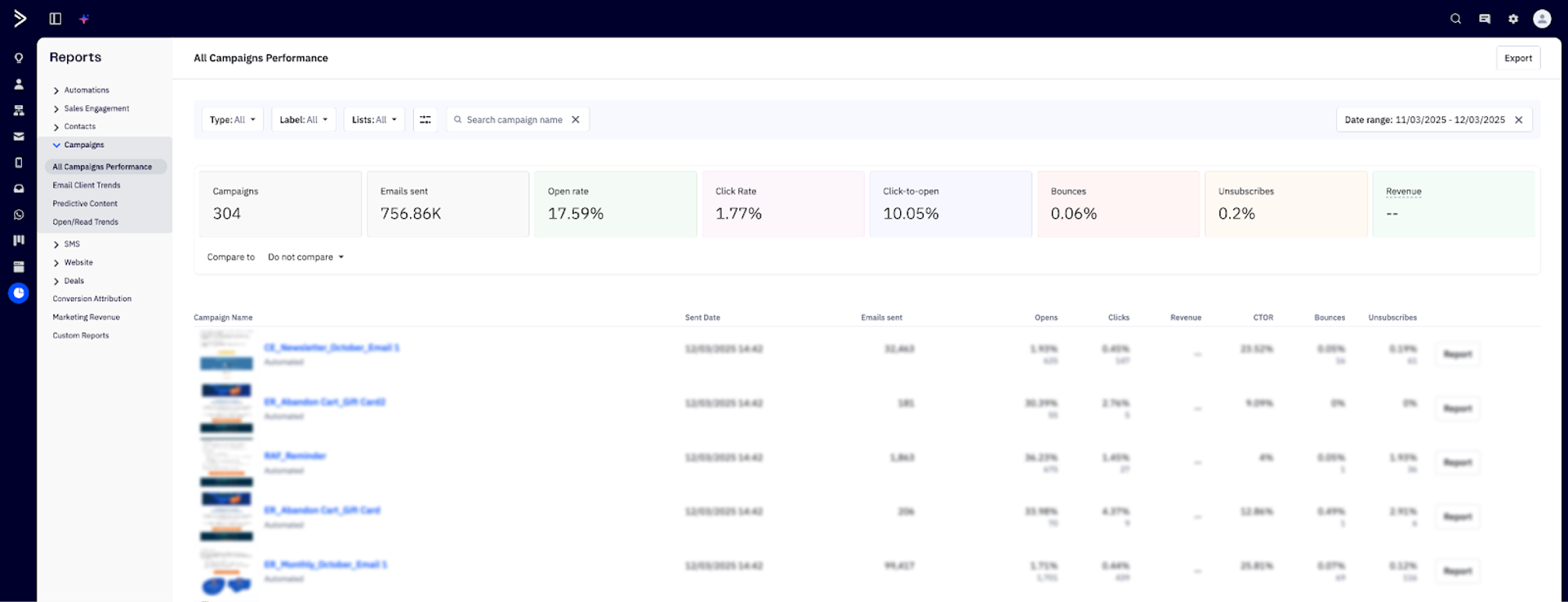
ElectricityRates.com’s 30-day email engagement performance dashboard
See how AI can help you do more with fewer resources in our guide: Using AI To Become a Marketing Team of One
"We've been able to scale our email outreach significantly," Cain says. "I think we're pretty much at the limit for how much we're able to be in people's inboxes for our customer list with relevant messaging."
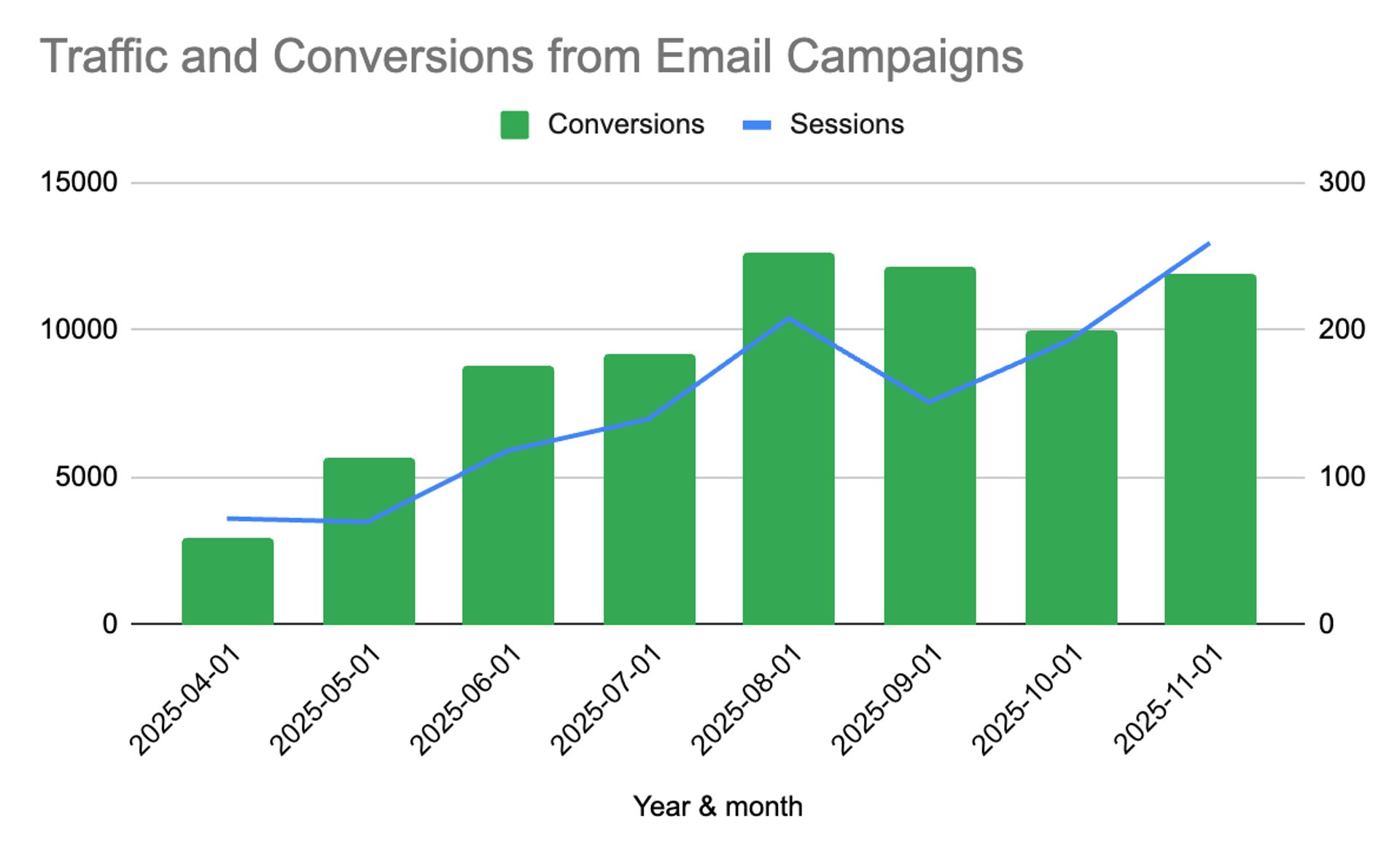
A consistent increase in traffic and conversions since ElectricityRates.com began using ActiveCampaign
Adam says that before ActiveCampaign, "if we wanted to have that level of scale, it would have taken us six people. We only have one person on the team managing this right now."
Step 1: Identify your conversion signals
What predicts customer intent in your business?
Cain's team tracked 10-12 variables per customer, including contract end dates, website visits, email interactions, past switching behavior, and potential savings.
For you, it might be product usage and pricing plan, support tickets, and renewal date, or cart abandonment and inventory changes.
Step 2: Feed your data to AI broadly
Upload your customer data, including the conversion signals you’ve identified, and ask open-ended questions: "Which customers are most likely to convert and why?" or "What patterns do you see in customers who take action?"
Let the AI surprise you.
Step 3: Layer in business rules
Add your constraints–urgency thresholds, value thresholds, engagement minimums, etc.–to your AI prompt.
For ElectricityRates.com, it’s factors like contracts ending within 60 days with potential savings of 7% or greater.
Test different combinations and measure which criteria actually predict conversions.
Step 4: Build your readiness score into your platform
Create a custom field for your score in your email marketing platform. If your platform has AI tools, your readiness score can unlock automated segmentation, dynamic campaign triggers, and frequency adjustments based on intent level.
Step 5: Connect external triggers to internal signals
respond. For example:
- Price changes → customers with expiring contracts → send email to renew or secure a better deal
- New inventory → customers who viewed that category → send email announcing new products or services
- Competitor news → customers in evaluation stage → send email sharing similar news about your business
Make the technology invisible
"We don't market ourselves as AI or tech-forward," Cain says. "Our goal is to use it to just make it as seamless as possible. I don't think people really care, and AI can kind of be a buzzword."
Cain simply wants to make the customer experience so seamless that the technology—from AI scoring to automatic triggers to segments—becomes invisible. Trustpilot reviews consistently use words like "easy," "quick," "fast," "simple."
Cain simply wants to make the customer experience so seamless that the technology—from AI scoring to automatic triggers to segments—becomes invisible.
When Cain talks about autonomous marketing, he's not talking about replacing marketers. He's talking about freeing them from repetitive work so they can focus on strategy and refinement. Between ActiveCampaign and Gemini, AI handles analysis, execution, and timing. The human handles oversight and optimization.
"There's still that review step, but it's able to take action in a way that fits your way of doing things," Cain says.
Sometimes getting started with building an autonomous marketing system just takes asking AI to look at your data and tell you what it sees.