Marketing headlines read “SMS has a 90% open rate!” and “It’s so much better than email!”
But that’s forgetting one thing: our texts are sacred space. It’s far more personal than our emails and snail mail, so we have to tread very carefully here.
Just because we have the ability to send text messages to our leads and customers doesn’t necessarily mean we should use this tactic every time we want to engage them. Text message marketing can be very powerful, but it can also do more harm than good.
Here are six best practices you can apply to make sure you’re using SMS marketing for the right reasons and in the right way.
1. Start with permission: SMS validation, opt-ins, and compliance
SMS is intimate. Unlike email or social media, it lands straight in someone’s personal space. That means the moment you send a text without permission, you risk breaking trust before you even begin.
Because of this, you need to earn the right to communicate.
Opt-ins aren’t just a legal checkbox; they’re the start of a contract with your audience. When someone gives you their number, they’re giving you permission to enter their day. Honoring that trust sets the stage for every message that follows.
To build a foundation for meaningful messaging, focus on these key actions:
- Use clear, upfront consent language. Don’t bury the terms—tell subscribers exactly what they’re signing up for. This includes the type of messages they’ll receive, how often, and how they can opt out.
- Validate numbers before sending to make sure every phone number on your list is accurate and active. This prevents messages from bouncing and reduces wasted effort, while showing respect for subscribers’ information. SMS marketing platforms like ActiveCampaign can automatically check and validate phone numbers when they are collected, helping you maintain a clean, engaged list.
- Automate opt-out handling. An unsubscribe request shouldn’t be ignored; seamless opt-out management protects your relationship and keeps your SMS list healthy. ActiveCampaign automates STOP requests so they’re processed immediately, protecting your relationships and maintaining list hygiene.
By embedding these practices into your workflow, you’ll also help stay compliant with regulations like TCPA, 10DLC, and GDPR. Depending on the location of your company and your contacts, these policies set the baseline for permission and privacy practices in SMS marketing.
2. Keep messages relevant and valuable
Your customers’ attention is precious. Unlike email, which people often check on their own schedule, a text can interrupt someone in the middle of their day. Every unnecessary message risks fatigue—or worse, an unsubscribe.
Relevance starts with knowing your audience. The more you understand subscriber behavior, preferences, and lifecycle stage, the better you can craft messages that feel useful. Compliant contact data acts as an engine for relevance. You can use it in segmentation software to personalize messages, tailoring them to fit your audience.
Timing matters, too. Even a perfectly personalized message can be annoying if it arrives at the wrong hour. Scheduling messages and setting SMS quiet hours ensures you reach customers when they’re most receptive. It also demonstrates that you value their time as much as their engagement.
Here are some practical rules you can apply to your SMS campaigns to nail relevant and valuable messages:
- Don’t use marketing jargon. Speak like a human, not a brand. Clear, friendly language builds trust and encourages action.
- Respect the 160-character limit. Brevity forces focus and makes every word count.
- Tailor messages using data. Use segmentation and personalization to ensure content aligns with each recipient’s interests or past behavior.
- Time messages thoughtfully. It’s a good idea to test send times and frequency to find what resonates best with your audience.
- Provide immediate value. Every SMS should have a purpose: try sharing a tip, a reminder, an actionable update, or a personalized promo.
When messages are relevant, concise, and timed well, subscribers are more likely to engage. Irrelevant or poorly timed messages erode goodwill, even if the content itself is well-meaning.
3. Turn SMS into a two-way conversation
SMS shouldn’t be a megaphone. One-way blasts may reach inboxes, but they don’t build relationships. The real power of SMS marketing comes from conversation: listening, responding, and making each interaction feel personal.
Invite replies with questions and clear CTAs that encourage interaction. Keyword responses can be automated to handle specified prompts efficiently, for example:
- “HELP” responses might receive an automated response linking to FAQs or support, while the team can still jump in for more complex questions.
- “INFO” could trigger a sequence with next steps or an offer.
- “STOP” is the common keyword for triggering SMS unsubscribes.
Trigger-specific conditions are also a useful way to tailor responses and follow-ups based on user-specific replies to SMS messages, increasing engagement and relevance.
Brand consistency plays a critical role in two-way SMS conversations. Your messages should come from a dedicated number, so subscribers recognize the brand and feel more confident replying. Centralized SMS inboxes help larger teams to manage replies at scale, respond quickly, and maintain context across interactions. This way, conversations stay personal even as message volume grows.
4. Use SMS as part of a multichannel strategy
When text messages operate as a silo, they’re more likely to feel repetitive or intrusive. But when they’re part of a broader, coordinated journey, they become far more effective.
The impact of SMS grows when it complements other channels. Different messaging tools each serve different purposes. A text can prompt action or provide a quick update, while email can deliver richer context or longer-form content. Together, they create a more balanced and respectful customer experience.
The best SMS marketing platforms make it easier to connect SMS with email marketing, WhatsApp messaging, automations, and other integrations, so messages support each other. Instead of asking “Should we send a text or an email?”, the better question becomes “What’s the best channel for this moment?”
When it comes to choosing the right channel for a message, keep in mind that each channel shines in different scenarios, for example:
- Email is ideal for long-form content, product education, newsletters, and nurture sequences.
- SMS is best for time-sensitive updates, reminders, confirmations, and high-intent prompts.
- WhatsApp or other messaging apps are useful for conversational support, international audiences, or ongoing dialogue.
- Social media is effective for discovery, community engagement, and brand storytelling.
Consistency across these channels depends on shared context. Centralized contact profiles ensure every message—whether sent by email, SMS, or another channel—is informed by the same customer data, preferences, and history. Having a stable, connected CRM can provide a single source of truth for customer data. This helps messages to feel connected rather than fragmented, even as customers move between channels.
5. Enhance messages with MMS and AI content
Sometimes a plain text isn’t enough to get the message across. MMS messages are similar to SMS, except they include multimedia like images or video alongside text, adding visual context and interactivity.
Images, GIFs, or short videos can make messages more engaging, but more isn’t always better. Thoughtful enrichment is key: adding bells and whistles only when they truly increase value for the subscriber. Every addition should deepen the conversation, clarify information, or make the interaction more engaging—without overwhelming or interrupting.
Some ideal use cases for MMS enrichment include:
- Appointment confirmations or reminders: Include a map or visual instructions to reduce confusion.
- Event updates: Include visuals for tickets, agendas, or location highlights.
- Limited-time offers or flash sales: Images or animated graphics draw attention quickly in a crowded inbox.
- Loyalty or reward notifications: Show a visual of the reward or coupon to make it immediately actionable.
Generative AI tools also help with enrichment by creating concise, engaging copy, suggesting alternative phrasing, or optimizing messages for tone and clarity. By pairing this with segmentation and personalization, you can produce content that feels thoughtful and tailored, without needing to draft every message from scratch.
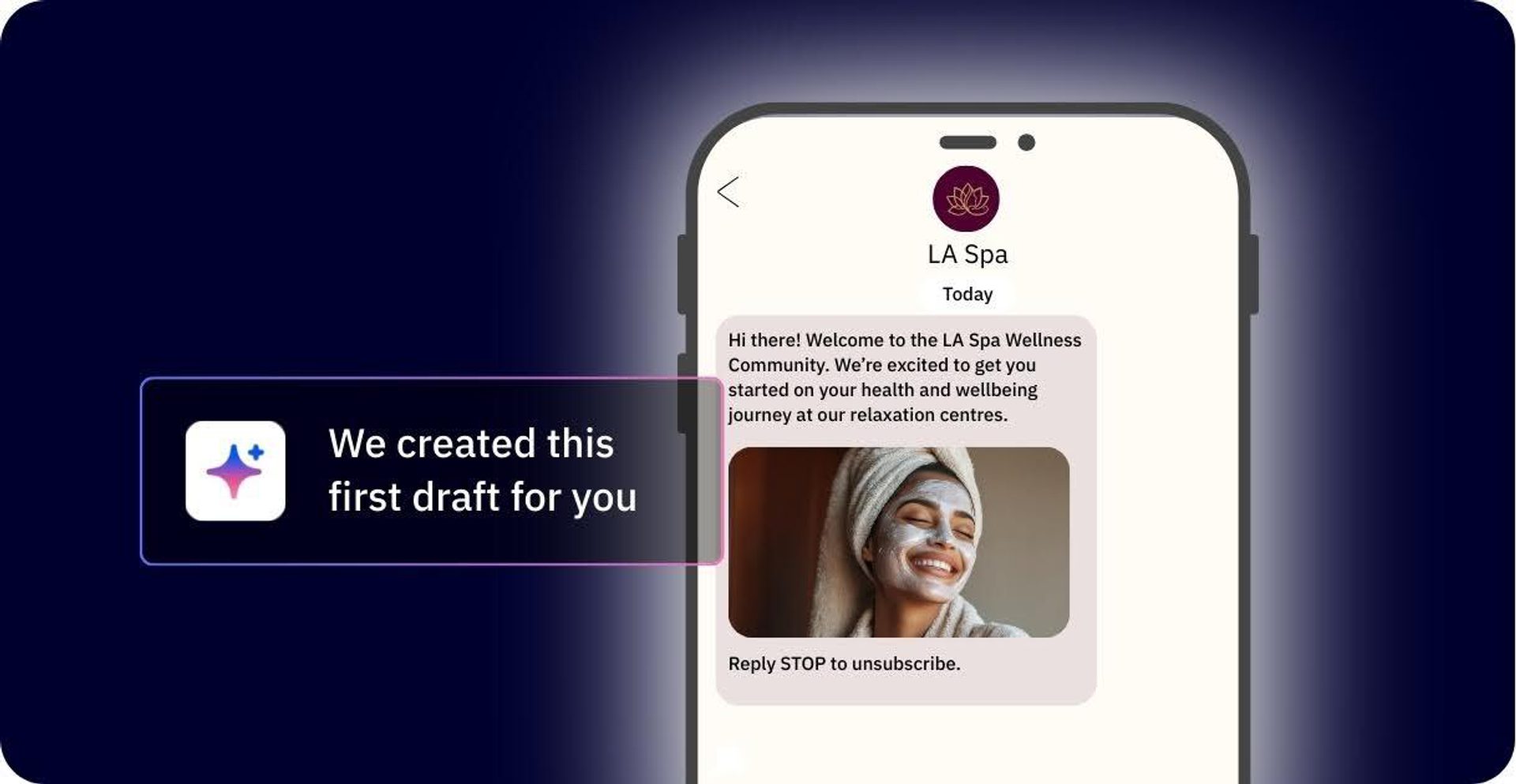
Generative AI can help to kickstart your copywriting and make campaign creation much easier.
6. Track, test, and improve every message
Sending an SMS message is just the first step. If you want SMS to drive real engagement, you need to know what works and what doesn’t. You should treat each message as a learning opportunity. The method is simple:
- Test what you send.
- Learn from how subscribers respond.
- Refine future messages accordingly.
For example, you might try two different subject lines, send times, or CTAs to see which drives higher engagement. Then, use those insights to make the next campaign even more effective. Over time, this cycle builds stronger engagement, more trust with your audience, and, ultimately, higher conversions.
Some key metrics to monitor for your SMS campaigns include:
- Delivery rate: Are your messages reaching the intended audience?
- Open rate and click-through rate: Are subscribers engaging with your content?
- Reply rate: For two-way messages, are subscribers responding?
- Conversion or redemption rate: Are subscribers taking the actions you want them to?
Tracking these metrics helps you spot trends and identify what resonates with your audience. Link tracking adds another layer of insight, showing which messages drive clicks and engagement so you can focus on what works.
ActiveCampaign provides reports on SMS campaign performance that let you click into data for further analysis and exploration, giving you visibility into results without extra steps.
It’s important to continuously use insights to improve. Measuring and iterating transforms SMS from guesswork into a strategic channel. ActiveCampaign’s Active Intelligence surfaces actionable trends automatically, helping you understand which messages, timing, or content types perform best. It even provides recommendations for specific optimizations and improvements, or can answer plain-language questions that you have about your campaigns. By applying these insights, you can refine targeting, message content, send schedules, and CTAs to make each SMS better.
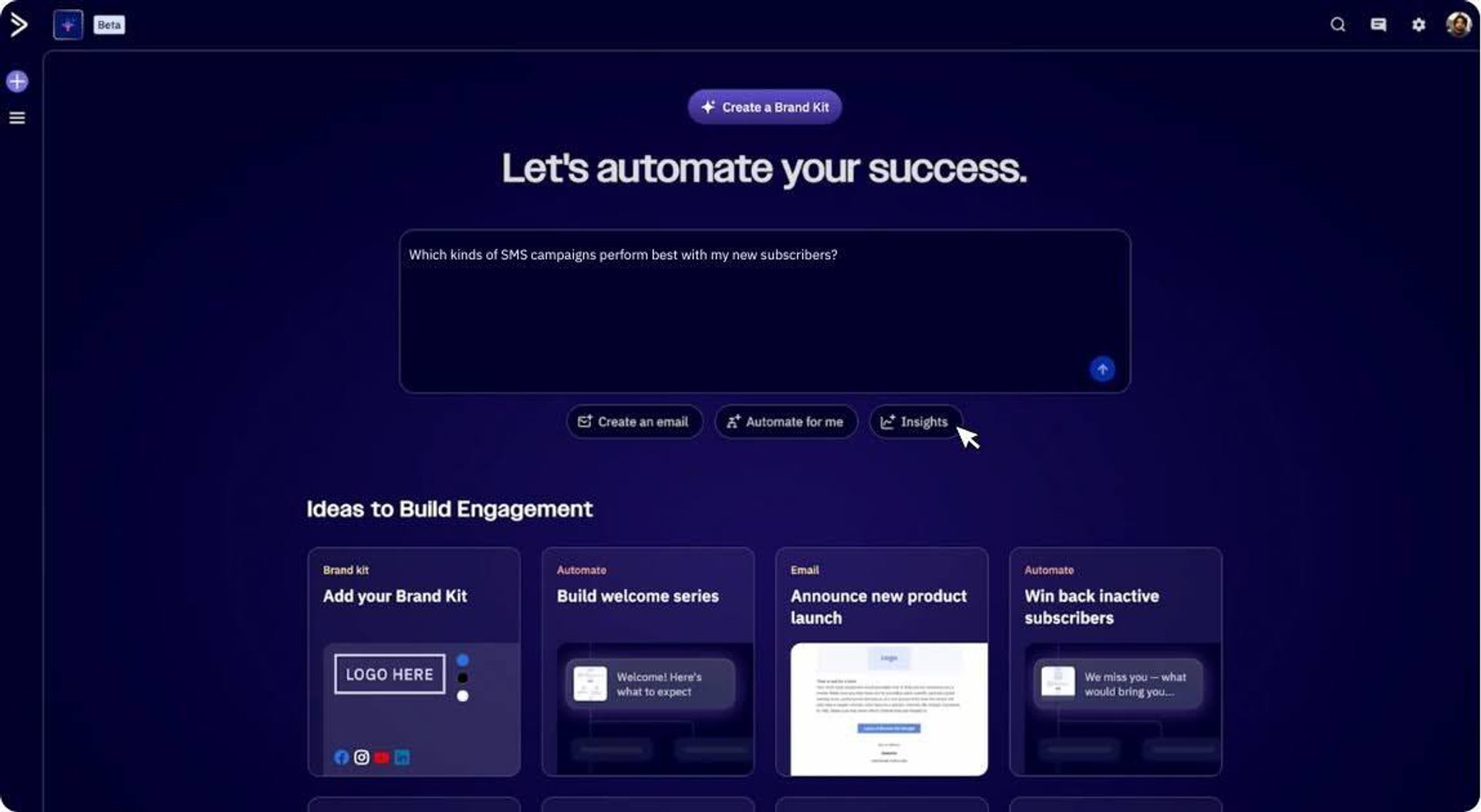
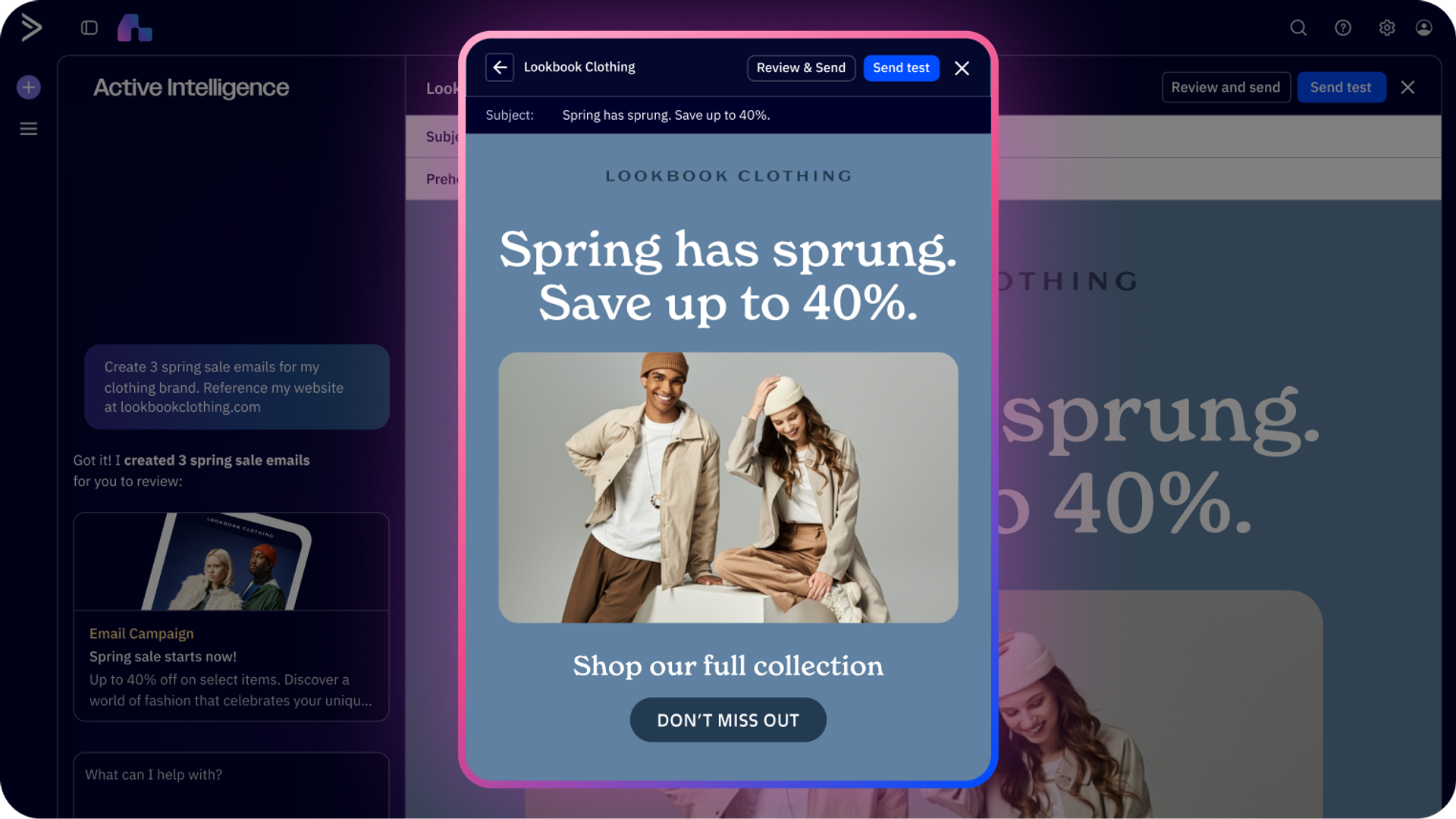
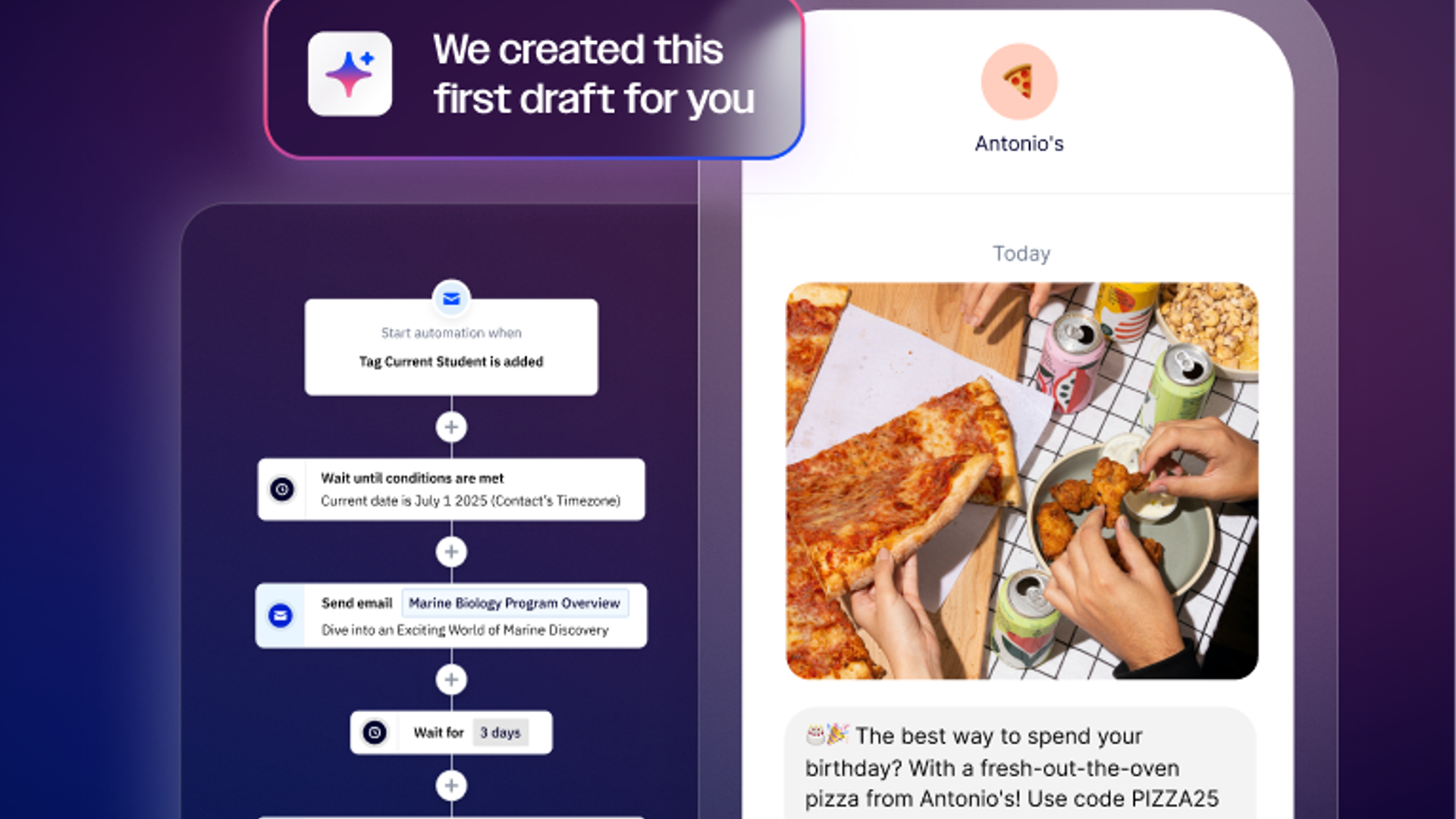
Active Intelligence has a suite of smart tools that help with campaign creation, optimization, and insights.
Make every SMS count with ActiveCampaign
SMS marketing can be a game-changer when done thoughtfully and strategically.
ActiveCampaign helps you put all these best practices into action, with tools for segmentation, personalization, two-way messaging, MMS, AI-assisted content, cross-channel workflows, and intelligent reporting.
That means you can reach the right people, at the right time, with the right message, without breaking a sweat.
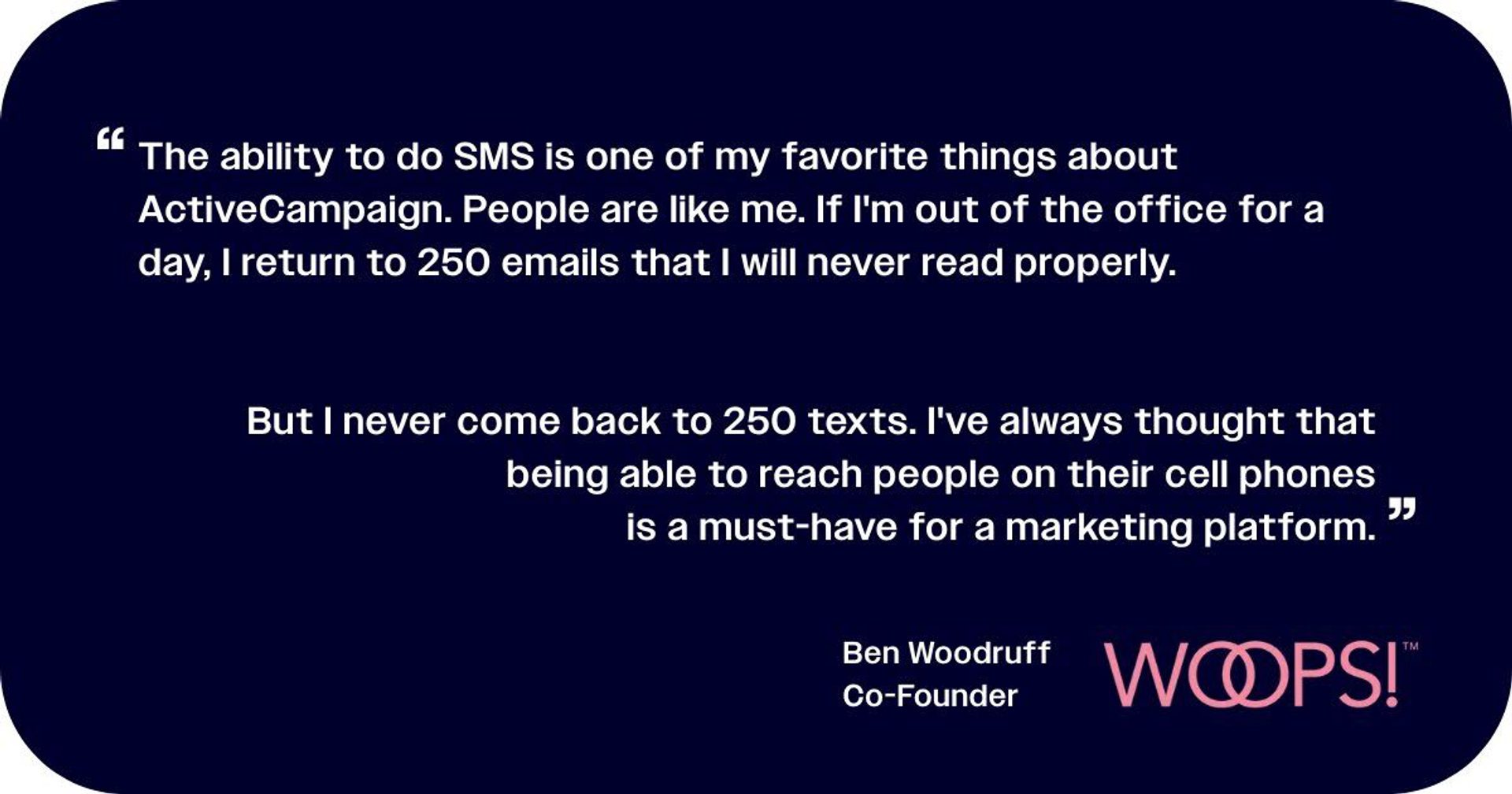
Woops! uses ActiveCampaign’s SMS automations to send timely SMS to potential franchisees rather than adding to the emails flooding their inbox.
If you’re just getting started, check out our SMS Marketing 101 Guide to learn everything you need to know to turn those pocket-sized screens into profit-driving touchpoints.
Ready to turn SMS into your brand’s secret superpower? Start your 14-day free trial and explore how ActiveCampaign can make your messages smarter, your workflows smoother, and your subscribers happier.
SMS marketing best practice FAQs
How do I get started with SMS marketing for my business?
Start your business’s SMS marketing strategy by building a permission-based subscriber list—always get opt-ins and confirm consent. Define your goals, segment your audience, and plan the types of messages you’ll send. Tools like ActiveCampaign make it easy to collect opt-ins, validate phone numbers, and set up automated SMS workflows so you can start sending relevant messages quickly and responsibly.
How can I make my SMS messages more effective?
To make my SMS messages more effective, focus on clarity, relevance, and timing. Keep messages concise, personalize content based on subscriber preferences, and send texts when they’re most likely to engage. Two-way messaging, keyword responses, and thoughtful enrichment with MMS or AI-generated copy can also increase engagement. Testing and analyzing results helps you refine every message over time.
What are the legal requirements for sending SMS marketing?
SMS marketing is governed by regulations like TCPA, 10DLC, and GDPR, which require clear consent, opt-out mechanisms, and responsible handling of subscriber data. Always include opt-in confirmation and easy ways to unsubscribe. Platforms like ActiveCampaign provide out-of-the-box consent language and automated opt-outs to help maintain compliance.
How can SMS marketing complement my email campaigns?
SMS is most effective when it’s part of a multichannel strategy, so it’s a great way to complement email campaigns. Use text messages for time-sensitive updates, reminders, or quick prompts, while email delivers longer-form content, education, or nurturing campaigns.
What types of content work best in SMS marketing?
Short, actionable messages perform best for SMS marketing campaigns—think reminders, confirmations, promotions, or urgent updates. MMS can be used to add visuals for products, tickets, or special offers.