Your business is small, but your marketing strategy doesn't have to be. If you’re a lean team or solo owner, here's how to run great email marketing, without the department-sized budget.
TL;DR: Unlike paid ads, email gives you a direct line to your audience, and you don’t pay each time you reach them. Now, AI-driven platforms can handle execution seamlessly, so you can set your goals and run complex campaigns, even as a team of one. A single clear goal decides what you send, and a few key automations will kick off the highest-ROI channel you can own. Pick a platform you won't outgrow, track a few key numbers, and you'll run marketing that once took a full department — as a team that's mostly you.
What you'll learn in this guide:
- How to pick one starting goal and the numbers that show it's working
- How to build and grow your email list on a small budget
- How to plan, write, and send your first campaign in four beginner-friendly steps, with no design or technical skills required
- The three most important email marketing automations small businesses should build first
- How to choose an email marketing platform you won't outgrow, with a side-by-side look at ActiveCampaign, Mailchimp, Klaviyo, and Brevo
What does email marketing mean for small businesses?
Email marketing remains one of the highest ROI channels available to small businesses. Studies report a return of up to $36 for every $1 spent. It often outperforms paid ads, social media, and other flashy tactics, doing so in a way that feels human.
For small businesses working with tight budgets and lean teams, email marketing isn’t just a nice-to-have.
Worldwide email marketing revenue is estimated to reach around 18 billion dollars by 2027.
Plus, email gives you things no feed can:
- You own the list. Social platforms let you rent space in front of an audience, and one algorithm change can take it away. An email list is yours to reach directly, whatever any platform decides.
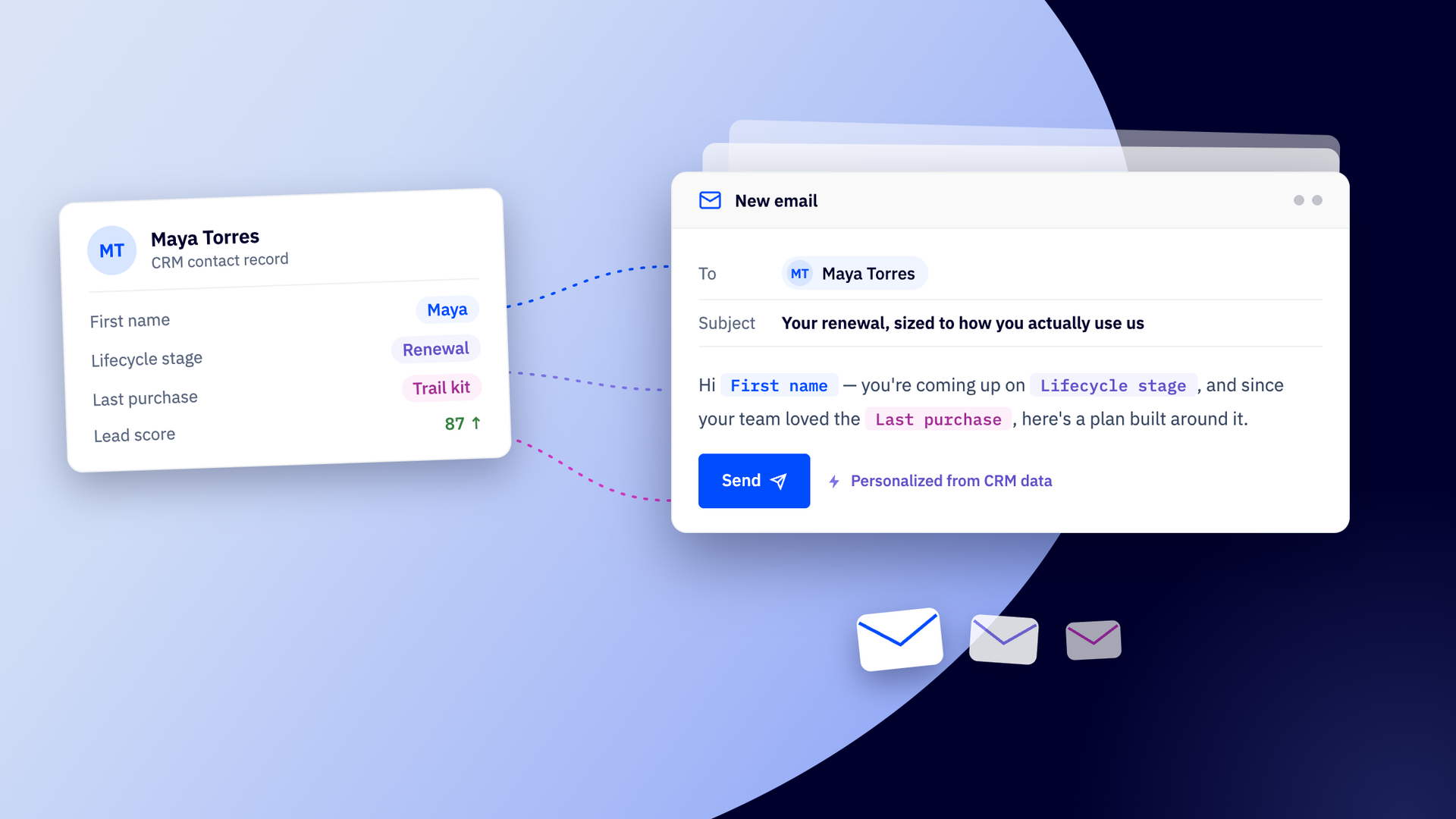
- It feels personal and real. With AI-made content filling every feed, a message from a brand someone chose to hear from reads as a real, personalized conversation. It can go well past a first name, using purchase history, the pages a person keeps returning to, or even a pet's birthday.
- Subscribers choose what they get. People can pick promotions, news, or holiday offers through a preference center, so the emails that reach them are ones they want to open. Those choices also tell you who to target and what to offer next.
You’re not renting a spot on someone’s platform. […] You own this list.
Email marketing pays off long after you hit send
Customer retention Email keeps you in front of customers between purchases, so the people you've already won don't drift to a competitor. | Repeat purchases A well-timed offer or reminder turns a one-time buyer into a regular, at a fraction of what it costs to find someone new. | Brand loyalty Consistent, useful emails build the familiarity and trust that make customers choose you on purpose, not by chance. | Content and promotions Email puts your best content and promotions in front of the audience most likely to act on them, so the work you've already made reaches further. | Customer feedback Customers can reply straight to you, so every answer shows what they want next and where to take the business. |
Starting early matters more than starting big, because even a small list compounds as you keep sending.
Compared to the costs of paid advertising, email’s affordability and repeat-use potential make it an apt choice for a no-brainer for small businesses looking to do more with less. If you're only investing in one channel to build consistency, engagement, and revenue, email is the best choice. And with today’s tools, you don’t need a marketing degree or a full-time designer to send professional, automated emails that convert.
Sophisticated email marketing used to belong to companies with the budget and headcount to run it. A big team wrote the copy, built the segments, tested the sends, and read the reports. Everyone else did their best with a fraction of the resources.
Now, with AI email marketing software handling the execution, an idea can go from your head to your subscribers' inboxes in the same week. The software also tells you what to do next, which small teams never had before. If a segment hasn't opened anything in 30 days, for example, Active Intelligence can flag it and suggest a win-back campaign, so one person wearing every hat has a second set of eyes on the numbers.
New ActiveCampaign users launch their first AI campaign in a median of about 18 minutes, compared with 2.6 hours when they build one by hand.*
*Median based on campaigns created using AI or manually, August 2025 to January 2026.
If we wanted to have that [large] level of scale, it would have taken us six people. We only have one person on the team managing [email] right now.
I’ve been pleased by the number of people who look at my company and think we must be 10 people.
Start with one goal, then change it as you grow
You don't need a full marketing plan before your first send. A good starting goal can be as simple as collecting your first subscribers and getting comfortable sending to them regularly, and you can refine the strategy as you learn what your audience responds to.
Whatever you choose, make it something you can count, like orders or sign-ups, because "engage more" is hard to check. Email goals such as growing your list or nurturing customers feed the bigger business goals you already have, like revenue and repeat purchases.
Tip: Think about what you want your emails to do. Are you trying to drive more sales, book more appointments, or stay top-of-mind with past customers? Pick the one or two that fit best, and know that you aren't locked in, because goals often take shape once you start sending.
Find the one that sounds like you:
Online store Increase orders by 15% in 60 days with a weekly product or promo email. | Service provider Capture 100 new leads in 30 days with a free consultation or quote offer. | Local business Drive 50 promo redemptions in 30 days with a targeted offer to nearby subscribers. | Consultants and creators Book 20 discovery calls in 60 days with a 5-email welcome series. |
These goals shape:
- Content (what you're sending)
- Frequency (how often you send)
- Success benchmarks (how you'll know it’s working)
When customers set up an ActiveCampaign account, they pick a main goal. These are the ones on the list:
- More targeted, more effective campaigns to your contacts
- A bigger list and more leads
- Stronger brand awareness
- Nurtured contacts and more business
- Automated data collection
Pick the closest fit and start there. You can change it any time.
If setting a goal feels intimidating, don’t worry. A goal is just a plain answer to one question: what do you want this email to do?
We say, ‘How much do you want to sell in your first year of business?’ Then, using the average conversion rates for the system, I can help them back into a monthly lead goal and share some of the best tactics to help them do it. […] Then, we back into the lead goal based on their average job size and their conversion rates. From there, we determine how many leads a month they need.
The right platform means you won't always have to shape your goal alone. With ActiveCampaign, you describe what you're after in plain language, and AI tools turn it into live campaigns with trackable Business Goals. As you grow, the same reports show what's working, so you can adjust your goals with real numbers behind you. Start with one or two, and expand once those are running.
Build and grow your email list without a big budget
When it comes to building your email list, quality beats quantity. A small list of people who know and like you often beats a big list of strangers, so send emails they'll want to open and treat every reply as a chance to build a real relationship.
Low-cost, high-impact ways to grow your list
Create a lead magnet Offer something useful in exchange for an email, like a discount code, how-to guide, or free trial. | Use existing touchpoints Add sign-up prompts to receipts, booking confirmations, or at your checkout counter with a quick “Want exclusive offers? Join our email list.” | Optimize your website Add lead generation forms to high-traffic pages: your homepage, blog, or even pop-ups timed to exit intent. | Convert your social followers Post your lead magnet or sign-up offer across your social profiles. Make it easy to subscribe. |
More inspiration:
Choose the right email marketing platform for your small business
When choosing an email service provider, small businesses should look beyond flashy features and focus on what truly supports their growth. With limited time, budget, and team capacity, it's essential to compare platforms based on the core tools that will make a daily difference.
Here are four email marketing platforms that are worth consideringtheir weight in gold for small businesses.
ActiveCampaign: Best for getting started fast and scaling as you grow
Want to run campaigns like a full marketing department without hiring one? ActiveCampaign is built for a small business that wants to build, personalize, and optimize at that level.
Active Intelligence works as a marketing advisor and an extension of your team, so you don't need a marketing background to use it well. It watches your account and drafts campaigns from your brand and performance data to fill the gaps it finds, and nothing sends until you approve it.
- AI Brand Kit imports your logos, fonts, and colors from a URL, so every email looks like you without a designer.
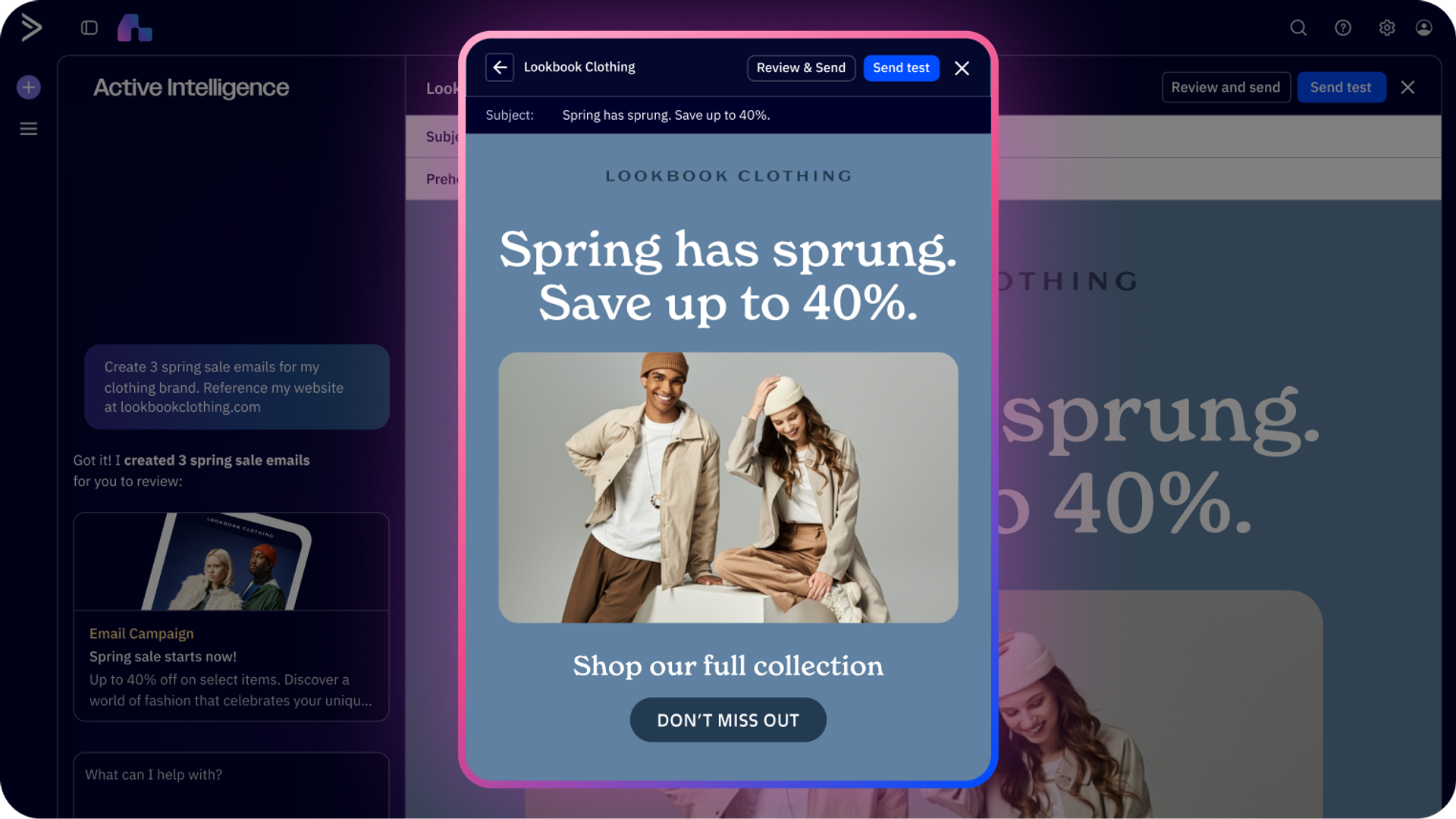
- AI Campaign Builder generates a full campaign from one prompt, turning a blank page into a ready-to-edit draft in minutes.
- AI analytics and reporting tools proactively act on the opportunities you didn't have time to find, so nothing slips through when capacity is tight.
Plans start at $15/month and include AI-assisted email and automations, which are emails that send themselves when a contact does something, like joining your list or leaving a cart behind. You can add a full sales CRM, SMS, and WhatsApp as you grow, so you can start lean and add channels when you're ready, all on one platform.
Short on hands but not on ambition? ActiveCampaign gives a small team the reach of a big one.
We didn’t want to pick any tool, email marketing or otherwise, that was just something we could use for today and we’re going to outgrow really fast. We wanted to build or buy something that was going to help us next year.
It used to take me a week to do one email. Now, with AI, it’s three emails a week. It removed the hesitation to even start. I feel like the AI tools are my creative partners. Just sitting down and clicking that button helps me go from hesitation to inspiration.
Mailchimp: Built for simple campaigns and minimal personalization
Want to get your first ever campaign out the door fast? Mailchimp is built for approachable, quick campaign creation:
- Fast, prebuilt landing pages and forms
- Straightforward, list-based segmentation you can set up without a learning curve
- A large template library that turns a blank page into a ready-to-send email in minutes
Those tools can get a first newsletter live in an afternoon.
Paid plans start at $26.50/month for 1,000 contacts.
Later on, you might find you need stronger automation capabilities. Mailchimp’s segmentation and personalization lean on static lists, so users typically switch platforms once they’re ready for workflows that react to what each contact does.
If you want the fastest possible start now, Mailchimp could work for you.
Klaviyo: A fit if ecommerce is all you need
Want a purpose-built ecommerce email and SMS tool? Klaviyo is designed around online retail:
- Prebuilt flows for the moments that drive store revenue, like abandoned carts and post-purchase follow-ups
- Deep ecommerce reporting tuned to product, order, and customer-value data
- Behavioral segmentation and predictive metrics built around shopping activity
Out of the box, those tools give an online store more retail-specific firepower than most general platforms.
Paid email plans begin around $30/month for 1,000 contacts.
Because it's purpose-built for ecommerce, you may end up adding tools like landing pages or a standalone CRM that a broader platform includes, so keep an eye on scope and cost as you grow.
If you're a pure ecommerce brand with low-lift campaigns, Klaviyo can be a strong fit.
Brevo: Low cost to start, light on automation
Want to start email marketing for your small business on the tightest possible budget? Brevo is a good choice for solopreneurs and creators who need simple broadcasts and light automation. It focuses on low cost to entry:
- A free tier with unlimited contacts, so you can build your list before you pay anything
- Pricing based on emails sent, not contacts stored — a big list costs nothing until you actually mail it
For a beginner watching every dollar, that pay-for-what-you-send model is a genuinely gentle on-ramp.
Paid plans start around $9/month when you're ready for higher send limits.
Automation and segmentation are lighter than a dedicated automation platform's, so as your campaigns get more sophisticated and behavior-driven, you may need capabilities Brevo isn't built for.
If keeping early costs low is your first filter, Brevo is a smart starting point.
Start your small business email marketing program in 4 steps
You can finish this sequence in a week, working an hour or two at a time. None of it requires design or technical skills. Follow the four steps in order and you'll have a working email marketing program by the weekend.
Step 1: Choose a platform you won't outgrow in six months
The tool you pick now shapes what's possible later, so choose for where you're headed, not just where you are today. When you're a small team, the right platform quietly does work you'd otherwise do by hand; the wrong one becomes a ceiling you hit in a few months, right when things start working.
Look at the platforms above and keep in mind a few things are non-negotiable at this stage:
- A visual automation builder, so you can set up a workflow once and let it run, instead of sending every email by hand
- Built-in forms and landing pages, so you can capture and convert leads without paying for a second tool
- Contact-level data, so you can see what each person actually did, not just who opened a broadcast
- Deliverability infrastructure, so the emails you send actually land in the inbox, not the spam folder
- Pricing that doesn't jump as your list grows, so a win (more subscribers) doesn't turn into a bill you didn't plan for
Avoid two traps that catch small businesses most often:
- Too simple. Some tools get you sending fast but cap you at basic broadcasts, so you hit a ceiling the moment you want real automation.
- Too heavy. Others are priced and built for enterprise teams, so you'd need a specialist, budget, and time a small business doesn't have to operate them.
ActiveCampaign pairs automations that run on their own with AI guidance, so the platform handles the complexity for you. You get enterprise-level capability without the enterprise-level learning curve.
Step 2: Set up your capture points and stay compliant from day one
Every subscriber is someone who chose to hear from you, and for a small business, that permission is worth more than any follower count. Collect emails in the four places that matter most:
- A website signup form catches visitors who are already interested while they're on your site
- A checkout or booking confirmation turns a one-time buyer into someone you can reach again
- A dedicated landing page for one offer gives your lead magnet or promo a home you can send traffic to
- In-person or point-of-sale capture like a tablet form or QR code that adds the people who walk through your door
What makes a form convert is restraint: one clear promise, two fields maximum, and an immediate reward. Ask for less and you'll get more signups.
"Gmail Outlook saw inconsistent engagement. Some people opened up everything. Some people opened up nothing. They decided I wasn't relevant."
See how Don Purdy, Director, Executive MBA Program, University at Albany doubled his deliverability rate with thoughtful segmentation.
Setting all this up used to mean a developer, a designer, and a compliance headache, none of which a small team has on hand. ActiveCampaign's form and landing page builders handle the mechanics for you, and Active Intelligence can draft a landing page from a plain-language prompt, so you go from idea to published capture point in minutes instead of days. Pages and embedded forms add a contact, tag them, and trigger a follow-up sequence the moment someone submits, with no developer involved.
Compliance is handled for you, too. GDPR consent fields come pre-checked and unsubscribes are processed automatically, so you stay CAN-SPAM and GDPR compliant without hiring legal help, and you protect your deliverability along the way.
Step 3: Write and send your first campaign
Keep your first send simple. Use:
- An engaging subject line that names the benefit
- One idea in the body
- One call to action, and a plain-text-style signature from a real person.
Try our email subject line generator to get started.
[AI] has completely gotten rid of my ability to procrastinate because I no longer have to look at a blank screen.
Start with a welcome email or a "here's what's new" note to existing contacts rather than a full newsletter program. Done beats perfect, because your first send is how you learn what your audience responds to.
AI takes the blank page off your plate. From a single plain-language prompt, Active Intelligence can draft a whole campaign, subject line, copy, images, layout, and CTA, pulling in your logos, fonts, and colors so it looks like your business, not a template. It can even split your contacts into the right segments and tailor the message to each one, so the email feels personal without you writing five versions by hand. You start from something to react to instead of nothing, with no designer required.
You stay in control the whole way. The draft arrives ready to edit, cut, and approve before anything sends, so it's your voice and your judgment going out, just without the hours it used to take to get there.
I see AI as a thought partner. I don’t ever expect AI to do my work for me.
Step 4: Track the three numbers that matter
Most analytics dashboards throw twenty numbers at you, and for a small team with no analyst, that's a fast way to track nothing at all. Three metrics tell you almost everything at the start:
- Click-through rate: Did the message land?
- Conversion or revenue per send: Did it work?
- Unsubscribe rate: Did it annoy people?
Healthy click-through rates often sit between 1% and 5%, varying by industry. Revenue per send typically climbs as your targeting sharpens, and unsubscribes should stay well under 1%. Treat these as directional, not as pass-fail lines.
Open rates alone mislead now because privacy features and automated clicks inflate the numbers. Contact-level reporting is particularly helpful because it connects an email click to a page visit to a purchase or booking, so you can prove which campaign actually paid for itself, the number a small business cares about most.
Active Intelligence might tell me questions or performance statements for a specific segment. So we test it. The system picks the winner automatically. We analyze what happened and that shapes the next campaign. I’m not starting from scratch. I’m building on what already worked.
Instead of you digging through reports, Active Intelligence’s proactive reporting software will surface what changed and what to do about it, flagging the campaign that's slipping or the segment worth doubling down on.
3 email marketing automations to build before anything else
When you have no spare hours, build the automations that run forever off a single setup. These three deliver the most revenue per hour of effort. Set them up once, and most of your email marketing program will run itself.
Each one covers a stage of the customer journey, the path someone takes from first hello to repeat purchase, so you're building the whole path once instead of sending one email at a time.
Welcome series When someone signs up, send a few automatic emails to say hi, share what you're about, and make a first offer. New subscribers are never more interested than right after they join, so this simple sequence tends to earn more than any one-off email you send. | Cart recovery When someone almost buys, then drifts off, a couple of well-timed reminders bring them back. It's the easiest money to win, because these people already wanted what you're selling. | Re-engagement When a subscriber goes quiet for a couple of months, send one honest "still want to hear from us?" People either come back or drop off, and both are wins: you keep a cleaner list, which costs less and helps your emails reach the inbox. |
ActiveCampaign has a library of 1,000+ ready-made automation recipes, so you can activate your email marketing flows from day one instead of building from scratch. Pick the recipe, adjust it to your business, and switch it on, often in a single afternoon.
Using ActiveCampaign’s abandoned cart sequences, Morrow Audio recovered $30,000 in sales that would have otherwise slipped away.
Run email marketing like a full department with Active Intelligence
Email marketing gets neglected when you're running a small business, usually due to a lack of hands, rather than a lack of ideas. Now, the work that used to require a copywriter, a designer, an ops person, and an analyst is the platform's job.
Active Intelligence works as a loop that ActiveCampaign calls Imagine, Activate, and Validate, and you make the call at each stage:
- Imagine: you start with a goal, and Active Intelligence turns it into a plan with the messaging, timing, and follow-up steps already mapped.
- Activate: it builds the campaign or automation from that plan, and you edit and approve it before anything goes out.
- Validate: it checks what happened and recommends the next move, and Scheduled Tasks can deliver those insights to your inbox without a prompt from you.
Each round feeds the next, so your plans get sharper the longer you use it.
Its recommendations draw on billions of anonymized data points from similar businesses. A first-time sender starts from proven patterns rather than guesswork about what to send, which shortens the road to results.
Customers using ActiveCampaign’s autonomous marketing platform save an average of 130 hours per week on manual marketing tasks. That's time a small team can put back into serving customers, improving your product, or running the rest of the business.
Anybody can do it. Within your fingertips, you have the marketing advisor, the brains to do it, with AI beside you.
For the first time, a small business can compete with much larger ones on quality and consistency, not on how many people it can afford to hire. That's the idea behind autonomous marketing: the platform handles the assembly, and you make the decisions.
Your competitors have a marketing team. Now so do you.
FAQs
How do I start email marketing for a small business with no experience?
Start from a user friendly email marketing platform, add a signup form on your website, and send a welcome email to everyone who joins. Don’t overthink it. Your first goal is to get subscribers and get comfortable sending regularly and you can improve the design and strategy as you go.
How do I grow my email list from scratch?
Give people a real reason to sign up, like a discount, a free guide, or early access to new products. Put your signup form everywhere your customers already are: your website, social profiles, checkout page, and even a QR code at your counter. And don’t be shy about asking in person. Your happiest customers are usually glad to join.
What if I have a very small email list?
A small list of people who actually know and like you often beats a big list of strangers. Focus on sending emails they’ll want to open, and treat every reply as a chance to build a real relationship.
How much does email marketing cost for a small business?
Depending on your list size and needs. Compared to most marketing channels, email is one of the most budget-friendly ways to stay in touch with customers. ActiveCampaign offers a free 14-day trial for you to try.
How often should small businesses send marketing emails?
For most small businesses, once a week to twice a month is a good starting point. Consistency matters more than volume, so pick a schedule you can actually stick to. If people open and click, you can try sending more often. If unsubscribes jump, ease off a bit.
Is it possible to fully automate marketing emails without losing the personal touch?
Yes, as long as you write your automated emails like you’re talking to one person, not a crowd. Use personalization tags like first names and past purchases, and set emails to go out based on what customers actually do, like signing up or abandoning a cart. Done right, automation makes your emails feel more personal because they arrive at the right moment.