Key stats
- 5 Xcustomer spend by converting buyers to members with ActiveCampaign
- 500+abandoned carts recovered in 6 months
- 80 %of customer questions answered autonomously through SMS
- 20 %higher open rates for emails personalized using tags
Chris Clark used to copy 700 email addresses into Gmail's BCC field every time he wanted to announce new tennis classes. He'd hit send and hope he didn't trip Google's spam filters.
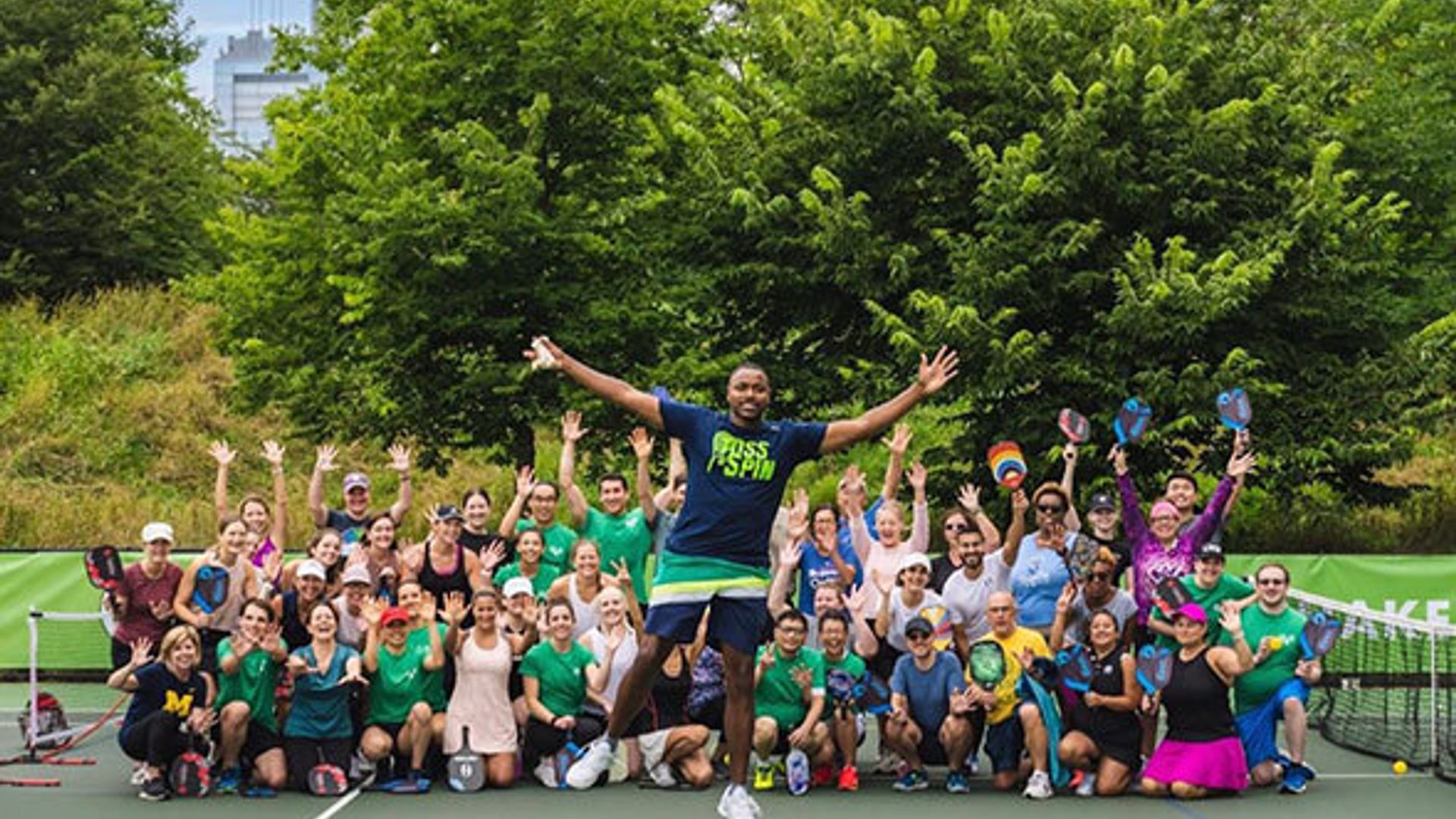
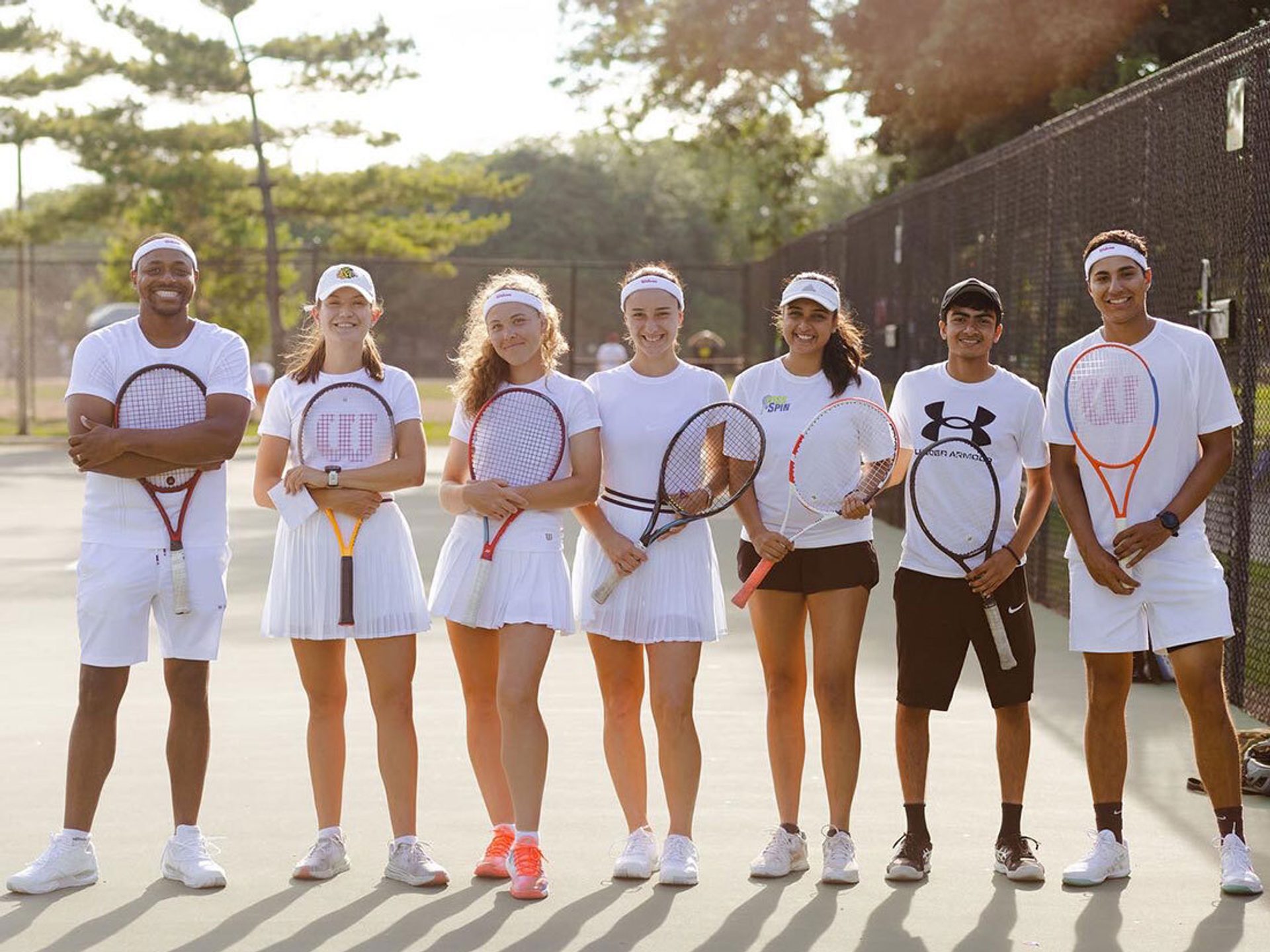
In the early days, Clark quickly started feeling overwhelmed by the manual work of running the business. Today, Toss and Spin runs over 500 automated customer journeys, sends hyper-targeted SMS campaigns to specific Chicago zip codes, and has grown from two employees to 16 full-time staff. The company runs racket sports programming through the Chicago Park District and creates brand activation experiences for clients like United Airlines, Chase, and Grey Goose.
Clark, a former college tennis player who spent nine years in corporate roles at Gatorade and Wilson, started the company during the pandemic after being furloughed. He found himself sitting outside on a tennis court and decided he wasn't going back. "How do we create something that is impactful to the community?" he remembers thinking. "Of course, tennis. Everybody can be outside."
The mission evolved quickly. "We used to say our job is to teach racket sports," Clark explains. "We've now reversed that. Our job is to connect the community and that connector happens to be racket sports."
But as the business grew, Clark hit a wall. Manual customer communications couldn't scale. He needed systems that can nurture thousands of contacts across multiple park locations without hiring a team just to manage email.
The Challenge
Between Gmail BCCs and ActiveCampaign, Clark tried MailChimp and MindBody. Neither solved the core problem of manual work that couldn't scale. "You get a hundred customer emails a day," Clark points out. "Who's going to reply to them all?" Revenue was unpredictable. Data analysis required hiring an intern to spend months pulling reports that were outdated by the time they finished. The breaking point came in December 2024 when Clark told his team to find something better.
Choosing ActiveCampaign
The team evaluated 15 platforms. ActiveCampaign ranked first in seven out of eight categories. Cost was the only exception, but even that didn't hold up. "There were similar costs with some that had nowhere near the capabilities," Clark says. The recommendation was unanimous.
What sealed it was the onboarding support. "They didn't know me. I didn't know them, but they really wanted to see this work for us," Clark recalls. "In a world where I don't know tech, to feel like I have that kind of support is phenomenal."
How Toss and Spin Uses ActiveCampaign
Implementation started in March 2024. Within 30 days, Clark saw results. "I'm talking like 30 days implementing, everything's set up," he says. "I thought, 'wow, I didn't know we had this much revenue potential here.'"
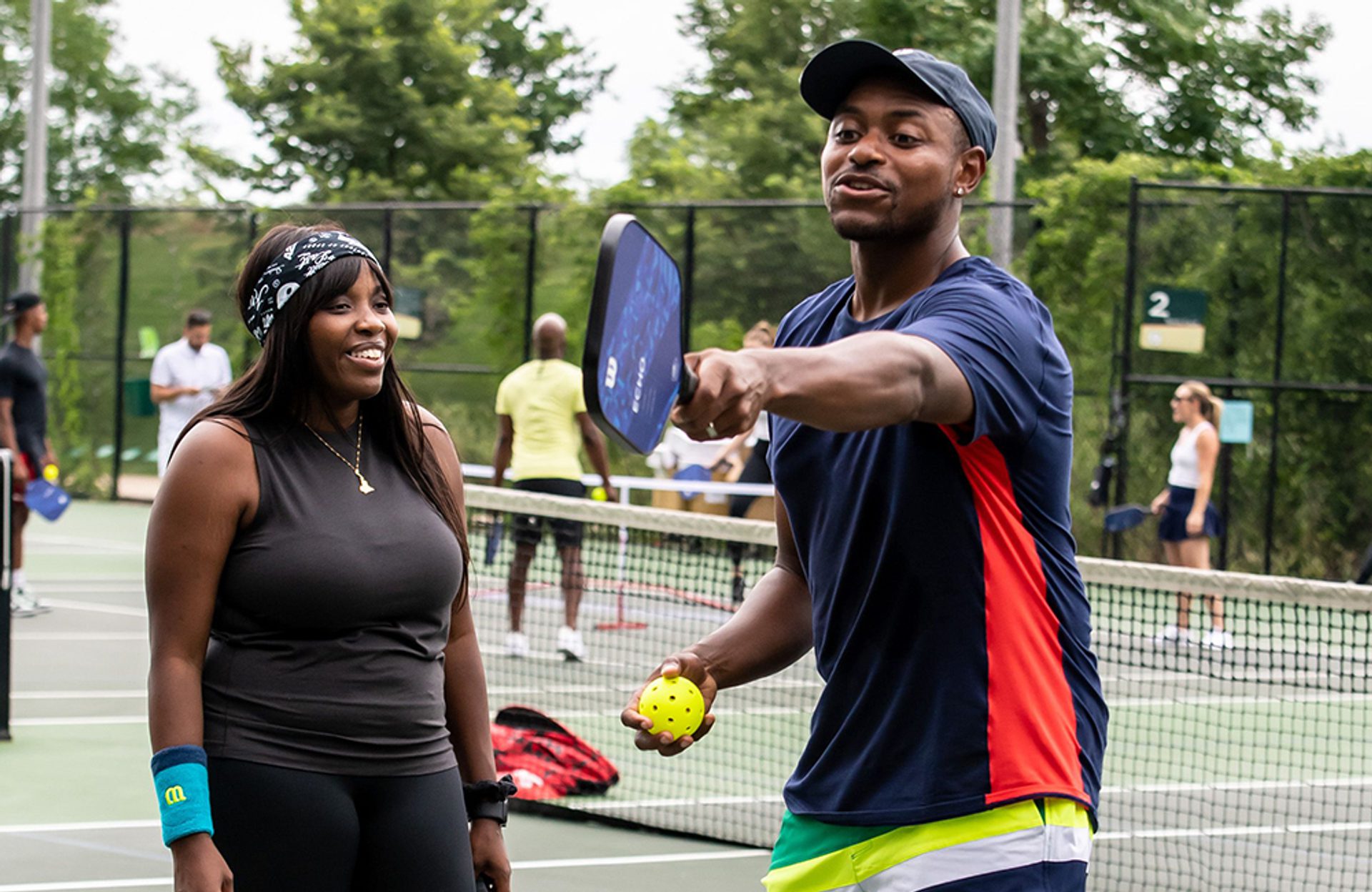
The impact came faster than Clark expected. "I thought, our newsletter drives X amount of revenue. I can see our database is growing. We're engaging with them. And then not only that, it was like, okay, so what about if we send more? Like, is that going to work? Well, let's try it." The answer was yes.
That speed came from Active Intelligence. Instead of manually deciding which customers to target or when to send, Clark asks questions and gets instant answers. Which zip codes convert best? What subject line length works? When should we send? "The system gets better and better the more you use it," Clark explains. "The more data, the more you do with it, the smarter it can measure things off of." This is autonomous marketing: a system that learns and optimizes itself.
Building the Foundation: Segmentation by Entry Point
Everything starts with tags in ActiveCampaign. Toss and Spin has four main customer entry pathways: programming, private lessons, court rentals, and brand experiences. Every contact gets tagged based on how they entered and what they've shown interest in.
"The most important thing for us is segmentation," Clark emphasizes. "Being able to understand how someone's coming into our database, how they are tagged, and what their interest is."
The tagging system has three layers, entry point tags (Court Rental, Lesson Inquiry, Class Signup, Brand Activation), behavioral tags (click frequency, email engagement, inactivity status), and location tags (park names and zip codes). When someone books a court rental, they're tagged and enter a specific automation. Multiple clicks on lesson information trigger an additional tag and a different sequence.
The data backs up the effort. Targeted emails to specific segments outperform database-wide blasts by 15-20%. Clark has developed a mantra for this: "Relevance drives revenue."
The Member Conversion Pathway: Court Rental to Lifetime Customer
Members spend five times more than non-members at Toss and Spin. So the entire automation strategy focuses on one goal: get people to become members within 60 days of their first interaction.
The pathway is simple but powerful. First court rental triggers: "Save 10% on your next rental." Second rental: "Need practice? Get 15% off lessons." Six rentals: "Become a member and save 15% permanently." After 90 days of inactivity, one final offer: a free class. No response? Move to quarterly check-ins only.
"It just took someone doing something once and then it just goes itself," Clark says. "You set the triggers, you set what you need to do, and then it goes."
If people don't take the free class offer, Toss and Spin segments them out. "If we can't give you a free class, you're probably not the right consumer for us," Clark says.
But there's one more offer in the sequence that Clark won't reveal. "I call it the grand slam offer," he says. "It's so good you feel silly not purchasing. But I won't tell what that is. Then maybe everybody would just wait a little longer to get it." The point: Toss and Spin has thought through progressive value at every stage, holding back their strongest offer for the right moment.
Using Active Intelligence and SMS to Fill Last-Minute Openings
This is the tactic Clark gets most excited about. It shows how powerful segmentation can be when paired with SMS marketing.
In one scenario, a tennis class at a specific Chicago park has 12 spots left to fill and only three days until it starts. In the past, someone would have to manually email everyone in the database, or just let those spots go empty.
Now, the team uses a repeatable process to fill those spots quickly. Clark explains. "We send an SMS out to the people who are tagged with that park, exclude the people who've already signed up at that location, and we offer the open spots for half off."
Three days before a class with empty spots, create a segment in ActiveCampaign with contacts who have tags for that park name OR live in target zip codes, but do NOT have a tag showing they've already registered. Draft an SMS with the discount and booking link. Send. Monitor registration.
Clark uses a phrase to describe this approach: "Southwest would rather have someone in the seat than have an empty seat, right? So if I can get someone interested in the class who hasn't played in three months, that's a win for us."
The geographic targeting came from Active Intelligence. Instead of hiring an intern to manually analyze thousands of customer addresses, Clark asked a simple question: "What are our top six zip codes that people live in from Toss and Spin?" The answer came back in under a minute.
The SMS results speak for themselves. Across all campaigns, 33% have zero unsubscribes. The rest have less than 1% unsubscribe rates. "People are really paying attention to what we're sending," Clark says.
Clark was skeptical about SMS at first. "I've been against text for years until I saw what it can do with the right messaging," he admits. The difference is relevance. Generic promotional texts get ignored. Hyper-local, time-sensitive offers to people who've already shown interest in that exact location get responses.
How to Build a Last-Minute Inventory Campaign
This strategy works for any business with perishable inventory: classes, appointments, hotel rooms, event tickets, restaurant reservations.
- Identify your perishable window - 3 days for classes, same-day for restaurants, 7 days for hotels
- Ask Active Intelligence - "What zip codes do most customers come from?" Get your top 5-10
- Build your segment - Include target zip codes + past customers. Exclude current registrants (critical to prevent cancellations)
- Create urgency - Significant discount (Toss and Spin uses 50%), time-limited (24 hours)
- Send via SMS - Faster response than email for last-minute offers
- Optimize - After 3-5 campaigns, ask Active Intelligence which zips converted best and refine
SMS Automation with Active Intelligence
Text messaging isn't just about promotional campaigns. Toss and Spin also uses SMS for customer service. How do you handle incoming questions without hiring someone to monitor texts all day?
The answer came from using Active Intelligence to anticipate the questions before they arrived. Clark asked: "What are the questions most likely to come back from SMS campaigns?" Active Intelligence analyzed past conversations and identified the five questions people ask 80% of the time: class times, pricing, skill levels, location details, and how to register.
ActiveCampaign's SMS automation uses keyword triggers to auto-respond. "Time" or "when" gets class schedules. "Cost" gets pricing. "Level" gets skill options. "Location" gets directions. "Register" gets the booking link. The remaining 20% of questions get flagged for manual response.
"If you come into our database and you have a question, we give you an automated answer right away," Clark says. "We know through Active Intelligence those are the top five things that people ask 80% of the time."
Balancing Sales and Community Content
Not every email drives a sale. The newsletter includes tennis tips, facility updates, and community stories. When they redid their lighting, they sent an update with no sales pitch. "People read it and think, 'I want to go back there and play,'" Clark notes.
Active Intelligence helps balance promotional and educational content by identifying which topics drive engagement vs. purchases. It also revealed the sweet spot: 130-175 character subject lines, Monday/Friday 8am for broad sends, Tuesday-Thursday for hyper-targeted campaigns to specific segments.
"On those Tuesday, Wednesday, Thursday, it doesn't mean you don't say anything to your customers, it just means say something that is relevant to them," Clark says. If you work downtown and live there, you might get: "Interested in playing tennis in the Loop? Here's the closest location to you." Higher engagement, better conversion, less list fatigue.
The Impact
The most visible result is staffing. Toss and Spin went from two people to 16 full-time employees in 18 months. That growth would have been impossible without automation handling customer communications at scale. "ActiveCampaign is part of the reason our programming side has been able to grow so much," Clark says.
The numbers tell the story:
- 500+ abandoned cart recoveries in six months
- 20% higher open rates for targeted emails using tags
- 33% of SMS campaigns have 0% unsubscribe rates
- 5X customer spend by converting one-time buyers to members
- 80% of SMS questions answered automatically
But Clark focuses on something harder to quantify. Every campaign adds data points. Every automation adds behavioral signals. Active Intelligence analyzes all of it to make better recommendations over time. "I truly am a testament to it just gets better and better month after month," Clark says. "I haven't had a month where I'm like, 'Yeah, no, this is starting not to work for us.'"
This is the opposite of most software, which stays static unless you manually upgrade. With Active Intelligence, the platform improves automatically as your business grows and your data set expands.
Looking Ahead
Chicago has 4 million people. "No one knows Toss and Spin, which is great," Clark says. "That means we shouldn't stop for the next five years." The 2026 mantra: "do more, bigger, better, and new."
Looking back, Clark has one regret. "I wish I would have implemented it earlier."
His advice to founders: "Don't be scared. It's worth it. Stop thinking of email as just email. I think of ActiveCampaign as not just an ESP. I think of it as a marketing automation platform, but it's a critical piece toward helping us improve sales. I need it for infrastructure for my organization at this point."
In a world where most small businesses are still BCC'ing Gmail lists or using basic newsletter tools, Toss and Spin shows what's possible when you treat customer communication as a system instead of a task. Relevance drives revenue. And the system that delivers relevance at scale is what allows a two-person operation to become a 16-person team without drowning in manual work.
If you'd like to see how ActiveCampaign and Active Intelligence can help you powerfully leverage your customer data to grow your business, start a 14-day free trial and see for yourself.